
New data from the Motability Scheme’s latest EV Transition Tracker highlights that gaps in public charging infrastructure are pushing EV users towards higher costs, with many relying on rapid and ultra-rapid chargers.
The research shows that when choosing a charging point, 52% of Britons consider cost the main factor, while proximity to the charger accounts for 27% and charging speed 20%. For disabled drivers on the Motability Scheme, price is even more critical, influencing 48% of their decisions.
However, real-world behaviour reveals a mismatch between preferences and available options. Anonymised data from the Motability Scheme’s public charging app shows that drivers often have no choice but to use higher-priced networks due to local infrastructure gaps. Between January and 1 December 2025, Scheme customers paid an average of 74p/kWh. The most-used networks charged 86p/kWh, 78p/kWh and 83p/kWh, demonstrating a clear divergence between desired and accessible charging options.
Rapid and Ultra-Rapid Dominating Despite Preference for Slow Charging
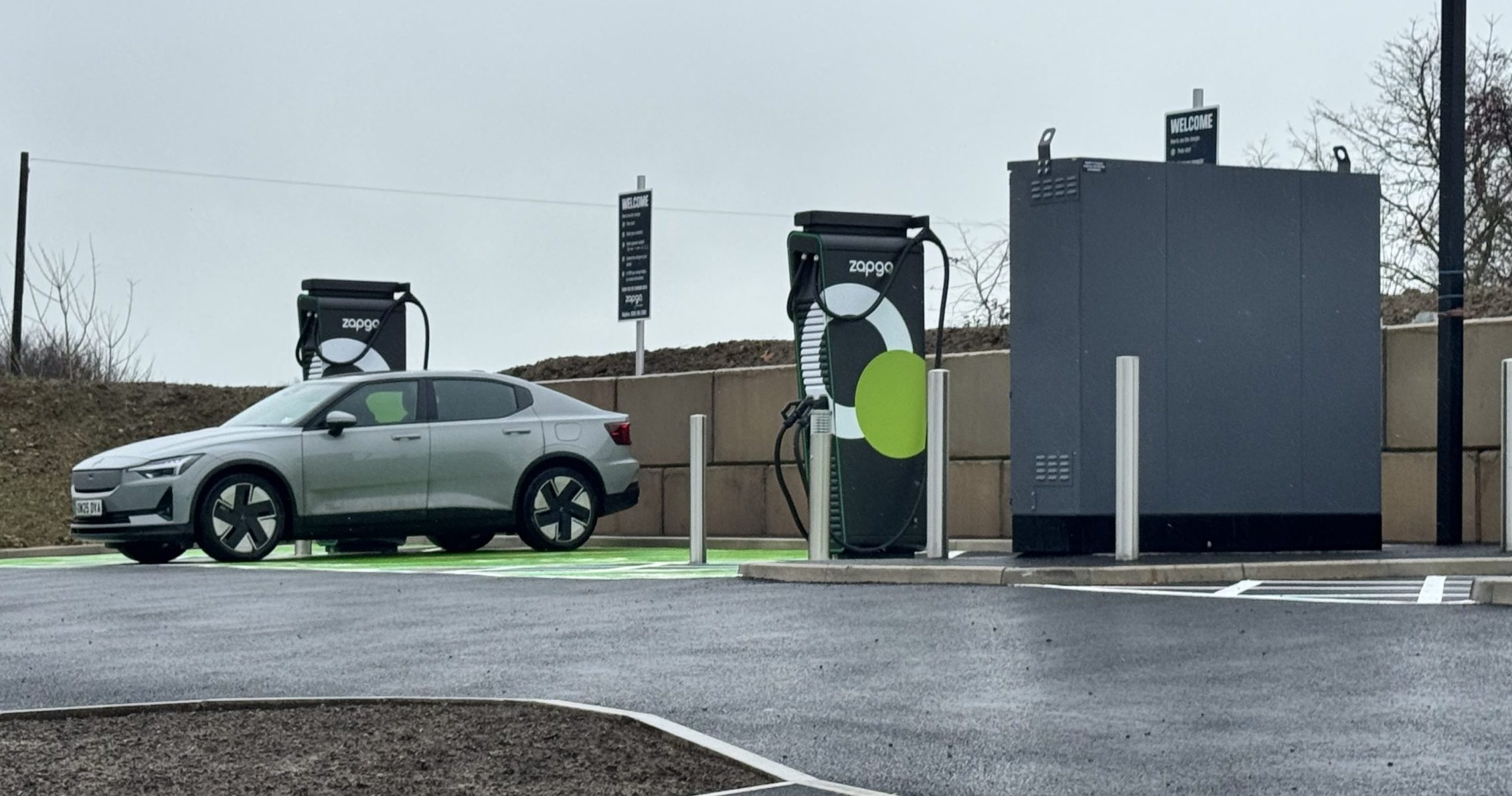
Although slow and fast chargers are expanding across the UK faster than rapid chargers, they represented only 25% of Motability Scheme charging sessions in 2025. The remaining 75% took place at rapid and ultra-rapid points, which are more expensive.
This trend is reflected nationwide. Zapmap data for Q3 2025 shows that 71.4% of all UK charging sessions occurred at rapid and ultra-rapid chargers, compared with just 28.6% at slow and fast points.
Local Access to Slow Chargers Boosts Confidence
A key reason for this disparity is the limited availability of low-speed chargers near people’s homes. For those without home charging, using cheaper public chargers relies on leaving vehicles plugged in for longer periods.
Data from Field Dynamics and Zapmap indicates that in some regions, households face walks of over 15 minutes to reach a public charger. In London, where 81% of households are within a 0–5 minute walk of a charger, 58% of Motability Scheme sessions were on slow and fast points—the highest proportion of any region. Conversely, in the East Midlands, only 24% of households are within five minutes of a charger, and just 10.8% of sessions used slow and fast chargers.
Joseph B, a Motability Scheme customer, said: “Where I live, public transport is too far away for me to access so my car is essential. I’m lucky to have a home charger for my EV, which means charging is great value. If I had to rely more on the public network, I would definitely need to prioritise the cost of the charge, over the speed unless I was in the middle of a journey.”
Andrew Miller, CEO of Motability Operations, added: “Inspiring the next cohort of EV drivers will depend not just on interest in EVs, but on the experience people have once they use them. While attitudes towards EVs remain stable, gaps in affordable, slow charging close to home are creating charging experiences that are often more expensive and less convenient than drivers expect. This is particularly detrimental for those without access to home charging. Without the right infrastructure in place, it will become increasingly difficult to convert curiosity about EVs into confident, long-term uptake.”