
For many fleet operators, the conversation around electric vehicles has moved beyond vehicle range and battery performance. The focus is increasingly shifting towards the practical realities of keeping vehicles charged, operational and productive throughout the working day.
Conn Byrne, Executive Director for Integrated Payments, Payroc, discusses why reliable charging and payment systems are essential to ensure confidence in pursuing a net-zero goal utilising electric vehicles.
The UK’s ZEV mandate now requires that 33% of new car sales this year are zero-emission vehicles, rising to 80% by 2030. Manufacturers face fines of up to £12,000 for every car sold short of the target. The policy signal is clear: EV adoption is accelerating, and public charging now faces the pressure of supporting both private motorists and the growing number of businesses transitioning company vehicles to electric power.
Yet, while vehicle range, battery technology, and model choice have all improved dramatically, one part of the EV ownership experience remains stubbornly unreliable: the act of paying to charge.
For fleet operators, transport managers and company vehicle drivers who rely on public infrastructure, the charging experience is becoming an increasingly important operational consideration. If the public network remains inconsistent and confusing, it risks undermining confidence in fleet electrification programmes and the UK’s wider transport decarbonisation strategy.
Charging confidence is a fleet issue
Range anxiety has largely subsided as EV capabilities have improved. In its place, a different kind of uncertainty has taken hold: the suspicion that charging a vehicle will be expensive, confusing, or both.
According to Zapmap, the average pay-as-you-go price at a UK rapid or ultra-rapid charger currently sits around 76p per kWh, which works out at roughly 22–23p per mile to run an electric car, compared to around 17–18p per mile for a typical petrol vehicle.
For fleet managers, charging uncertainty is about more than driver convenience. Unpredictable charging costs, inconsistent payment systems and failed charging sessions can all affect route planning, vehicle utilisation and overall operating costs.
When that cost is combined with an unreliable payment experience, public charging starts to feel less like a convenience and more like a compromise.
Fragmented payments are an overlooked barrier to adoption
Beyond cost, the payment journey itself is fragmented in ways that actively discourage mainstream adoption. EV drivers routinely juggle several charging apps across different networks, with some reporting they manage five or more just to ensure access to chargers. Each network requires a separate account, with different pricing structures and user interfaces.
Some charge per kWh, others per minute, and others use a hybrid model. Idle fees, session fees, and unexpected surcharges add further confusion.
Beyond the driver experience, fragmented payment systems create challenges for businesses trying to consolidate charging data, monitor expenditure and maintain accurate reporting across multiple vehicles and drivers.
One industry survey found that negative attitudes towards managing multiple charging apps now outweigh the positive ones by nearly five to one. For organisations weighing up the transition from petrol and diesel vehicles, this kind of friction can make existing fuelling arrangements appear significantly simpler.
When charging fails, there is no fallback
Unreliable chargers pose a particular challenge in unattended environments, where no member of staff is available to resolve a problem. Nearly half of EV drivers report regularly encountering out-of-service charging points. The UK government now requires rapid charging networks to maintain 99% uptime, but first-time success rates often paint a less reassuring picture.
A failed charging session can have consequences far beyond driver frustration. For fleets operating to strict schedules, delays can affect customer commitments, service delivery and vehicle availability.
Unlike a petrol station, where someone behind the counter can override a system error or process a different card, the technology at a charging point either works or it does not.
Making payments work for fleet electrification
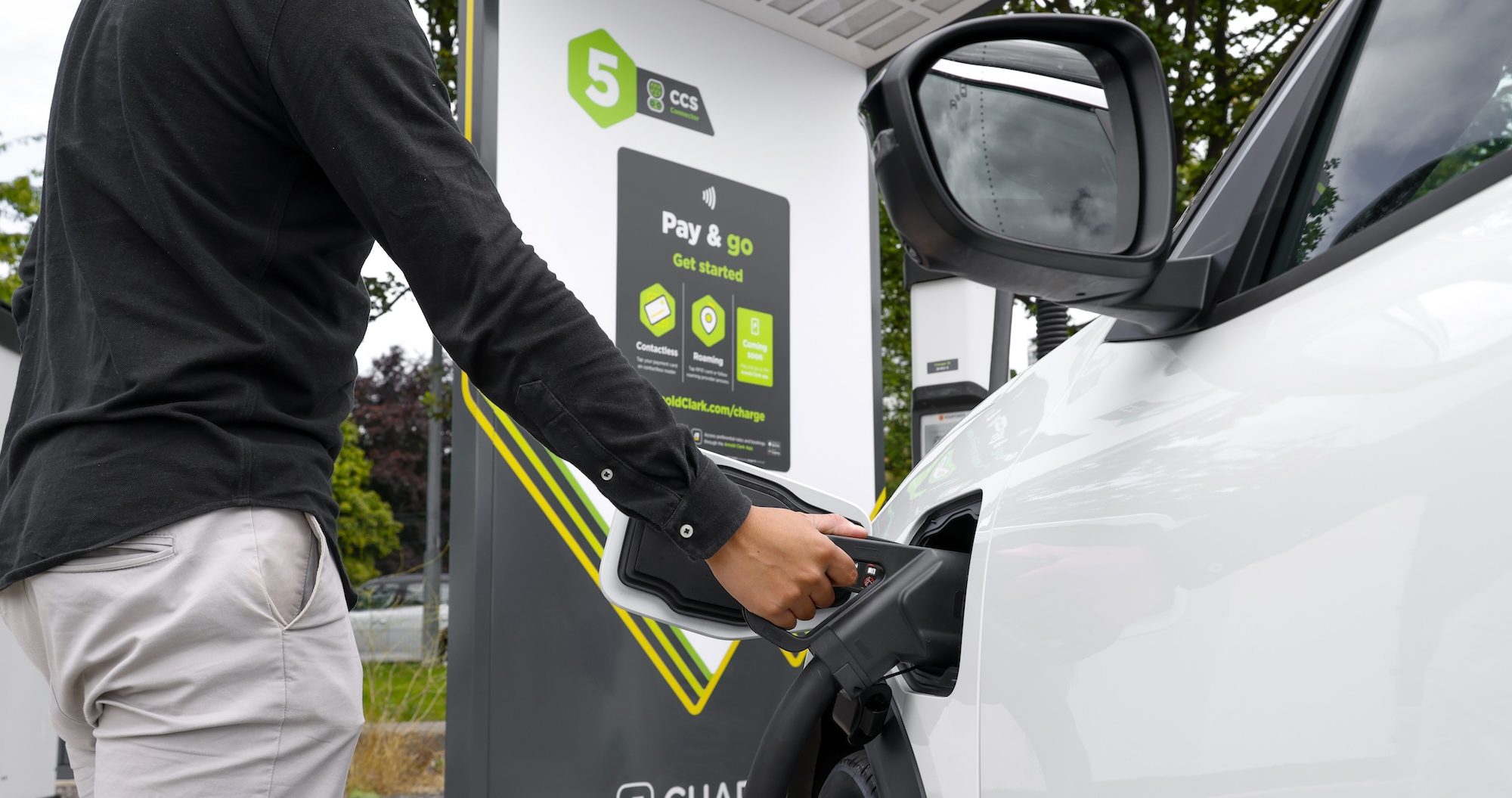
Open, interoperable, and dependable payment systems are essential to making charging inclusive and convenient enough to support mass adoption. Drivers should be able to pay with a contactless card that works consistently, without needing to download an app or create a new account each time they use a different network.
Unattended payment systems also need fallback options, such as QR codes, pay-by-text, or stored wallet credentials, so that when one method fails, another is immediately available. They need the ability to separate the charging session from the payment authorisation, allowing a driver to plug in and start charging while the transaction is processed in parallel.
As more organisations deploy EVs, payment systems must support both individual drivers and fleet-wide charging management, including consolidated billing, expense tracking and simplified reimbursement processes.
Clear, upfront pricing and real-time monitoring so operators can identify and resolve issues as they happen are equally important.
The payments industry has already solved many of these problems in other unattended contexts, including vending, parking, and transit. The difference is that much of the EV charging network was built with payments treated as an afterthought. Payment logic embedded at the device level creates technical debt that compounds with every new site and every compliance change.
The platforms addressing this are the ones moving that logic to the cloud, centralising it so that updates, new payment methods, and fixes can be pushed remotely across an entire network without dispatching a technician to every charger.
User experience will determine the pace of fleet electrification
The UK now has over 119,000 public charge points, and the network is growing rapidly. But infrastructure numbers alone will not sustain EV adoption if the experience of using that infrastructure remains frustrating and unpredictable.
The ZEV mandate is pushing manufacturers towards ambitious electric sales targets. Meeting those targets depends not only on consumers being willing to buy, but also on businesses having confidence that EVs can be operated efficiently and cost-effectively at scale.
The next phase of the EV transition will be determined not just by the vehicles being introduced to market, but by the reliability of the infrastructure that supports them. For fleet and transport managers, charging must become as straightforward and dependable as refuelling has been for decades. If the charging experience remains inconsistent, it risks becoming a barrier to electrification at precisely the moment adoption is expected to accelerate.