
Most fleet disruptions do not begin with a breakdown. They begin with small operational signals that go unnoticed for too long. In this article, Patrick Miles from Intangles a fleet intelligence platform, discusses why real-time visibility of operations is essential both for cost control and competitiveness.
A vehicle consuming more fuel than expected, a slight rise in coolant temperature during a long run, repeated idling on specific routes, or a delayed maintenance response may each appear minor in isolation. Across a large fleet operation, these small inefficiencies often become expensive disruptions when teams cannot identify them early enough.
For many operators, the challenge is no longer collecting data. Most fleets already generate substantial volumes of operational information every day through connected vehicles and telematics systems. The challenge is turning those signals into awareness quickly enough for intervention to still matter. By the time many issues surface through standard reporting cycles, the impact has often already spread across the network, affecting schedules, vehicle availability, and customer commitments before anyone has had the chance to respond.
At the same time, operating costs are rising, delivery windows are tightening, and downtime is becoming more expensive to absorb. Traditional reporting based on end-of-day or weekly summaries is becoming less effective in environments where conditions shift continuously throughout the working day. The goal is no longer simply understanding what happened. It is identifying issues early enough to prevent disruption before it takes hold.

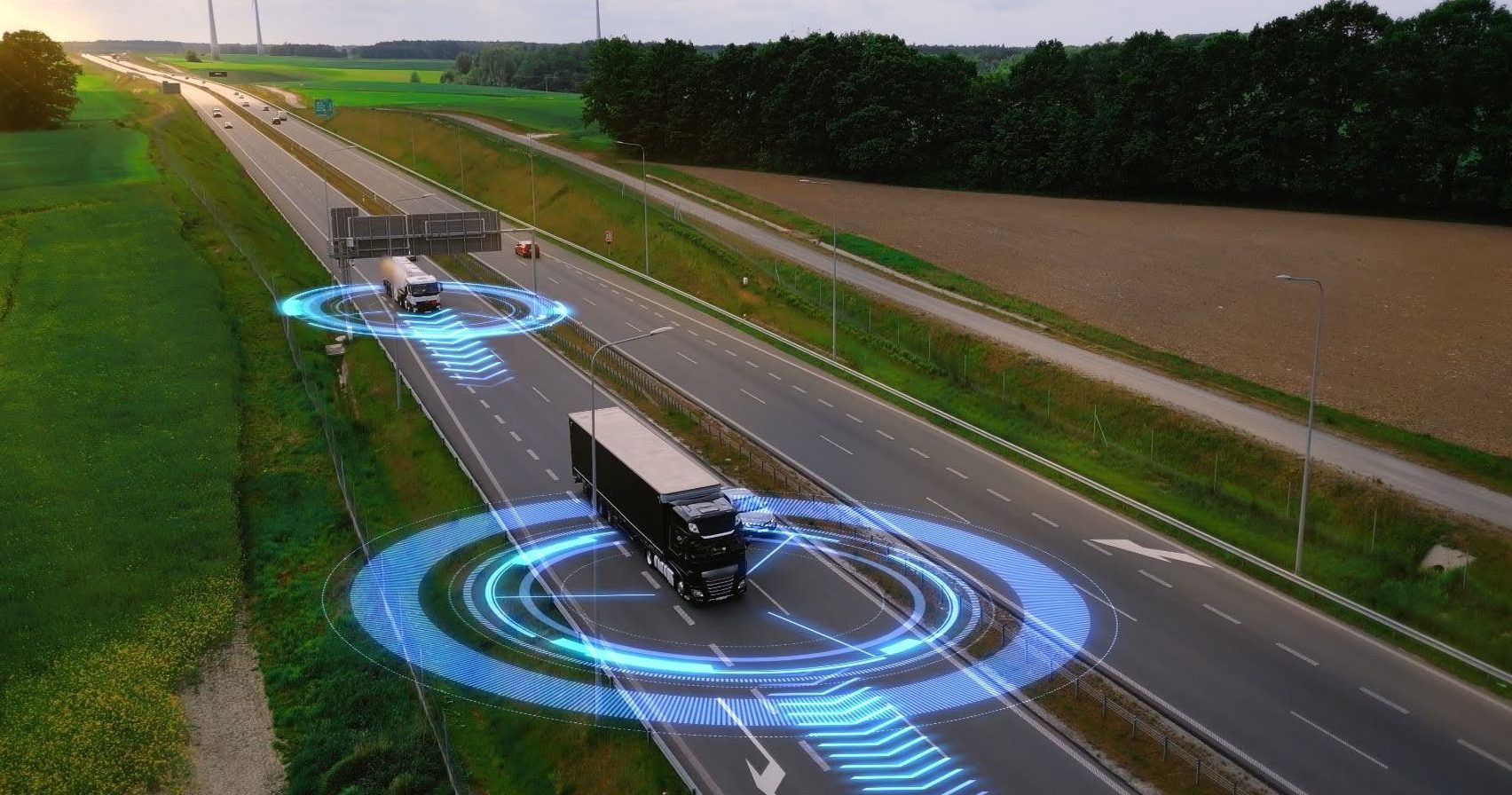
Predictive Maintenance. Image: Intangles
Why delayed awareness creates larger problems
In many cases, fleets continue to find out about issues only when contacted by a driver on duty or when their truck fails to appear in the allocated slot. In this respect, it is worth noting that this process introduces a delay between the occurrence of an incident and its recognition by the operations team.
The effects of such an event are not always realized until it reaches a critical mass. An issue with the coolant in a truck during its journey may start as nothing more than a warning light, but soon become something more as it leaves drivers stranded at the roadside, incurring expenses that could have been avoided earlier.
Fuel waste can persist for weeks before patterns become obvious in periodic reports. A driver behaviour issue may not surface until it has already affected vehicle wear across multiple routes. In large fleet environments, operational problems rarely stay isolated. One unresolved issue can affect vehicle availability, maintenance scheduling, route planning, and customer commitments simultaneously across multiple locations.
This is why many operators are rethinking how visibility should function across day-to-day fleet management. Teams increasingly need awareness while operations are still in motion, not after the impact has already spread. Reactive management may have been an acceptable approach when operating environments were more predictable. In today’s commercial transport landscape, it is increasingly a liability.
What real-time visibility actually changes
Operational visibility in real time encompasses more than just GPS monitoring. This refers to having full visibility of everything that happens within the fleet, on the routes, with drivers, and at workshops, without having the schedule get affected.
In practice, the shift is less about the technology itself and more about what becomes possible when operational data is acted upon in time. Platforms that bring together predictive vehicle health monitoring, fuel analytics, and driver behaviour data into a single operational view are making this more achievable for fleet teams, allowing developing issues to be flagged and acted upon before they affect the day’s schedule.
Early warning of a developing engine fault allows a vehicle to be brought in for planned maintenance rather than recovered from the roadside. Fuel consumption anomalies spotted mid-shift can be investigated before they become a persistent cost. Driver behaviour trends identified early can be addressed through targeted coaching rather than incident review after the fact.
Most breakdowns do not happen without warning. However, in most situations, the presence of such signals is established much earlier than the actual breakdown occurs. It depends on their ability to detect these signals and respond to them early enough to avoid the spread of disruption throughout the network.
The pressures driving this shift
UK commercial transport is operating under mounting pressure from several directions at once.
Fuel costs, maintenance expenses, and unplanned downtime continue to weigh heavily on operating margins. DVSA compliance obligations and operator licence responsibilities are placing greater accountability on fleet operators for vehicle condition and driver conduct. Meanwhile, customer expectations around delivery reliability, transparency, and issue resolution are rising steadily across logistics and transport contracts.
In addition, fleet operations are increasingly more complicated on their own merits. Today, many companies have a greater number of vehicles to operate, dispersed among several different facilities and locations, operating with much reduced turnaround times, and with very little room for error anywhere along the way. Under such conditions, one malfunctioning vehicle at a critical time can cause repercussions completely out of proportion to its actual significance.
Unplanned vehicle downtime continues to be one of the largest cost issues that fleet owners face, according to the Road Haulage Association, and the problem is compounded as fleet sizes grow and schedules get busier. This is particularly problematic for companies that own multiple fleets at various sites, as even minor inefficiencies will eat into profits quickly.
Operational visibility is increasingly becoming part of everyday fleet coordination rather than an occasional reporting exercise. The fleets responding most effectively to these pressures tend to be those capable of identifying operational exceptions earlier and coordinating responses before disruption has the chance to spread.
Responsiveness as a competitive advantage
Historically, competitive advantage in fleet operations often came from scale, route density, or geographic reach. Increasingly, how quickly an operation can identify and respond to developing problems is becoming just as important as any of those factors.
The fleets managing this most effectively tend to be those that have shifted from periodic review to continuous operational awareness, not by adding layers of complexity, but by reducing the time between a signal appearing and a decision being made in response to it.
That shift does not eliminate operational problems. But it significantly reduces the window during which a fleet is operating without awareness of them. In an environment where margins are tight and the cost of disruption is rising, that window is precisely where operational performance is won or lost.
As fleet operations grow more complex and compliance demands continue to increase, real-time visibility is moving from a technology consideration to a core operational requirement. The operators investing in that capability now are likely to find themselves better placed to manage reliability, reduce unnecessary downtime, and maintain efficiency as the pressures on commercial transport continue to build.
ABOUT INTANGLES
Intangles is a fleet intelligence platform that combines physics-based Digital Twin technology with machine learning to help commercial fleet operators improve vehicle reliability, reduce fuel consumption, and minimise unplanned downtime through predictive maintenance and real-time operational insights. Learn more at www.intangles.ai.