
HMRC to appeal on public EV charging VAT ruling
The decision by HM Revenue & Customs (HMRC) to appeal a landmark VAT ruling on public EV charging has reignited debate about fairness, affordability and the pace of the UK’s transition to cleaner transport. At the heart of the issue is a stark disparity: domestic electricity is taxed at just 5% VAT, while electricity supplied via public EV charge points is subject to the full 20% rate.
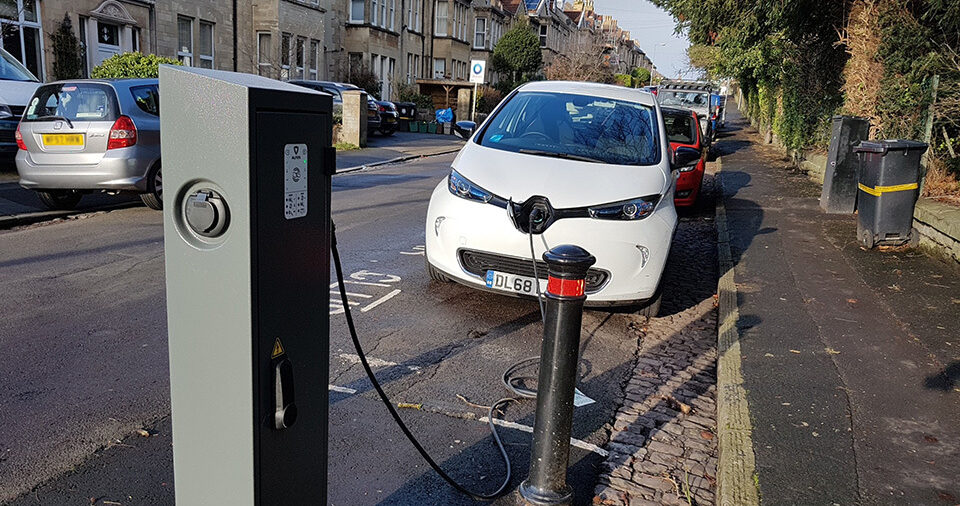
This difference has long been criticised as a structural disadvantage for drivers without access to off-street parking. Typically, these are urban residents, renters and lower-income households who must rely on public infrastructure to charge their vehicles. The appeal now delays what many saw as a potential turning point in addressing this imbalance.
The controversy stems from a ruling in the case of Charge My Street v HMRC. The First-Tier Tribunal found that electricity supplied at public charge points, under certain consumption thresholds, could qualify as domestic use and therefore be eligible for the reduced 5% VAT rate.
Had it stood unchallenged, the decision could have significantly lowered the cost of public charging, narrowing the gap between home and on-street charging. However, HMRC’s decision to appeal means the ruling is effectively paused pending further legal proceedings.
The VAT disparity has often been described as a “pavement tax” – a term used to highlight the inequity faced by those who cannot charge at home. While EV adoption continues to grow, this pricing imbalance risks slowing uptake among key demographics.
Vicky Read, chief executive of ChargeUK, criticised the appeal, stating: “This is a disjointed and disappointing decision from government. On the same day it commits to doubling down on clean power and electrification, HMRC appeals against a legal ruling which could cut the cost of EV charging for millions.
“Interest in EVs is surging as drivers look to shield themselves from volatile petrol prices. But for the many who cannot charge at home that equation is still not straightforward – addressing the pavement tax would help make it so. We urge that as government progresses its review of the cost of public EV charging, equalising VAT should remain on the table regardless of this ruling.”
The appeal has drawn widespread criticism from across the EV industry, with many arguing it contradicts broader government ambitions to accelerate the transition to electric mobility.
John Lewis, CEO of char.gy, said: “This is a deeply disappointing decision, and one that sends entirely the wrong signal to the millions of people who rely on public charging. While home charger users pay 5% VAT, drivers without a driveway – disproportionately those in cities, renters, and lower-income households – continue to be penalised at 20%.
“The government talks about accelerating EV adoption, yet is actively choosing to maintain a tax structure that makes public charging more expensive than it needs to be and undermines the transition. char.gy stands ready to pass on any VAT saving to our customers the moment the government does the right thing. The question is: what is the government waiting for?”
Tanya Sinclair, CEO of Electric Vehicles UK, echoed concerns about inequality: “Drivers without off-street parking already pay more to charge simply because of where they live. HMRC appealing this ruling is the government choosing to defend that inequality.
“If you’re serious about EV adoption, you don’t fight the ruling that would fix your most regressive charging cost. You let it stand. Their actions don’t match the narrative.”
For many drivers, the cost difference is not trivial. Public charging can already be significantly more expensive than home charging due to infrastructure and operational costs. Adding a higher VAT rate exacerbates the issue, in some cases making EVs less economical than petrol vehicles.
Ginny Buckley, CEO of Electrifying.com, highlighted the real-world impact: “For a government that talks about standing up for ‘working people’, the decision to appeal this ruling flies in the face of that. Ministers are doubling down on a system that penalises millions of drivers who rely on public charging.
“Those drivers can pay up to ten times more to charge an electric car than someone with a driveway – and in some cases, that makes EVs more expensive to run than petrol.
“This hits those without driveways the hardest, making it more expensive for them to switch and if the government is serious about making EVs affordable, it cannot allow a two-tier system where access to cheaper, cleaner driving depends on what type of property you have.”
The appeal raises important legal and policy questions. If HMRC succeeds, the status quo remains, reinforcing the current VAT framework. If the tribunal’s interpretation is ultimately upheld, it could force a broader reassessment of how electricity for EV charging is classified and taxed.
Warren Philips, Campaign Lead at FairCharge, stressed the wider implications: “FairCharge has led on this issue, but consumers, industry and MPs alike have always known it was wrong. Charging people more because they depend on public infrastructure was wrong in principle, and the tribunal confirmed it. People unable to charge at home pay four times the VAT rate of their neighbours for identical electricity, a failing that persisted long after the legal basis was challenged. By appealing, the government is telling 1.4 million current EV drivers, and more than 30 million who will have to switch, that it is willing to go to court to keep public charging costs high. It should accept the ruling and work with consumers and industry to put this right.”
The appeal process means uncertainty will persist for both consumers and charge point operators. While the government has indicated it is reviewing the cost of public EV charging more broadly, there is no immediate relief for those affected by higher VAT rates.
The outcome of the appeal could have far-reaching consequences. Beyond pricing, it will signal how aligned fiscal policy is with the UK’s net zero ambitions. For now, the debate underscores a key tension: balancing tax policy with the need to create a fair and accessible pathway to electrification.
The HMRC appeal against the Charge My Street ruling has become a focal point in the UK’s EV transition debate. At stake is not just a tax rate, but the principle of equitable access to affordable clean transport. As EV adoption accelerates, resolving this disparity will be critical to ensuring that the shift to electric mobility is inclusive rather than uneven.