
Translating AI fleet analytics into actionable daily decisions
Fleet teams now have more data than ever, from telematics and diagnostics to driver behaviour and fuel usage. Fleet managers operating under tight margins and increasing compliance demands must be able to turn that data into actionable insight. Evelyn Long, Editor-in-Chief of Renovated Magazine discusses how you can leverage the power of advanced AI fleet analytics to inform practical decisions that strengthen your fleet’s performance.
Why Data-Driven Decision-Making Matters More Than Ever
Traditional fleet management often relies on periodic reviews, manual checks and reactive decisions. This is where AI-driven analytics changes the game. Instead of simply reporting what has already happened, these systems can highlight trends, flag anomalies and surface actionable insights in real time. As you shift from reactive management to proactive decision-making, small daily adjustments can lead to significant long-term gains.
Common Operational Challenges Data Can Solve
Transport managers face a variety of issues:
- Inefficient route planning leads to delays and higher costs.
- Underutilised vehicles increase overall fleet spending.
- Inconsistent driver behaviour affects fuel efficiency and wear.
- Limited visibility into real-time performance slows decisions.
AI-driven data analytics can address each of these challenges by providing the insights needed to plan routes more effectively while also optimising vehicle utilisation and maintenance.
Understanding Your Data Streams
Different data sources provide different insights into fleet performance. Traditional diagnostics, such as fluid analysis, can detect metals indicative of system wear and provide advanced warning of potential failures. This granular approach to vehicle health has served fleets well for years.
Telematics and AI fleet analytics take this concept further by tracking vehicle location, driver behaviour and fuel consumption in real time. Despite these benefits, only 19% of companies currently use telematics. That gap represents a significant untapped opportunity for fleets willing to invest in data infrastructure.
Key Analytics to Track for Better Daily Decisions
Managing a modern fleet effectively requires monitoring new metrics:
- Vehicle readiness versus scheduled routes: Matching fuel and battery levels to daily route requirements prevents range-related disruptions.
- Performance variability across routes and conditions: Understanding how weather, terrain and driving styles affect actual range helps with accurate planning.
- Fuel and energy usage patterns and costs: Tracking when, where and how much energy is used reveals opportunities to optimise both time and expenses.
- Driver behaviour impacts: Educating and incentivising drivers to avoid the 23% increase in fuel consumption that aggressive acceleration and braking can cause.
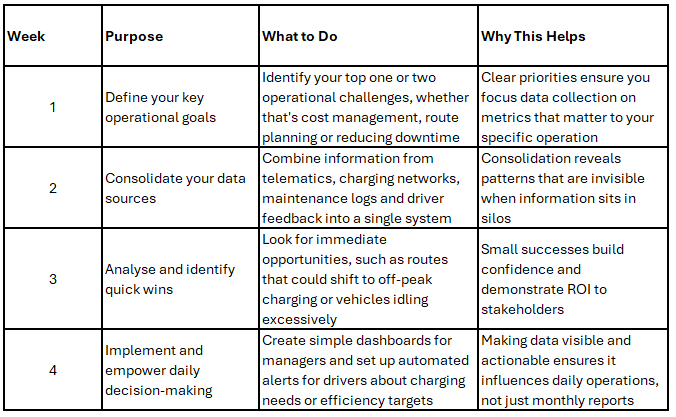
Your Four-Week Plan for an Analytics Reset
Getting started with data-driven fleet management doesn’t require a complete operational overhaul. A focused, month-long approach can establish the foundation you need.
 Easy Wins Build Momentum
Look for patterns like vehicles consistently returning with excess charge or fuel, suggesting that you could extend their routes and reduce fleet size. Or identify drivers whose efficiency metrics lag significantly behind team averages, indicating a training opportunity.
Quick wins matter because they build organisational confidence in data-driven approaches. When managers see concrete cost savings or efficiency improvements within weeks, they become advocates for deeper investment in analytics. Real examples prove the concept works.
Future-Proofing Your Fleet
Building data capabilities now prepares you for challenges that haven’t fully materialised yet. The pay-per-mile electric vehicle excise duty scheduled for 2028 will tie operating costs directly to distance travelled. Fleets with detailed route and mileage data will be able to minimise these charges through better planning.
Additionally, long-term data collection transforms procurement decisions. Fleet management software provides insights into which brands or models perform best in your specific operation, removing guesswork and enabling smarter decisions.
How AI Fleet Analytics is Already Driving Real Results
G4S implemented telematics across its fleet, reducing idle time by 43% and translating to fuel savings and reduced emissions. United Utilities took a similar approach and achieved 35% better fuel economy through route optimisation and driver coaching. Both organisations demonstrate that analytics investments pay for themselves through operational improvements.
Turning Data into Your Greatest Asset
Fleets that build robust data capabilities now will navigate the changing fleet landscape more smoothly and operate more efficiently than competitors relying on traditional management approaches. AI fleet analytics can offer a competitive advantage by providing the information you need to make smarter decisions every day.