
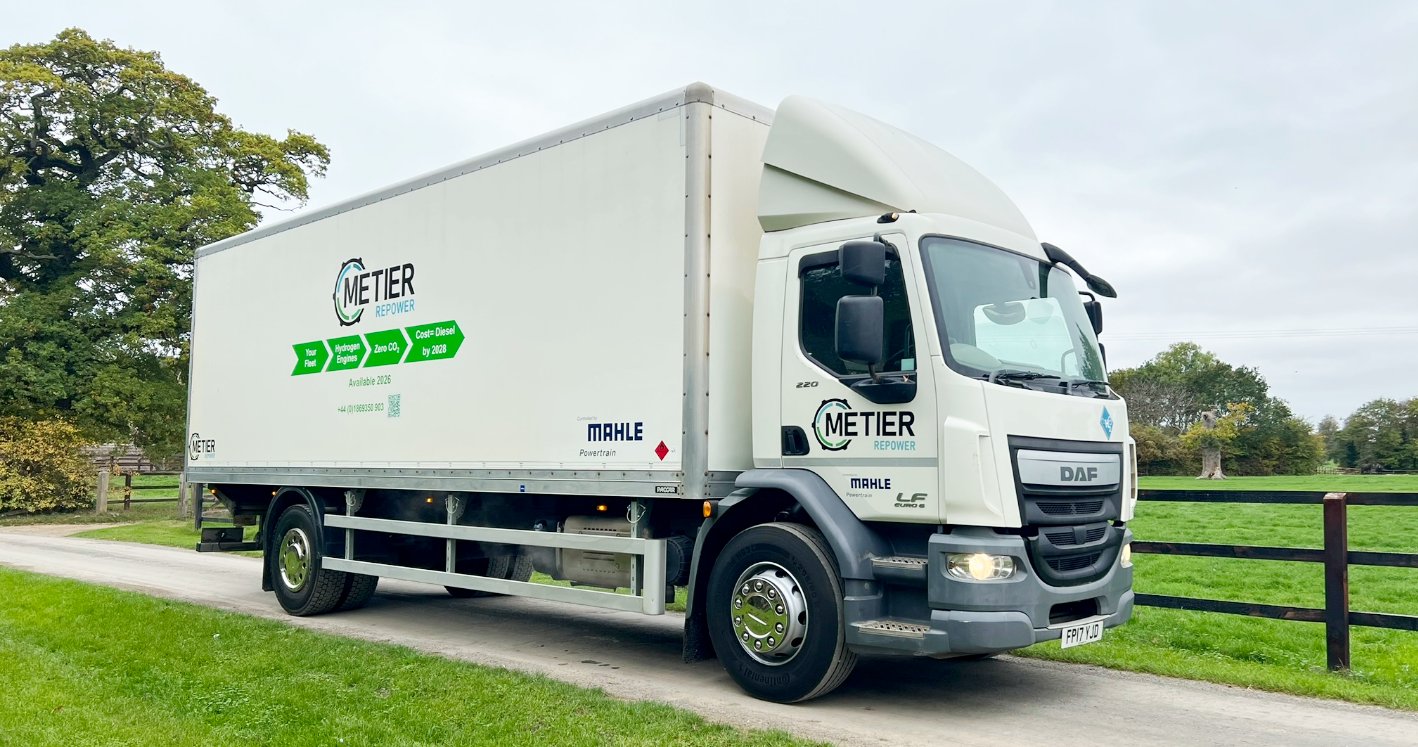
First hydrogen ICE powered truck passes MOT
Metier Technologies has announced a major breakthrough for the UK hydrogen transport sector after its H2ICE demonstrator vehicle successfully passed its MOT, making it one of the first road-legal hydrogen internal combustion vehicles in the UK and among only a handful operating in Europe.
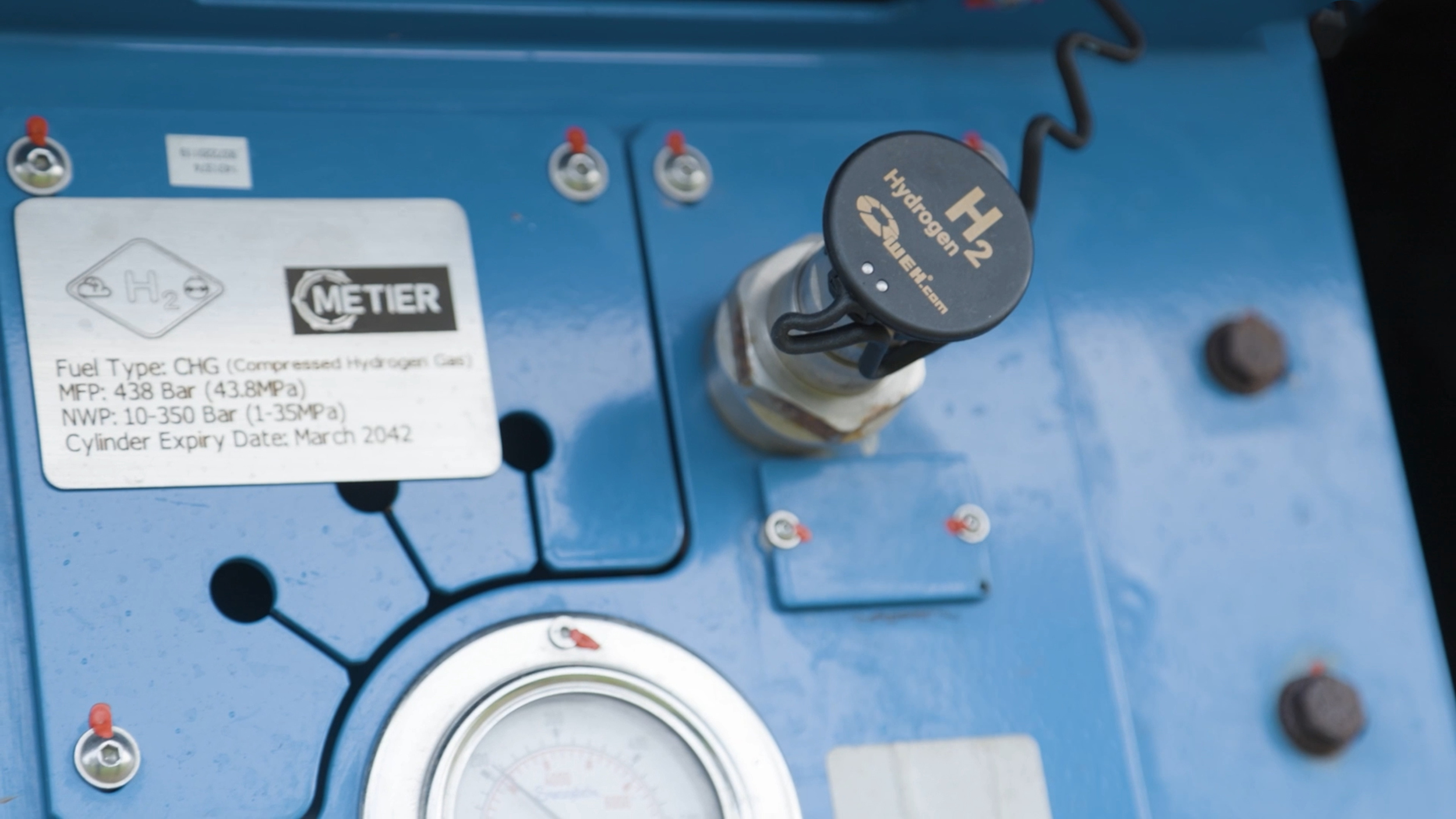
The milestone marks an important step forward for hydrogen-powered heavy goods vehicles, demonstrating that hydrogen internal combustion engine (H2ICE) technology is no longer theoretical but commercially viable for real-world fleet operations.
“This is a defining moment not just for Metier, but for the hydrogen sector as a whole,” said James Budgett, Managing Director of Metier Technologies. “For years, hydrogen has been discussed as a future solution. By putting an operational, road-legal vehicle on UK roads, we are demonstrating that the technology is here, it works, and it can be deployed at scale.”
Hydrogen HGV Demonstrator Now Road Legal
The demonstrator vehicle is based on a DAF LF platform and has been repowered using Metier’s hydrogen internal combustion engine technology. The vehicle has now received full road certification, including a V5 classification confirming zero CO2 emissions.
Passing its MOT allows the truck to operate legally on UK roads for the first time, enabling live demonstrations for fleet operators, policymakers and regulators considering alternative fuel solutions for heavy-duty transport.
“This is no longer theoretical,” Budgett added. “Having the vehicle on the road is a major step towards demonstrating that hydrogen internal combustion can deliver zero-emission performance in real operating conditions, with minimal reliance on subsidies.”
Matching Diesel Performance with Zero Emissions
The current demonstrator delivers approximately 130kW of power, making it suitable for urban and inner-city fleet operations. Metier is aiming to increase output to 170kW by August 2026, which would bring the vehicle in line with diesel-powered equivalents for motorway and heavy-load applications.
At full performance, the hydrogen powertrain is expected to match diesel capability while maintaining zero emissions and enabling access to low and ultra-low emission zones.
Metier also believes its hydrogen model can achieve total cost of ownership parity with diesel vehicles by the end of the decade as hydrogen production scales and supporting infrastructure expands.
“We are closing the gap rapidly,” said Budgett. “As hydrogen production scales, we expect TCO to approach diesel parity, giving fleet operators a commercially viable pathway to decarbonisation without compromising performance or payload.”
The company argues that hydrogen internal combustion provides a practical alternative for both urban and long-distance operations without the payload, charging and range limitations associated with battery-electric trucks.
Growing Support for Hydrogen Transport
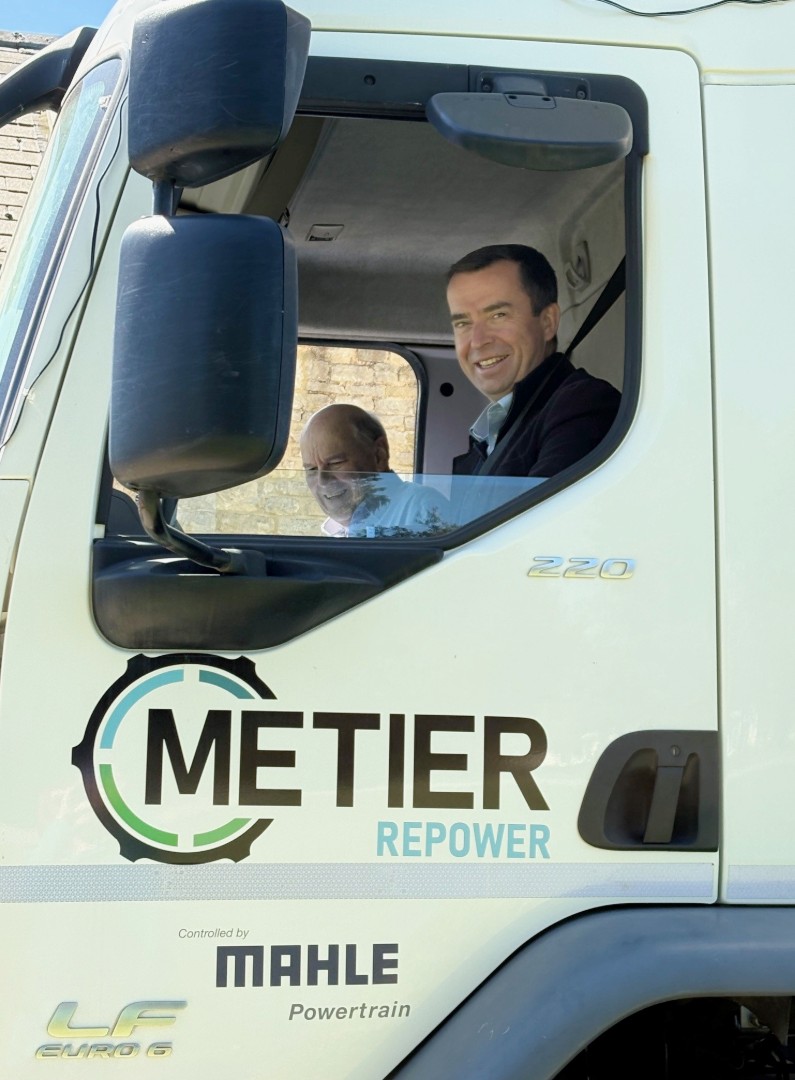
The announcement follows a recent visit to Metier’s facility by the Liberal Democrat MP for Bicester and Woodstock, Calum Miller, who viewed the demonstrator vehicle in operation.
“In an era of unreliable oil and gas supplies and volatile prices, Britain has to broaden its energy mix. Seeing a hydrogen-powered heavy-duty truck in operation today shows the technology is ready. There’s a real opportunity for British industry to lead on hydrogen transport, including heavy goods vehicles, and the UK is well placed to lead on green hydrogen production,” commented Miller.
International Demand for Hydrogen Fleet Technology
Metier says it is already receiving international interest in its hydrogen powertrain technology from markets including Europe, Australia, Korea, the United States and Namibia. Discussions are focused on truck and bus fleet deployment, as well as wider hydrogen infrastructure development.
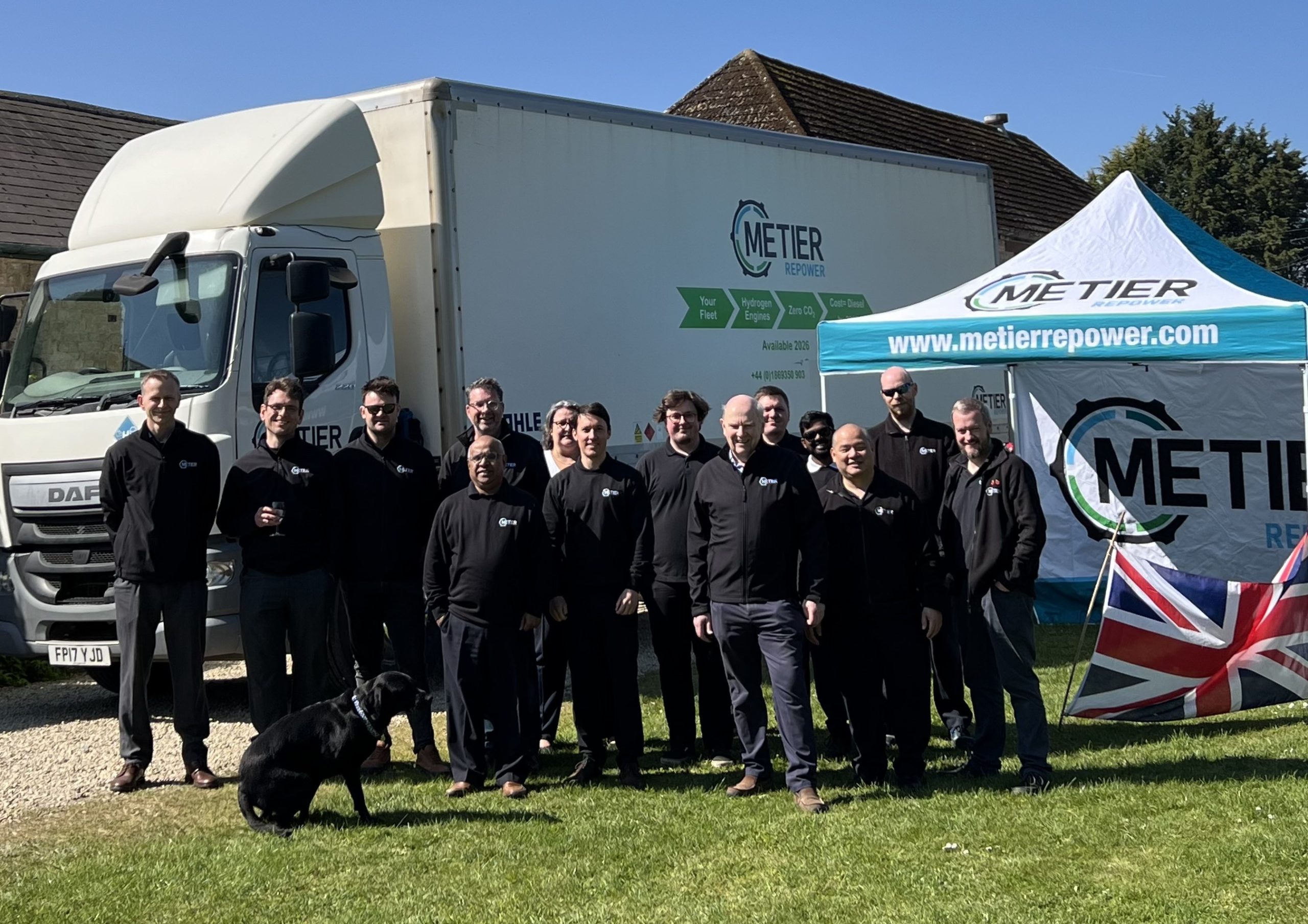
“This is not just a UK story,” said Budgett. “Demand is building globally, particularly in markets looking for practical, cost-effective alternatives to diesel without waiting for entirely new vehicle platforms.”
Breaking the Hydrogen Infrastructure Barrier
One of the biggest challenges facing the hydrogen economy is the dependency between vehicle demand, fuel supply and refuelling infrastructure investment. Metier believes its approach can help overcome this issue by focusing initially on depot-based fleet operations that return to base daily.
By working with local hydrogen supply partnerships, the company aims to support immediate deployment without requiring a nationwide refuelling network while creating reliable demand for hydrogen producers and refuelling providers.
“This is about unlocking the market,” Budgett explained. “By starting with fleets of rigid trucks that return to base we can create offtake for local hydrogen ecosystems that enables them to survive and then expand organically. That is how the transition begins.”
Commercial Rollout Planned from 2027
Metier’s hydrogen internal combustion solution is based on proven diesel engine architecture, allowing existing vehicles to be converted in as little as two to three weeks.
The company is targeting commercial deployment from 2027, with plans to convert at least 1,000 vehicles by 2028 and expand to 10,000 vehicles across Europe by 2031.
Alongside transport applications, Metier is also exploring hydrogen-powered generator technology as an additional route to market.
“Hydrogen is no longer a future technology,” said Budgett. “It is here, it is road legal, and it will be ready for deployment in 2027. The politicians should be paying attention now because this is the moment where hydrogen moves from promise to reality.”