
Wales has launched its first comparative trial of hydrogen and battery electric refuse collection vehicles (RCVs), marking a significant step in the nation’s efforts to accelerate the transition to cleaner, greener transport.
The £420,000 feasibility and demonstrator project, supported by the Welsh Government’s Climate Innovation scheme and Circular Economy programme, is being delivered by the Cardiff Capital Region (CCR). The initiative brings together ten local authorities across South East Wales to assess the real-world performance of zero-emission refuse vehicles.
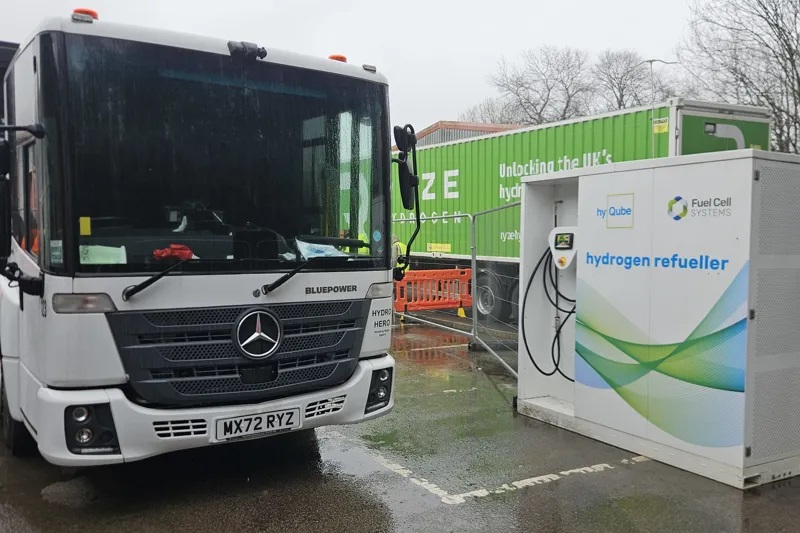
Image: SMMT
The collaboration includes engineering consultancy Ricardo, hydrogen specialist Hyppo, Caerphilly County Borough Council and Rhondda Cynon Taf County Borough Council. The project aims to gather operational data that will help local authorities better understand the benefits, limitations and practical requirements of different zero-emission technologies.
During the trial, engineers and fleet managers will closely monitor factors such as energy usage, driving range, operational performance and how well the vehicles perform across varying routes and terrain. The findings will be used to inform future investment decisions and support the development of sustainable municipal fleets across Wales.
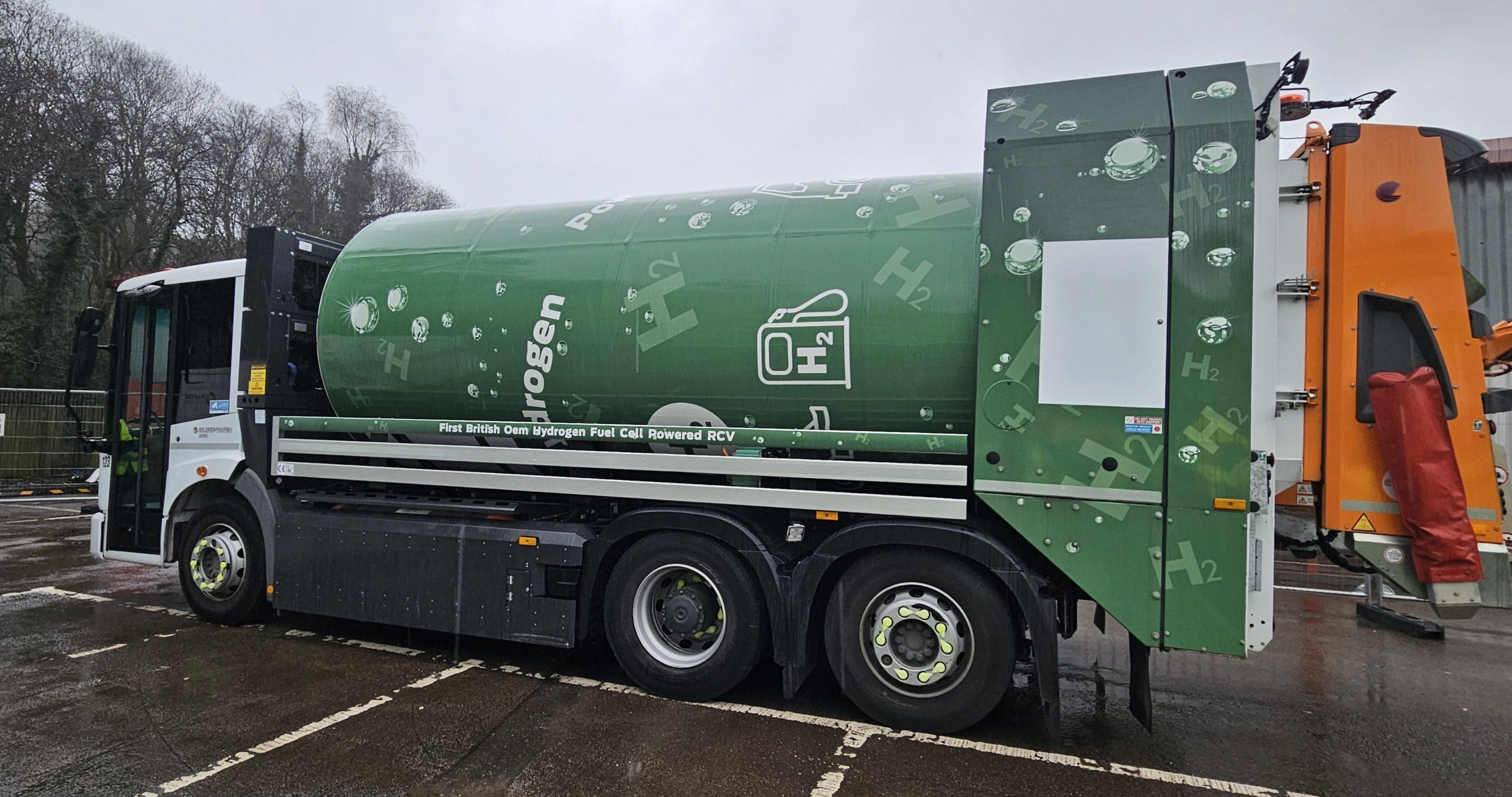
The hydrogen vehicles being used in the pilot are Faun Zoeller Bluepower fuel cell electric refuse trucks supplied by St Helens Borough Council. These 27-tonne 6×2 vehicles are built on a Mercedes Econic chassis and are equipped with a Rotopress compactor refuse body and bin lift system.
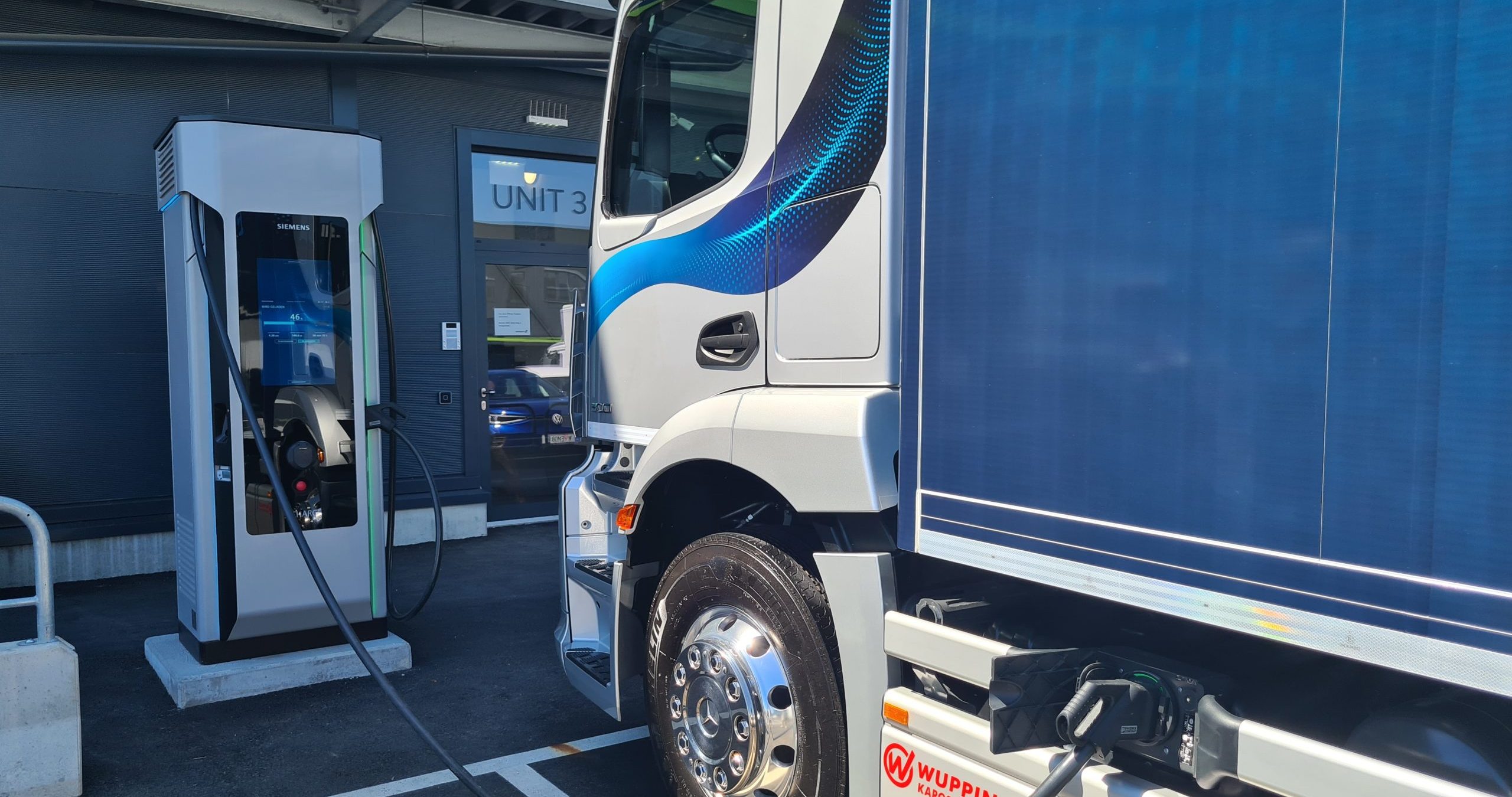
Alongside the hydrogen vehicles, the trial also includes a battery electric Mercedes eEconic refuse collection vehicle. The 27-tonne 6×2 chassis is fitted with a Faun Zoeller refuse body featuring a Vario-Press compactor and a universal bin lifting system.
By comparing the operational performance of hydrogen fuel cell and battery electric technologies in real-world waste collection operations, the project aims to provide local authorities with the evidence needed to make informed fleet transition decisions.
Mike Brough, CCR’s Strategic Director for Regional Growth, said: “Heavy-duty fleets are one of the hardest sectors to decarbonise and by bringing hydrogen and electric technologies together in a real-world environment, we’re helping local authorities make informed, future proof decisions.”
The demonstration project is expected to provide valuable insight into how zero-emission refuse collection vehicles can operate effectively within the demanding requirements of municipal waste services, while supporting Wales’ wider ambition to reduce transport emissions and build a more sustainable public sector fleet.