
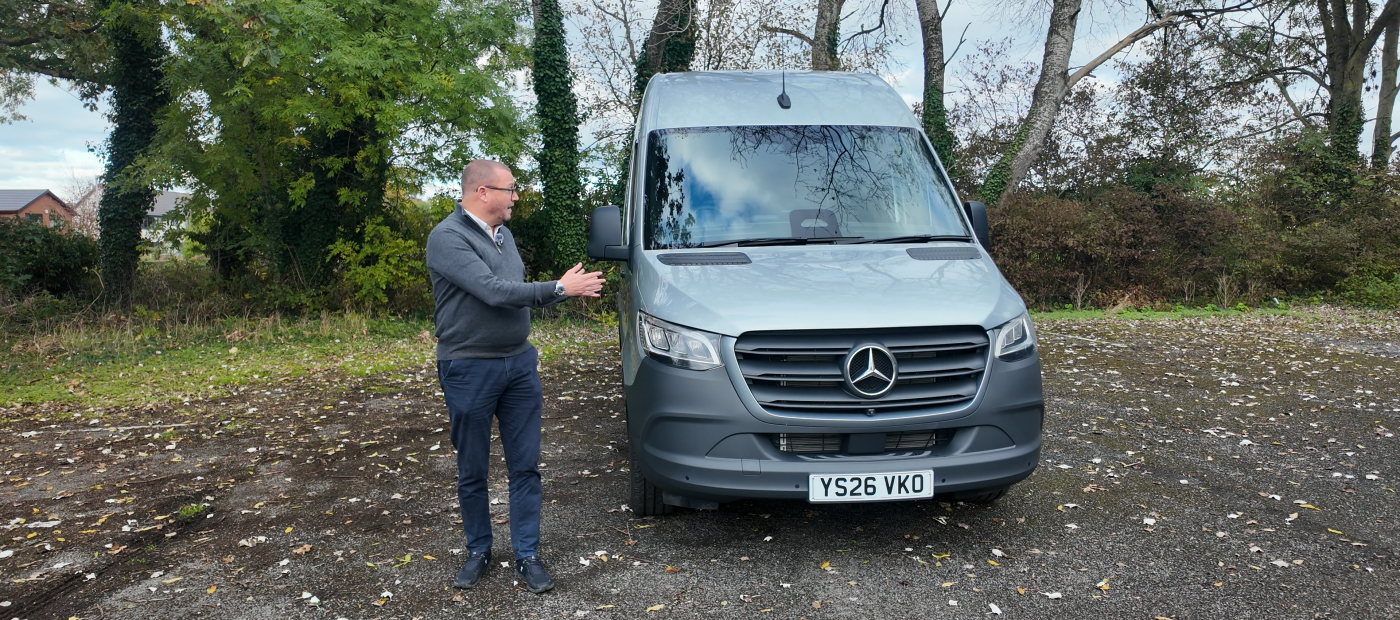
Mercedes-Benz Sprinter 315 CDI Review: Is This The Best Large Van On The Market?
Watch the review — click here (opens YouTube in a new tab)
A week with the Mercedes-Benz Sprinter 315 CDI , reviewed by John ‘Barney’ Barnes.
First Impressions
There are vans that simply get the job done, and then there are vans that have built an entire reputation around doing it exceptionally well. The Mercedes-Benz Sprinter sits firmly in the second category. It has long been one of the benchmark large commercial vehicles for British businesses, from delivery operators and builders to specialist conversion companies, and the 2026 Sprinter 315 CDI continues to make a compelling case for itself.
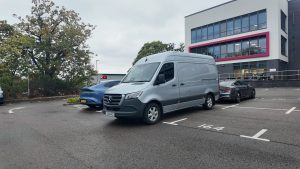
The formula is reassuringly straightforward: a capable diesel engine, a properly usable load area, a professional driving environment and the flexibility to configure the vehicle around the job in hand. It isn’t trying to reinvent the large van. Instead, it focuses on making the fundamentals work as well as possible — and that is precisely where the Sprinter earns its reputation.
Under the bonnet, the 315 CDI uses a 2.0-litre four-cylinder turbocharged diesel producing 150PS, equivalent to approximately 148bhp, with 340Nm of torque according to the supplied model information. Those figures might not sound especially dramatic in isolation, but commercial vehicles aren’t about headline-grabbing acceleration. What matters is how effectively the engine moves a fully laden van, how relaxed it feels on a motorway and whether it can cope with a demanding working week without becoming tiring.
The Sprinter’s other major advantage is choice. Different body lengths, roof heights, gross vehicle weights and equipment specifications allow businesses to select a van that suits their particular operation rather than making compromises around a single standard configuration. Mercedes-Benz quotes load volumes of up to 15.5 cubic metres across the wider panel-van range, with payload capacity varying considerably according to specification. That adaptability is central to the Sprinter’s appeal. Mercedes-Benz Vans UK
For fleet managers, owner-operators and tradespeople who need a dependable, professional large van, the 315 CDI has all the ingredients of a very strong all-rounder.
Design and Interior
The Sprinter has a familiar, purposeful appearance. Its proportions are dictated by practicality rather than fashion, with a tall body, a broad front end and a large load compartment that makes its working intentions immediately obvious. It looks like a serious commercial vehicle because it is one.
There is a good reason the Sprinter is so widely used as the basis for everything from parcel-delivery vans to mobile workshops and specialist conversions. The platform offers considerable flexibility, and the different lengths and roof heights mean businesses can prioritise manoeuvrability, load volume or carrying capacity according to their needs.
The standard panel van is available in several configurations, with the wider range accommodating load volumes from around 7.8 cubic metres in compact versions to as much as 15.5 cubic metres in the largest panel vans. Buyers should check the precise body designation before ordering, because the dimensions and carrying capacity of one Sprinter can differ significantly from another.
Inside, the emphasis is on creating a useful working environment. The driving position is elevated, visibility is generally well suited to commercial use, and the cabin is designed to accommodate long working days rather than simply getting a driver from one delivery to the next.
The dashboard layout is modern without losing sight of the van’s purpose. Storage for everyday work essentials, accessible controls and practical seating arrangements all matter when the vehicle is doubling as a mobile office. Three-seat front configurations are available, making the Sprinter useful for teams who need to transport colleagues alongside tools and equipment.
Cabin equipment depends on the chosen trim and options, so it is worth checking the exact vehicle specification rather than assuming every 315 CDI comes with the same technology. Higher equipment levels can make a meaningful difference to driver comfort and convenience, particularly for businesses where employees spend most of their working day behind the wheel.
The overall impression is of a cabin built around commercial requirements, with the technology and comfort features needed to make the Sprinter feel like a modern working vehicle rather than a basic transport appliance.
Infotainment and Technology
Technology has become an increasingly important part of the commercial-van market, and the Sprinter benefits from Mercedes-Benz’s MBUX infotainment system on suitably equipped versions.
The system brings a more contemporary feel to the dashboard, with a central display, digital connectivity and access to vehicle information. Depending on specification, buyers can also benefit from navigation, smartphone integration and additional connected services.
For a van driver spending hours travelling between customers, sites and distribution centres, straightforward navigation and accessible media controls are more than just luxuries. They help make the working day easier, particularly when the vehicle is being used across unfamiliar areas.
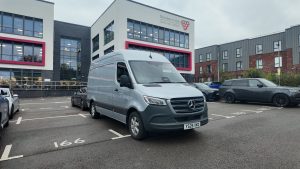
Mercedes-Benz’s connected-vehicle offering can also be valuable for businesses running several vehicles. Fleet operators need to think beyond the driver’s experience: vehicle utilisation, maintenance planning and visibility across a fleet can all influence operating efficiency. Connected services may help with these tasks, subject to the package selected and the relevant subscription or service requirements.
That said, equipment needs to be checked carefully at the point of purchase. Screen sizes, navigation functionality, camera availability and other convenience features can vary between model years and trim levels.
The important point is that the Sprinter offers access to the sort of technology expected in a modern commercial vehicle, while retaining a layout that is intended to support everyday work.
On the Road
The 315 CDI’s 2.0-litre turbodiesel is the heart of the package. With 150PS and 340Nm of torque as specified in the supplied information, it is aimed at businesses that need a sensible balance of pulling power, running costs and everyday usability.
Torque is particularly important in a commercial vehicle. A van regularly carries tools, materials, stock or delivery parcels, and its engine needs to cope with the additional weight without demanding constant gear changes or making routine journeys feel unnecessarily hard work.
The Sprinter’s diesel powertrain is designed around that requirement. It is a working engine for a working vehicle, with the emphasis on delivering useful performance across a broad range of everyday duties rather than providing sports-car levels of acceleration.
Transmission choice is another consideration. Manual and automatic versions have been offered across the Sprinter range, with the appropriate gearbox depending on the exact derivative and specification. An automatic can be particularly attractive for urban delivery work, where repeated stop-start driving can make a manual van more tiring over the course of a shift. Buyers should confirm which gearbox is fitted to the specific 2026 vehicle they are considering.
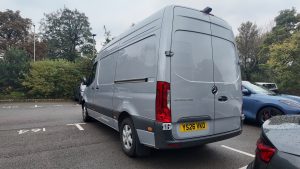
On longer journeys, the Sprinter’s large-van proportions are balanced by a driving environment designed for professional use. A commanding driving position helps with visibility, while the steering and driver-assistance systems are intended to make the vehicle manageable in a variety of conditions.
Crosswind Assist is an especially useful feature on a tall-sided van. Strong gusts can affect any large commercial vehicle, particularly on exposed roads and motorways, so systems designed to help maintain directional stability are a welcome addition.
Of course, a Sprinter is still a substantial vehicle. Narrow streets, tight loading bays and multi-storey car parks require more consideration than they would in a smaller van. Overall length, roof height and turning requirements should all be considered before choosing a particular body configuration.
The 315 CDI’s appeal is therefore less about excitement and more about competence. It is designed to cover distance, carry equipment and support a demanding working schedule, and that is exactly what most buyers in this class need.
Cargo Space and Practicality
This is where the Sprinter makes one of its strongest arguments.
The load compartment is the reason many businesses choose a large van in the first place, and the Sprinter’s extensive range of body configurations makes it particularly versatile. Whether the job involves parcel delivery, building materials, trade equipment or a bespoke mobile-workshop conversion, there is a configuration intended to suit a wide variety of requirements.
Mercedes-Benz quotes load volumes of up to 15.5 cubic metres for the panel-van range, with maximum load-compartment floor lengths reaching approximately 4,810mm on the longest versions. The precise figures depend on the selected body and roof configuration. Mercedes-Benz Vans UK — Sprinter dimensions
That space can make a real difference to working efficiency. A van that accommodates more of the required load in one journey can reduce repeat trips, save driver time and help businesses make better use of their vehicles.
Loading access is equally important. The Sprinter’s panel-van layout offers sliding side-door access and rear doors, making it practical for loading and unloading in depots, on building sites and at customer premises. The exact door arrangement and opening specification should be checked against the vehicle being ordered.
The other major consideration is payload. A large load area is only useful if the vehicle can legally carry the weight required. Mercedes-Benz quotes payload figures of up to approximately 2,479kg across certain Sprinter panel-van configurations, but that is a range maximum rather than a figure that can automatically be applied to the 315 CDI.
Passengers, shelving, racking, tools and conversion equipment all contribute to the total weight. Businesses should therefore confirm the plated gross vehicle weight and actual payload of their chosen vehicle before committing to a specification.
For specialist operators, the Sprinter’s adaptability is particularly valuable. It can form the basis of a mobile workshop, a delivery vehicle or a professionally converted body, provided the chosen chassis, weight rating and conversion are suitable for the intended application.
In short, the Sprinter isn’t simply a large van. It is a flexible commercial platform that can be configured around the demands of a business.
Fuel Economy and Running Costs
Fuel consumption is one of the biggest considerations for any diesel van operator, particularly when annual mileage is high and fuel represents a substantial part of the fleet budget.
The 315 CDI is intended to balance useful performance with reasonable diesel efficiency. For the standard rear-wheel-drive, manual, 3,500kg version listed in Mercedes-Benz’s technical data, the manufacturer’s published combined figure is approximately 33.3mpg. This is a specific configuration figure, not a universal figure for every Sprinter 315 CDI. Larger bodies, automatic transmissions, additional equipment, heavier loads and driving conditions can all affect consumption. Mercedes-Benz technical data
Real-world economy will depend heavily on the type of work being undertaken. A lightly loaded van travelling steadily on motorways will usually operate under different conditions from one making frequent urban stops with a full load. Driving style, traffic, tyre pressures and maintenance also matter.
For fleet managers, the sensible approach is to assess fuel consumption over a representative working cycle rather than relying exclusively on the best official figure. A difference of only a few miles per gallon can have a noticeable effect across a fleet covering tens of thousands of miles annually.
Servicing, tyres, insurance, depreciation and downtime also need to be considered. The Sprinter’s purchase price is only one part of the ownership calculation; the vehicle must earn its keep throughout the period it remains in service.
Warranty coverage provides another element of reassurance. Mercedes-Benz UK’s published information specifies a standard two-year, unlimited-mileage vehicle warranty, with a three-year, unlimited-mileage extended warranty available for UK models purchased through an authorised Mercedes-Benz dealer, subject to the applicable terms. Buyers should confirm the precise cover included in their quotation.
The Sprinter is not necessarily the cheapest large van to buy or maintain, but its appeal lies in the combination of capacity, professional presentation, configurable specification and established commercial-vehicle support.
Safety and Driver Assistance
Safety is an important consideration for any business operating commercial vehicles, particularly where drivers cover long distances, work in congested urban areas or share roads with cyclists and pedestrians.
The Sprinter range offers driver-assistance technologies intended to support the driver and help reduce the demands of everyday commercial driving. Crosswind Assist is particularly relevant to a tall van, helping address the effects of strong side winds.
Other assistance and parking features depend on the chosen specification and options. Buyers should confirm the equipment fitted to the exact vehicle rather than assuming that every system is standard on every 315 CDI.
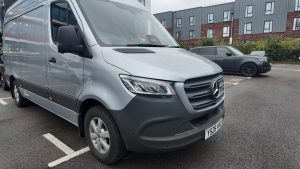
For businesses, safety also extends beyond the electronic equipment. Correct tyre pressures, regular brake inspections, sensible load distribution and compliance with the vehicle’s weight limits remain essential. Overloading can adversely affect handling, braking and tyre performance, as well as creating legal problems.
A properly specified Sprinter, maintained to the manufacturer’s requirements and driven within its limits, provides a sensible foundation for a professional fleet operation.
The Niggles
The Sprinter gets a great deal right, but a 4.5-star rating shouldn’t suggest that it is without compromise.
First, the purchase price. Mercedes-Benz’s premium positioning can make the Sprinter a more substantial investment than some alternatives. For businesses buying several vehicles, the difference in acquisition cost can be significant. The case for the Sprinter needs to be judged against the work it will do, the specification required and the expected whole-life cost.
Second, configuration complexity. The extensive choice of body lengths, roof heights, gross vehicle weights, engines and equipment is a major advantage, but it can also make the buying process more involved. Choose the wrong version and you could end up paying for capacity you do not need or, worse, discovering that the payload is insufficient for your normal workload.
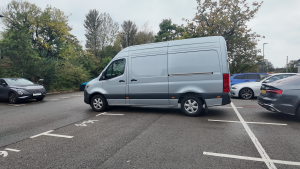
Third, the dimensions. A large van inevitably brings compromises in tight urban environments. Drivers need to pay attention to height restrictions, parking arrangements and narrow access points, especially when moving from a smaller commercial vehicle into a long-wheelbase, high-roof version.
Fourth, specification-dependent technology. Features such as navigation, reversing cameras and upgraded infotainment equipment should be confirmed before ordering. A fleet buyer needs to know exactly what is included rather than relying on the headline model name.
Finally, running costs deserve close attention. Fuel consumption varies considerably with body configuration and use, while servicing, tyres, insurance and depreciation all affect the final ownership calculation. The Sprinter may justify its premium for the right operator, but that decision should be based on the whole package rather than the badge alone.
None of these points undermines the Sprinter’s fundamental strengths. They simply reinforce the importance of choosing the correct derivative and understanding the cost of operating it.
The Fleet Case
For fleet managers, the Mercedes-Benz Sprinter 315 CDI is best understood as a business tool rather than just another line on a vehicle order.
Its first advantage is versatility. A choice of body configurations allows businesses to match the vehicle to their work, whether that means local deliveries, long-distance transport, carrying tools or supporting a specialist conversion.
Its second advantage is the potential to improve working efficiency. Adequate load space, suitable payload and sensible loading access can help drivers complete jobs with fewer compromises. However, those benefits depend on selecting the correct specification in the first place.
The third advantage is driver suitability. A comfortable, well-equipped cabin and access to modern infotainment and assistance technology can make a difference to employees who spend long hours in the vehicle. That matters to driver satisfaction, recruitment and retention as well as day-to-day productivity.
The financial case still needs to be built around actual usage. Fuel consumption, annual mileage, purchase or finance costs, servicing, insurance, depreciation and downtime should all be included in a whole-life-cost comparison. A lower purchase price elsewhere may prove attractive, but the cheapest van on the order sheet is not automatically the cheapest vehicle to operate.
Businesses should also consider whether the chosen 315 CDI has the right gross vehicle weight, payload, transmission and body size for the work expected of it. These details can matter more than a small difference in headline engine output.
For operators who need a capable diesel workhorse with substantial carrying capacity and the flexibility to support different types of commercial activity, the Sprinter makes a persuasive case. It is a vehicle that can be specified around a business rather than forcing a business to adapt to a limited choice of configurations.
The Competition
The large-van market is highly competitive, with established alternatives including the Ford Transit, Volkswagen Crafter, Renault Master and Peugeot Boxer.
The Ford Transit is an obvious rival for businesses looking for a versatile commercial vehicle with a broad choice of body styles and powertrains. The Volkswagen Crafter competes closely on space, equipment and professional appeal, while the Renault Master and Peugeot Boxer provide alternatives worth considering when acquisition cost, payload and running expenses are high priorities.
The right comparison depends on the exact vehicles being considered. A fair assessment should compare equivalent gross vehicle weights, load volumes, payloads, transmissions and equipment levels, alongside warranty coverage and finance offers.
The Sprinter’s strongest selling points are its broad configuration range, established position in the large-van market and the combination of practical capability with a modern, professional cabin. It may not be the lowest-cost choice in every comparison, but it deserves serious consideration when the requirement is a well-rounded van that can support a demanding working life.
The Verdict
The 2026 Mercedes-Benz Sprinter 315 CDI remains a compelling proposition for businesses that need a large commercial van with genuine versatility. Its 2.0-litre diesel engine, 150PS output and 340Nm of torque provide a sensible foundation for everyday commercial duties, while the wider Sprinter range offers an impressive choice of load capacities, body lengths and roof heights.
The practical advantages are clear. There is generous load space available, the cabin is designed around the demands of professional drivers, and the technology offering can make the van a more convenient place to spend a working day. For fleet operators, the ability to tailor the vehicle to a particular job is one of its most important strengths.
It isn’t perfect. The Mercedes-Benz badge can come with a premium purchase price, the range can be complicated to specify, and the largest versions require careful consideration when working in confined spaces. Fuel consumption and payload also depend heavily on the precise configuration and the way the vehicle is used.
But those are manageable compromises rather than fundamental flaws. Get the specification right, understand the whole-life costs and the Sprinter 315 CDI makes a very strong case as a professional working vehicle.
Four and a half stars from us. The Sprinter earns its place among the leading large commercial vans by getting the essentials right: usable space, a capable diesel powertrain, a practical cabin and the flexibility to suit a wide variety of businesses. For operators looking for a premium large van that can work hard across a demanding schedule, the 2026 Mercedes-Benz Sprinter 315 CDI deserves to be near the top of the shortlist.