
Ford E-Transit Custom Sport review: The electric van to beat
A week with Ford’s electric best-seller — the E-Transit Custom Sport reviewed by Ian Campbell.
First Impressions
The Transit Custom has been the best-selling vehicle of any kind in Britain for years, so when Ford finally plugged it in, the stakes could hardly have been higher. Get the electric version wrong and you don’t just dent a model line, you unsettle the entire backbone of the UK’s working fleet. So it was with a fair bit of curiosity that I took delivery of the E-Transit Custom Sport — the 320 L1 H1 in 218PS rear-wheel-drive form — for a week of mixed running around Lancashire and beyond.
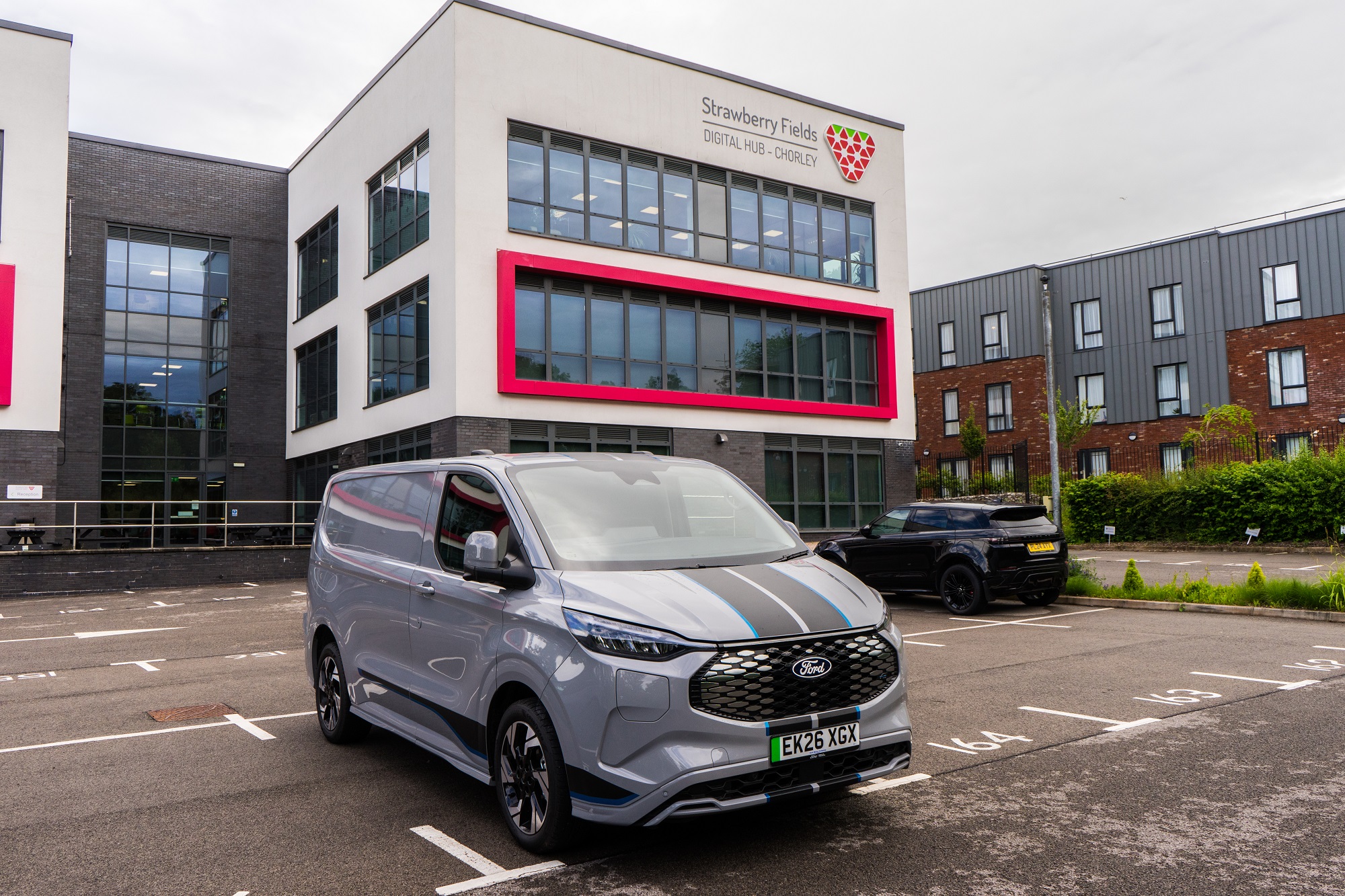
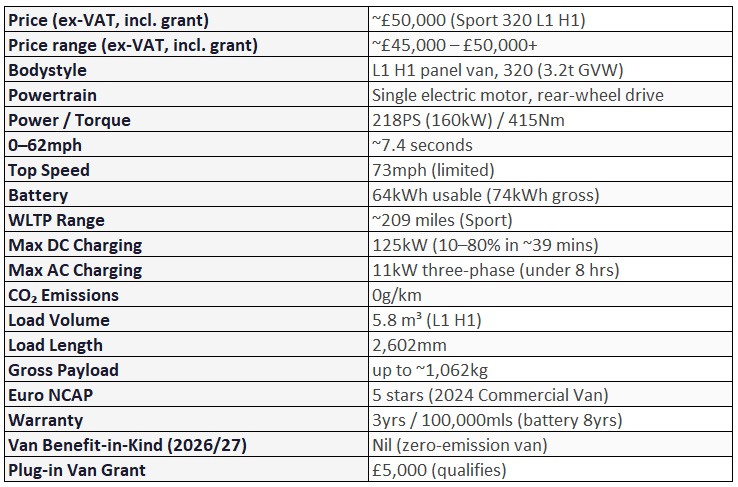
Let’s deal with the basics first. The E-Transit Custom range opens at a little under £45,000 excluding VAT for the entry Trend, with the £5,000 Plug-in Van Grant already factored in. The Sport I tested sits near the top of the panel-van range at a touch over £50,000 ex-VAT, and for that you get a 160kW (218PS) motor driving the rear wheels, a 64kWh usable battery, a 13-inch SYNC 4 touchscreen, a 12.5-inch digital driver’s display and the Sport’s bodykit, 19-inch alloys and grille detailing. It is not cheap. But, as I kept reminding myself all week, you tend to get what you pay for.
First and lasting impression? This simply does not drive like a van. It’s comfortable, it moves well, and within a mile or two you stop thinking of it as a commercial vehicle at all, which set the tone for a week that quietly impressed me at every turn.
Design and Interior
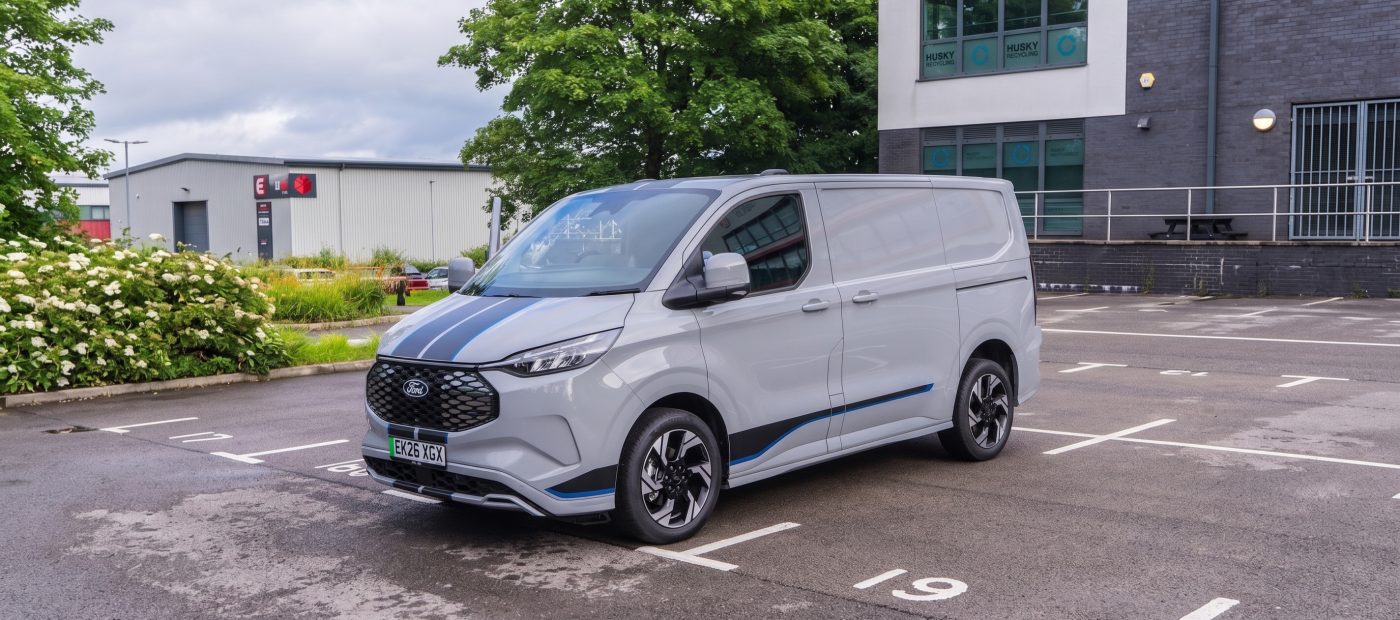
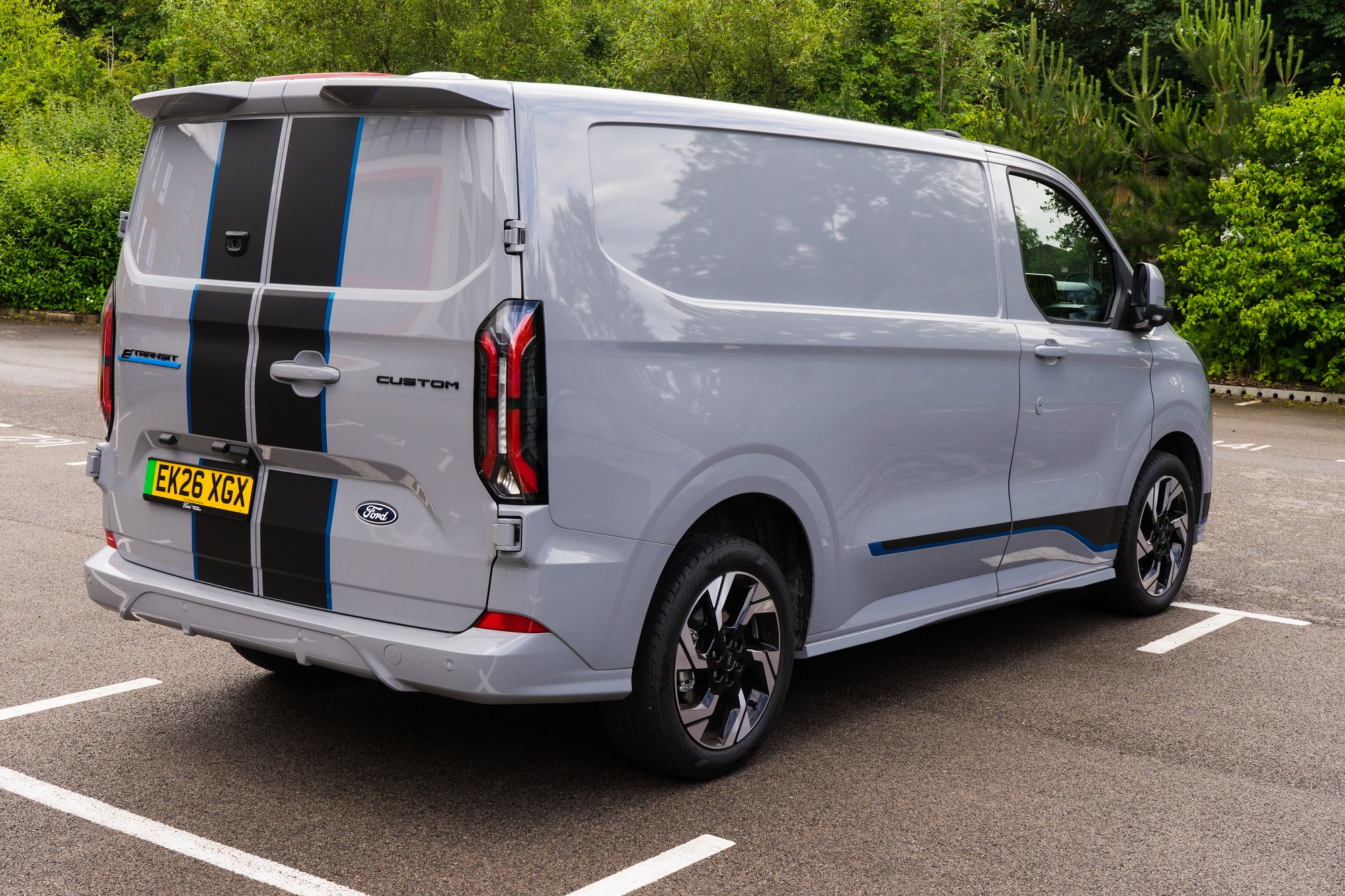
Park the E-Transit Custom alongside the old shape and you can see how much sharper Ford has made it. The Sport trim adds genuine kerb appeal on top — 19-inch alloys, a subtle bodykit, polygon detailing across the grille and, if you must, optional bonnet stripes. It looks purposeful rather than shouty, and it carries the Transit badge with the kind of confidence that comes from selling more vans than anyone else.
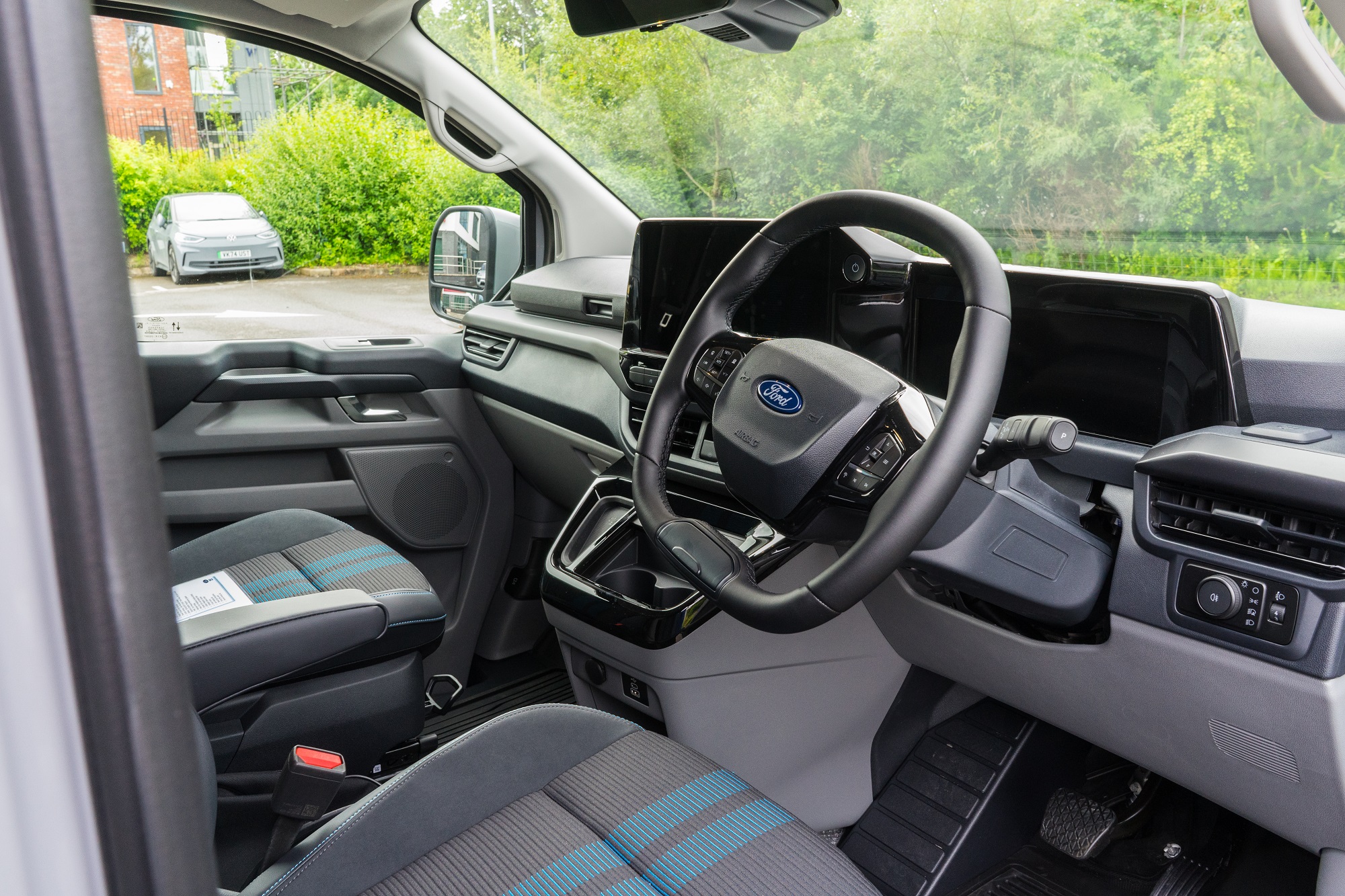
Climb aboard and the cabin is where Ford’s years of van-building experience really tell. The 13-inch SYNC 4 touchscreen dominates the dash and is backed by a 12.5-inch digital instrument display, and both look genuinely high-tech without burying the basics. Crucially, all the controls are exactly where you expect them to be. Nothing has been moved for the sake of looking clever, so you get in, reach for something, and it’s there, a small thing that makes a working day far less frustrating. The on-screen system works really well too: it’s quick to respond, clearly laid out, and dropping in via Apple CarPlay or Android Auto is effortless.
There’s sensible storage scattered throughout, the seats are supportive enough to shrug off a long day, and the driving position is far more car-like than van-like. Getting in and out is easy, visibility is good, and Ford’s camera-based rear-view mirror, which felt like a gimmick when it first appeared on cars, makes complete sense in a panel van where the back doors give you nothing.
The materials are typical hard-wearing van plastics rather than anything plush, which is exactly right for the job, even if it means the cabin never feels as special as the price tag might suggest. But everything you actually touch day to day feels built to take years of abuse, and that matters more than soft-touch trim when there’s a working life ahead of it.
On the Road
Here is where the E-Transit Custom won me over: it is very easy to drive, and the experience is honestly nothing like driving a van. Power comes from a single rear-mounted electric motor — 160kW, or 218PS, with 415Nm of torque, and it moves the thing along beautifully. Around town it just glides, the steering is light and accurate, and the whole van feels planted and composed in a way that flatters the driver.
And it’s properly quick when you want it to be. The instant torque means darting out of a junction or filling a gap in traffic is effortless, and an official 0–62mph time of around 7.4 seconds is genuinely brisk for a working van. Top speed is capped at a sensible 73mph, which is plenty for UK motorway work and helps preserve range.
A real highlight is the turning circle. For a van of this size it is excellent, the rear-wheel-drive layout means the front wheels turn more sharply, and the result is that reversing into tight bays, three-point turns on narrow streets and multi-storey car parks all become far easier than they have any right to be. If your drivers spend their days threading through town, it’s one of those details you’ll be grateful for every single shift.
Just as welcome is what the van doesn’t do. There aren’t too many bings and bongs constantly chiming at you to say you’ve done something wrong, the driver-assistance nannying that blights so many new vehicles is kept refreshingly in check here, and the one warning you might want to mute, the speed-limit alert, can be switched off with a steering-wheel button. The result is a calm, relaxing cabin rather than a constant argument with the dashboard.
Ride comfort is another strong point. Helped by independent rear suspension and a low centre of gravity from the underfloor battery, the E-Transit Custom stays composed and supple even when you’re running empty, where lesser vans crash and bang. There’s a touch of lean if you really press on, but it’s a remarkably civilised thing to spend a day in. If I’m being picky, the brakes can be a fraction tricky to modulate smoothly, but there’s no faulting the actual stopping power.
Battery, Range and Charging
Every E-Transit Custom uses a 64kWh usable battery (74kWh gross), and Ford has recently increased capacity across the range for the latest model year, lifting range by a useful margin over the launch cars. In the Sport, the official WLTP range works out at around 209 miles, a little less than the lighter, lower-powered Trend and Limited models, simply because of the bigger motor and chunkier alloys, but more than enough for the urban delivery and trades work this van is built for.
For the typical van driver doing a round of local drops or site visits, that’s the whole game. Plug in overnight, set off on a full charge, and a normal day’s route simply isn’t going to trouble the battery. The low running costs of an electric van against a diesel equivalent only sharpen the case, particularly for businesses doing predictable mileage from a fixed base.
Charging is a strong suit too. The E-Transit Custom will take up to 125kW on a DC rapid charger, which means a 10–80% top-up in around 39 minutes if you’re caught short mid-shift. The standard 11kW three-phase on-board AC charger will refill the battery in well under eight hours on a suitable wallbox, so an overnight charge at the depot or at home is completely painless.
The Niggles
No van is perfect, and a week is long enough to find the rough edges. The obvious one is price. The Sport is an expensive way into the range, and while the performance and the kit go some way to justifying it, a business watching every penny could get the core E-Transit Custom experience for meaningfully less in Trend or Limited trim and put the difference towards the load bay.
Beyond that, the range is the lowest in the line-up thanks to the Sport’s motor and wheels, still perfectly usable, but worth bearing in mind if your days are long. The brakes take a little familiarity to use smoothly, the camera mirror takes a day or two to trust, and the cabin plastics, while tough, feel built strictly to a price in the places you don’t often touch. None of it is a deal-breaker, but they’re the honest blemishes on an otherwise very polished package.
Safety and Warranty
Reassuringly, the Transit Custom family earned a full five-star rating in Euro NCAP’s 2024 Commercial Van Safety assessment, along with the top Platinum safety award — exactly what a fleet manager wants to see on the spec sheet. The usual suite of driver aids is fitted as standard, including pre-collision braking, adaptive cruise control, lane-keep assist, road-sign recognition, a reversing camera and parking sensors, and most of the fussier interventions can be switched off easily by drivers who find them intrusive.
On warranty, Ford offers its standard three-year, 100,000-mile cover on the van, with the all-important battery protected separately for eight years or 100,000 miles. Sales and servicing run through the extensive Ford Pro commercial network, which remains one of the broadest and most established support setups of any van maker in the country, a genuine reassurance when uptime is money.
The Fleet Case
Now the bit that matters for the people signing the cheques. As a fully electric, zero-emission van, the E-Transit Custom attracts a nil van Benefit-in-Kind charge — nothing for the driver who takes it home, against the £4,170 flat-rate charge a conventional van carries for 2026/27. Add the nil van fuel benefit on top and you’re looking at a saving of the best part of £750 a year per van compared with a diesel, before you’ve burned a drop of fuel. It’s worth noting the Treasury is expected to start equalising electric and conventional van tax in future years, so this is an advantage to make the most of now.
On purchase price, the E-Transit Custom Sport qualifies for the £5,000 Plug-in Van Grant, which is already reflected in the figures above and softens the blow of the up-front cost. First-year running costs are low, electricity remains far cheaper per mile than diesel for the urban work this van is built for, and Ford’s residual values and dealer network help protect the whole-life cost spreadsheet. For a business going electric without leaving the brand it trusts, the sums add up more sensibly than the headline Sport price suggests.
E-Transit Custom vs the Competition: Where It Fits
The honest read after a week is that the E-Transit Custom sits right in the thick of the medium-van fight, and it’s a closer contest than the old diesel’s dominance might lead you to expect. The Vauxhall Vivaro Electric and its Peugeot and Citroën cousins match it on paper and undercut it on price, while the Renault Trafic E-Tech leans on being cheaper still to make up for a less sophisticated powertrain. Newer arrivals like the Kia PV5 and the next Volkswagen Transporter only add to the pressure.
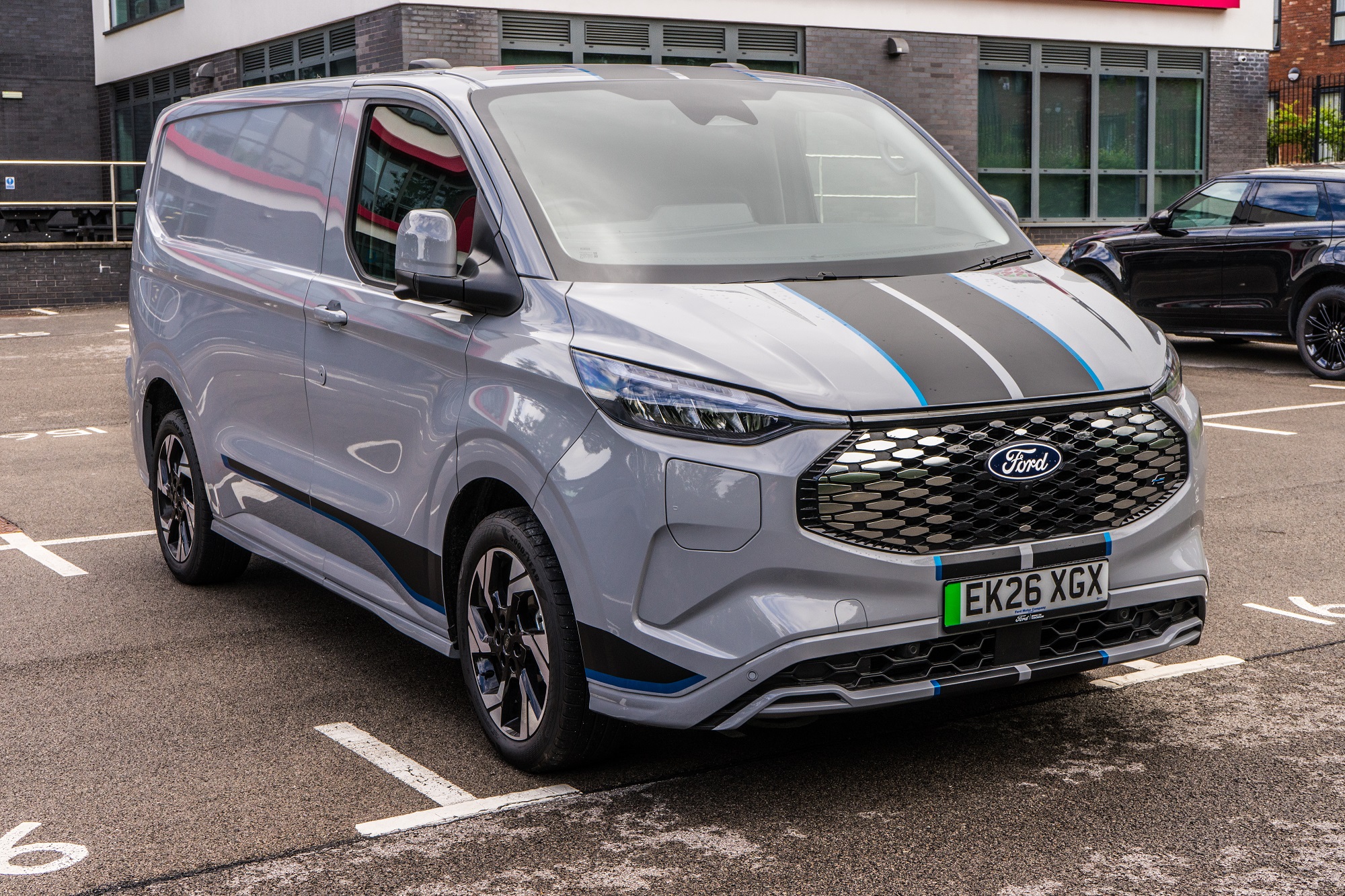
What the Ford brings to that fight is the strongest all-round package: a genuinely car-like drive, the rear-drive agility and turning circle, that big-screen cabin, five-star safety, the Plug-in Van Grant and the reassurance of the biggest support network in the business. The Sport adds pace and presence on top. If your business hauls bulky loads all day you might want the larger L2 or the high-roof H2, and if you’re counting every pound a cheaper rival will tempt you, but for an all-round medium electric van that drives this well, the E-Transit Custom remains the one to beat.
The Verdict
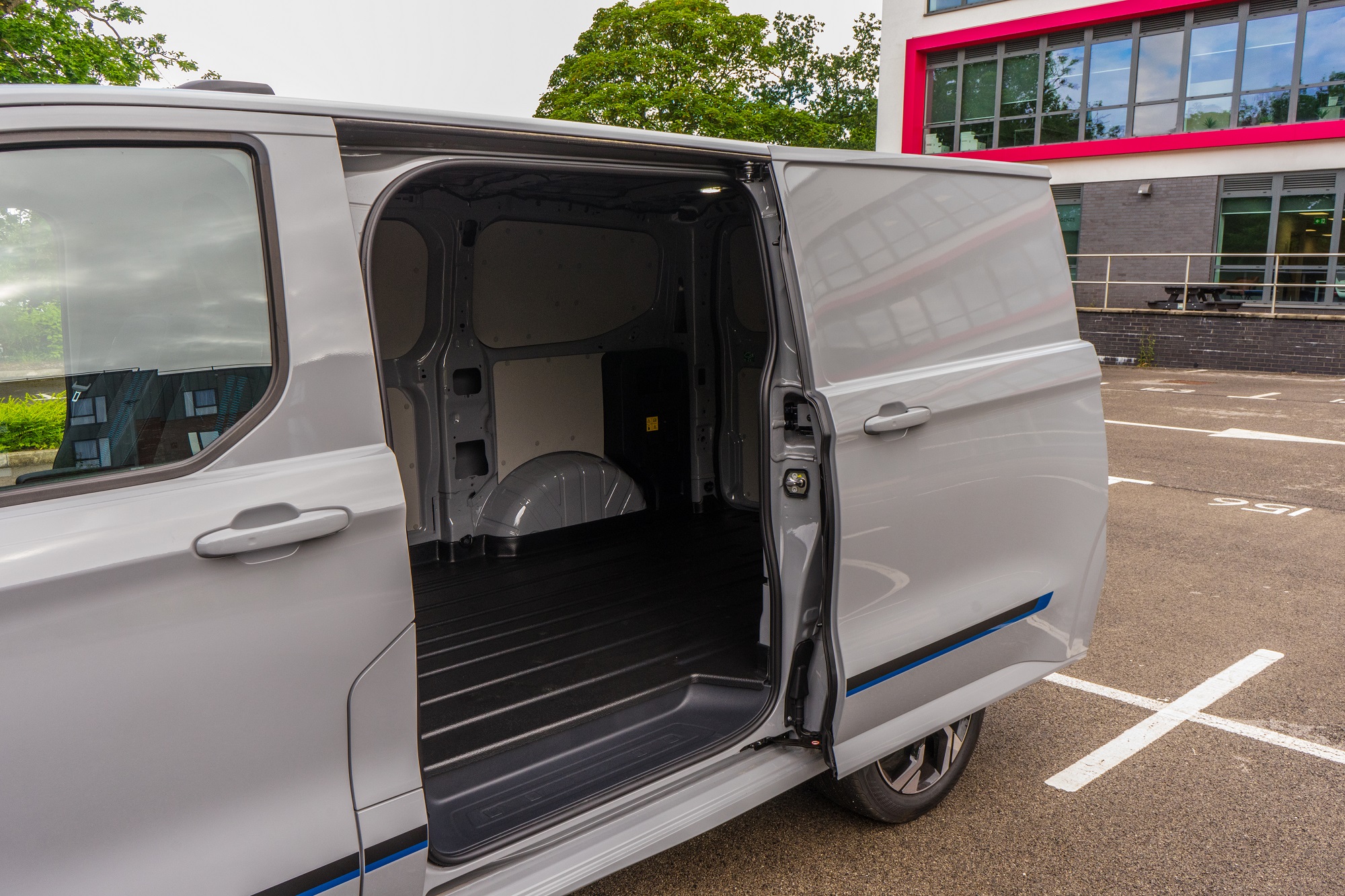
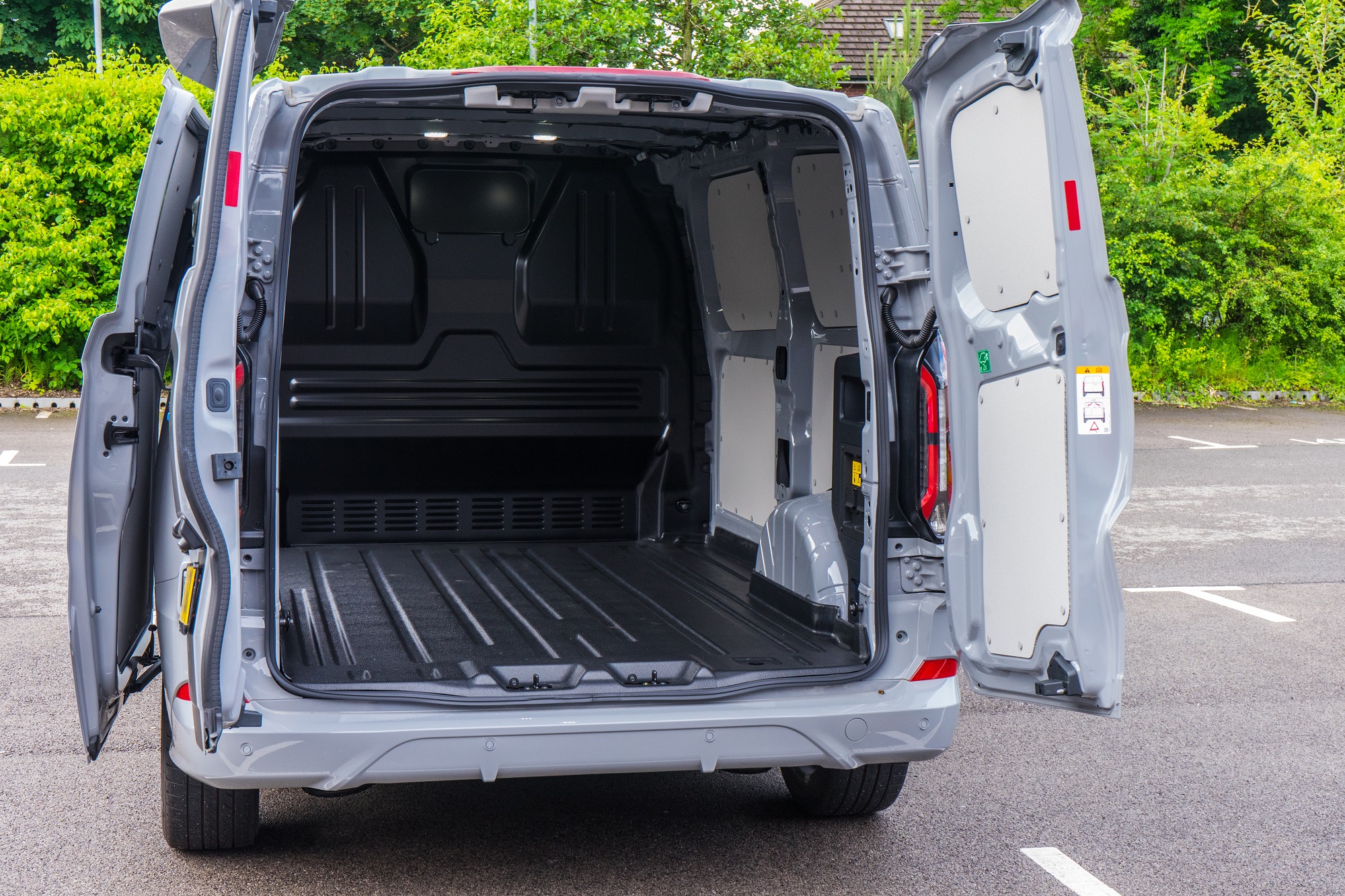
The Ford E-Transit Custom Sport does the single most important thing an electric van can do: it doesn’t drive like a van at all. It’s comfortable, it moves well, the turning circle is excellent, and every control falls exactly where your hand expects it. It doesn’t hector you with endless warning chimes, the touchscreen works a treat, and the load space is as generous and usable as ever — with the powered electric side door a genuinely nice touch on a working van.
It isn’t flawless. It’s expensive, especially in Sport trim, the range trails the rest of the range, and the brakes and some cabin plastics betray the odd rough edge. But weigh those niggles against what you drive away with, a refined, quick, five-star-safe electric van with a nil BiK charge, the £5,000 grant, the broadest dealer network in the country and a driving experience a diesel can’t match, and the balance tips firmly in Ford’s favour.
Yes, it’s pricey. But you get what you pay for, and what you get here is very nice indeed. If you run an urban fleet or a small business ready to go electric and you want a van that simply gets on with the job in comfort, the E-Transit Custom Sport should be high on your list. It loses a star only for the price and the slightly trimmed range — otherwise this is the medium electric van to beat.
Key Specifications — Ford E-Transit Custom Sport (320 L1 H1, 160kW)