
Van market grows 22% with record electric LCV registrations
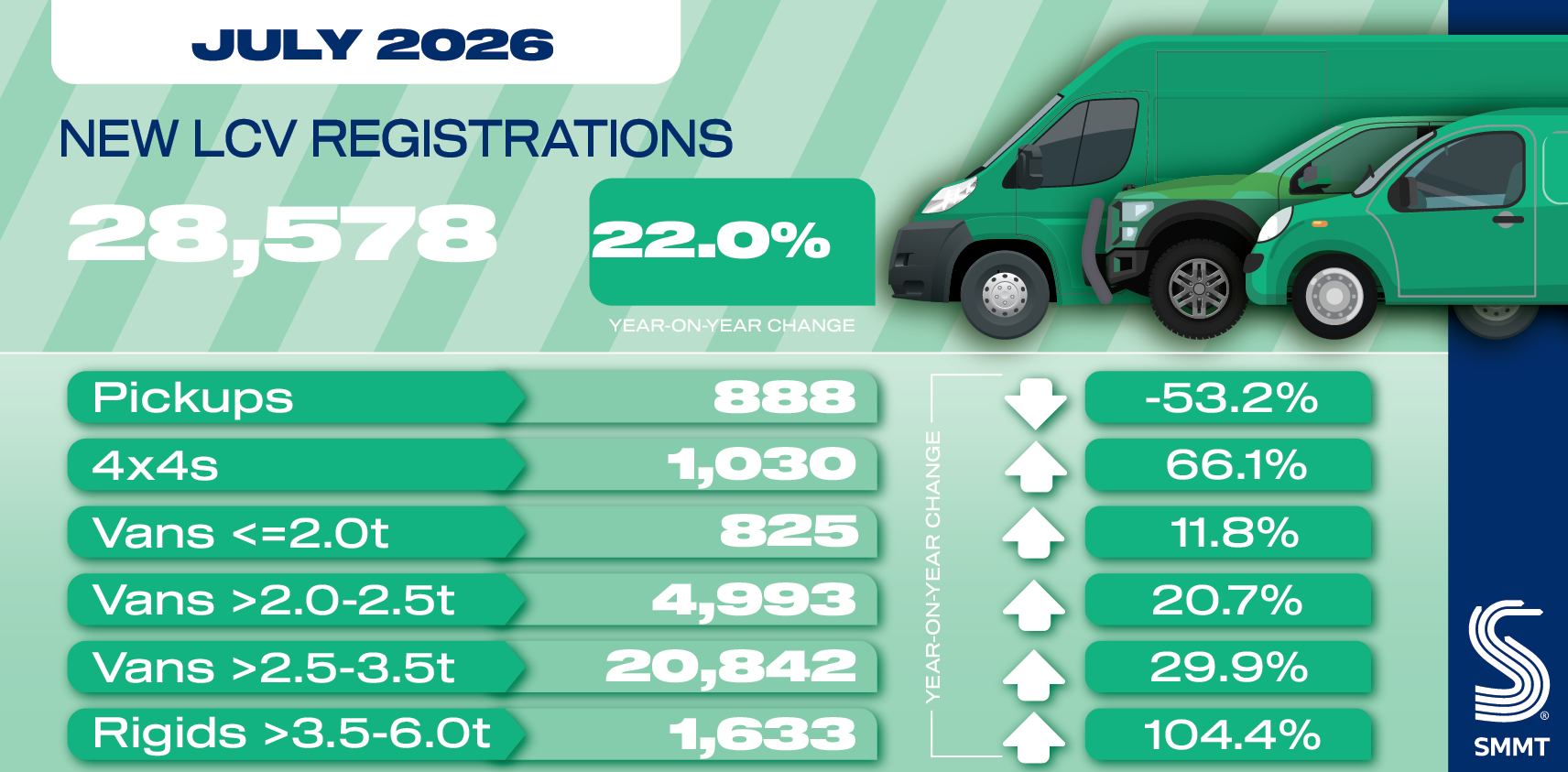
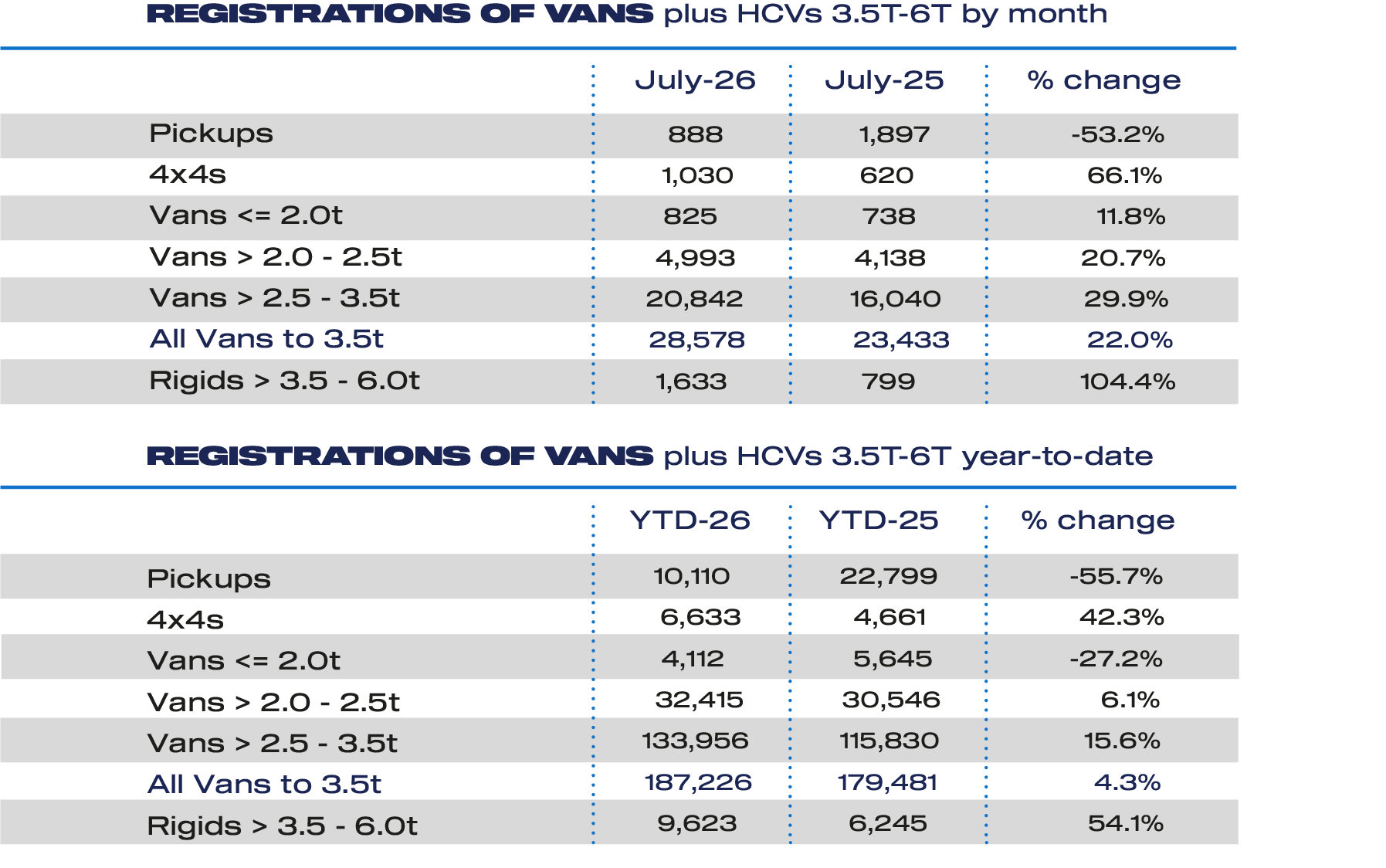
The new van market enjoyed another strong month in July, with registrations rising 22.0% year-on-year to 28,578 units, according to the latest figures from the Society of Motor Manufacturers and Traders (SMMT). The performance marks the fourth consecutive month of growth and takes registrations for the first seven months of 2026 to 187,226 units, an increase of 4.3% compared with the same period last year.
The latest figures underline continued resilience in the van sector despite ongoing economic pressures. However, the SMMT warns that while demand for battery electric vans continues to accelerate, regulatory reform and improved charging infrastructure are essential if the market is to meet the government’s ambitious zero-emission vehicle targets.
Large vans remained the backbone of the market, recording a 29.9% increase to 20,842 registrations. Medium-sized vans also performed strongly, rising 20.7% to 4,993 units. Demand for 4×4 commercial vehicles surged by 66.1% to 1,030 registrations, while the small van segment grew by 11.8% to 825 units.
 In contrast, pickup registrations continued their downward trajectory, falling for the tenth consecutive month. Just 888 pickups were registered during July, a decline of 53.2%, leaving the segment with only a 3.1% market share.
According to the SMMT, the decline continues to reflect the impact of the government’s decision to reclassify double cab pickups for Benefit in Kind (BiK) taxation and capital allowance purposes. The organisation argues that reversing the measure would encourage fleet renewal and support businesses that depend on these vehicles across construction, agriculture and other key sectors.
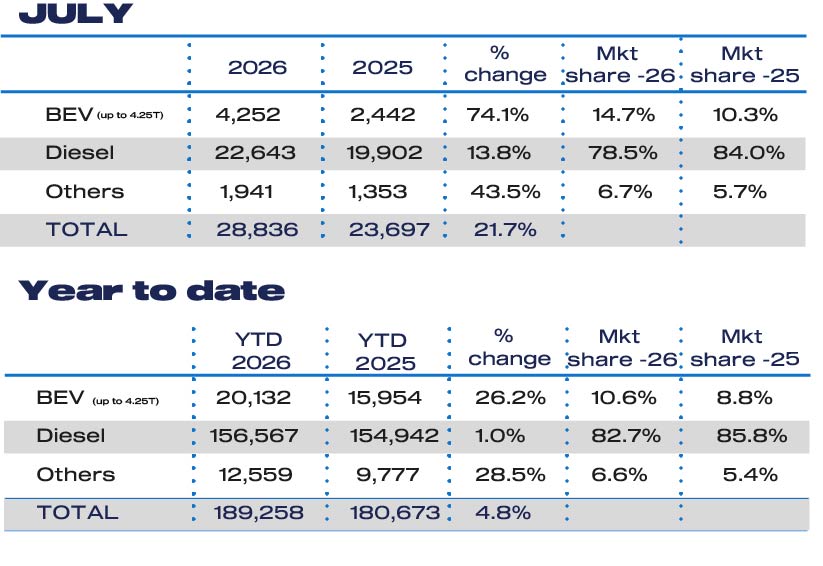
 Battery electric vans were once again the standout performers. Registrations increased by 74.1% compared with July 2025, delivering the strongest monthly growth since August last year and achieving a record market share of 14.7%.
Year to date, battery electric vans now account for 10.6% of all new LCV registrations, marking the first time the segment has reached double-digit market share. While this represents significant progress, it remains well below the 24% market share required under the UK’s Zero Emission Vehicle (ZEV) Mandate for 2026.
The SMMT’s latest market outlook has been revised upwards, although it expects overall van market growth to moderate during the remainder of the year. Total LCV registrations are forecast to reach around 316,000 units in 2026, representing growth of just 0.2% compared with 2025.
Electric van adoption is expected to continue increasing faster than the wider market, with battery electric vehicles projected to account for 11.5% of registrations in 2026 before rising to 15.9% in 2027. Even so, the organisation believes the market will remain around two years behind the ambitions set out in the current ZEV Mandate.
The industry says several barriers continue to slow the transition to zero-emission commercial vehicles. Higher upfront purchase prices remain a significant challenge for many operators, while concerns over the availability of reliable public charging infrastructure and wider operational pressures continue to influence fleet purchasing decisions.
The SMMT is therefore calling on the government to reform the ZEV Mandate to better reflect current market conditions and to introduce measures that stimulate investment in charging infrastructure and commercial vehicle decarbonisation.
Mike Hawes, SMMT Chief Executive, said: “Continued van market growth shows operator resilience and sustained sector investment, while record battery electric van uptake is encouraging, proving businesses will switch if business conditions are right. However, multiple barriers are constraining the market – high capital expenditure costs, infrastructure challenges and, for pick-ups, fiscal disincentives. Rapid revisions to regulation and taxation are required urgently to spur the commercial vehicle fleet renewal essential to the achievement of net zero.”
Despite the positive momentum seen in recent months, the latest figures suggest the UK’s commercial vehicle market remains at a critical point. Strong demand for electric vans demonstrates growing confidence in zero-emission technology, but industry leaders argue that greater policy certainty, improved charging infrastructure and targeted fiscal incentives will be needed if fleet operators are to accelerate the transition and meet the UK’s net zero ambitions.