
Mercedes-Benz eVito Select Review: The refined choice
Watch the review — click here (opens YouTube in a new tab)
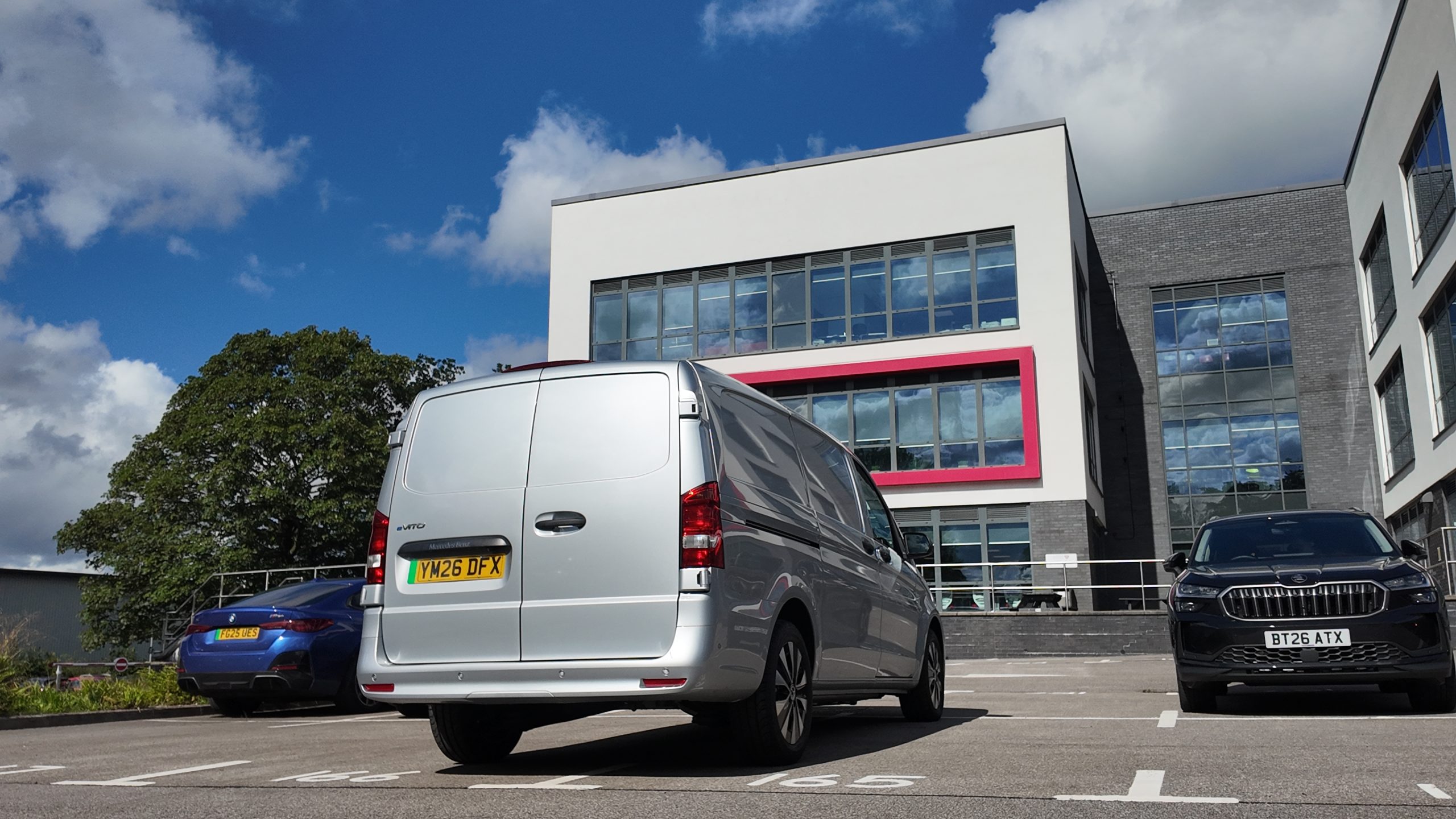
A week with the Mercedes-Benz eVito Select, The refined choice in the medium electric van segment, reviewed by Ian Campbell.
First Impressions
Following last month’s cheap-and-cheerful Farizon V7E, this month I got the keys to the polar opposite: the updated Mercedes-Benz eVito Select. Same segment, same broad shape, wildly different feel and, as I’ll come to, wildly different price tag. This is Mercedes’s medium electric van refreshed for 2026 with a bigger 66kWh battery, a revised cabin lifted from the latest diesel Vito, and a range that’s finally usable for the sort of duty cycles fleet managers plan around.
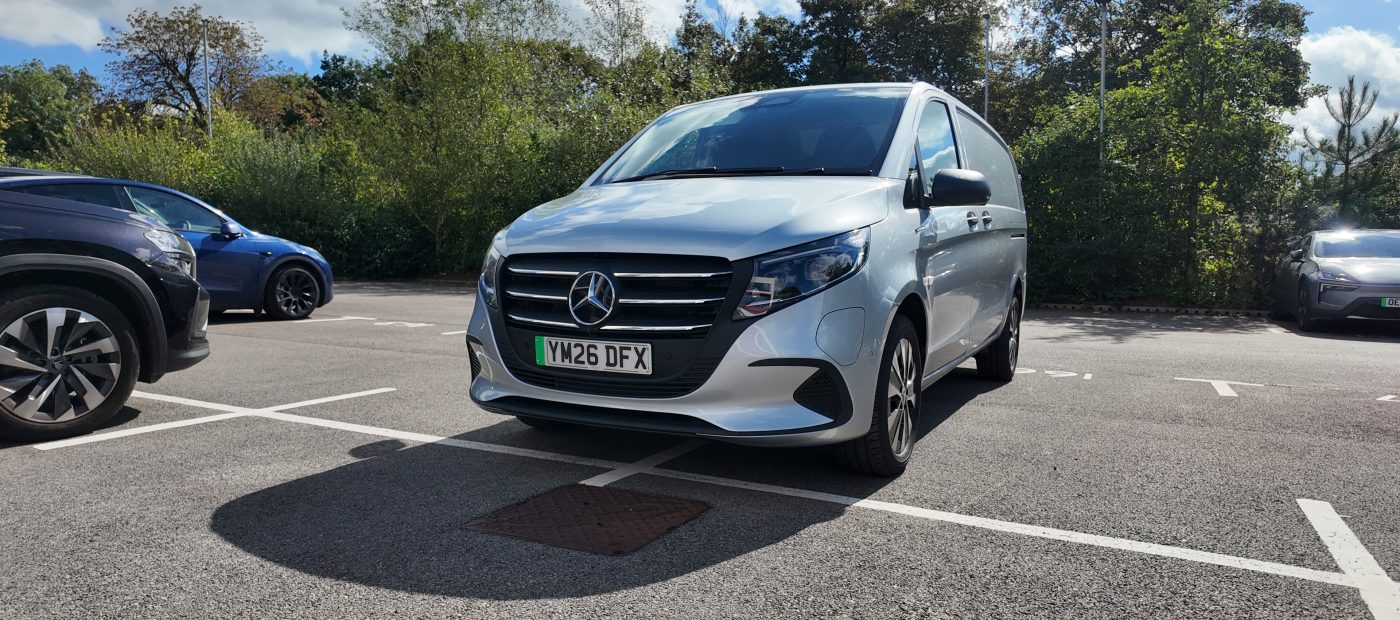
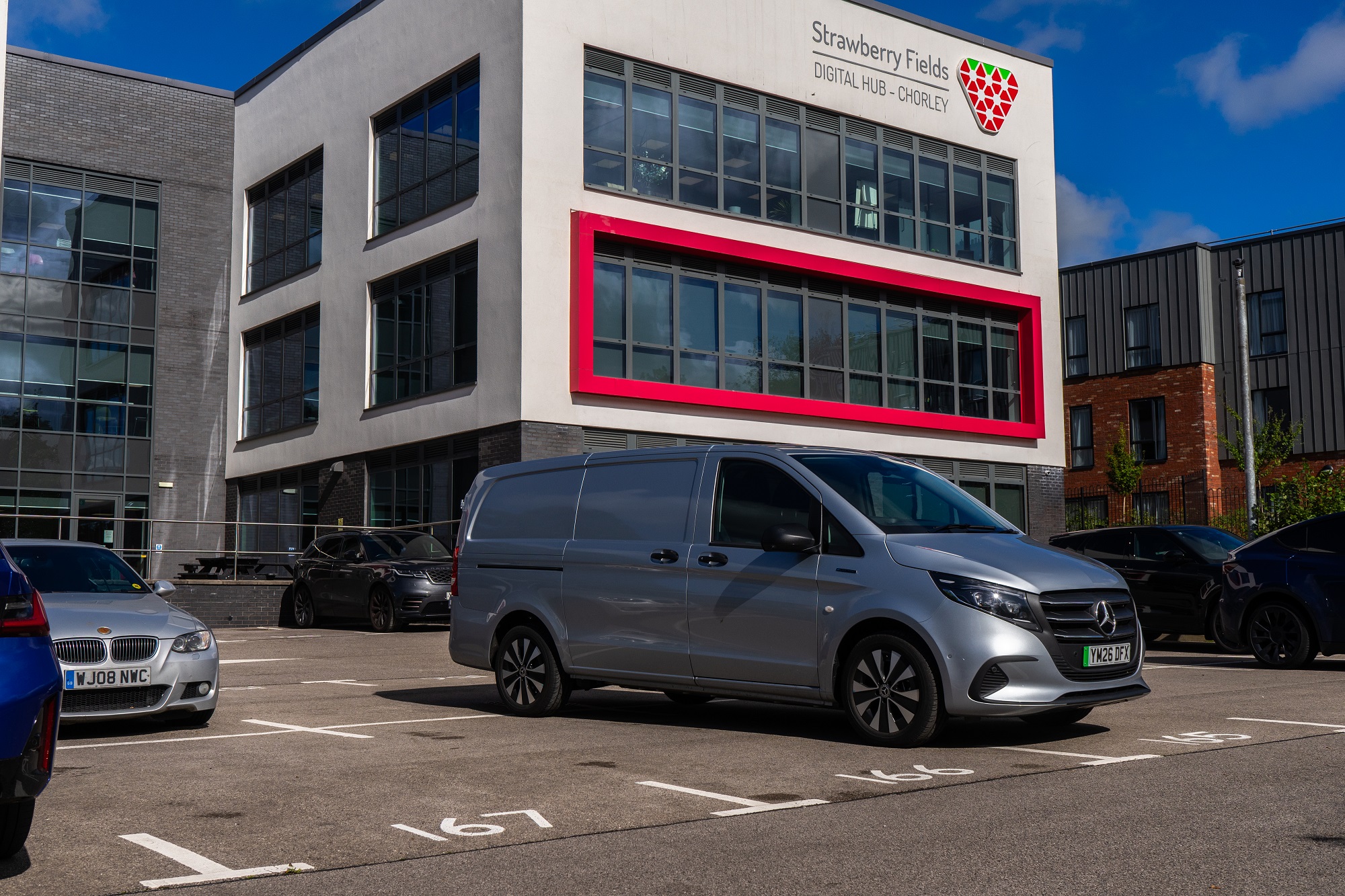
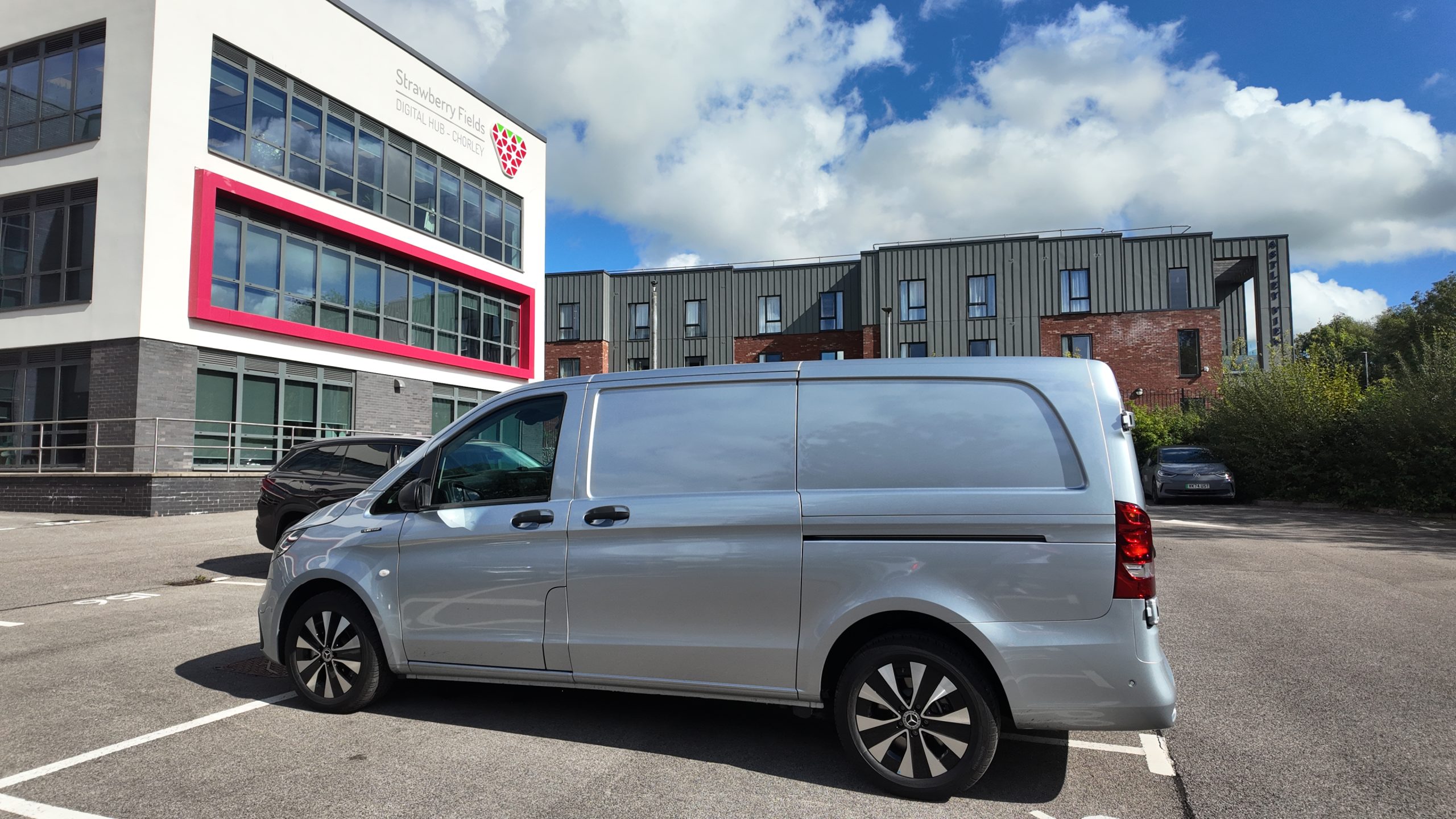
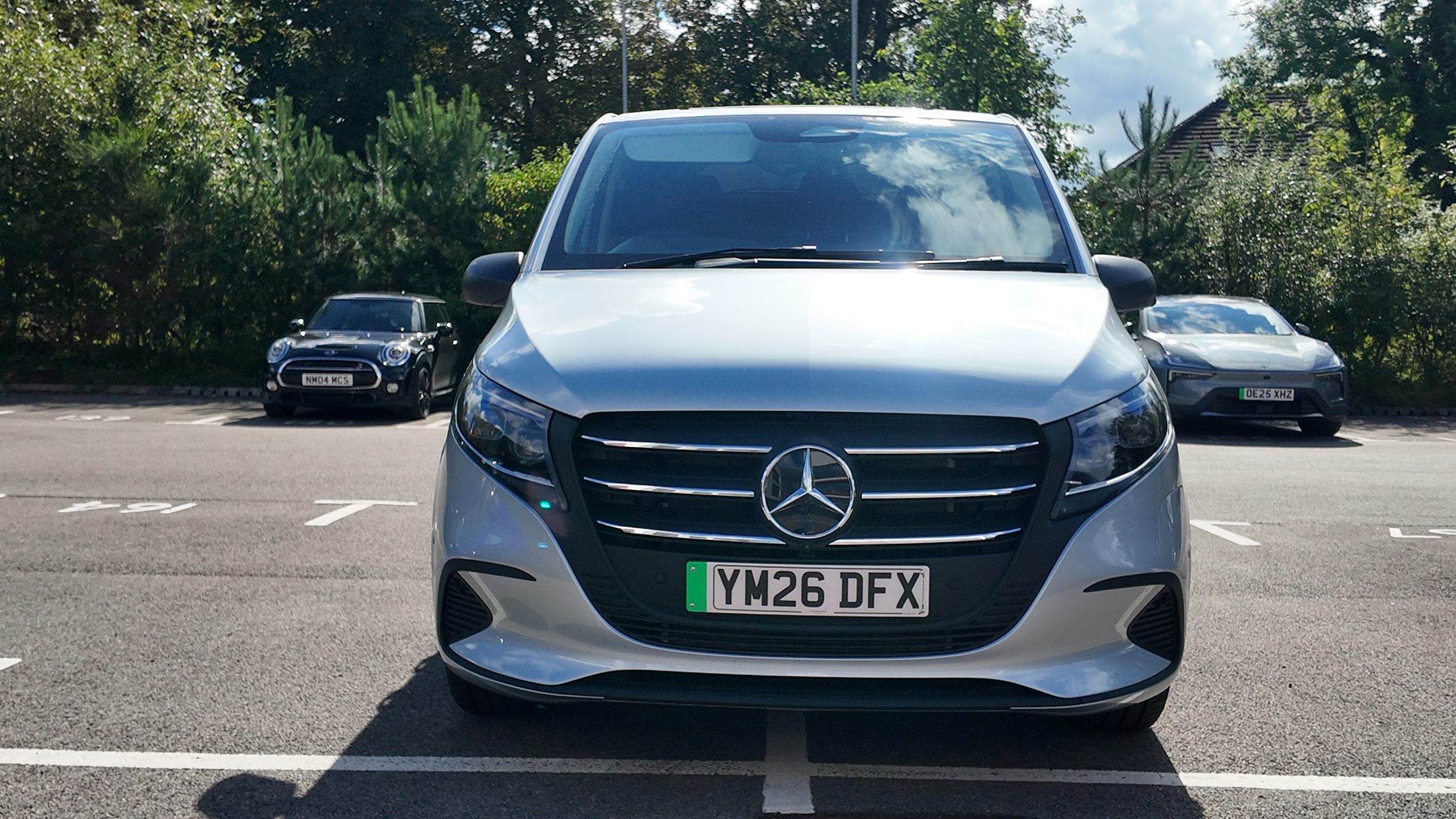
First look, and this is a good-looking van. The eVito has sleek exterior lines that lift it well above the boxy competition, particularly on the Select trim I tested with its chrome grille, painted bumpers and 17-inch alloy wheels. Climb inside and you’re immediately in a Mercedes; comfortable, higher-quality cabin, professional-feeling steering wheel, materials and switchgear that feel a proper class above the mainstream. You can tell it’s a Mercedes from the moment you close the door.
But here’s the sting: my Select L2 test car lists at around £53,000 excluding VAT. Almost double what the Farizon costs. That is a proper premium to swallow, and it means the eVito has to earn that money back on refinement, aftersales, driver retention and residual values. Fleet story is very different from the Farizon’s, but it’s a genuine story worth reading.
Design and Cab
The eVito shares its bodywork with the diesel Vito, which is no bad thing, it’s an honestly handsome medium van, not the boxy urban tool the Farizon and the Ford E-Transit Custom present as. On Select trim you get 17-inch alloys instead of steel wheels with covers, colour-coded bumpers, a chrome grille and electrically folding door mirrors, all of which lift the eVito from workhorse to something a driver would genuinely enjoy parking on the drive.
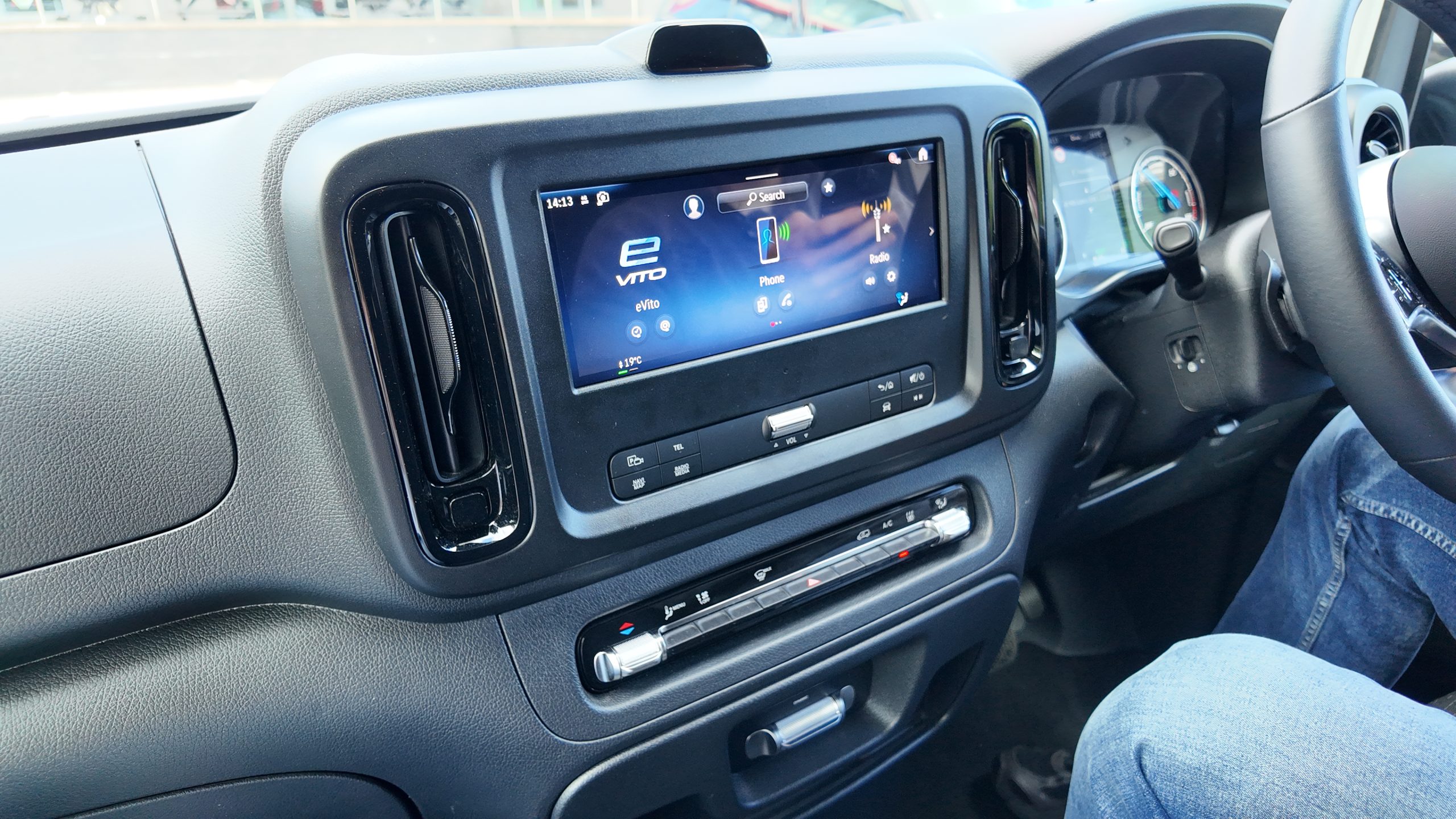
The dashboard has been substantially updated versus previous eVitos. There’s now a 10.25-inch MBUX central touchscreen paired with a 5.5-inch digital driver display, and the whole layout has been lifted from the latest diesel Vito. It’s clean, modern, and immediately familiar if you’ve driven any recent Mercedes commercial vehicle. Materials are, as I mentioned, a step above the segment norm; not luxurious in a passenger-car sense, but noticeably better than the Farizon’s or a Ford E-Transit Custom’s cabin. It looks and feels like a Mercedes.
The driver’s seat is one of the eVito’s highlight features. Genuinely comfortable, well-bolstered, plenty of adjustment (with power lumbar on the Select) and proper armrests on both sides. It’s a really nice place to be for eight hours a day, and a step above what the mainstream competition offers. If your business puts drivers behind the wheel of a van for extended shifts, this is exactly the sort of detail that pays back through reduced fatigue and improved retention.
The Missing Vanity Mirror
One niggle that surprised me on a van costing north of £50,000: no mirror on the passenger sun visor. That’s a genuine oversight. Even ten-a-penny superminis fit vanity mirrors these days, and for a driver checking themselves before meeting a customer, arriving at a site, or just having a quick tidy after lunch, it’s a functional daily-use item. Feels like a cheap loss on an otherwise premium package. I wouldn’t mention it if the eVito was a £25k tool van; on a Select trim priced against the Ford Transit Custom Sport, it stands out.
Infotainment and Physical Controls
The MBUX system on the 10.25-inch central touchscreen is one of the sharpest infotainment systems in the medium van segment. Graphics are crisp, the layout is logical for the most part, wireless Apple CarPlay and Android Auto are standard and connected reliably every single time I got in during my test week. That reliability is a proper contrast with some newer entrants I’ve tested recently; the Mercedes system does exactly what you expect, every time. CarPlay pretty much lives on the main screen and makes the whole thing very easy to use.
The head-up display fitted to my test van was another highlight. Speed, drive mode and key navigation cues projected onto the windscreen right in the eyeline, it’s the sort of feature that seems like a luxury nicety until you’ve had a week with it and then miss it in every other vehicle. For a working driver eating up motorway miles, keeping the eyes on the road matters, and the head-up display genuinely helps.
Another lovely detail: the range display is presented as a simple, familiar fuel-gauge-style indicator on the main dash rather than the overpowering wall of kWh, percentage and consumption graphs some EVs throw at you. It’s easy to read at a glance, easy to understand for a driver making the transition from diesel, and refreshing in a segment where designers seem determined to overcomplicate simple information. Little things, done right.
One frustration I have to flag though, and this one caught me out repeatedly during my week: the touch-sensitive haptic pads on the steering wheel. Where you’d expect physical buttons for cruise control, media and menu functions, Mercedes has fitted flush pads that respond to a light finger touch. The problem is your hand rests naturally near these while driving, and I kept triggering things by accident — skipping music tracks, cycling through driver display menus, adjusting cruise control speed. Physical buttons, please Mercedes. Not everything needs to feel like an iPhone.
On the Road
Here’s where the eVito shows both its best and least impressive sides. All versions get the same 114bhp front-mounted electric motor with 300Nm of torque, feeding through a single-speed transmission to the front wheels. On paper that’s decent, in practice, this is not a nippy van. It gets off the mark cleanly enough thanks to the instant electric torque, but acceleration tails off quickly as speeds build, and joining faster-moving motorway traffic requires a bit of forward planning. Top speed is limited to 75mph, which is more than enough for UK legal purposes but does mean overtakes need to be picked with care. ‘Slow and steady, but capable’ is the phrase I kept coming back to, and I found myself flipping into the sportiest of the Dynamic Select drive modes almost every trip just to inject a bit more life into the throttle response.
Where the eVito properly earns its Mercedes badge is refinement. The ride is genuinely comfortable, softly tuned suspension, minimal body movement, well-controlled over broken tarmac and speed bumps alike. It’s a marked step above the Farizon V7E’s slightly jittery unladen ride. On a longer trip the eVito is a really relaxing vehicle to spend time in. Wind noise is well suppressed, road noise is muted, and the electric drivetrain’s inherent smoothness means you arrive at your destination genuinely fresher than you would in a diesel equivalent.
And here is where I have to give real credit: the driver assistance systems. I’ve been consistently negative about ADAS calibration across every recent vehicle I’ve tested this year (looking at you, Farizon and EX2), but the Mercedes system is in a properly different class. The lane-keeping assist is smooth and confidence-inspiring rather than intrusive, the adaptive cruise holds distance sensibly and the whole package essentially drives itself down a motorway with genuine competence. On my longer test journeys the eVito almost handled the motoring for me. This is what modern ADAS is supposed to feel like; helping you drive rather than fighting you. It makes long journeys measurably easier, and for a working driver doing sixty thousand miles a year, that’s a real welfare benefit.
One more welcome detail: the various safety alerts are easily switched off when you don’t need them, via clearly-placed controls rather than four levels deep in a touchscreen. If you’re driving a rural route where the speed-limit alerts fire on every hedge, or the lane keep chimes on rural bends, you can silence them quickly and get on with your job. This alone is a significant improvement over most of the medium vans I’ve tested this year, and Mercedes deserves proper credit for it.
Battery, Range and Charging
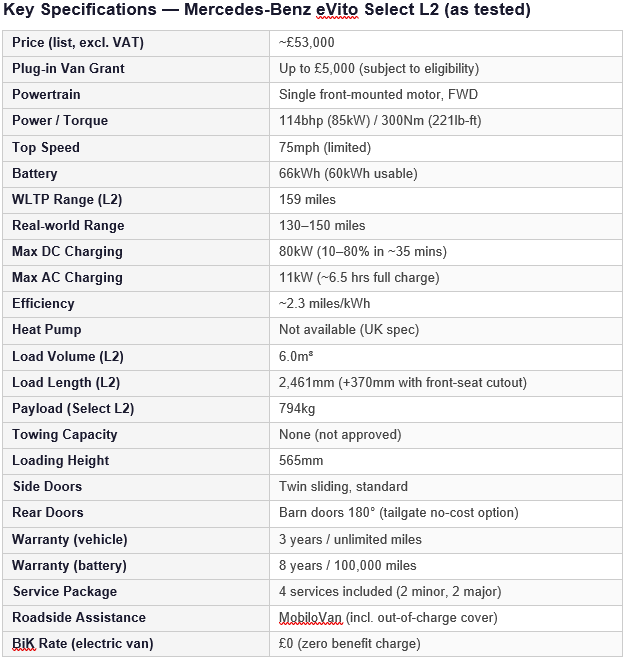
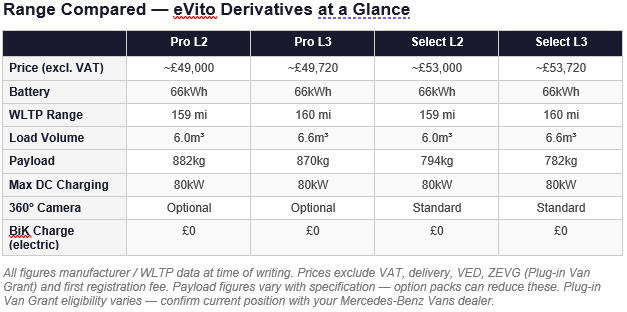
The updated eVito’s 66kWh battery (60kWh usable) delivers an official WLTP range of 159 miles in L2 form (160 in L3). Real-world usable range in my testing landed around 130–150 miles depending on conditions and load, which is honest but not exceptional — and I’d expect that to drop closer to 130 miles in genuinely cold winter conditions. That’s enough for a comfortable urban working day and most regional routes, but the eVito falls materially behind newer rivals: the Ford E-Transit Custom claims 204 miles, the Farizon V7E 204 miles combined (295 city cycle), and the Vauxhall Vivaro Electric 231 miles. For a fleet operator planning long-distance routes or minimising charging stops, that gap matters.
Charging is respectable but not class-leading. AC charging at 11kW gives you a full charge in around 6.5 hours, fine for overnight depot use. DC rapid charging peaks at 80kW, meaning a 10–80% top-up takes about 35 minutes. That’s adequate for a driver taking a break mid-shift but slower than newcomers now hitting 100kW+ at similar cost. Charge little and often at the depot, and the eVito works well; try to use it for a long day with public charge stops, and the range and charge speed together become a genuine planning constraint.
There’s no heat pump available in the UK spec, which will hit real-world winter range harder than it needs to. It’s a surprising omission for a premium-priced offering.
Load Space and Payload
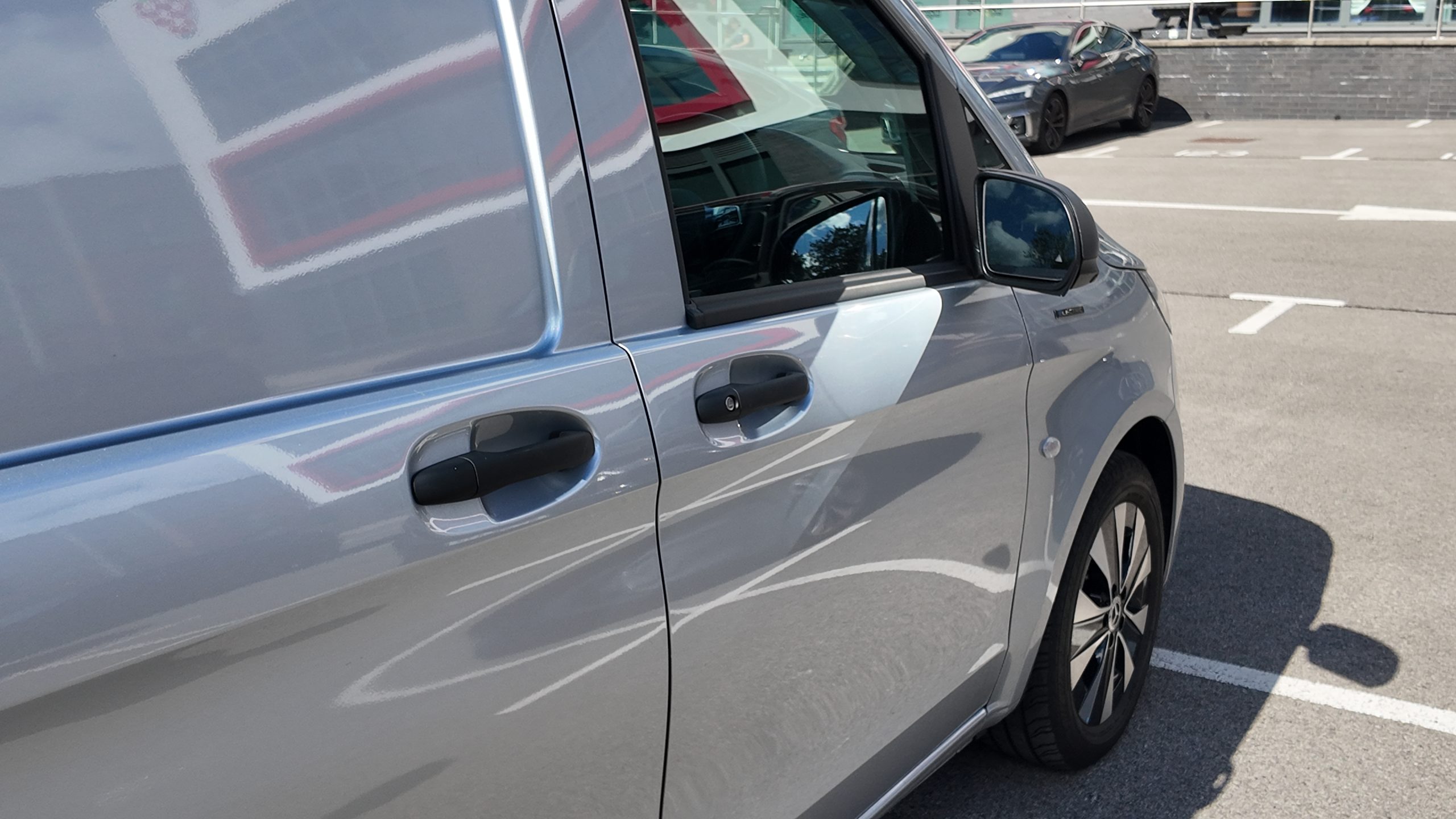
Access to the load area is genuinely excellent. Twin sliding side doors are standard, not a cost option, and both open wide enough for kerbside loading from either side of a busy street. The rear barn doors open to 180 degrees (a top-hinged tailgate is a no-cost swap if you prefer), and the loading height sits at a relatively low 565mm. All of that adds up to a van that’s properly quick and easy to get in and out of, whether you’re handling parcels, tools or the sort of awkward long items where the front-seat cutout adds a useful extra 370mm of load length.
Load volume is honest at 6.0m³ in L2 and 6.6m³ in L3, fine but not class-leading. The Farizon V7E manages 6.95m³ for considerably less money. Where the eVito falls behind more materially is payload: 794kg on the Select trim is well below the class leaders. The Farizon carries 1,208kg, the Ford E-Transit Custom over 1,000kg. If your operation regularly runs full-payload work, this is a genuine consideration that could push the eVito off your shortlist.
One more thing worth flagging: the eVito is not approved to tow any type of trailer. Zero towing capacity. For trade fleets who regularly hitch up a plant trailer or a car transporter, that alone rules it out.
Safety and Warranty
Standard active safety equipment is extensive, as you’d hope for the money: Active Brake Assist with pedestrian detection, Attention Assist for fatigue monitoring, Crosswind Assist, adaptive cruise with speed limiter function, and the acoustic pedestrian warning at low speeds. The Select trim adds a 360-degree camera system that makes tight urban manoeuvres genuinely straightforward. As I said in the driving section, the calibration of these systems is amongst the best in the segment, they help rather than nag.
The warranty package is where the eVito is more middle-of-the-road for its price point. Mercedes gives you three years of unlimited-mileage vehicle warranty and an eight-year, 100,000-mile battery capacity guarantee. That’s decent, but it’s beaten by Farizon’s five-year package on the V7E, Kia’s seven-year package on the PV5 Cargo, and Toyota’s ten-year offering (subject to franchised servicing). Mercedes counters with two things worth flagging: the Integrated Service Package includes four services (two minor, two major) as standard, materially reducing servicing costs over a four-year fleet cycle, and MobiloVan roadside assistance is included with dedicated electric-vehicle out-of-charge recovery. For a fleet operator, those are genuine value-adds.
The Mercedes-Benz UK dealer network is one of the deepest and most established in the country. No fleet manager is going to worry about the availability of service and parts. That’s a proper strength versus newer-entrant rivals still building their network.
The Fleet Case
As with all electric vans, the eVito benefits from a strong stack of UK fleet tax advantages that partially offset its higher purchase price:
- Plug-in Van Grant (Zero Emission Van Grant) applies at up to £5,000, subject to eligibility
- Zero Benefit-in-Kind charge for electric vans provided to employees for private use — £0 in tax for a driver taking the van home
- Full VAT recovery for VAT-registered businesses on the purchase price
- Zero fuel benefit charge (no equivalent to the car fuel benefit)
- Class 1A NIC exemption for the van benefit • Zero congestion charge in London and ULEZ-compliant everywhere
- Full access to Clean Air Zones and zero-emission zones
So far, so much like every other electric van. But here’s where the eVito’s numbers get harder to square. On a typical four-year, 80,000-mile cycle at the Select L2’s ~£53,000 ex-VAT list price, you’re looking at a whole-life cost per mile that’s materially higher than a Ford E-Transit Custom or Farizon V7E doing the same duty cycle. Depreciation is the big variable. Mercedes has historically held its value well in the diesel van market, but the electric-van residual value market is still finding its feet, and eVito residuals have not been the strongest performers to date. Ask your leasing broker to run a comparison against the Ford E-Transit Custom and the Farizon V7E on the same term and mileage before signing anything. The numbers may or may not stack up depending on your specific duty cycle.
Where the eVito genuinely earns its money is in the softer fleet economics that don’t show up on a spreadsheet: driver comfort, refinement, dealer network, brand perception. If you’re a business where the vehicle a driver is putting time into materially affects retention (mobile engineers, high-touch service teams, executive drivers between locations), those are proper considerations. If you’re running a pure urban delivery operation where the vehicle is a tool, the maths favours the cheaper competition.
The Competition
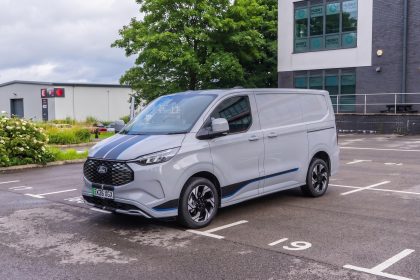
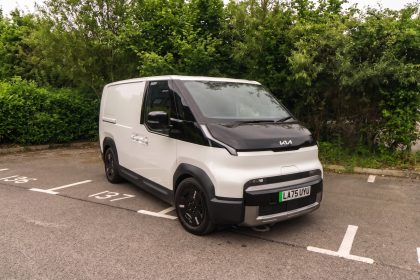
The medium electric van market is now properly contested. The Ford E-Transit Custom is the class benchmark and materially cheaper trim-for-trim with better range and payload; it’s the sensible fleet default in most cases. The Vauxhall Vivaro Electric (and its Stellantis siblings) offers even longer range at lower cost though with less cabin refinement. The Farizon V7E I reviewed last month is nearly half the price, with more load volume and more payload — though with the chime-fest ADAS and rougher edges I flagged. The Kia PV5 Cargo I reviewed a few months back is a strong urban-focused alternative with a longer warranty. The Volkswagen e-Transporter is arguably the closest cabin-quality rival to the eVito and its natural head-to-head. What the eVito uniquely offers is that particular blend of Mercedes refinement, dealer network reassurance and driver-facing quality that some fleets will value above the pound-note savings on offer elsewhere. Whether that’s the right call for your fleet is a question only your fleet manager can answer.
The Verdict
The Mercedes-Benz eVito Select is a genuinely refined and comfortable medium electric van that does the important quality stuff exceptionally well. The cabin is a nice place to be, the driver’s seat is a proper welcome to a long day’s work, the ADAS calibration is class-leading, the head-up display and simple fuel-gauge-style range indicator show how thoughtful design pays back in daily use, and Apple CarPlay and the alert switch-offs are both handled properly. For a fleet operator whose drivers are the priority, this is a van they will genuinely enjoy spending time in.
But it’s not without frustrations. It’s sluggish; not slow, but slow-and-steady where the segment now offers genuinely nippy alternatives. The haptic steering wheel pads are a real usability annoyance. The missing passenger vanity mirror is a small but symbolic cheap loss at this price point. Payload is off the pace, load volume is honest rather than class-leading, and towing capacity is zero. And the sticker price is a proper premium over the mainstream competition.
Four stars from me. Sluggish and expensive, but genuinely capable and very comfortable to spend a day in. For fleet operators where driver welfare and dealer reassurance are proper priorities, the eVito Select deserves shortlist consideration alongside the Ford E-Transit Custom and Volkswagen e-Transporter. For value-first operations focused on running cost per mile, the mainstream rivals and the Farizon V7E will make the cash case more convincingly. Choose according to what actually matters for your operation, and either way, the segment is now delivering the choice.