
Farizon V7E Review: A £28k cheap-and-cheerful fleet bargain
Watch the review — click here (opens YouTube in a new tab)
A week with the Farizon V7E, Farizon’s urban and city electric van, reviewed by Ian Campbell.
First Impressions
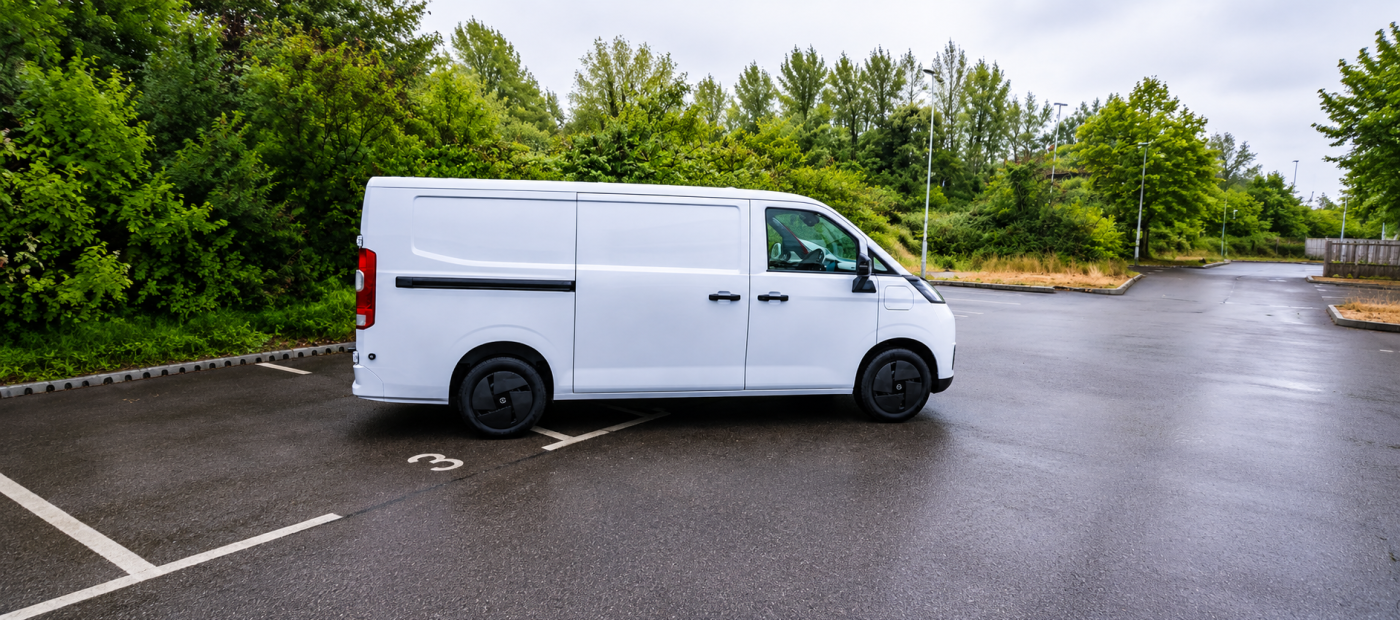
This month, for a change of pace, I stepped out of a car and into a van. The Farizon V7E is the newest arrival to the UK’s medium-electric-van market, built by the commercial vehicle division of Geely, distributed here by Jameel Motors, and priced from a properly attention-grabbing £28,000 excluding VAT. It arrived at the office looking every bit the part: five metres of upright white panel van, twin sliding doors on the sides, barn doors at the back, and a load bay big enough to swallow the sort of jobs that make up the daily bread of an urban delivery fleet.
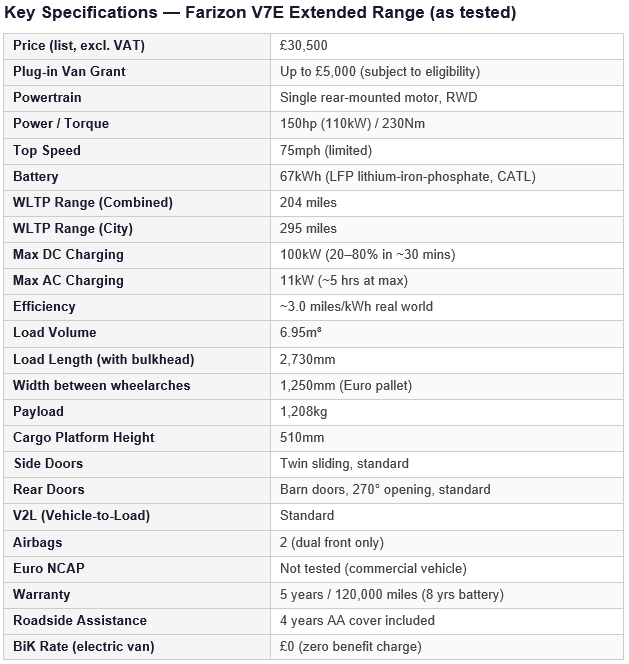
The best way I can describe the V7E is cheap and cheerful. There’s a lot to like on paper; a class-leading 6.95m³ load volume, over a tonne of payload capacity, a 204-mile WLTP combined range from the 67kWh battery I tested, and an equipment list that would embarrass some panel vans costing considerably more. There’s also plenty that got on my nerves during my week with it. The chimes, in particular. Oh, the chimes.
Here’s the fleet headline: for a business-user fleet operator, this van sits at the sharp end of the price sheet in its segment. Combined with zero Benefit-in-Kind on electric vans, the Plug-in Van Grant (Zero Emission Van Grant), full VAT recovery for VAT-registered businesses and the fuel savings against a diesel Transit Custom, the whole-life-cost story is genuinely compelling. But you’re going to need to accept some rough edges to enjoy it. Fair warning.
Design and Cab
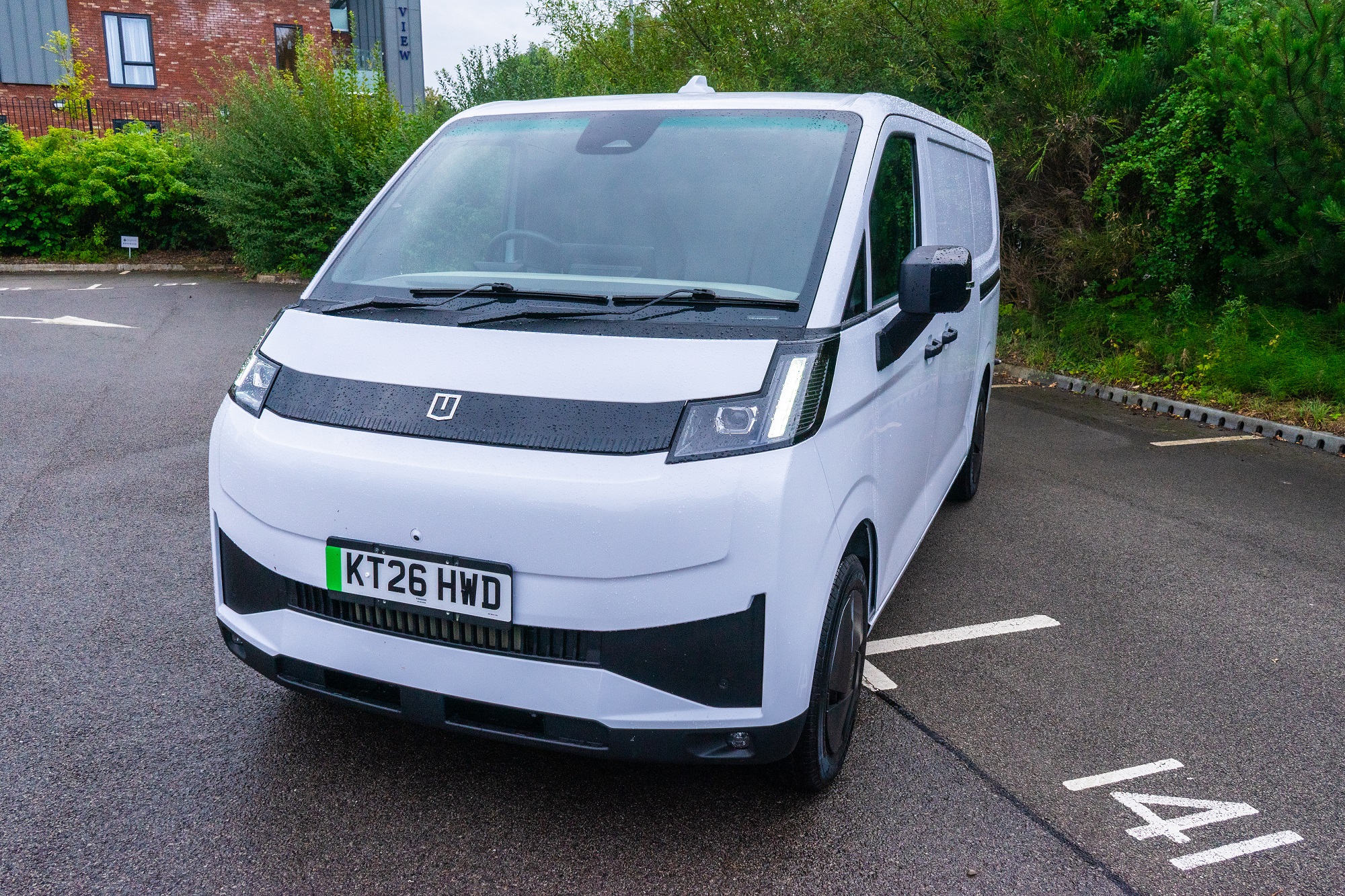
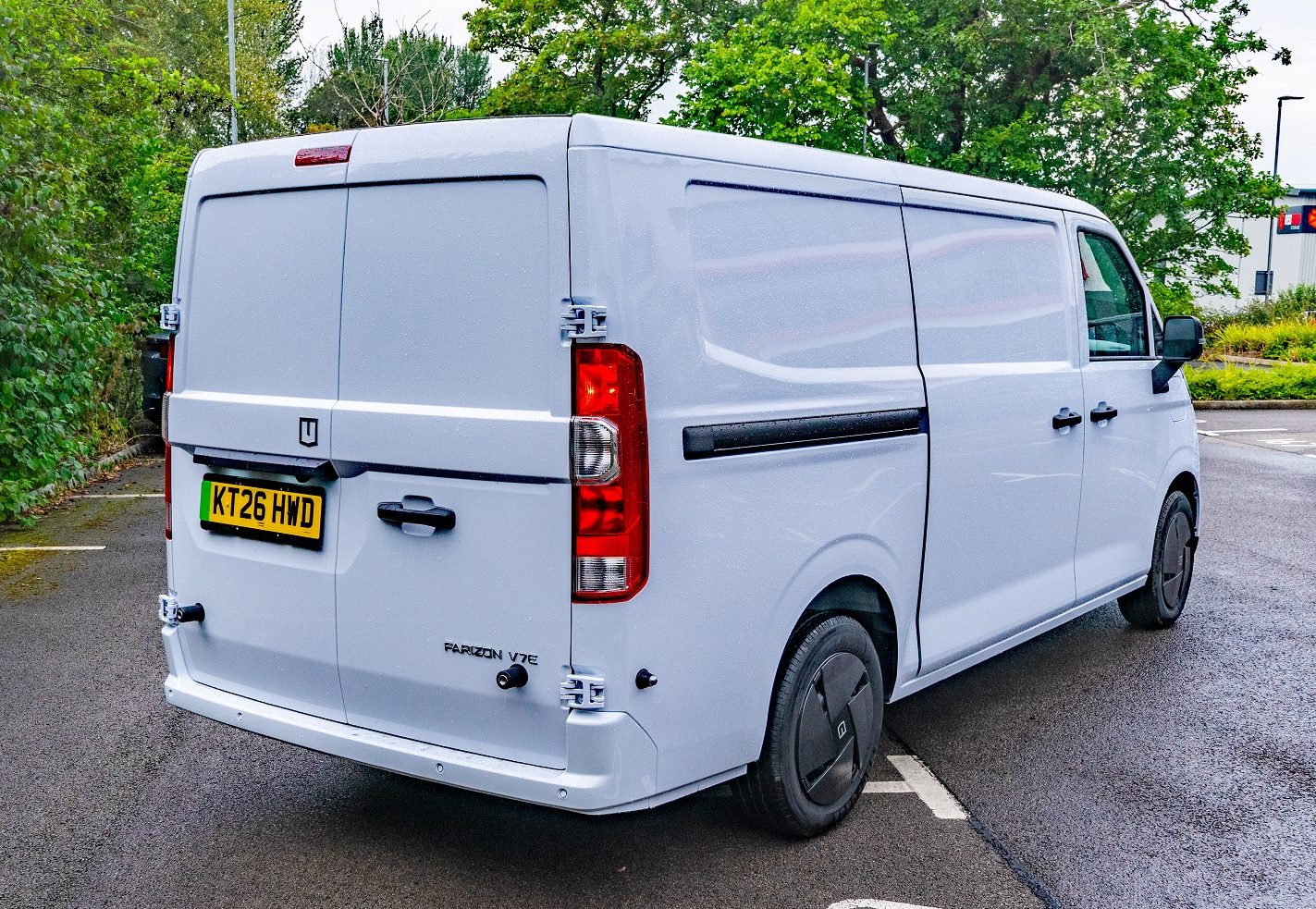
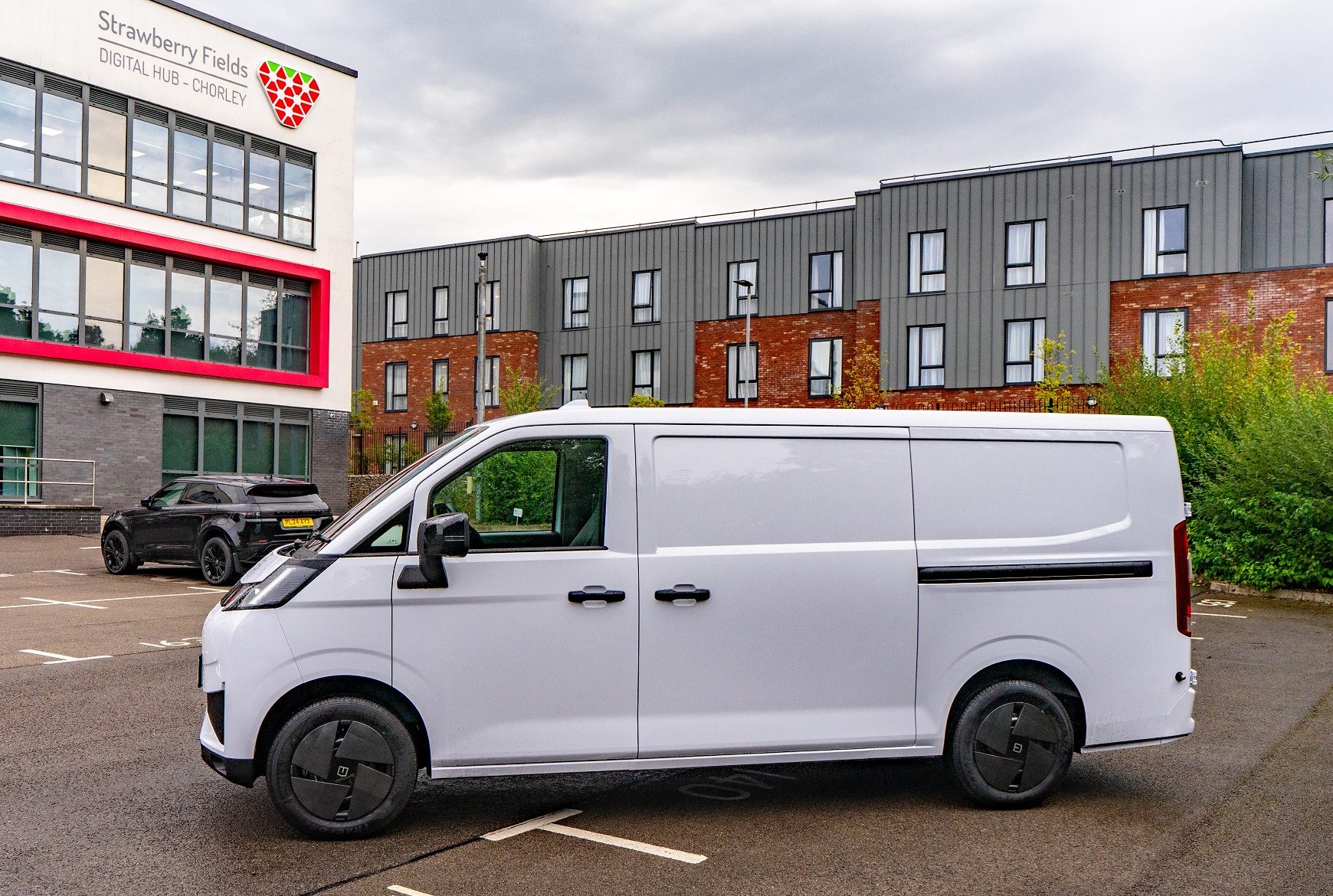
Visually the V7E is a functional, boxy medium panel van, close in dimensions and silhouette to the Ford Transit Custom and the imminent Foton, all three of which share very similar footprints. It’s upright, honest and dressed in modern LED lighting, and while nobody is buying this as a design statement, it doesn’t look cheap standing next to more established rivals. Three paint options are available (all white or off-white, this being a van), and there’s a single body size and a single trim level to keep fleet ordering simple.
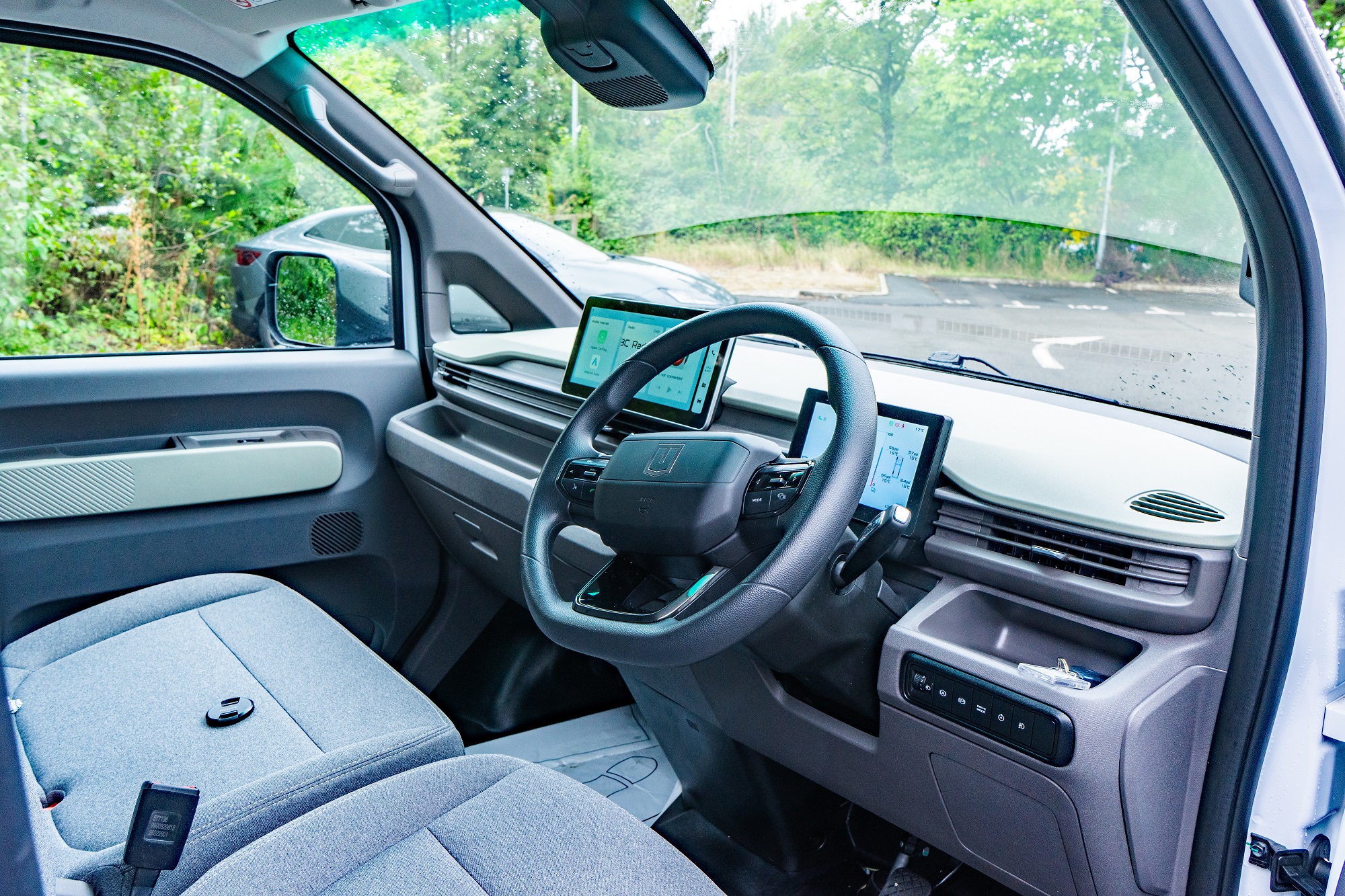
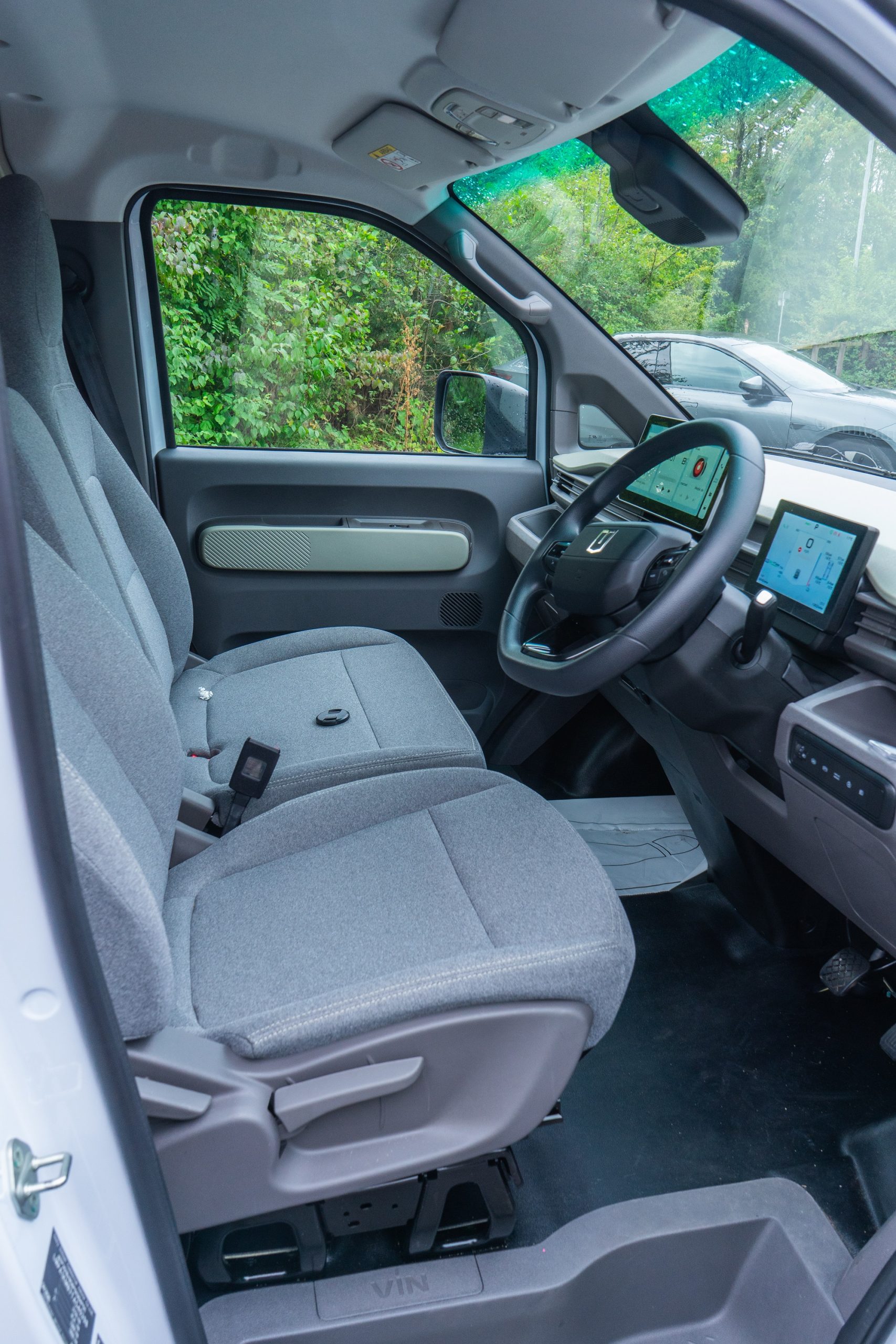
Climb into the cab and you’re greeted by a modern, well-laid-out driving environment. The 12.3-inch central touchscreen sits above a proper row of physical climate control buttons (a proper win for a work vehicle), there’s a 7-inch digital driver display in front of the steering wheel, and there are USB ports, a 12V outlet, a decent glovebox and open trays across the dashboard. Farizon has thought about storage more than most rivals. There are big door bins, a large glovebox and multiple cubbies for the paperwork and receipts that accumulate in any working van. Standard kit includes wireless Apple CarPlay and Android Auto, electric parking brake with auto hold, 360-degree camera, adaptive cruise control and heated steering wheel.
One curiosity worth flagging: the driver’s seat is heated and ventilated, but the passenger seat gets neither. I applaud the ventilation on the driver’s side, it’s a genuinely useful energy-saving feature, letting you cool your body without wasting battery cooling the whole cabin, but no heating? For a UK winter, in a work vehicle where a driver might be jumping in and out of a cold van a hundred times a day, that’s a real oversight.
And now for the seats themselves. Honest verdict: not the most comfortable. There’s decent support in the seat back, but the cushion feels a bit flat and firm, and by the end of a longer day I was shifting around trying to find a comfortable position. A working driver spending six or seven hours a day behind this wheel needs to try the seat for themselves before committing. This is not the sort of ergonomic cocoon a Transit Custom driver would be used to.
The Bench-That-Isn’t-a-Bench
This deserves its own paragraph because it’s such a peculiar design choice. From the driver’s seat, the front of the V7E looks like a proper three-seat bench arrangement, the sort of thing you’d find in most working vans. Look closer, though, and it’s actually a two-seat layout with a fold-down centre section acting as an armrest and cupholder storage. There’s no seat belt for a middle passenger, no headrest, and no legal way to carry a third person up front.
Farizon’s reasoning is understandable, turning the centre position into an armrest with cupholders creates a nicer, less compromised driving environment for the two people who are actually in there, but it’s a design decision with real fleet consequences. If your business regularly needs to transport three crew members to a job site, the V7E is off the shortlist. A dedicated three-crew van it is not.
The cupholders themselves are a proper little oddity too. Rather than sitting on top of the armrest where you can grab them at a glance, they’re tucked away inside the fold-down section. Fine when the armrest is down, invisible when it’s up. It’s a lot of design effort dedicated to something that could have been solved with a couple of cutouts on the dashboard. For a working driver who wants to grab a coffee at a service station stop without a fumble, it’s a small daily annoyance.
Infotainment and Controls
The 12.3-inch central touchscreen is generously sized and clearly presented, running wireless Apple CarPlay and Android Auto that worked reliably during my test week. The physical climate control buttons below the screen are exactly the right call for a work vehicle; you’re not diving into menus to change the temperature on a hot day.
That said, the operating system does feel a step behind the best in class. Menus are sometimes a bit sluggish to respond, some functions are buried deeper than they need to be, and the layout has a slight generic-Chinese-EV feel rather than the polish of, say, the recently tested Kia PV5’s system. None of this is a deal-breaker but it’s an area Farizon could sharpen up with an over-the-air update. The 360-degree parking camera on the other hand is genuinely excellent; sharp, multiple viewing angles, and properly useful for placing a five-metre van in tight loading docks.
On the Road
Every V7E gets the same 150hp, 230Nm electric motor driving the rear wheels through a single-speed gearbox. Top speed is limited to 75mph. Around town it’s properly nippy off the mark, and the instant electric torque means there’s no delay when you need to pull out into a gap or up a hill. On the motorway it cruises without complaint at legal speeds, and the electric drivetrain’s inherent smoothness makes a long day behind the wheel less fatiguing than a diesel equivalent.
Handling is better than the boxy dimensions suggest. The compact overall footprint, tight turning circle, and good forward visibility make the Farizon V7E easy to place in urban traffic, and the steering weight (adjustable between Comfort and Sport) is well-judged for the job. The high driving position gives you a commanding view of the road that most car drivers will find refreshing.
Ride quality is more of a mixed picture. Unladen, which is how I spent most of my test week, the V7E feels harsh over low-speed bumps and rougher urban surfaces. There’s a noticeable jitter through the suspension over drain covers and expansion joints that reminded me of van drives from a decade ago. Add some payload to the back axle and it settles down considerably, the extra weight compresses the springs and everything smooths out, so if your drivers are typically running with a full load, this will feel less of an issue. But if they’re doing a lot of return trips empty, it’s something to test drive for yourselves before ordering.
Load Space and Payload
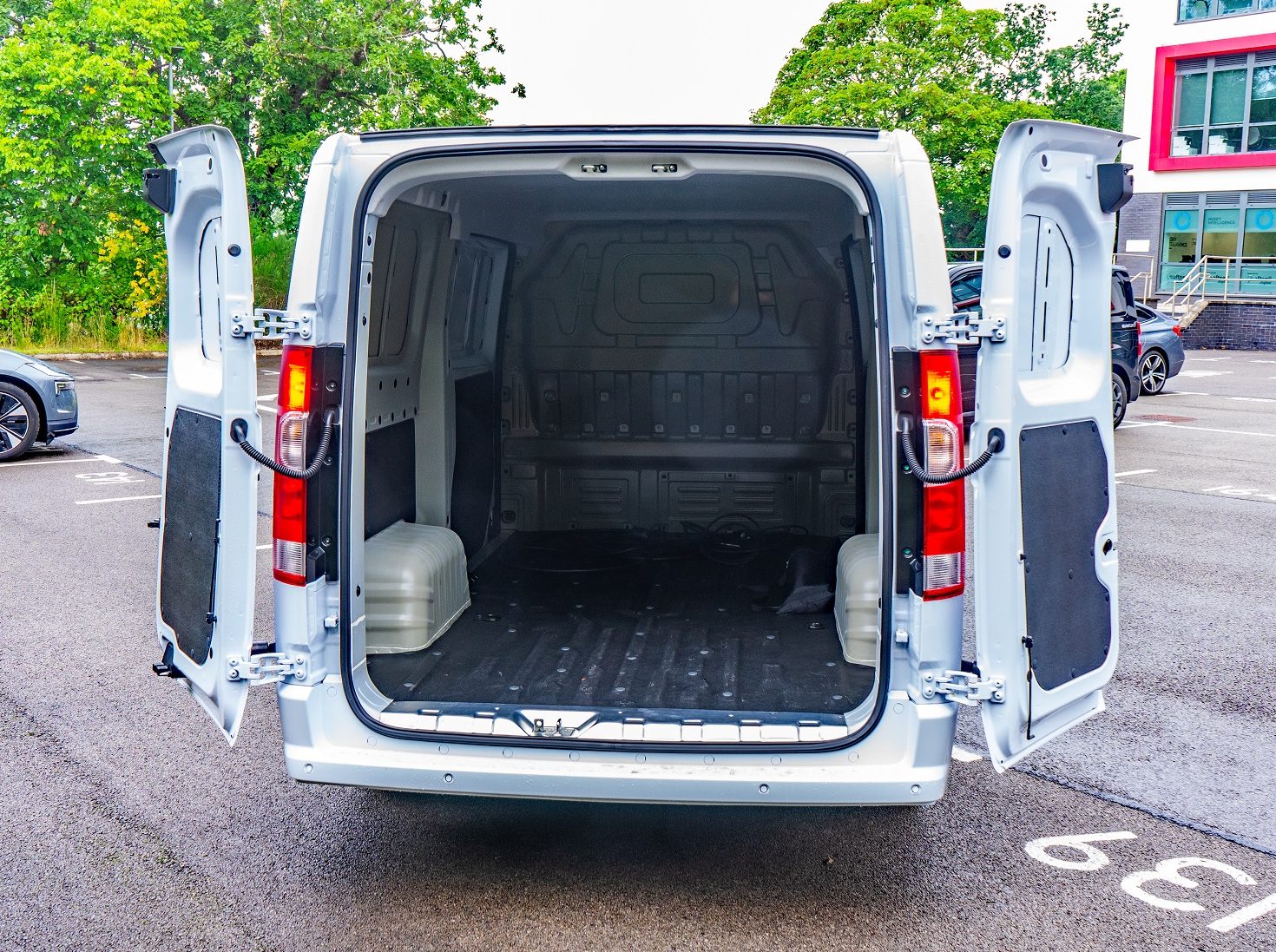
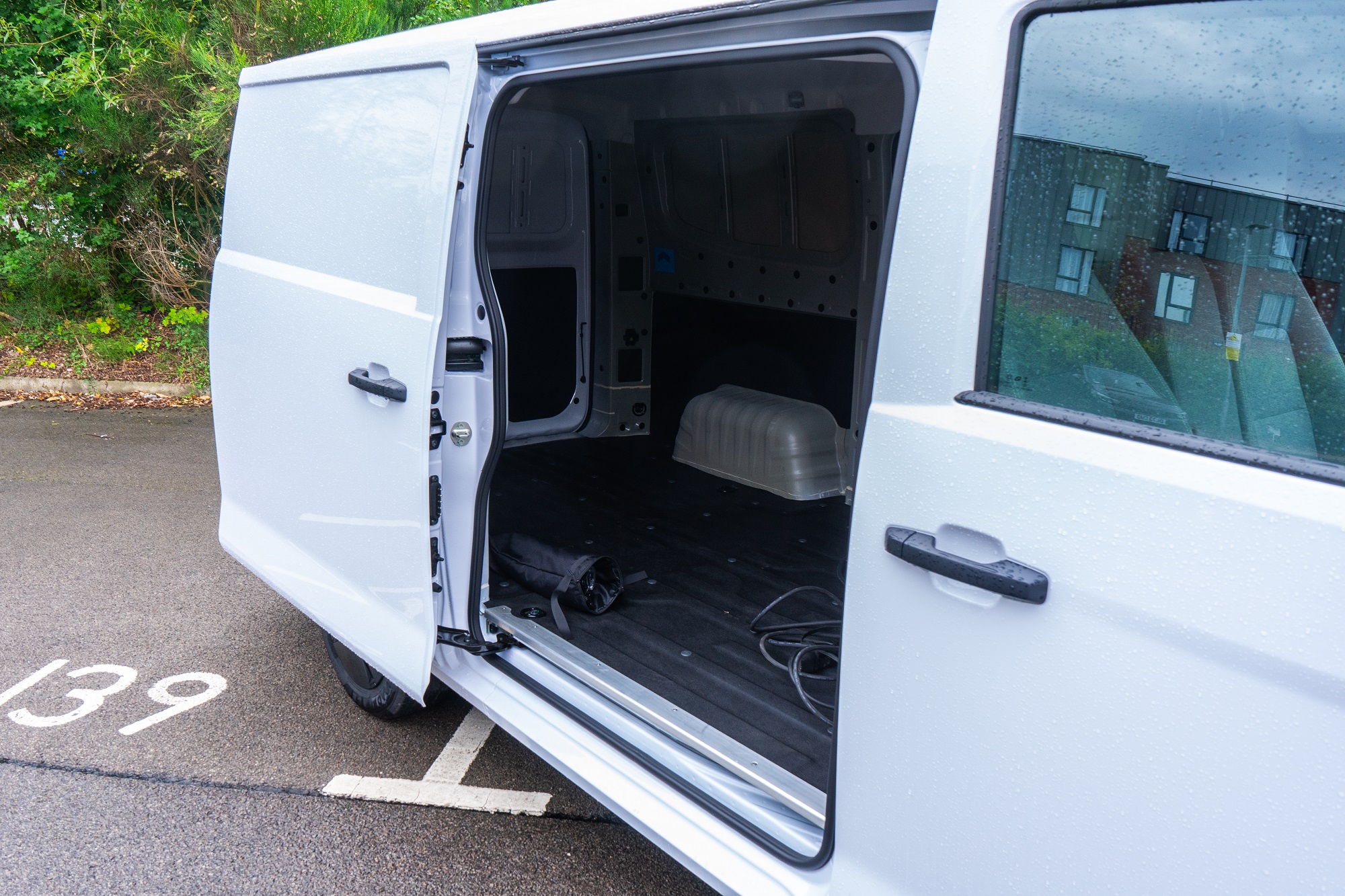
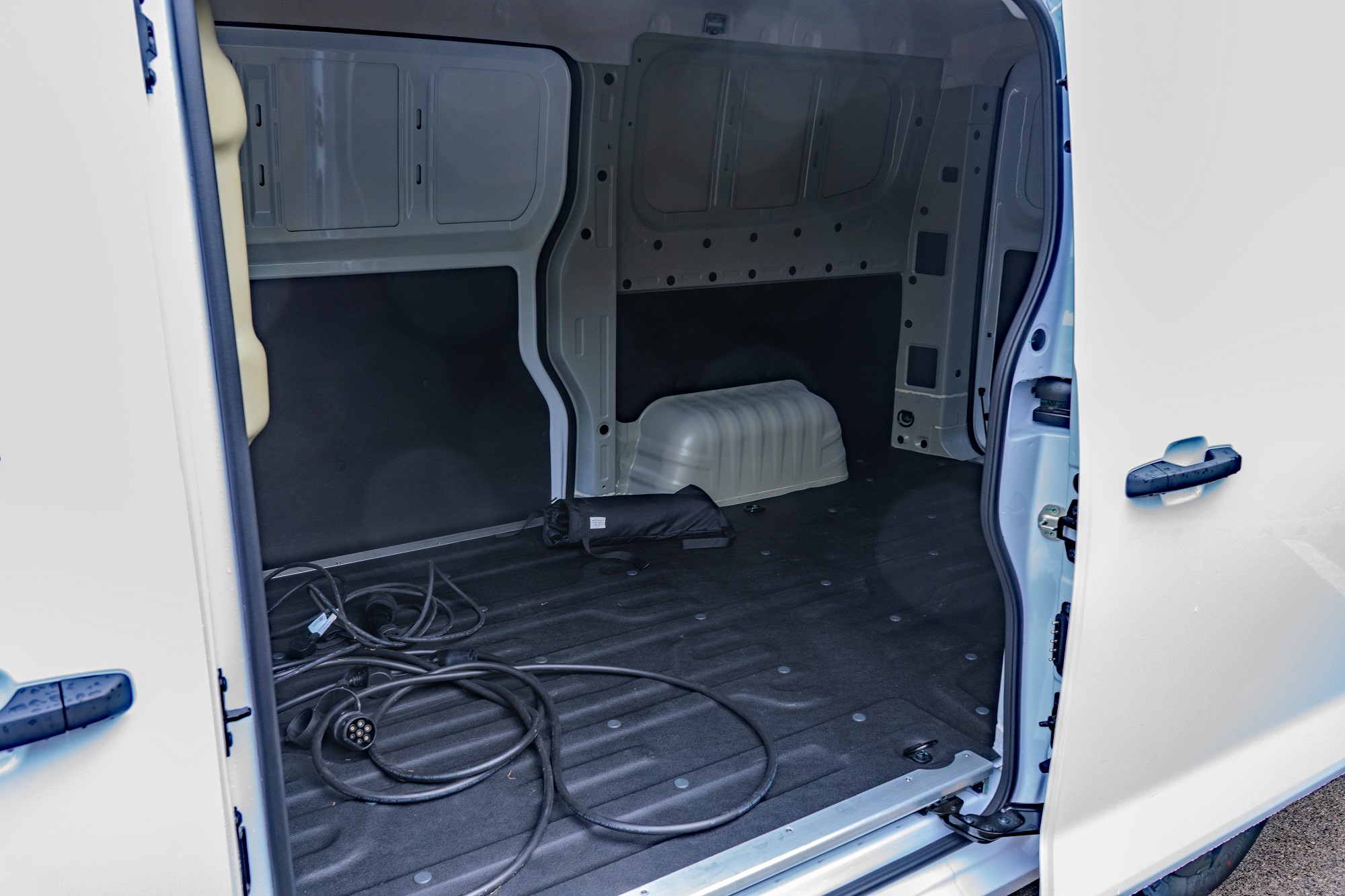
Here is where the V7E genuinely excels, and where the fleet manager’s ears prick up. The load bay measures 6.95m³; a full cubic metre more than a Ford E-Transit Custom, with a 2,730mm load length behind the standard steel bulkhead and 1,250mm between the wheelarches, which is exactly enough to carry a Euro pallet flat. Standard chequer-plate load floor, LED lighting on both sides, full-height wall lining, and multiple lashing points as standard. The rear opening height sits at just 510mm off the ground, which will save your drivers’ backs when they’re loading and unloading a hundred times a day.
Twin sliding side doors are standard across the range, not a cost option, standard, and both open wide enough for genuine kerbside loading from either side. The rear barn doors open to a full 270 degrees and lock magnetically flat against the body, and Farizon has cleverly designed them so they clear the fully open sliding side doors without fouling. That’s the sort of detail that shows a manufacturer has actually watched drivers using the vehicle.
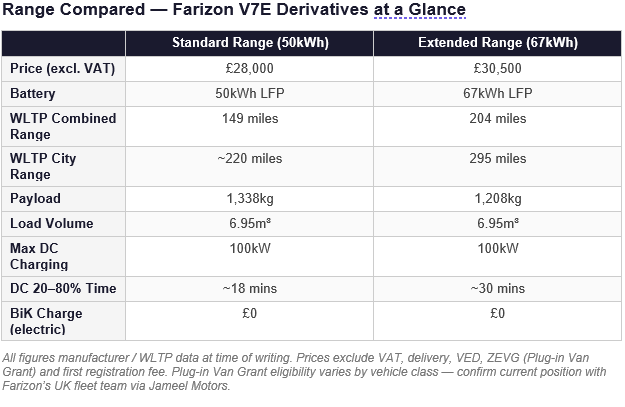
Payload is where the V7E really lands its knockout punch. The 50kWh Standard Range version can carry 1,338kg; that’s 142kg more than a Ford E-Transit Custom. The bigger battery 67kWh Extended Range still manages 1,208kg. Both figures are class-leading for a medium electric van, and both comfortably exceed a working tonne, which is what most urban delivery operations plan around.
Battery, Range and Charging
The two battery options offer distinct fleet propositions. The 50kWh Standard Range delivers 149 miles WLTP combined, which is fine for genuinely urban operations with predictable route patterns and depot-based overnight charging. The 67kWh Extended Range gets you up to 204 miles WLTP combined, and up to 295 miles on the WLTP City cycle, that last figure is important because a heavily urban delivery fleet doing stop-start work will genuinely see something close to it, meaning some drivers could conceivably plug in just once every couple of days.
Real-world efficiency in my testing (mixed urban and A-road driving, unladen) was around 3.0 miles per kWh, which would translate to roughly 200 miles of usable range from the 67kWh pack. That drops when you’re carrying a full load, but the V7E doesn’t feel like a range-anxious vehicle for its intended duty cycle.
Both battery versions support 100kW DC rapid charging and 11kW AC charging. A 20–80% DC top-up takes around 18 minutes on the small battery and 30 minutes on the large battery; both perfectly workable for a driver taking a break. Home or depot AC charging at 11kW gets you full in roughly four to five hours. V2L (Vehicle-to-Load) capability is standard, which means a driver can power a mains-powered tool or laptop from the van battery on-site. Genuinely useful for mobile service teams, engineers or event operators.
The Niggles
And now we come to the reason this review doesn’t score higher. The chimes. Oh, the chimes.
The Farizon V7E is loaded with active safety systems: speed limit alerts, lane-keeping assist, driver attention monitoring, forward collision warning, rear cross-traffic alert, the full modern-mandate package. Fine. But the calibration of the audible warnings from these systems is bordering on the ridiculous. Chime for the speed limit warning. Chime for the lane-keep intervention. Chime for the driver attention alert. Chime for the seatbelt reminder. Chime when you engage reverse. Chime when a passing shadow triggers the rear cross-traffic sensor. I had the van for a week, and I was pulling my hair out by day two. Is this really what we’re calling the future of driving?
The frustrating bit is that they can be turned off, but only by diving into the touchscreen menus every single time you start the vehicle, individually toggling each system, because EU regulation resets them at every ignition cycle. This is not a Farizon-only problem, every new vehicle on sale in the UK now has to include this stuff, but the V7E’s implementation is genuinely more intrusive than most, and the chime volume is set uncomfortably loud even by 2026 standards. For a driver who’s going to be in this van eight hours a day, it’s a real quality-of-work concern. Farizon absolutely need to prioritise a software update that at minimum reduces the chime volume and, ideally, adds a single “mute all warnings” shortcut on the home screen. This is the single change that would move the V7E from a three-star vehicle to a four-star vehicle.
Beyond the chimes, the other niggles are relatively minor. The unladen ride harshness I mentioned. The heated-seat-on-driver-only-not-passenger oddity. The infotainment system that’s a generation behind the best in class. The buried cupholders. Individually none of these are deal-breakers; collectively they suggest a vehicle that’s been shipped to market with a few too many rough edges.
Safety and Warranty
The V7E has not yet been Euro NCAP tested (and, being a commercial vehicle, likely won’t receive the full car-equivalent crash rating). Farizon has, however, fitted a comprehensive active safety suite as standard: autonomous emergency braking with pedestrian and cyclist detection, forward collision warning, adaptive cruise control, lane departure warning, lane change assist, lane keeping assist, rear collision warning, rear cross-traffic alert, blind spot detection, 360-degree camera, tyre pressure monitoring, hill hold control and intelligent speed assist. On the active-safety front, this is a fully loaded van.
However, and this is an important, honest flag for fleet operators, the V7E is fitted with just two airbags (dual front). There are no side airbags, no curtain airbags. This is unfortunately becoming common practice in commercial vehicles at this price point (the reasoning being that vans don’t go through the destructive Euro NCAP crash tests that reveal airbag adequacy), but it’s worth having in the fleet risk assessment for any operation where driver welfare is a stated priority.
The warranty is a genuine highlight. Farizon offers five years or 120,000 miles of vehicle warranty coverage in the UK, with an eight-year separate battery warranty, and four years of AA mobile roadside assistance included. For a fleet operator running a four or five-year vehicle cycle, that’s peace of mind that’s hard to match at this price point. Combined with the fact that the V7E’s parent brand Geely is one of the world’s largest vehicle manufacturers (owner of Volvo, Polestar, Lotus and now UK van distribution partner with Jameel Motors), the concerns you might reasonably have about a brand-new entrant’s longevity are, if not eliminated, then at least materially reduced.
The Fleet Case
This is where the numbers get interesting. As an electric van, the Farizon V7E benefits from a stack of UK fleet tax and grant advantages that make the sticker price only the start of the story:
- Plug-in Van Grant (Zero Emission Van Grant) applies at up to £5,000 depending on eligibility, taking the on-the-road price down further
- Zero Benefit-in-Kind charge for electric vans provided to employees for private use — that is literally £0 in tax for a driver taking the van home
- Full VAT recovery for VAT-registered businesses on the purchase price
- Zero fuel benefit charge (no equivalent to the car fuel benefit)
- Class 1A NIC exemption for the van benefit
- Zero congestion charge in London and ULEZ-compliant everywhere
- Access to zero-emission zones (increasingly relevant in urban delivery)
Put that against a diesel Ford Transit Custom on typical urban duty and the whole-life cost picture starts to look properly compelling. Diesel at current prices would run the equivalent van at 15–18p per mile on fuel; electric charged at commercial rates comes in at around 4–5p per mile. Over 100,000 miles that’s £10,000–£13,000 in fuel savings alone, before you factor in reduced servicing, lower congestion-charge exposure and the tax benefits above.
Two more practical fleet-specific points to close on. Firstly, the class-leading 1,338kg payload on the 50kWh model gives you genuine load capacity without compromise and is something not all electric vans in this segment can claim. Secondly, the 500mm cargo platform height is genuinely low for a medium van, and over the course of a shift full of loading and unloading, that adds up to real reductions in back strain and lost-time injury risk. The twin sliding side doors as standard finish the practical story off. For a delivery fleet doing hundreds of drops a week, these are the details that make the day easier.
The Competition
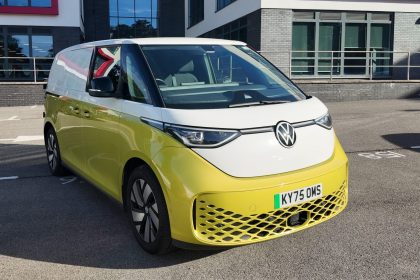
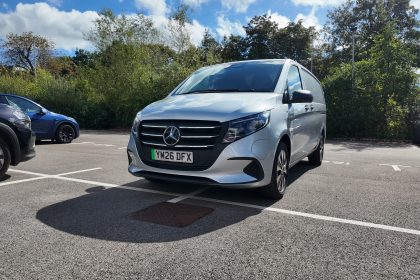
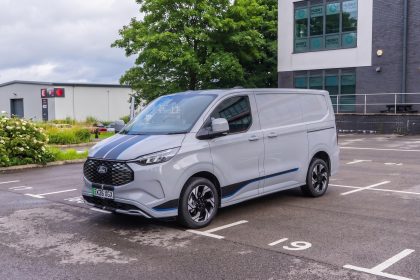
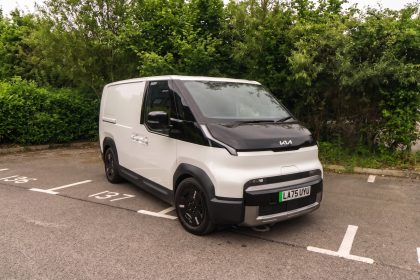
The medium electric van market is now genuinely contested. The Ford E-Transit Custom is the class benchmark for refinement and dealer coverage, but it’s materially pricier and gives you less load volume and less payload. The Volkswagen ID.Buzz Cargo is a lovely thing but operates in a completely different price universe. The Maxus eDeliver 7 is closer on price but arguably less well-specified. The Kia PV5 Cargo I reviewed a few months back is a strong alternative for the parcels-and-tools end of the market and comes with Kia’s dealer network and warranty package, though it doesn’t match the V7E on outright load volume or headline payload. The incoming Ford Transit City and the Foton (both due later this year) will pressure this price point too. What the V7E offers uniquely today is the combination of class-leading load volume, class-leading payload, the lowest price point in the segment, and Geely’s substantial financial and manufacturing backing behind an established UK distribution partner. That’s a serious opening pitch.
The Verdict
The Farizon V7E is a genuinely credible medium electric van at a properly attention-grabbing price. On paper, and often in practice, it does the important stuff exceptionally well: the load bay is class-leading in volume and payload, the equipment list is generous, the warranty package is reassuring, and the running-cost story stacks up handsomely against a diesel Transit Custom. Fleet operators looking for a value-first electric medium van should absolutely put this on the test-drive shortlist.
It’s not without frustrations. The chimes were genuinely wearing after just a week; I dread to think what a full-time driver would feel like after a month. The seats aren’t the most comfortable I’ve sat in. The bench-that-isn’t-a-bench up front will rule this van out for any operation that regularly carries three crew. The unladen ride is on the firm side. And the infotainment is a generation behind the best in class.
Three stars from me, and I’ll be honest, the chimes alone brought it down at least a full point. Fix that with an over-the-air update, put a bit more work into the seats and the unladen ride, and this becomes a four-star van that’s genuinely hard to argue with on cost, capability or capacity. For now, it’s a compelling value proposition with some rough edges you’ll need to be willing to live with. Bring some patience, and possibly some earplugs, and you’ve got yourself a very sharp fleet deal.
More details about Farizon can be found here.