
Kia PV5 Cargo Review: An electric van that sets a new benchmark
A Week with Kia’s First Electric Van — the PV5 Cargo, reviewed by Ian Campbell
First Impressions
Kia has spent the last decade quietly turning itself into one of the most respected names in electric cars, so the arrival of its first proper electric van had my attention before the keys ever landed on my desk. The PV5 is the opening act in Kia’s commercial-vehicle push, and the derivative I’ve had for the week is the one most of you will actually be buying — the PV5 Cargo. A week of mixed running around Lancashire and beyond, I can tell you this is a seriously impressive first effort.
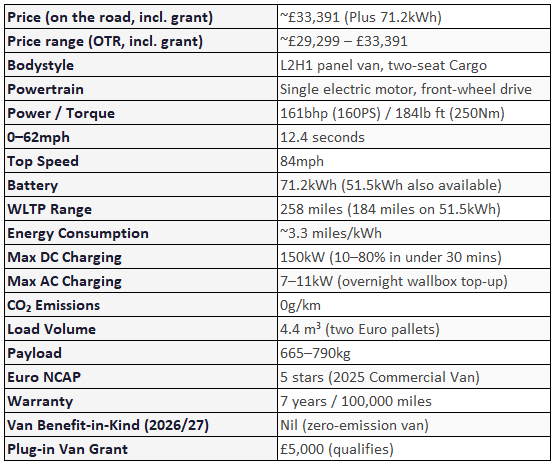
Let’s deal with the basics first. The Cargo range opens at £27,645 excluding VAT for the 51.5kWh Essential, and with VAT and the £5,000 Plug-in Van Grant applied that works out at around £29,299 on the road. The larger 71.2kWh battery adds £3,000, and the better-equipped Plus trim I tested lands at £31,055 ex-VAT, or roughly £33,391 on the road after tax and grant. For that you get a 161bhp electric motor, an official 258-mile WLTP range, a 12.9-inch touchscreen running Android Automotive, and a cabin that has clearly been designed by people who understand how vans actually get used.
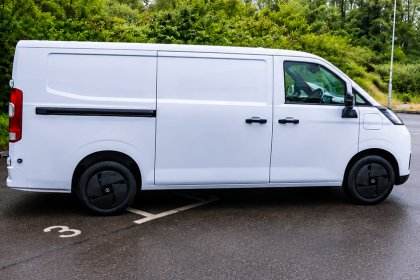
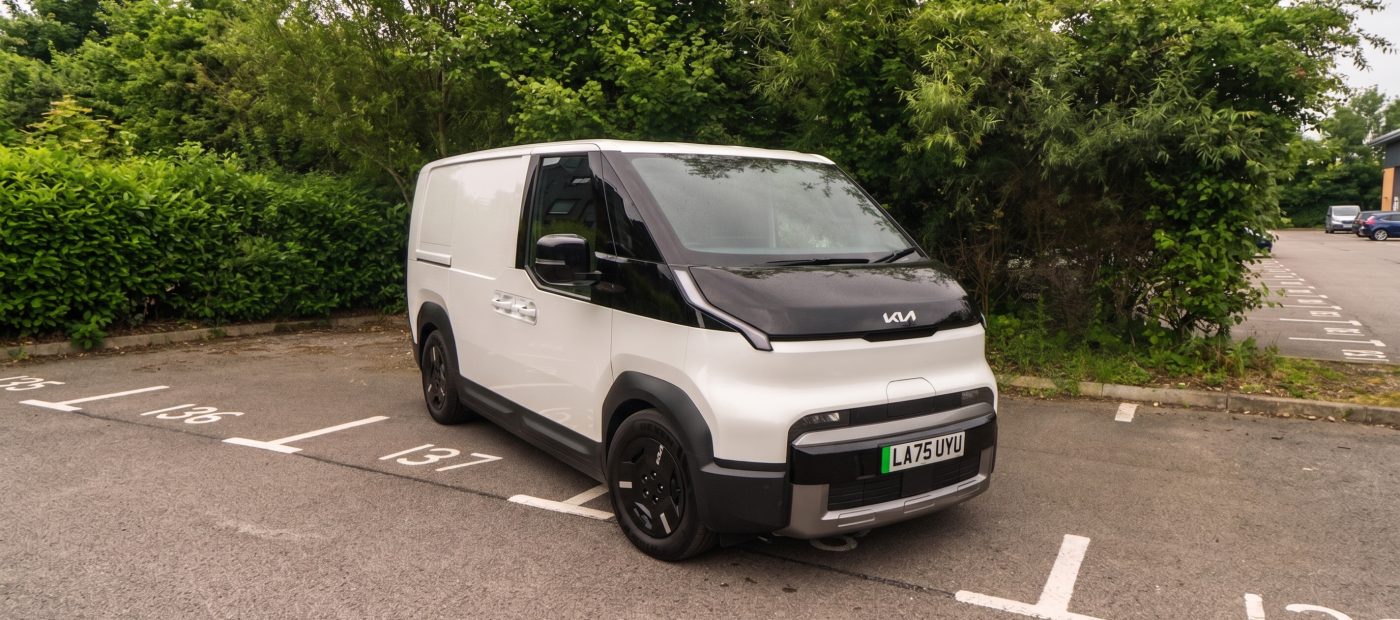
First and lasting impression? This is a lovely-looking, futuristic van. It genuinely turns heads in a way vans simply don’t, and that set the tone for a week that surprised me again and again.
Design and Interior
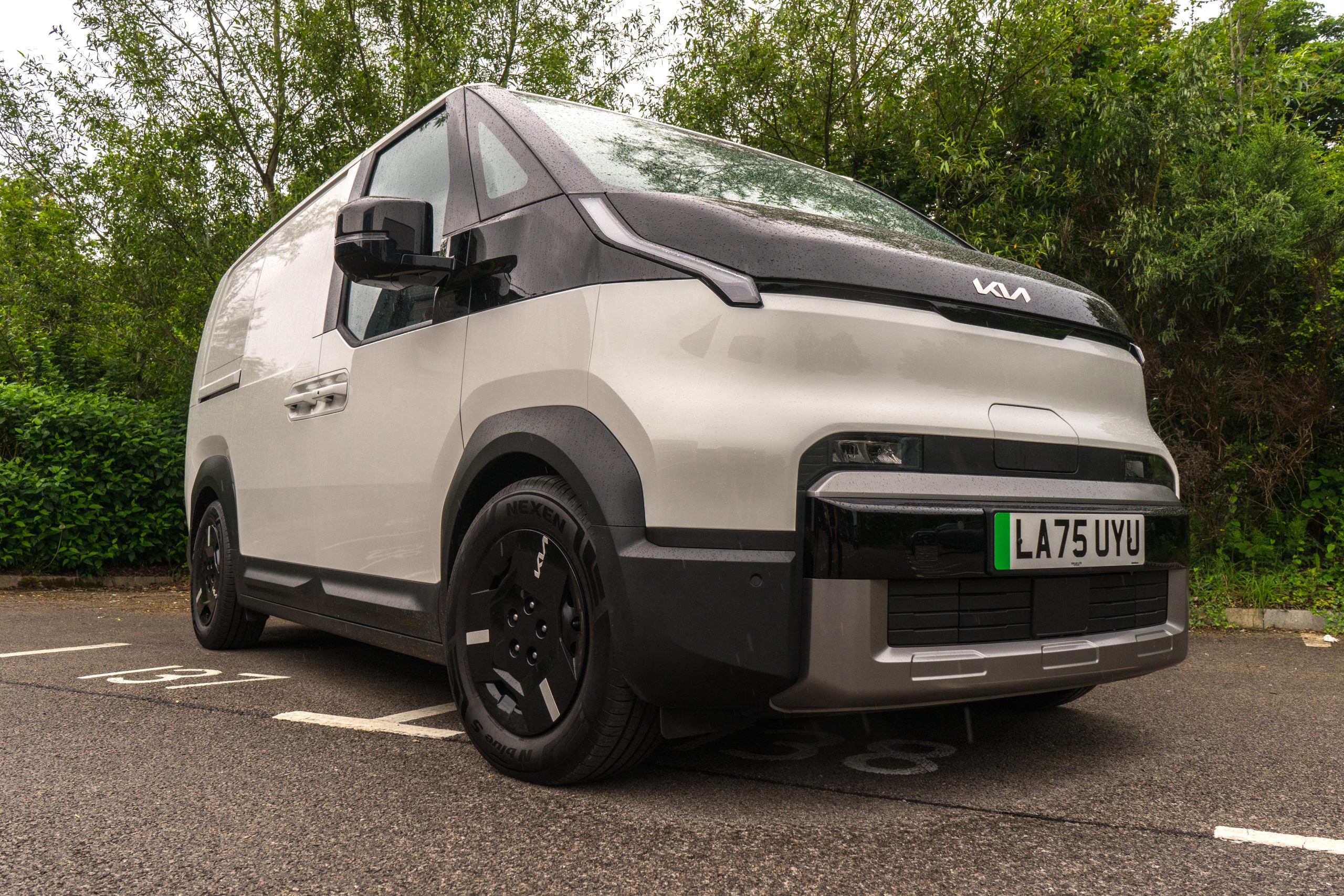
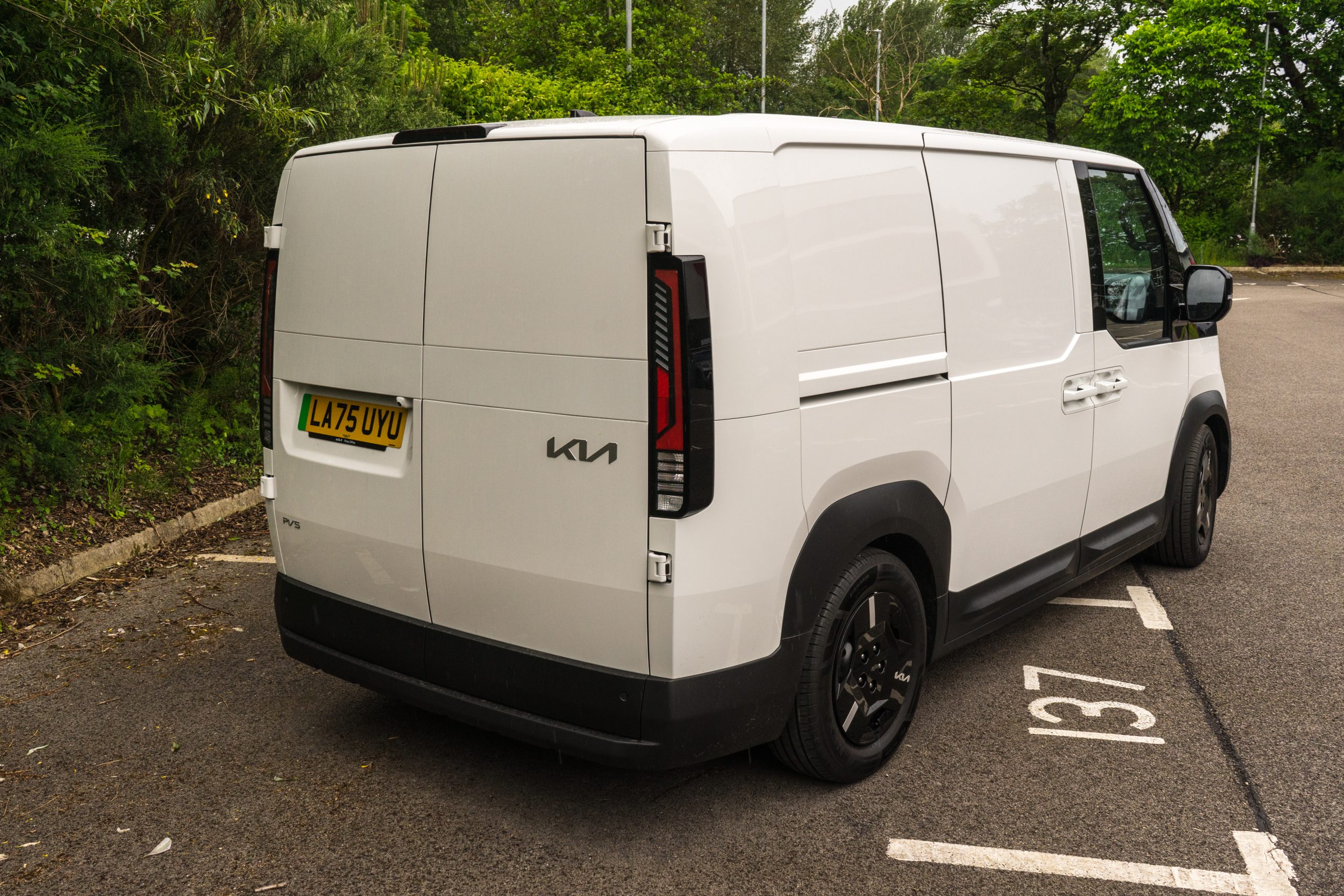
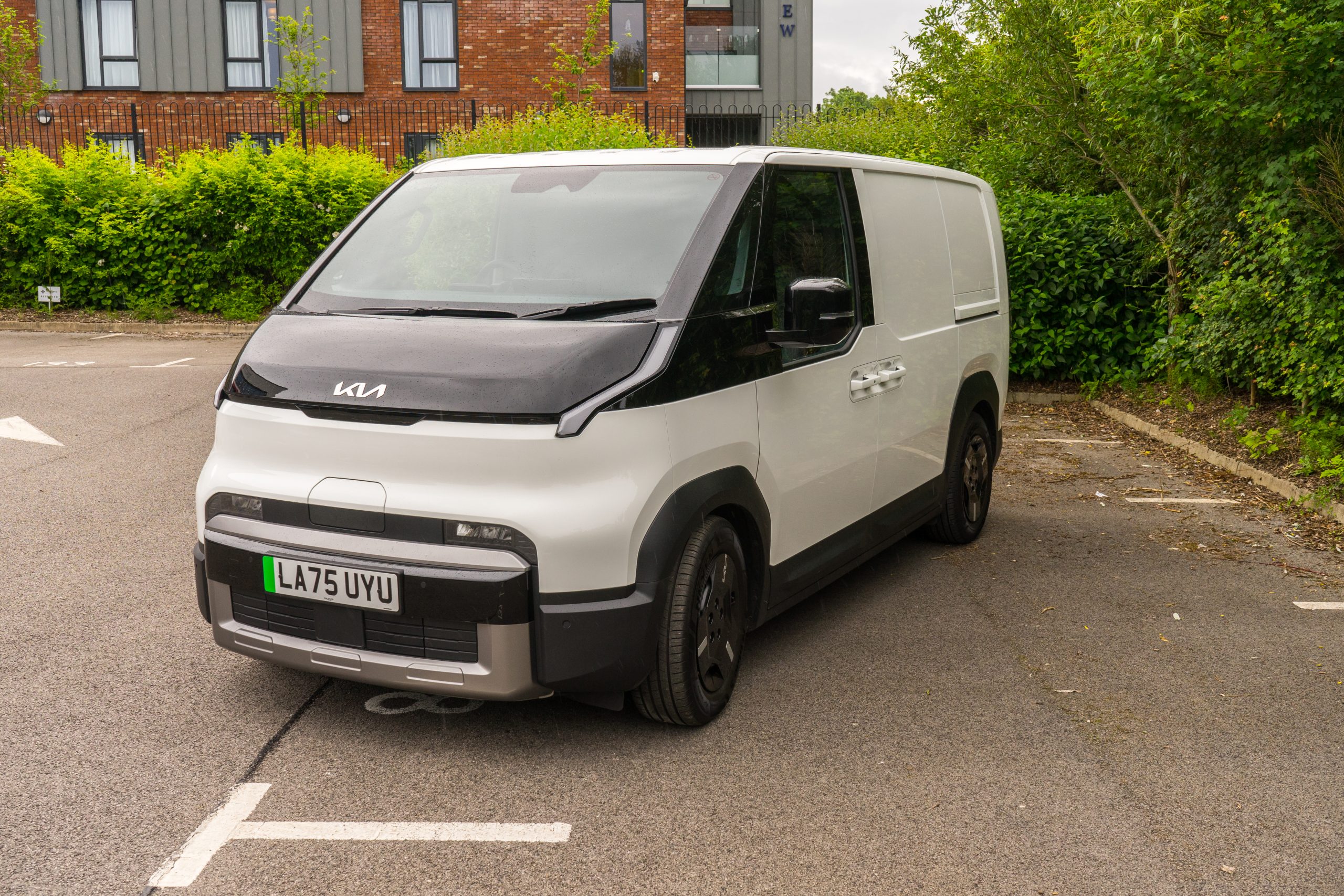
Park the PV5 next to anything else on a builder’s yard and it looks like it has arrived from a few years into the future. The short, smooth nose tells you immediately this was designed as an EV from the ground up rather than converted from a diesel, with the headlights tucked low either side of the charging port and slim running lights stretched wide across the front. There’s a clean, almost concept-car confidence to the squared-off arches and panel detailing. It’s a proper van that doesn’t look like a proper van — and I mean that as the compliment it is.
Climb aboard and the futuristic theme carries on, though now in service of getting work done. A 7-inch driver’s display sits alongside the big 12.9-inch central screen, and the whole thing runs Android Automotive with over-the-air updates. The cabin is awash with sensible storage — deep door bins, a lidded dash-top cubby, a tray with a wireless charging pad, and a centre console that swallows the clutter of a working day. It’s practical first and stylish second, but it never feels cheap where it matters.
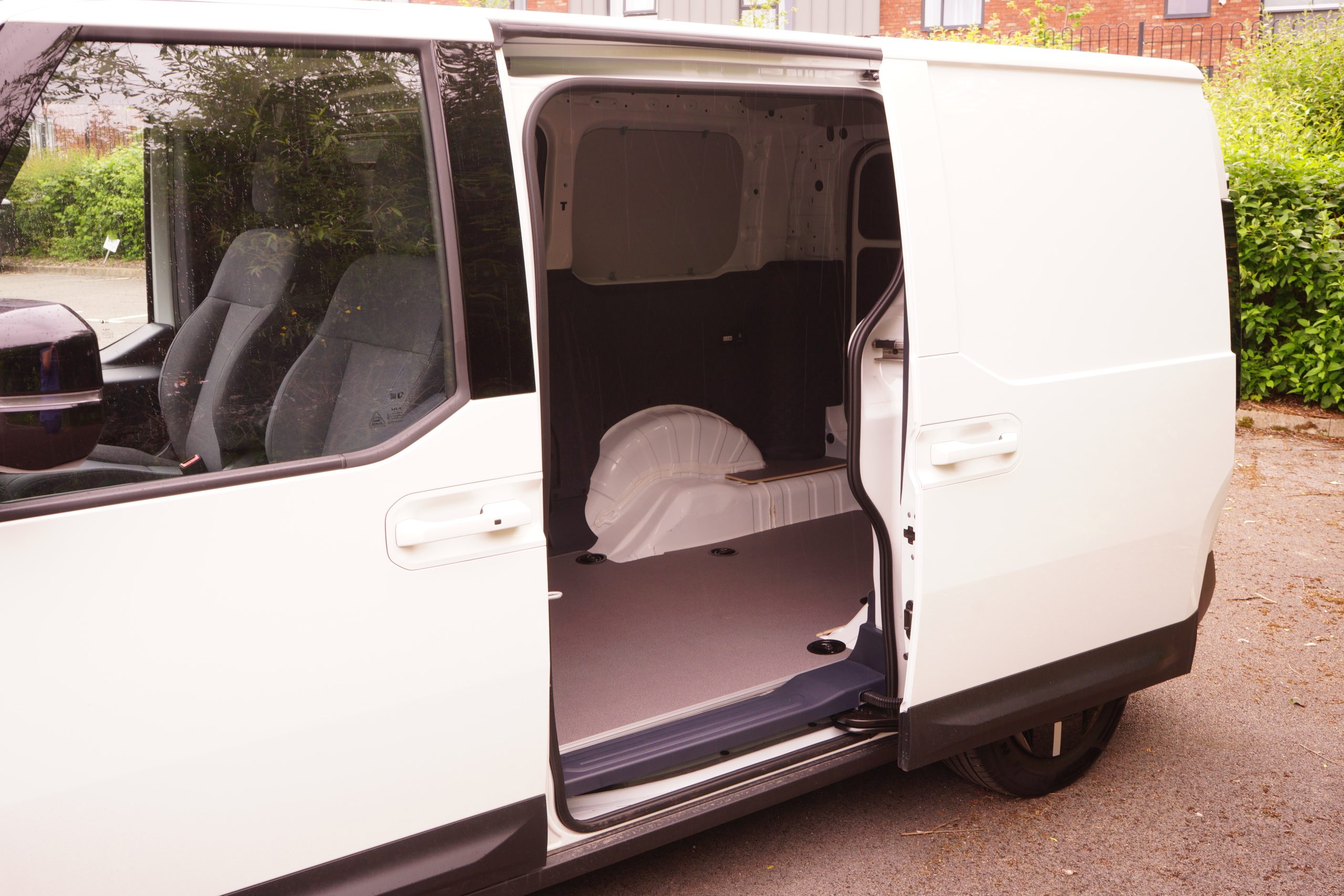
Getting in and out is genuinely easy thanks to a low step and a sensible door aperture, and once you’re settled the seat is comfortable enough that a long day behind the wheel never left me aching. The driving position is more car-like than van-like, which is part of why this thing is so painless to live with.
If I’m being picky — and a week of test-driving means I should be — the one real downside is what’s missing rather than what’s there. My Cargo was a strict two-seater, with no third seat or front bench available. For a lot of trades that won’t matter, but if you regularly need to take a mate and his lunchbox along, the lack of that middle perch is the one thing that gave me pause. However, the latest update to the PV5 now has 3 seats as standard on the L2/H1 Cargo at no extra cost.
On the Road
Here’s where the PV5 won me over completely: it is very easy to drive, and the experience is honestly not like driving a van at all. Power comes from a single front-mounted electric motor — 161bhp and 184lb ft in the 71.2kWh version I drove — and around town it just glides. The steering is light and accurate, visibility is good (the chunky A-pillars aside), and within ten minutes you forget you’re piloting a commercial vehicle at all.
And it’s nippy when you want it to be. The instant torque means darting out of a junction or filling a gap in traffic is effortless, and the thing feels far livelier than its on-paper 0–62mph time would suggest. It’s never going to worry a hot hatch, but for the cut and thrust of a working week it has plenty in reserve.
The single most jaw-dropping party trick, though, is the turning circle. I genuinely couldn’t believe how good it is. The PV5 spins around in its own length in a way that shames vehicles half its size — reversing into tight loading bays, three-point turns on narrow streets, multi-storey car parks; all of it becomes laughably simple. If your drivers spend their days in town, this alone is worth the trip to a dealer.
Then there are the paddles on the steering wheel, which let you set the regenerative braking exactly as light or as strong as you fancy. Flick through the levels and you can have the van coasting freely on the motorway or hauling itself down to a near stop the moment you lift off in traffic — effectively one-pedal driving when you want it. It’s a small thing that makes a big difference to how relaxing the van is to drive, and I found myself constantly tweaking it to suit the road.
Ride comfort is another highlight. Even unladen, where most vans crash and bang over rough surfaces, the PV5 stays composed and supple. There’s a touch of lean if you really press on through a corner, but the low-slung battery keeps everything planted and stable. It is, in short, a remarkably civilised thing to spend a day in.
Battery, Range and Charging
My test van had the larger 71.2kWh battery, and the range was the other thing that genuinely impressed me over the week. The display was showing around 300 miles on a full charge, and — whatever the official figure — what mattered to me was how uncannily accurate the prediction proved. At one point it told me I had 10 miles left and I drove 11 before it blinked; that kind of honesty in a range readout is rarer than it should be, and it does wonders for your confidence when you’re planning a day’s drops. For the record, Kia’s official WLTP figure for this battery is 258 miles, with 184 miles from the smaller 51.5kWh pack.
For the typical van driver doing a round of local deliveries or trades work, that’s the whole game. Plug in overnight, set off on a full charge, and the daily route simply isn’t going to trouble the battery. Kia quotes consumption of around 3.3 miles per kWh, which tallied closely with what I saw, and the low running costs of an electric van versus a diesel equivalent only sharpen the case.
Charging is a strong suit too. Every PV5 will take up to 150kW on a DC rapid charger — better than some of Kia’s own passenger cars — which means a 10–80% top-up in under half an hour if you’re caught short mid-shift. On a 7kW or 11kW AC wallbox an overnight charge is effortless, and the Plus trim’s vehicle-to-load capability even lets you run power tools or a charger straight off the van’s battery via an optional three-pin socket in the load bay.
The Niggles
No van is perfect, and a week is long enough to find the rough edges. The big one I’ve already flagged: the strict two-seat layout. The lack of a third seat or front bench on the launch Cargo means that, for now, this is a two-person van and nothing more. With the latest upgrade, as mentioned above, the L2/H1 is now a three-seater, and the 3-seat option will be rolled out to other Cargo variants in due course.
Beyond that, the controls are mostly run through the touchscreen, and while I found the system easy and intuitive in daily use, I’d still like a few more physical buttons for the things you reach for on the move. The thick A-pillars can hide a pedestrian or a motorbike at a tight junction, so you learn to lean and look. And the lower reaches of the cabin trim feel a little hard and plasticky, though everything you actually touch day to day feels built to take years of abuse.
Safety and Warranty
Reassuringly, the PV5 Cargo earned a full five-star rating in the 2025 Euro NCAP Commercial Van Safety assessment — exactly what a fleet manager wants to see on the spec sheet. It scored 75% for occupant protection, 80% for crash avoidance and safety assist, and 80% for post-crash safety, with the usual suite of autonomous emergency braking, lane-keeping assist, blind-spot assist and adaptive cruise fitted as standard. The driver aids can also be switched off easily, which the drivers who find them fussy will appreciate.
On warranty, Kia plays its trump card. The PV5 comes with the brand’s famous seven-year, 100,000-mile cover, battery included — a genuine peace-of-mind package and a meaningful answer to anyone nervous about backing a manufacturer’s very first van. Sales and servicing run through a dedicated network of Kia Van Centres set up specifically for the commercial range.
The Fleet Case
Now the bit that matters for the people signing the cheques. As a fully electric, zero-emission van, the PV5 Cargo attracts a nil van Benefit-in-Kind charge — nothing for the driver who takes it home, against the £4,170 flat-rate charge a conventional van carries for 2026/27. Add the nil van fuel benefit on top and you’re looking at a saving of the best part of £750 a year per van compared with a diesel, before you’ve burned a drop of fuel. It’s worth noting the Treasury is expected to start equalising electric and conventional van tax in future years, so this is an advantage to make the most of now.
On purchase price, the PV5 qualifies for the £5,000 Plug-in Van Grant thanks to its sub-2,650kg gross weight, which is what brings that Essential down to around £29,299 on the road. First-year running costs are low, the seven-year warranty protects the whole-life cost spreadsheet, and electricity remains far cheaper per mile than diesel for the urban work this van is built for.
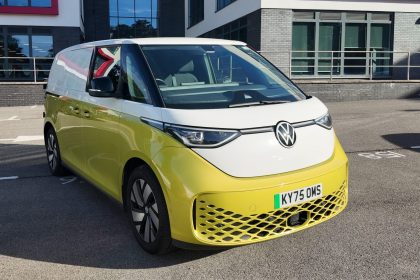
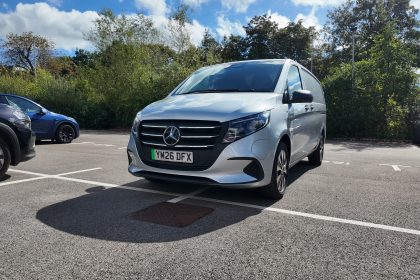
Where the PV5 really opens up daylight is against its rivals. Kia sees the Volkswagen ID. Buzz Cargo as its natural competitor, and the PV5 undercuts it by roughly £8,000 while offering more load volume and a higher payload. Step up to the bigger, more capable Ford E-Transit Custom and you’re starting north of £43,000 ex-VAT; the smaller E-Transit Courier is closer on price but smaller inside. For a business that wants a genuinely modern electric van without the premium-badge sting, the Kia makes a very persuasive financial argument.
PV5 Cargo vs the Competition: Where It Fits
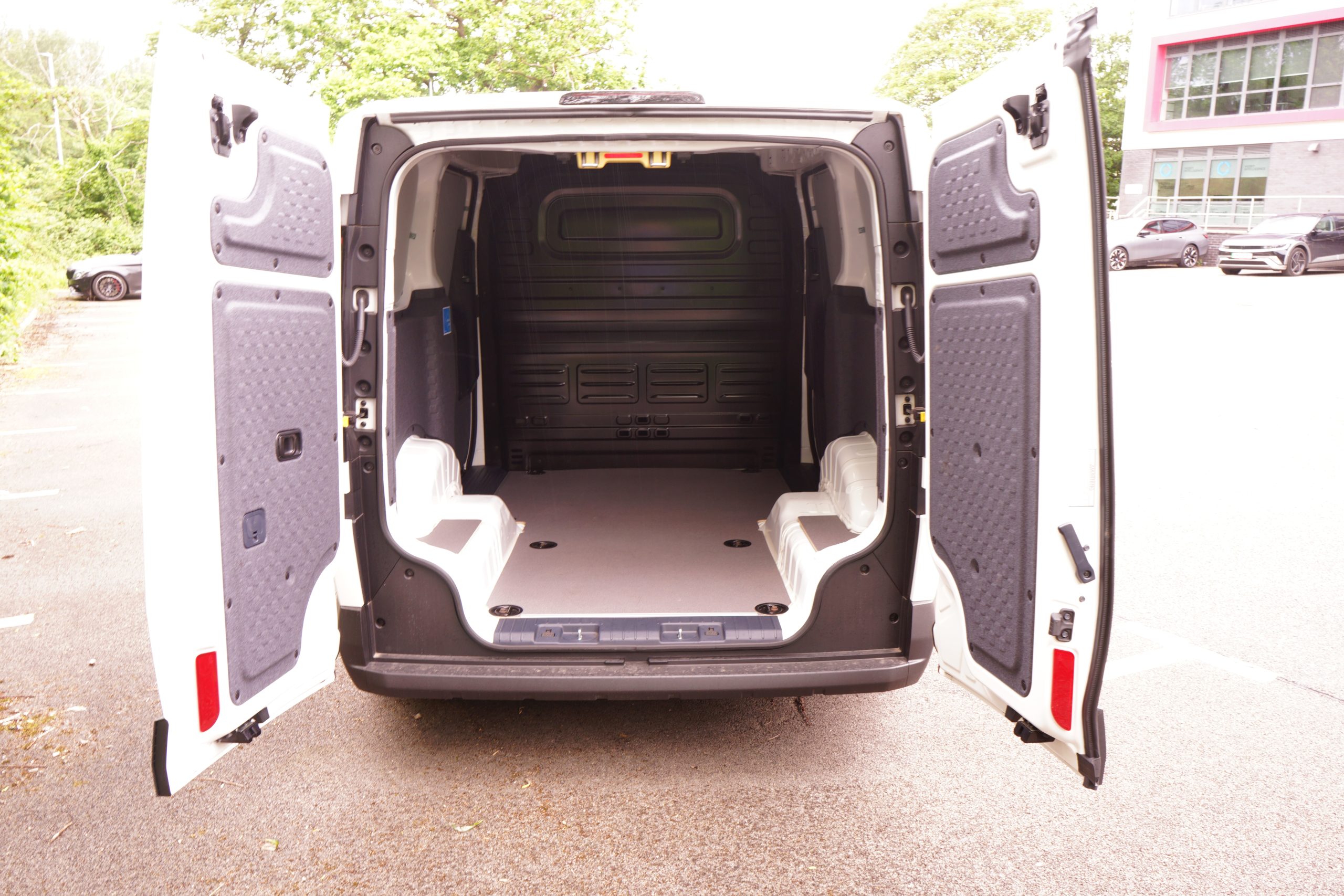
The honest read after a week is that the PV5 slots into a slightly unusual size bracket — bigger than a Berlingo or E-Transit Courier, smaller than an E-Transit Custom — and that’s either a perfect fit or a near-miss depending on your work. With 4.4 cubic metres of load space, room for two Euro pallets, a 665–790kg payload and the lowest rear load step of any medium van, it covers most urban delivery and trades duties comfortably.
If your business hauls bulky loads all day or needs to carry more than two people up front right now, a bigger Transit or a three-seat rival still makes more sense, and you may want to wait for the larger L2H2 and three-seat PV5 variants due later in 2026. But if your drivers spend their days threading through town, value a tight turning circle and a car-like drive, and you want zero-emission tax savings with a seven-year warranty behind them, the PV5 Cargo is one of the most compelling electric vans on sale.
The Verdict
The Kia PV5 Cargo is a remarkable first effort — and it doesn’t drive like a first effort at all. It’s a lovely-looking, futuristic van that’s genuinely easy and even enjoyable to drive, with a turning circle I’m still talking about, nippy performance when you want it, those clever regen paddles, a range readout you can actually trust, and a comfortable, easy-access cabin that makes long days painless. The controls are intuitive, and dropping in via Android Auto or CarPlay makes the whole thing slot effortlessly into daily life.
It isn’t flawless. The launch Cargo is a strict two-seater, the A-pillars are thick, a few buttons wouldn’t go amiss, and some lower cabin plastics feel built to a price. But weigh those niggles against what you drive away with — a modern, refined, five-star-safe electric van with a nil BiK charge, a seven-year warranty, a £5,000 grant and running costs a diesel can’t touch — and the balance tips firmly in Kia’s favour.
If you run an urban fleet or a small business ready to go electric, you should be booking a test drive in the PV5 Cargo. Kia has walked into the van market and, at the first attempt, built one of the best electric vans you can buy. It loses half a star only for that missing third seat and the rough edges a second-generation model will iron out — otherwise this is as assured a debut as I’ve driven.
Key Specifications — Kia PV5 Cargo (71.2kWh Plus)