
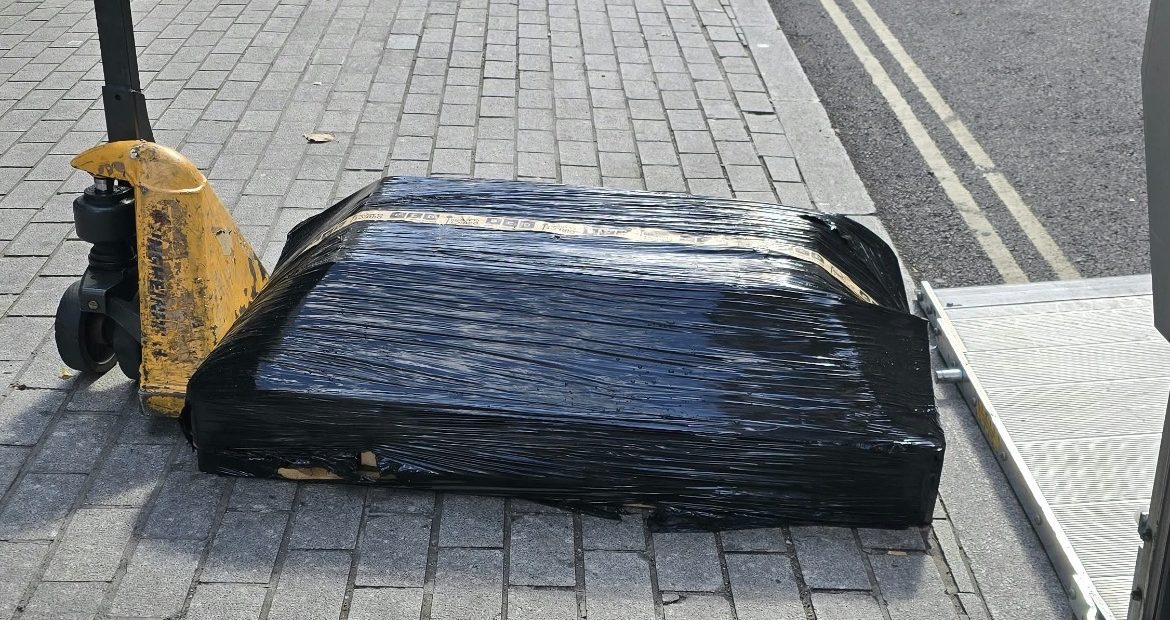
How to avoid common pallet delivery problems
For many businesses, arranging a pallet delivery can seem straightforward: prepare the goods, book the transport and wait for the vehicle to arrive.
In reality, some of the problems that can cause the most frustration happen before the vehicle has even reached the collection point.
Incorrect dimensions, inaccurate weights, unsuitable packaging, restricted access or missing information can turn what should be a routine collection into a delay — and sometimes an additional cost.
In this article, Darren Morey is the founder of Paramount Logistics Ltd, says: “In my experience, many of these problems are preventable with a little preparation and communication.”
Get the information right
One of the simplest ways to avoid problems is to provide accurate information when booking the transport.
The dimensions and weight of a pallet aren’t just details for a booking form. They help determine how the freight can be handled and what type of transport is appropriate.
A pallet that turns out to be considerably larger, taller or heavier than originally declared can create problems when the vehicle arrives or when the freight enters a pallet network.
If you’re unsure of the measurements, measure the pallet once it has been packed and wrapped, taking the widest, longest and highest points. Don’t rely solely on the dimensions of the empty pallet.
The same applies to weight. An accurate weight allows the transport provider to plan the movement properly from the beginning.

Give the pallet delivery a fighting chance
The goods may be the valuable part of the shipment, but the pallet underneath them is what has to support them throughout the journey.
A damaged or unsuitable pallet can make a load unstable before it has even left the premises.
Goods should be positioned securely, with heavier items generally forming a stable base. Where possible, avoid allowing goods to overhang the edges of the pallet, as this can increase the risk of damage and affect how the pallet is handled.
The load should then be secured appropriately for transport.
Stretch wrapping is commonly used, but it should secure the goods to the pallet, rather than simply wrapping around the goods. Depending on the type of freight, additional protection such as strapping or edge protection may also be appropriate.
The aim is simple: the load should remain stable while it is being moved, handled and transported.
Think about access before the vehicle arrives
Another issue that can easily be overlooked has nothing to do with the pallet itself.
Can the vehicle actually get to the collection point?
A business operating from an industrial estate with a loading bay may have very different requirements from a collection at a residential address, a narrow street or a site with vehicle restrictions.
If there are height or weight restrictions, limited turning space, loading restrictions or specific site procedures, the transport provider needs to know beforehand.
Finding out that a vehicle cannot access the site after it has arrived creates an avoidable problem for everyone.
Don’t assume there will be a forklift
Loading and unloading arrangements are another important consideration.
If there isn’t a forklift or loading dock available, a vehicle with a tail lift may be required.
That should be discussed when the transport is booked rather than when the driver arrives.
The weight and nature of the pallet also matter. Not every pallet is suitable for every type of loading operation, so particularly heavy, awkward or unusual freight should always be discussed in advance.
A quick conversation before collection can prevent a much bigger problem on the day.
Don’t forget about the delivery
Businesses naturally tend to concentrate on getting the freight collected, but the delivery point deserves just as much attention:
- Does the consignee have suitable unloading facilities?
- Are there restricted delivery hours?
- Does the driver need a booking reference?
- Is there a particular entrance or delivery point?
- Are there vehicle restrictions?
- And, perhaps most importantly, will somebody actually be there to receive the goods?
Providing this information before the shipment leaves can make the final part of the journey considerably smoother.
Communication is one of the most useful tools
If there is something unusual about a collection or delivery, tell the logistics provider before the collection takes place.
If you’re unsure whether something is important, mention it anyway.
From my experience, it is far better for a transport provider to have the information in advance than for the driver to discover an important detail after arriving on site.
Photographs can also be useful, particularly where access is difficult or the freight is unusual. A photograph of the prepared pallet or the collection point can sometimes explain a situation much more clearly than a lengthy description.
A successful pallet delivery starts before collection
Not every disruption can be prevented. Traffic, weather and other operational issues will always be part of road transport.
However, incorrect dimensions, unsuitable packaging, inaccessible collection points and missing delivery information are often avoidable.
For businesses sending palletised freight, spending a few extra minutes preparing the load and providing accurate information can save considerably more time and frustration later.
A smooth pallet delivery usually starts well before the driver arrives. Getting the pallet, collection details and delivery information right at the booking stage can prevent a lot of problems later.