
EU urges Britain to raise tariffs on Chinese EVs
Brussels has told London that Britain would need to raise tariffs on Chinese cars and more closely align with EU trade policy if it wants to avoid “made in Europe” barriers that would hit key exports. The warning, first reported by the Financial Times, puts the government in a difficult position. For fleet operators, manufacturers and suppliers, the outcome could shape vehicle pricing, model availability and the future of British car plants.
What is “Made in Europe”?
The policy is intended to favour manufacturers within the bloc through subsidies and public procurement to counter competition from China. It sits within the EU’s Industrial Accelerator Act. According to electrive, Brussels has signalled that closer alignment of British trade policy with the EU could be a prerequisite for UK companies to benefit.
British firms are keen to be included. The UK is pushing for automotive, chemical and energy supply chains to be covered by the initiative, and Reynolds has said that excluding British supply chains would not be in Europe’s interests.
The main concern is what officials call the “backdoor”. The EU levies duties of up to 45% on Chinese EVs, imposed in 2024 after Brussels concluded that Chinese manufacturers benefited from state subsidies. Britain did not follow suit and currently applies the regular 10 per cent duty on Chinese vehicles.
That gap worries the EU. If Chinese cars can enter Britain more cheaply, there is a fear they could be routed into the single market and undercut the bloc’s own protections. One EU official put it plainly: “A customs union would solve most of the problems of ‘made in Europe'”, and would also address the question of tariff differences. The British government continues to rule out a customs union.
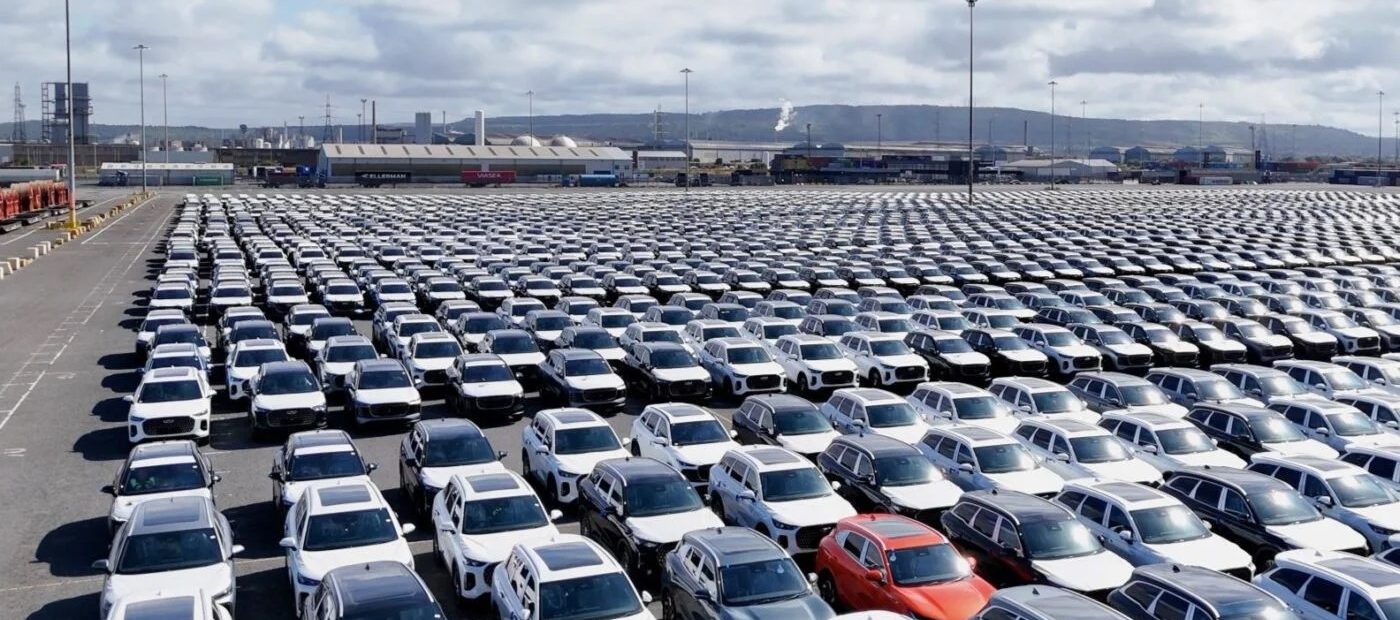
Chinese brands have taken a growing share of the UK market, with a combined 16% of new car sales this year. Nissan’s European boss, Massimiliano Messina, warned this month that Britain risked becoming a “corridor” into the EU for Chinese EVs, and said the UK needed to adjust some of its tariff policy. Tensions are also visible elsewhere: the EU announced this month that it would monitor exports of titanium dioxide from the UK. Separately, Handelsblatt reports that the European Commission is preparing countervailing duties on Chinese plug-in hybrids, which would widen the gap further.
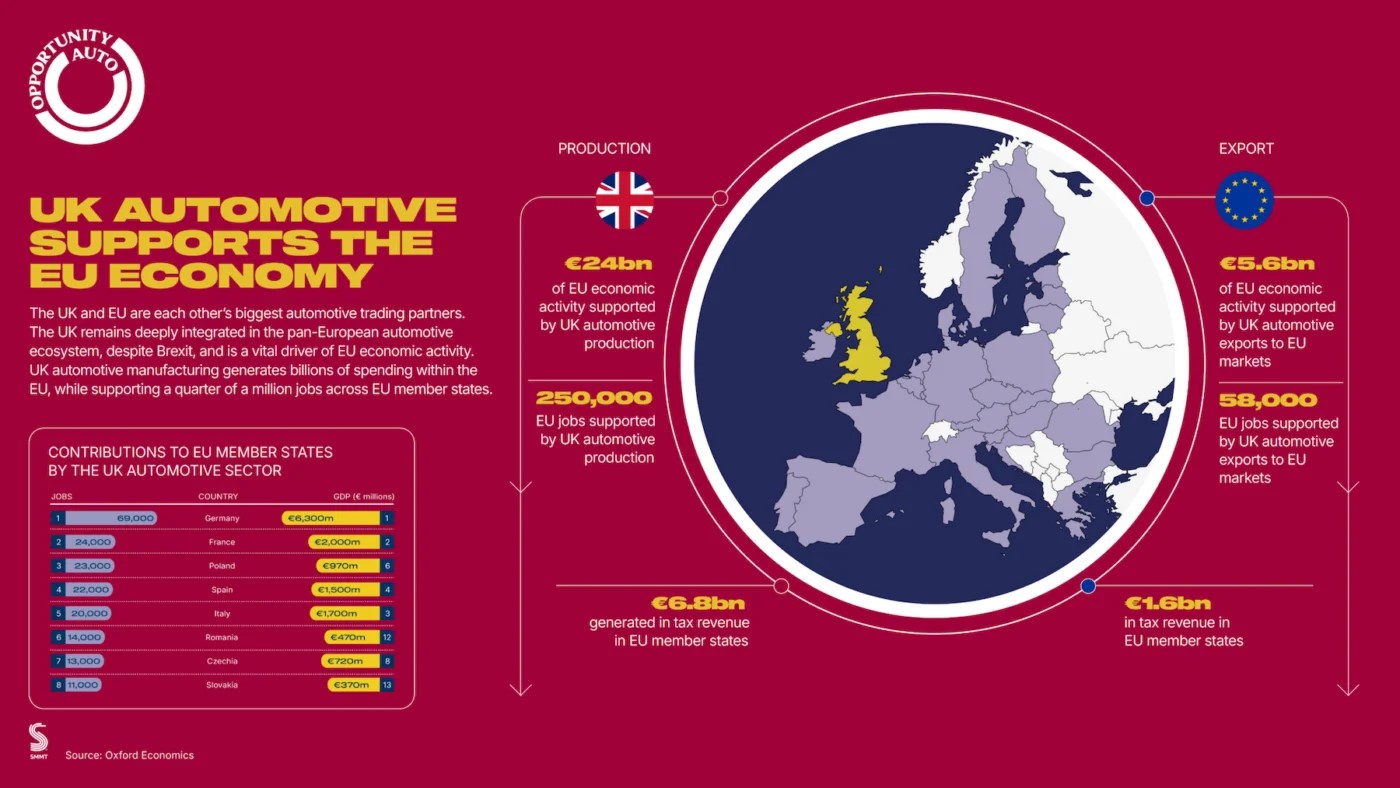
The UK has good reasons to want a deal. The SMMT estimates that UK automotive production supports €24bn (£21bn) of economic activity and 250,000 jobs across the EU, and the EU is the largest export market for British-built vehicles. Losing preferential access would hurt manufacturers already facing a further hurdle: new post-Brexit rules of origin taking effect in 2027 will see UK EV exports to Europe attract a 10% tariff, with a similar impact on EVs imported from the EU.
Against that, raising tariffs carries clear costs. Matching EU duties would shrink the UK’s post-Brexit freedoms and raise prices for consumers, at a time when affordable EVs are central to the zero-emission transition. There is also an investment question. The government is courting Chinese capital, including a deal for Chery to produce cars at Nissan’s Sunderland plant. Higher tariffs on Chinese imports could complicate that ambition, although they might also strengthen the case for building locally.
Business Secretary Jonathan Reynolds has now acknowledged that a change is possible. Describing the UK’s position on Chinese EVs as “finely balanced”, he said: “We are an export-orientated sector. So clearly, you shouldn’t do anything that risks your export markets, and you always have to take heed of retaliatory action if you put tariffs in place.” He also indicated that different parts of the domestic automotive sector want different outcomes, and no decision has been announced.
Brussels is not negotiating from a position of unchallenged strength. The EU’s own carmakers and suppliers rely heavily on British demand, and the UK is a major market for European-built vehicles, components and services. Germany’s automotive industry has explicitly called for the UK to be included in a “Made with Europe” scheme, reflecting how tightly integrated the two sides’ supply chains remain. Excluding British manufacturers would risk raising costs for European producers too.
The EU also has a legitimate interest in protecting its tariff wall. If Brussels grants the UK preferential treatment while Britain’s China policy diverges, it could weaken the very industrial strategy “Made in Europe” is meant to support. That tension explains why the EU is linking the two issues.
The SMMT is calling for the UK to be recognised as a “trusted partner” and for British vehicles to be treated as “assembled in the EU” under the new rules. It argues that UK-built vehicles, parts and materials should be treated as equivalent to European products.
SMMT Chief Executive Mike Hawes said: “The EU is rightly focused on strengthening its industrial base. But restricting access for UK manufacturers in their largest market would be self-defeating – reducing substantial demand for EU-made components, goods and services, weakening competitiveness on both sides, and threatening growth at precisely the moment our industry must invest harder and faster in zero-emission mobility.”
For fleet decision-makers, the immediate impact is uncertainty rather than change. Nothing has been agreed, and the UK and EU are still looking at options for including British companies in the planned rules. But the direction of travel matters. Higher tariffs on Chinese-built EVs could push up list prices, affect residual value forecasts and narrow the choice of competitively priced models that have helped many operators manage the cost of electrification. Conversely, if Britain is shut out of “Made in Europe”, the resulting pressure on UK manufacturing could threaten the domestic supply of vehicles and parts.
The likeliest route to resolution is a compromise. That could mean some form of trade policy alignment in return for recognition of British-built vehicles and supply chains. The government must weigh export access, consumer prices, Chinese investment and its post-Brexit trade independence, all before rules of origin tighten in 2027. Fleetpoint will continue to follow the negotiations and what they mean for operators.