
ACEA call for delay to EV rules as UK-EU trade faces 10% tariff
European carmakers are calling for a further delay to tougher rules of origin for electric vehicles, warning that a failure to act could expose large numbers of vehicles traded between the UK and EU to a 10% tariff from 1 January 2027.
The warning, reported by the Financial Times, comes as manufacturers continue to rely heavily on batteries and other key electric vehicle components sourced from outside Europe, particularly China. The European Automobile Manufacturers’ Association (ACEA) has subsequently confirmed that it has written to EU leaders seeking a temporary change to the battery rules of origin contained in the EU-UK Trade and Cooperation Agreement (TCA).
The issue is particularly significant for the UK automotive industry because Britain is outside the EU single market. While the TCA allows qualifying vehicles to be traded between the UK and EU without customs tariffs, vehicles must meet increasingly stringent rules of origin requirements to benefit from that preferential treatment.
From 1 January 2027, the requirements are due to become substantially tougher. Under the existing agreement, an electric vehicle will need to meet a 55% UK/EU content threshold, while its battery pack will need to meet a 70% originating-content requirement and battery cells a 65% threshold. Vehicles that fail the applicable requirements can face a 10% customs tariff when crossing the UK-EU border.
Carmakers seek another delay
The UK and EU had already agreed in December 2023 to postpone the next stage of the rules of origin regime. The tougher requirements originally scheduled for 1 January 2024 were instead deferred until the end of 2026, giving manufacturers additional time to establish battery production and develop regional supply chains.
At the time, the UK Government said the extension would help the industry scale up domestic battery production and avoid the imposition of 10% tariffs on electric vehicle trade.
However, ACEA now argues that the European battery supply chain has not developed quickly enough to enable manufacturers to meet the 2027 requirements.
In its 17 September letter, ACEA said the rules due to apply from January 2027 “cannot be met by European vehicle manufacturers”. The organisation is proposing that the more flexible treatment of battery packs should remain in place until the end of 2029, followed by stricter requirements for battery cells from 2030 and cathode materials from 2032.
ACEA says the objective is not to abandon localisation requirements, but to align their introduction with the speed at which the European battery industry is actually developing.
The organisation says manufacturers have already made significant investments in European battery production, but the full capacity resulting from those investments will only become available over the coming years.
ACEA argues that “the question is not whether they will be able to comply, but when”, adding that EU trade policy should be aligned with the pace of Europe’s industrial policy on localisation.
£1.5bn annual tariff risk
The potential financial impact is substantial.
ACEA estimates that the EU could export around 520,000 electric passenger cars and vans to the UK in 2027, with a combined value of approximately €17.9bn. Under the rules currently scheduled to apply, it estimates that 82% of those exports would fail to meet the rules of origin requirements and would consequently face the 10% customs duty.
ACEA estimates that this could generate around €1.47bn in additional customs costs in 2027 alone.
The FT report places the issue in the wider context of European automotive trade, with the same rules applying in the opposite direction to UK-built electric vehicles exported into the EU.
That creates a particular problem for UK manufacturers whose vehicles contain batteries or battery components sourced from China or other countries outside the UK and EU. The rules do not simply consider where the vehicle is assembled. They also determine whether sufficient value within the vehicle and its battery originates within the qualifying trading area.
UK-made EVs that fail to meet the relevant rules could therefore lose tariff-free access to the EU market and face a 10% import duty.
For manufacturers operating on tight margins, the tariff could either increase the cost of vehicles for customers or have to be absorbed by manufacturers, potentially affecting the economics of production and exports.
Why batteries are at the centre of the problem
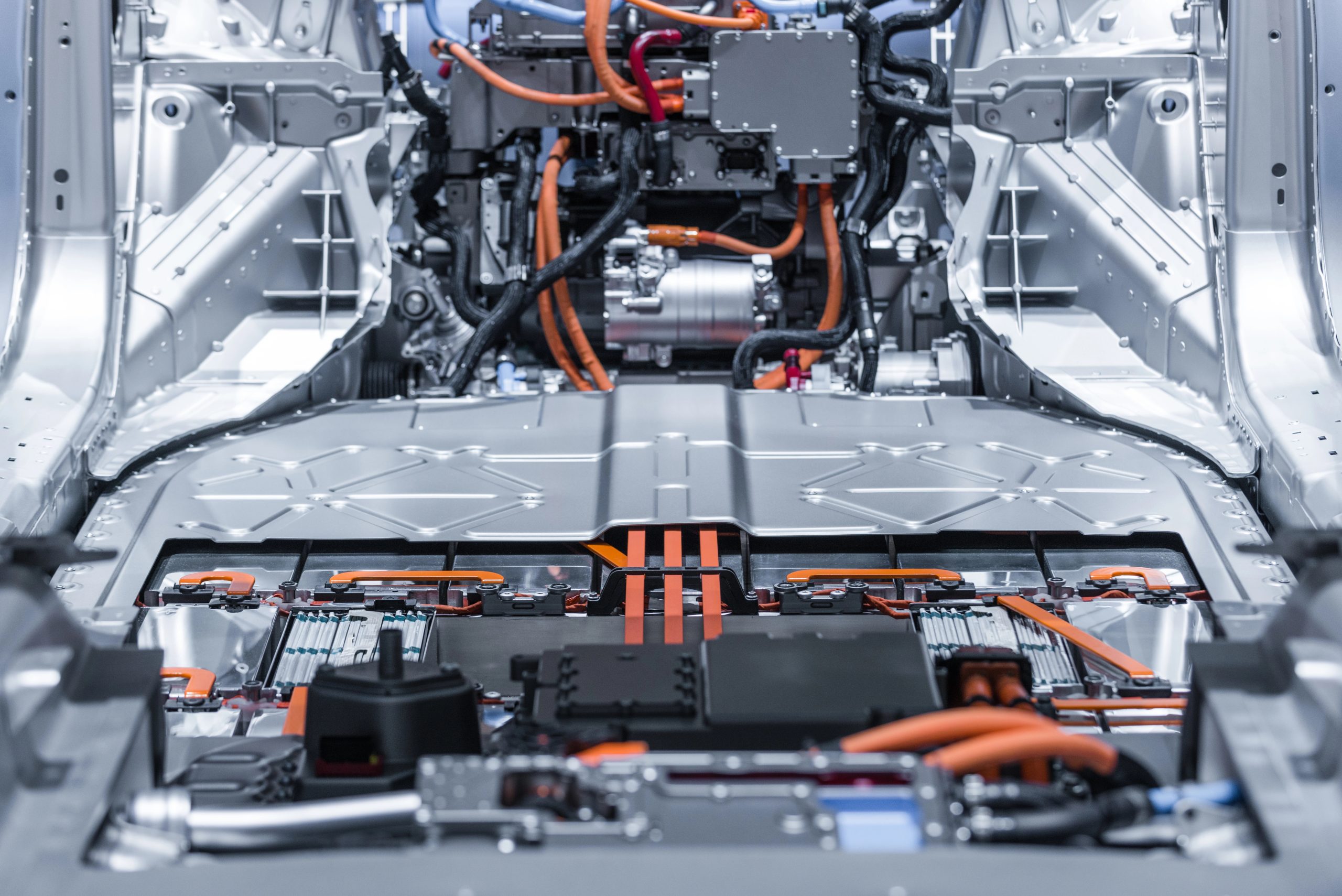
Batteries are particularly important because they account for a significant proportion of the value of an electric vehicle and remain one of the areas in which Europe is heavily dependent on overseas supply chains.
The UK Government’s own battery strategy previously highlighted the importance of establishing domestic production to meet the TCA requirements. It noted that batteries account for approximately 40% of the cost of a car and that dependence on imported batteries could make it harder for UK manufacturers to satisfy rules of origin requirements.
The challenge is not simply battery cell production. The supply chain extends through cathode materials, active materials, battery modules, packs and other components.
That means a vehicle can be assembled in Britain or the EU while still containing substantial non-originating content.
China remains particularly important to the global battery supply chain. This has created a difficult balancing act for European manufacturers: they are being encouraged to localise production and reduce strategic dependencies while simultaneously being expected to meet rules that assume a sufficiently developed regional supply chain already exists.
ACEA’s proposal is therefore aimed at providing additional time for European battery investments to reach commercial scale.
EU wants more “Made in Europe” production
The dispute comes against the backdrop of a wider EU push to strengthen domestic industrial capacity.
In March 2026, the European Commission proposed its Industrial Accelerator Act (IAA), designed to increase demand for European-made and low-carbon products and technologies. The proposal covers strategic sectors including cars and net-zero technologies such as batteries.
The Commission says the IAA is intended to strengthen European production capacity, reduce dependencies on non-EU suppliers and create greater demand for European manufacturing.
It proposes “Made in EU” and low-carbon requirements in areas including public procurement and public support schemes, while also seeking to attract investment and accelerate the development of industrial projects.
The Commission says manufacturing represented 14.3% of EU GDP in 2024 and has set a goal of increasing the manufacturing share to 20% by 2035.
The IAA remains a legislative proposal rather than an adopted law, and it is being negotiated by the European Parliament and Council.
ACEA has broadly supported the objective of strengthening Europe’s industrial base. In May, it said the automotive sector recognised the need to build an integrated European battery value chain, while warning that the assumptions underpinning some of the proposed measures were optimistic.
This creates an important distinction for the UK automotive sector. The IAA’s “Made in EU” provisions are part of a broader industrial policy, while the immediate 10% tariff threat from January 2027 stems from the separate EU-UK TCA rules of origin.
Nevertheless, the two policies are connected by the same strategic objective: increasing the amount of automotive and battery production taking place within Europe.
European battery investment has fallen short
The problem for manufacturers is that investment has not translated into sufficient available capacity quickly enough.
ACEA’s request follows a period in which several European battery projects have encountered financial and operational difficulties. The FT highlighted the collapse of Northvolt as one example of the challenges facing Europe’s emerging battery industry, while weaker-than-expected EV demand has also affected investment decisions.
At the same time, European manufacturers remain under pressure from Chinese EV producers, which benefit from much deeper battery supply chains and substantial economies of scale.
The EU has already introduced countervailing duties on Chinese battery electric vehicles, while its industrial strategy is increasingly focused on strengthening domestic production and reducing strategic dependencies.
The resulting policy challenge is complex. Rules of origin are intended to encourage investment in European battery manufacturing, but manufacturers argue that enforcing them before sufficient European capacity exists could impose substantial costs on the very companies being asked to invest.
What it means for UK fleets and manufacturers
For UK fleet operators, the immediate consequences would be indirect but potentially significant.
If the 10% tariff is applied to UK-built EVs that fail to meet the rules of origin, manufacturers could face higher costs when supplying the EU. The impact could influence production decisions, vehicle pricing and the allocation of models between UK and European markets.
The UK is an important manufacturing base for vehicles destined for Europe, while the EU is also a major source of vehicles and components for the UK market. Consequently, the rules have implications beyond individual vehicle manufacturers.
For fleet operators considering electric vehicle procurement, changes in supply chains and vehicle pricing could also affect model availability and total acquisition costs.
The issue is particularly relevant to manufacturers with UK production operations that rely on imported batteries. Even where final vehicle assembly takes place in Britain, the origin of the battery and its components can determine whether the finished vehicle qualifies for tariff-free trade.
The TCA rules were specifically designed to encourage UK and EU investment in battery manufacturing. The fact that manufacturers are now asking for another delay demonstrates the difficulty of building an entirely regional EV supply chain within the original timetable.
A decision with implications beyond tariffs
ACEA’s proposal is effectively asking policymakers to choose between maintaining the scheduled timetable for localisation and allowing manufacturers more time to develop the supply chain needed to comply.
The association is not seeking to remove the long-term localisation requirements. Instead, it wants battery pack assembly to remain the basis for the rules until the end of 2029, followed by tighter requirements for battery cells from 2030 and cathode materials from 2032
The proposal therefore represents a further attempt to bridge the gap between Europe’s industrial ambitions and the current state of its EV supply chain.
For the UK, the stakes are particularly high because a failure to satisfy the rules could directly affect tariff-free access to the EU’s automotive market. For European manufacturers, the issue works in both directions, with ACEA warning that tariffs on EU-built EVs entering the UK could undermine competitiveness and market share.
The European Commission and EU member states must now consider whether the 2027 rules should proceed as planned or whether another transitional arrangement is required.
With the January 2027 deadline approaching, the outcome will be closely watched across the automotive industry. It could determine not only the cost of UK-EU EV trade, but also how quickly manufacturers are able to shift towards a genuinely European battery supply chain.
Mark Salisbury, Editor