
Amazon’s logistics ambitions just got bigger
In a bid to challenge other major players such as UPS and FedEx, Amazon has opened up its shipping, freight, and distribution capabilities to external businesses. Rob Carlisle, Head of Logistics at Argon & Co, explores the potential impact of this move on a highly fragmented logistics landscape.
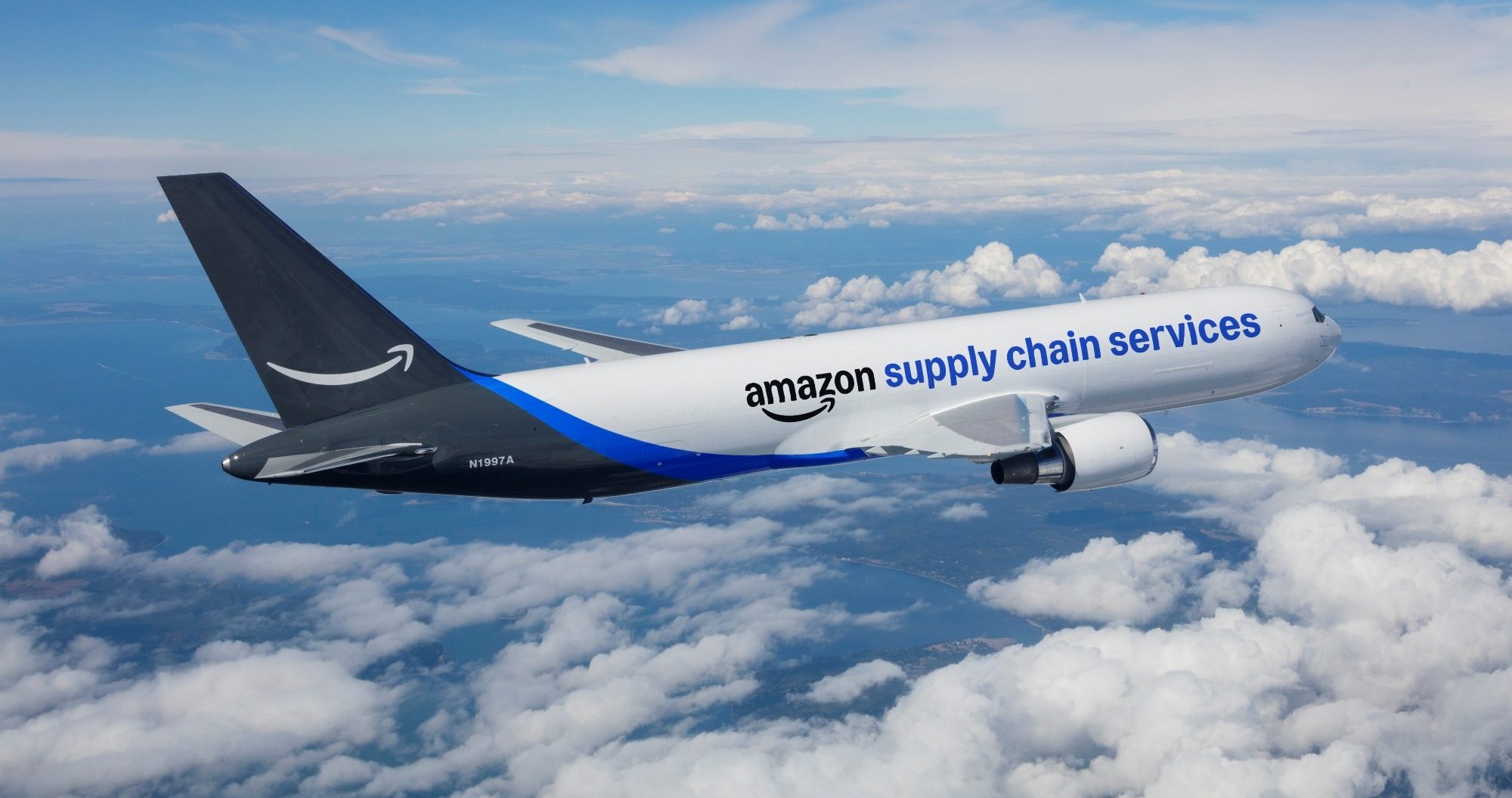
Amazon’s decision to open up access to its supply chain network is a significant moment for the logistics industry. Now, potentially any firm can tap into Amazon’s freight network – spanning road, rail, ocean, and air – to move, store, and deliver goods.
Despite having been founded only just over 30 years ago, Amazon has built one of the most sophisticated logistics networks in the world. Originally developed to serve its own retail and marketplace operations, that network now spans warehousing, transport, freight, and last-mile delivery. By offering access to external businesses, Amazon is turning that capability into a service that can rival traditional carriers. But the bigger disruption may be felt more deeply by third-party logistics providers and contract logistics businesses.
A competitive threat, or minor industry change?
While consumers might be thinking about what this move means for their weekly Amazon Prime deliveries, the greater disruption sits beyond parcels. Amazon already directly competes against the courier arms of FedEx and UPS in last-mile delivery; the company has been building scale in this area for some time.
Its latest move extends its reach into the wider logistics ecosystem, particularly in warehousing. This allows Amazon to rub shoulders with contract logistics and third-party logistics (3PL) providers such as DHL, GXO, and Kuehne & Nagel. In today’s market, scale, technology, and network density are critical, and Amazon has these assets in abundance. If it can give external customers reliable access to an existing network, it could compete strongly on visibility and price.
This is what makes the move a credible competitive threat. Logistics has always been a scale game, and this move once again reinforces its importance, as it shows how providers can spread fixed costs, invest in technology, absorb volatility, and compete on both price and service. In response, further market consolidation is likely, and there are already signs that this is underway. CMA CGM has recently agreed to acquire FedEx Supply Chain for $1.4 billion, a deal expected to nearly triple the size of the North American contract logistics operations of CEVA Logistics.
For Amazon, opening up its network could also help it make better use of its existing capacity. In quieter periods, non-Amazon volumes could help fill space and routes that would otherwise be underused.
The biggest near-term impact may therefore be felt by mid-market and smaller 3PL providers, especially those competing mainly on cost or standard transport services. They may find it difficult to match Amazon’s scale and technology.
The logistics landscape remains fragmented and complex
However, the threat should not be overstated. It’s worth remembering that contract logistics is inherently complex, and many customers still need dedicated warehouse space, bespoke or specialist handling, and long-term operational relationships. These requirements are not always so easy to plug into a shared network.
The 3PL market also remains highly fragmented, with several thousand providers operating across Europe, with a market value of around €264 billion. The benefit of this fragmentation is that providers can carve out niches and tailor solutions for specific sectors – so while they may not be able to match Amazon’s scale, they can offer sharper differentiation and deeper sector expertise. Some, for instance, cater to areas such as life sciences, healthcare, or high-tech, where customers require more specialised handling and compliance.
There’s also the broader question of how capacity will be managed in busier periods such as Christmas and Black Friday. As volumes increase across the network, customers may also want reassurance that service levels will hold up during peak times.
This is an area where incumbent logistics providers may still hold an advantage. Many have deep customer relationships, established sector knowledge, and experience managing complex, business-critical supply chains. For some shippers, that combination of reliability, specialist knowledge, and trust will matter just as much as, if not more than, network scale.
Could Amazon move further upstream?
An interesting long-term question is whether Amazon is becoming one of the few truly joined-up, end-to-end fulfilment operators, sitting alongside the likes of DHL, UPS, and FedEx. It already has many of the building blocks, like road freight, air freight, a pallet network, supply chain and fulfilment capabilities, and final-mile delivery. More importantly, it has the capital and technology to allow it to challenge traditional operating models.
Amazon already operates in freight through Amazon Freight, so how far it pushes upstream is key. If it did, it would start to overlap more directly with the likes of Maersk, which has been moving in the opposite direction by expanding from shipping into contract logistics and warehousing.
However, global freight forwarding and containerised shipments are highly complex, depending on volatile shipping rates and knowledge of international customs laws. Amazon’s logistics network is also not equally developed in every market, which means its most immediate opportunity is likely to be domestic and regional, where it can build on existing infrastructure and routes.
For now, this is probably not about Amazon becoming a global ‘one-stop shop’ overnight. The more interesting development will be where it is building scale and proving whether it can reliably serve non-Amazon supply chains. If it takes off, the threat to traditional logistics providers will become much harder to ignore.
A market shift, not a market takeover
Amazon’s expanded logistics offering has also launched in the UK and Europe, although its maturity will vary a lot by market. In Europe, its final-mile capabilities and network reach are already strong, but frequency and bespoke capacity could be seen as gaps. But as goes America, so goes the world. Innovation proven at scale in the US often shapes how other markets develop elsewhere, and Europe’s logistics industry should be watching closely.
Ultimately, Amazon’s move should be taken seriously but not sensationalised. While it won’t replace UPS, FedEx, DHL, or Royal Mail, it may raise the bar for some; traditional carriers and 3PLs will need to be clearer about where they add value, perhaps doubling down on customer service and specialist capability, or investing further in technology and network scale.
It’s a good day for consumers, however, as competition can drive innovation and put downward pressure on costs. But for the logistics industry more broadly, it’s yet another reminder that the future will favour providers that make bold moves and can combine scale with reliability.