
HTC Group expands Gophr partnership to cut parts delivery times
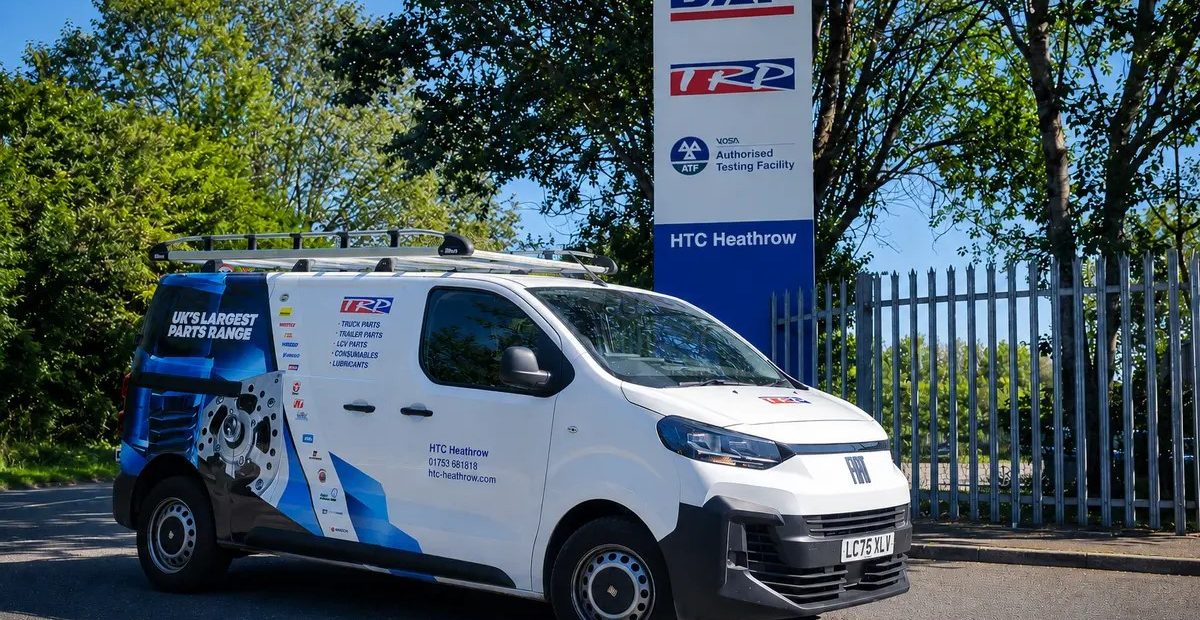
DAF dealer and commercial vehicle services provider HTC Group has expanded its partnership with same-day delivery specialist Gophr, strengthening its ability to provide urgent parts deliveries and additional logistics capacity across its ten branches in the South of England.
The expanded partnership is designed to give HTC Group greater flexibility when time-critical parts are required outside planned delivery schedules, demand increases unexpectedly or the dealer’s own resources are stretched. Gophr will provide access to one-hour urgent deliveries, same-day courier movements between branches and additional capacity when required.
For fleet operators, the significance of the arrangement is straightforward. A commercial vehicle sitting in a workshop because a relatively small replacement component has not arrived can quickly become a much more expensive problem. Lost vehicle utilisation, driver downtime, missed deliveries and disruption to customer operations can all follow from a delay in getting a vehicle back on the road.
Andrew Moreton, group parts sales manager at HTC Group, said: “Our customers rely on us to keep vehicles on the road, so when a part is needed urgently, time is very much money. They can’t afford to have stationary vehicles.
“We have a strong delivery operation across our branches, but there will always be those moments when the picture changes rapidly, or extra capacity is needed. It’s vital that you have a flexible and agile response, and our expanded partnership with Gophr gives us that, ensuring we meet the level that our customers expect.”
Flexible parts delivery for fleet uptime
HTC Group already operates its own delivery infrastructure across its branch network, meaning the Gophr relationship is not intended to replace its established operation. Instead, the partnership provides additional capacity that can be deployed when circumstances fall outside normal operating patterns.
That distinction is important in commercial vehicle parts logistics. Routine deliveries can be planned around known routes, stock movements and workshop requirements, but breakdowns and unexpected repairs do not necessarily follow a timetable.
A truck may be immobilised because of a single component, while another branch may have the required part available. In such circumstances, the ability to arrange a direct movement rather than waiting for the next scheduled delivery can have a disproportionate impact on vehicle availability.
Gophr’s same-day delivery operation is built around on-demand and direct courier movements, with live tracking and proof of delivery available as standard. Its network covers major UK towns and cities, allowing the company to support both local and longer-distance same-day movements.
For HTC Group, this creates an additional layer of resilience around its existing parts operation. Rather than maintaining permanent spare delivery capacity for every possible eventuality, the dealer can call upon additional resources when the requirement actually arises.
One-hour deliveries target critical delays
The one-hour delivery service is particularly relevant when a vehicle is already in a workshop and the required part is the final barrier to completing a repair.
Claire Mullarkey, national business development manager at Gophr, said: “Commercial vehicle parts delivery is a different proposition from moving high volumes of predictable orders. One missing component can be the difference between a truck returning to service and sitting in a workshop for another day.
“Our role is to complement HTC Group’s existing network with responsive capacity at the moments it matters most.
“Whether that is an urgent one-hour delivery, a same-day movement between branches or cover when resources are stretched, we can help get the right part to the right place before a small delay becomes a much higher operational cost.”
The focus on responsiveness reflects the economics of commercial vehicle downtime. The value of a rapid parts delivery is not simply the cost of the courier journey. It can also be measured against the potential cost of a vehicle remaining unavailable, particularly where the truck is responsible for time-sensitive work or forms part of a tightly utilised fleet.
For fleet and transport managers, getting a vehicle repaired quickly can therefore be more important than minimising the cost of an individual delivery.
Supporting HTC Group’s growing dealer network
HTC Group’s expansion has increased the importance of effective parts logistics. Following its acquisition of Barnes DAF in 2024, the group increased its network to ten dealer points, adding Guildford and Shoreham to existing locations including Heathrow, Dunstable, Park Royal, Reading, Oxford, Croydon, Belvedere and Hemel Hempstead. The group subsequently operates sites across the South of England, supporting customers with vehicle sales, servicing, repairs and parts.
The geographical spread creates opportunities for stock to be moved between locations when a required component is not immediately available at the branch where a vehicle is being repaired. It also means delivery requirements can vary considerably depending on traffic, customer demand, workshop activity and the location of available stock.
A flexible courier network can help bridge that gap without requiring the dealer to redesign its core delivery operation.
The arrangement also provides resilience during periods when internal resources are under pressure. Staff holidays, sickness, peaks in demand or multiple urgent requirements occurring simultaneously can all create temporary capacity constraints. Having access to external delivery resources allows HTC Group to respond without compromising its normal service.
Visibility adds another layer of control
Speed is only one part of an effective urgent delivery operation. Knowing where a part is and when it is likely to arrive is increasingly important for workshops and fleet operators planning vehicle repairs.
Gophr provides real-time tracking for its deliveries together with proof of delivery, giving HTC Group greater visibility over urgent movements. That information can help parts teams, workshops and customers understand the progress of a delivery rather than relying on estimated arrival times alone.
For commercial vehicle operators, better visibility can also improve communication with drivers and customers. If a repair depends on a particular component, workshop teams can plan their workload around the expected arrival and provide more accurate updates on when a vehicle should be available again.
The wider trend is towards treating parts logistics as part of the overall uptime proposition rather than as a separate back-office function. As fleets become increasingly focused on utilisation, maintenance efficiency and minimising unplanned downtime, the ability to move components quickly can become an important element of aftersales support.
Parts logistics becomes part of uptime strategy
The HTC Group and Gophr partnership highlights how commercial vehicle dealers are adapting their logistics operations to meet increasingly demanding expectations from fleet customers.
For operators, the objective is not necessarily to have every delivery completed by the fastest possible method. Instead, it is to have the right delivery option available when circumstances change.
Scheduled routes remain appropriate for predictable demand, while dedicated same-day or one-hour deliveries provide a solution when a vehicle is unexpectedly immobilised or an urgent repair depends on stock being transferred from elsewhere.
That combination gives HTC Group a broader range of options while allowing its established delivery network to remain at the centre of its parts operation.
Ultimately, the value of the expanded Gophr partnership will be measured not by the number of parcels moved, but by the vehicles that can return to work sooner. For fleet operators, where every hour of unnecessary downtime can carry a cost, getting a critical part from the right branch to the right workshop at the right time can make the difference between a manageable repair and a much more disruptive interruption to operations.