
Fleet agility: Building a flexible fleet strategy
Why fleet agility matters now
In November 2025, the Road Haulage Association (RHA) warned that planned fuel duty increases (now postponed to 2027[i]), higher employment costs, and changes to business rates would place substantial pressure on an industry already operating on razor-thin margins[ii]. Quantifying these stresses, the RHA’s annual cost movement survey found that operating costs rose, while margins remained at around 2%.[iii]
That alone would be enough to force difficult decisions. But fleet operators are also managing a second challenge: uncertainty. Geopolitical disruption, supply chain instability and shifting trade conditions are making it harder to predict vehicle costs, lead times and replacement cycles with confidence.
James Hardie, Transportation Finance – Business Development Manager, Siemens Financial Services UK, discusses how fleet operators can build flexibility into their fleet management.
For trucks and heavy goods vehicles, this uncertainty quickly becomes operational. Disruption to shipping routes and procurement channels can affect vehicle availability, monthly rentals and total cost of operation. Tariff changes and broader market volatility can also turn pricing into a strategic risk rather than a routine purchasing decision. Small fleet operators and trades businesses are especially exposed, with little room for manoeuvre. [iv]
This is why agility has become more than a buzzword. In a market defined by cost pressure and unpredictability, operators need the ability to adapt without tying up too much cash. This is already top of mind. The 2026 Leasing Outlook report by the British Vehicle Rental & Leasing Association (BVRLA)[v] placed the cost of finance at the top of customer concerns, followed by residual values, and maintaining cash flow.
The challenge is not only how to fund vehicles, but how to retain flexibility as conditions continue to change.
Compliance costs
A fourth pressure cited by BVRLA respondents was the regulatory burden. Fleet replacement cycles are colliding with a transition period in regulation and drivetrain technology, forcing operators to make high-stakes investment choices in an environment that is still shifting. Growing layers of decarbonisation targets, safety standards and driver monitoring rules – folding in more vehicle types – further increase cost and operational complexity.
In the near term, HGV operators must navigate Direct Vision Standard (DVS) requirements and charges in clean air zones, among other compliance pressures. Over the medium term, fleet transformation plans must account for Zero Emission Vehicle (ZEV) mandate deadlines. Further ahead, all new HGVs sold must be zero-emission by 2040.
There may be further change on the horizon. From January to March 2026, the government ran a consultation on a new HGV CO₂ emissions regulatory framework, with outcomes still to be released.[vi] At the same time, operators must increasingly consider not only where a vehicle is based, but where it will travel. In practice, fleet specification often has to meet the demands of the strictest geography in which a vehicle will operate, not simply those of the home depot.
Taken together, these overlapping requirements increase the value of shorter decision cycles, staged fleet renewal and the ability to refresh assets before compliance risks become costly.
Nearshoring & supply chain reconfiguring
An interesting effect of wider geopolitical pressures is nearshoring and supply chain reform[vii], which may in turn change route patterns: for instance, reducing very long-distance road contracts, and increasing regional delivery closer to home. A survey of global manufacturers found that, in the long-term, 62% of respondents plan to localise most, or all, of their supply chains.[viii] In the UK, 84% of surveyed manufacturers have nearshoring/localising plans for at least half of their supply chain.[ix]
This is in addition to a changing balance in imports and exports. Over the last 20 years, the volume of goods lifted by UK-registered HGVs in both imports and exports has broadly declined, according to UK government analysis of international road freight. Additionally, UK-registered HGVs now typically carry more imports than they carry exports.[x]
These trends matter because route changes alter more than mileage. They also change the economics of fleet investment. Electrification, for example, is often determined as much by route profile, dwell time and access to infrastructure as by policy ambition alone.
Operators therefore face a practical question: what happens to the business case for particular vehicles when long-haul demand softens but regional delivery intensity increases? The risk is ending up with a fleet specified for yesterday’s operating model rather than tomorrow’s. Shorter commitments and planned renewal points can help reduce that risk.
Transportation asset finance
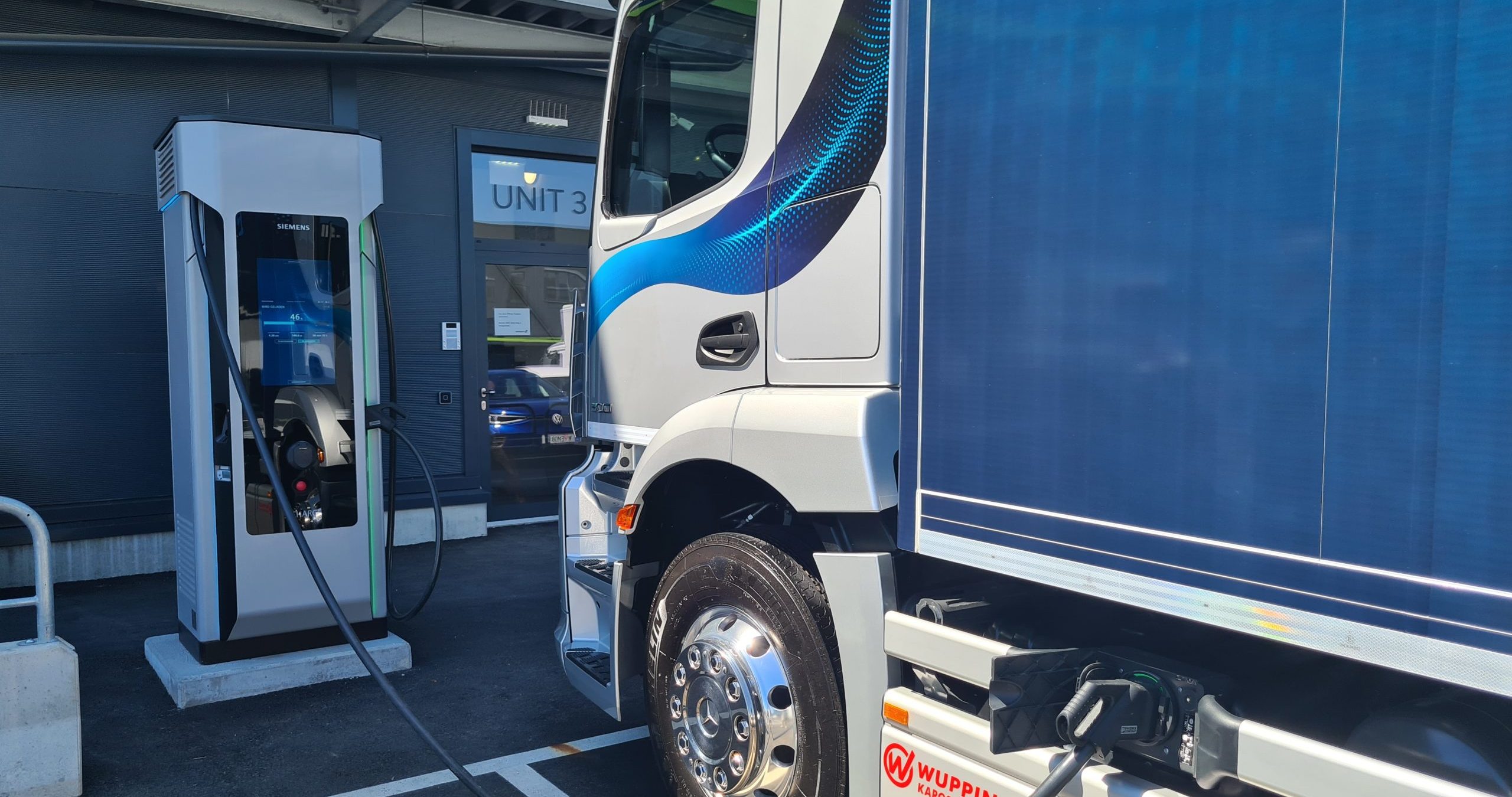
This is where flexible transport finance becomes strategically important. Ownership can leave businesses committed to assets for longer than operational conditions justify. Structures such as leasing keep more cash available, even as fleet operators upgrade technology, meet regulation, shift to lower-emission vehicles, and ensure they can access appropriate infrastructure, such as EV charging equipment. They can also create smoother cash flows and make it easier to re-specify assets as usage patterns, infrastructure access and operating geographies change.
Historically, UK operators have already balanced ownership with flexibility. In 2020, just under half of HGV acquisitions were made outright, while the remainder prioritised leasing or rental (44% purchased, 33% leased long term and 23% rented short term).[xi] More recently, economic uncertainty has led some operators to defer investment or extend existing leases.[xii] At the same time, electrification, residual value uncertainty, rising capital costs and margin pressure are making the case for outright ownership less clear-cut.
Leasing models such as operating leases and contract hire can offer a more adaptable route, especially where businesses want to reduce exposure to end-of-life value risk and rapid technology change. This is especially relevant during periods of transition, where shorter commitments and reduced upfront capital allow operators to respond more quickly to shifting market conditions.
Flexibility builds resilience
In today’s climate, the operating context can change faster than the asset itself. The most resilient fleet strategies are therefore not simply the lowest cost on paper at one moment in time, but the ones that preserve room to adjust. That starts with a clear understanding of what vehicles are needed, what they will cost and how those requirements may change over time. Once that picture is in place, specialist finance can help operators build a fleet strategy that is robust enough for today’s pressures and flexible enough for tomorrow’s sharp turns.
Learn more about transportation asset finance here.
Siemens Transform is back for 2026 at Manchester Central on 15 and 16 July. The event brings together thousands of industry participants, to help accelerate digital and sustainability transformation. Register your interest here.
[i] https://commonslibrary.parliament.uk/research-briefings/cbp-10340/
[ii] https://www.rha.uk.net/news/news/detail/rha-reaction-to-chancellors-budget
[iii] https://www.rha.uk.net/news/news/detail/rha-annual-cost-movement-survey-reveals-rising-costs-and-shrinking-margins-for-haulage-industry#:~:text=We%20want%20to%20work%20with,the%20full%20pay%20report%20HERE:
[iv] https://www.fleetpoint.org/fleet-management-2/the-squeeze-is-coming-most-operators-wont-see-it/
[v] https://www.bvrla.co.uk/home/develop/industry-outlook-report
[vi] https://www.gov.uk/government/consultations/new-hgv-co2-emissions-regulatory-framework-for-the-uk
[vii] See, for instance, https://www.globaltrademag.com/how-geopolitical-tensions-in-2026-are-reshaping-global-supply-chain-strategies/; https://x2uk.com/geopolitical-resilience-in-supply-chains-strategies-for-flexible-logistics/; https://www.ajg.com/gallagherre/news-and-insights/features/de-risking-supply-chains-reducing-exposure-with-onshoring-and-near-shoring/
[viii] https://www.dnb.co.uk/blog/supplier-risk/nearshoring-manufacturing-resilience-strategy.html
[ix] https://www.dnb.co.uk/blog/supplier-risk/UK-manufacturing-nearshoring-supply-chains.html
[x] https://www.gov.uk/government/statistics/road-freight-statistics-2024/international-road-freight-statistics-united-kingdom-2024
[xi] https://assets.publishing.service.gov.uk/media/66fd22b130536cb927482a92/dft-understanding-the-road-freight-market.pdf
[xii] https://www.fleetnews.co.uk/features/volume-of-leased-trucks-declines-in-a-challenging-hgv-market