
Dealership Technology at Automotive Management Live
A dealership’s technology needs stretch well beyond managing stock or publishing vehicles online. Sales teams must respond to enquiries, marketing teams need to keep listings up to date, service advisers have to stay in touch with customers, and managers want a clear view of the whole business. Each area creates its own administrative burden, and the number of digital tools promising to help keeps growing.
Automotive Management Live this November reflected that. Suppliers demonstrated everything from artificial intelligence and vehicle merchandising to inventory management, customer self-service and digital forecourts. Some of it introduced new capabilities, but much of it tackled familiar frustrations: duplicated information, slow processes, missed enquiries and the time spent keeping systems up to date.
Rather than pointing to one defining technology, the event showed how several developments are changing the way dealerships work.
How AI is changing customer communication
Artificial intelligence was one of the more prominent themes, particularly in how dealerships talk to customers and manage information.
Responding quickly to an enquiry can decide whether a potential buyer stays interested. Yet enquiries don’t always arrive during opening hours, and a busy showroom makes it hard for staff to give every customer an immediate reply.
At AM Live, AutoConverse demonstrated its conversational AI platform, which works across dealership websites and WhatsApp. It draws on a retailer’s website and live stock to answer customer questions, help buyers find suitable vehicles, arrange test drives and request part-exchange valuations. That gives dealerships another way to engage prospective buyers without needing a member of staff free for every first contact. Its effectiveness depends on the accuracy of the information it provides and on how smoothly it hands over a customer who needs more detailed help.
AI is also finding uses beyond the showroom. CarCutter showcased its AI-powered vehicle imagery technology, which helps dealerships produce consistent photography and digitally enhanced backgrounds. Online listings often give a buyer their first impression of a vehicle, so presentation matters more than ever. Automating parts of image production could help retailers keep a consistent standard across large volumes of stock.
Connecting operations and reducing administration
Not every development relies on artificial intelligence. For many retailers, the most useful technology brings existing processes together and cuts the manual work involved in running the business.
Independent dealerships, in particular, can find themselves juggling stock information, customer records, advertising, invoicing and vehicle preparation across several platforms. Entering the same details repeatedly takes time and increases the risk of inconsistencies.
MotorDesk, developed by Chief Mechanic Ltd, presented its cloud-based dealer management system for independent retailers. The platform combines stock management, classified advertising feeds, lead handling, vehicle preparation costs and invoicing. It also connects to accounting software including Xero, Sage and QuickBooks. Customer-facing functions include online reservations, finance applications, part-exchange valuations and payments.
The appeal of these systems lies less in adding another layer of technology and more in reducing the number of separate processes staff need to manage. When information moves between systems without repeated manual input, dealerships have more time to sell vehicles and look after customers.
Digital retailing extends onto the forecourt
The shift towards digital retailing doesn’t end when a customer arrives at the dealership. Online listings and digital enquiries are now an established part of buying a vehicle, but the physical forecourt still needs to offer the same level of information and convenience.
Printed windscreen cards can be time-consuming to maintain, especially when prices change, vehicles move or new promotions start. Keeping details consistent across online listings and physical stock becomes yet another task for sales teams.
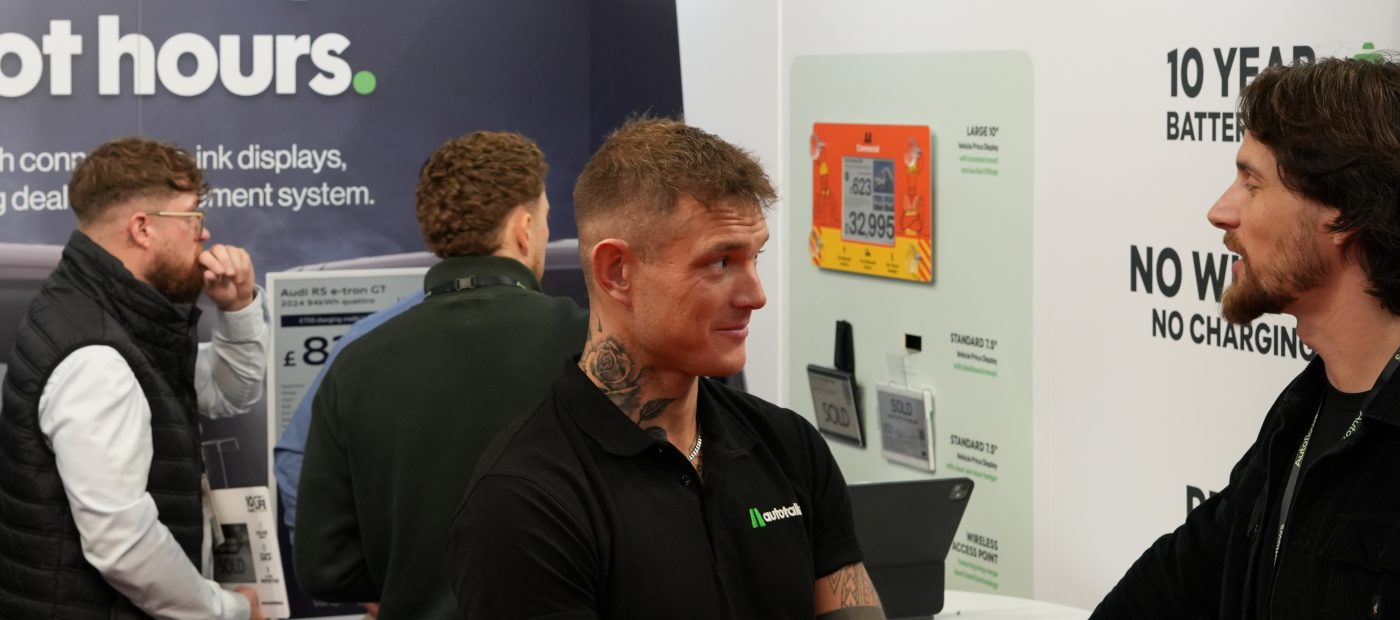
AutoTalker demonstrated its digital Vehicle Price Displays, including a new 13.3-inch model alongside its existing 9.7-inch and 7.5-inch screens. Connected to dealership stock information, the displays let staff update vehicle details without printing and replacing individual price cards. As well as prices and specifications, the screens can show finance information, promotional offers and QR codes that direct customers to further details, videos, brochures or enquiry forms.
Andrew Wood, CEO and Founder of AutoTalker, said: “Dealers have invested heavily in digital systems, but the customer experience doesn’t stop when someone walks through the showroom door. The information on the forecourt needs to be as accurate and accessible as the information customers find online. Technology should help dealers keep those two experiences connected, while reducing the manual work involved in keeping vehicle details up to date.”
The displays show how digital technology can improve an existing part of the buying process without asking customers to change how they browse vehicles.
Choosing technology that solves the right problems
One of the more interesting aspects of AM Live was the variety of approaches on show. AI is opening up new possibilities for customer communication, vehicle imagery and workshop processes, but it isn’t the answer to every dealership challenge. Connected systems, automated workflows, digital displays and self-service tools all have a part to play.
For retailers, the decision isn’t necessarily about adopting the newest technology. It’s about understanding where time is being lost, where customers meet unnecessary friction and which processes could work better. A system that connects existing information may offer more practical value to one dealership than an AI tool, while another might benefit more from automating how it handles enquiries.
The range of solutions at Automotive Management Live showed how far dealership technology now reaches, touching almost every stage of the customer journey and much of the work behind the scenes. As these tools develop, the opportunity for retailers lies in finding the right combination to support their teams, improve the buying experience and give customers a better reason to stay engaged.