
Five logistics trends for 2027
The end of the free pass
2026 was a year of acceleration. AI moved into everyday use across the logistics industry. As we head into 2027, the conversation is shifting from adoption to impact. Trade and geopolitics keep everyone on their toes, and budgets are tight, so companies want proof that their technology investments pay off. Through it all, people and partnerships matter as much as ever. Here are the logistics trends 2027 will bring, by Philipp Pfister, Sector VP Transporeon, a Trimble Company.
Disruption: the map keeps moving
Trade policy, energy prices, fuel costs and geopolitics are all volatile at once. Europe will feel the effects up close, as regional conflicts continue to hit supply chains directly. Upcoming elections in key markets could bring new thinking on infrastructure spending, road tolls and the pace of emissions enforcement. These include France’s presidential race and parliamentary votes in Italy, Spain and Poland. North America faces the same fuel and energy pressures, plus some of its own. Cross-border trade with Mexico and Canada is growing, while tighter scrutiny of Chinese goods routed through those countries could reshape established trade lanes.
Weather matters too. In summer 2026, low water on the Rhine left barges running roughly a fifth full. A single barge carries the equivalent of 50 to 150 truckloads, so that left a lot of freight looking for another route. Not every disruption stems from conflict or trade disputes.
Rail can take on some of that freight, but it cannot absorb much more until capacity improves. Germany is investing heavily in rail infrastructure, yet major improvements will take years. Until then, expect intermodal transport to progress corridor by corridor.
AI: from automation to governed autonomy
In our predictions for 2026, we said “AI as a colleague” was replacing “AI as a tool”. In 2027, that colleague gets a promotion.
Companies will hand more defined tasks to AI agents while keeping them inside safe, guarded environments. Fully autonomous operations remain some way off. Today, most AI applications wait for a person to trigger them. In 2027, expect most to act proactively, with people overseeing the results. “Give me a summary of this” will become “Will this load be delayed, and what should we do about it?”
Answering questions like that requires good data, and that problem is not solved. However, companies have stopped trying to clean every last drop of data before they put AI to work. They pick a use case, work out exactly what data it needs and plug that in first.
Autonomy is also appearing on the road, with trucks now in testing on public roads. Wider rollout in Europe depends largely on legislation, but these vehicles become a more realistic option every year.
Smaller players: catching up on digitalisation
Technology that once demanded a big budget and a bigger IT team is now within reach of small and mid-sized shippers and carriers. With leaner processes and fewer ERPs to untangle, these companies can move fast, as long as leadership is on board. Big players gain too, because they can digitise small processes that never seemed worth the investment before.
Companies that don’t invest risk falling behind. That risk already fuels mergers and acquisitions across the industry.
People: the roles change, not just the tasks
Despite the rise of technology, transportation is still first and foremost a people’s business. That starts with drivers. The shortage isn’t going away, so digitalisation can take up the most slack through better planning and fewer empty loads.
In logistics teams, routine process roles will continue to shrink, but people aren’t stepping aside. Instead, the focus shifts towards managing exceptions. Rather than validating routine shipments, logistics professionals will handle the edge cases, compliance thresholds and disruptions that AI flags.
Customers welcome the speed of AI and how quickly it resolves some issues. When matters get delicate or complex, though, they still want to speak to a human. “Can we still call you?” is a question support teams will hear for a while yet, because connections and collaboration matter as much as ever.
Change is tough, and nobody enjoys having their processes rewritten. The leaders who explain the thinking behind the strategy and bring their teams along will succeed.
Connected data: one link at a time
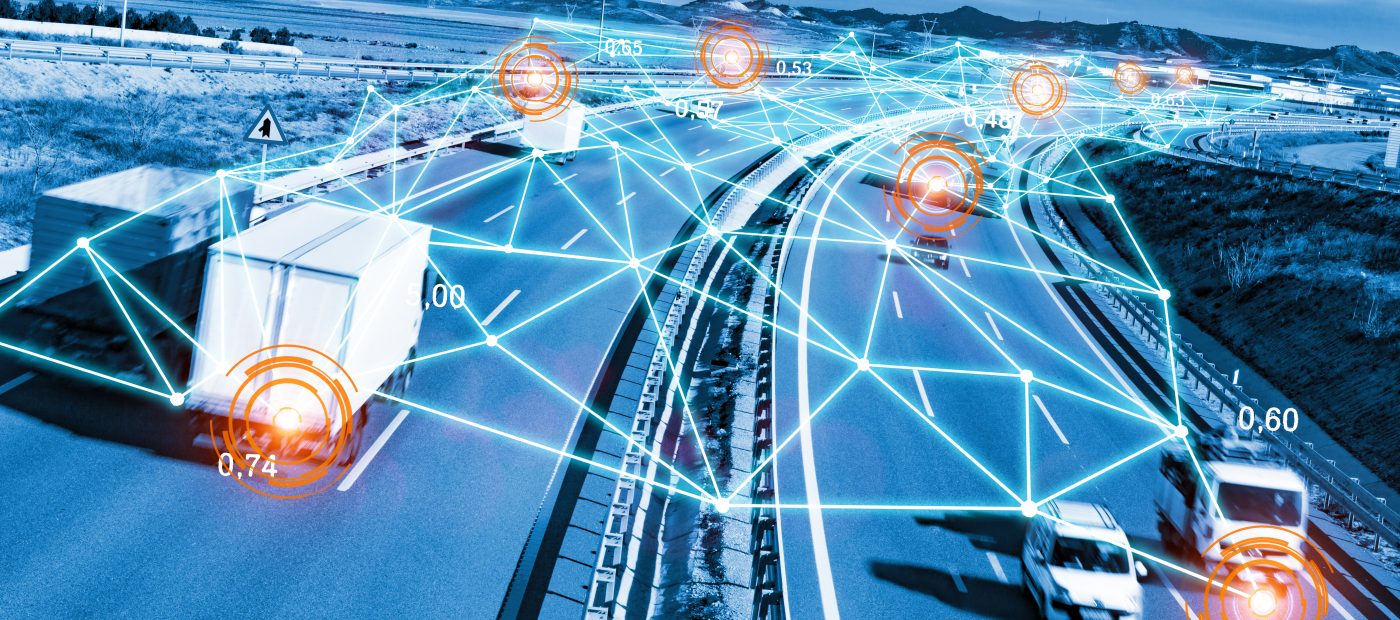
Plenty of value in logistics sits idle, stuck in data that never leaves its origin system. Warehouse operations, transport execution, dock and yard scheduling, real-time visibility and freight audit each hold a critical piece of the big picture. Yet they rarely talk to each other. Connecting them lets teams ask AI, “What are the five things most likely to go wrong today?” and get an answer worth acting on. AI agents will help by giving people one common interface across fragmented systems.
Progress will be gradual, one use case at a time. When companies connect one piece of the puzzle, they quickly see what the next could do. The more partners connect, the more everyone can optimise across the network.
Sharing more also means knowing who you share with. Digital freight fraud is growing more sophisticated and targets systems, credentials and digital identities. Companies will need to combine AI checks with trusted network relationships.
Heading into 2027
Where does that leave us? With a year where nothing gets a free pass. The map will keep moving, and AI will have to earn its keep like any other investment. Smaller players will keep closing the distance on bigger ones. Companies that share data with business partners will act on disruptions earlier than those going it alone.
Despite all the technology, logistics remains a people business. From drivers on the road and dispatchers managing daily operations to trusted partner relationships across the freight network, people will decide how much value companies get from any of it.