
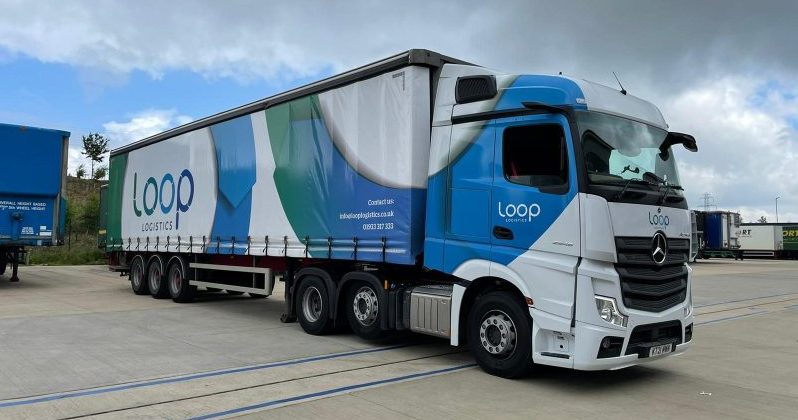
Loop Logistics calls in the administrators
Instant Despatch Services (IDS), trading as Loop Logistics, has entered administration after nearly 24 years in business, becoming the latest casualty in a UK logistics sector facing mounting financial pressure.
The Northampton-based haulage and warehousing company formally appointed administrators from FRP Advisory on 6 May 2026. IDS, which traded as Loop Logistics, operated general haulage, pallet distribution, warehousing and fulfilment services across the UK and Europe. The business had built a strong reputation in the Midlands logistics market and worked with clients including BSH Home Appliances and Pall-Ex.
However, despite years of expansion and investment, the company was ultimately unable to withstand the financial pressures currently hitting much of the UK transport and logistics industry.
Why Did Loop Logistics Go Into Administration?
The clearest indication of the reasons behind the administration came from statements issued by FRP Advisory and Companies House filings.
Administrators said the company had faced “ongoing operational and financial challenges” and confirmed that advisors had been working with directors since November 2025 in an attempt to secure the future of the business. Trading eventually ceased on 24 April 2026. Around 42 employees were made redundant, while a small number were retained to assist with winding down operations and handling customer goods.
FRP Advisory partner Glyn Mummery said: “Loop Logistics had built an established presence in the logistics sector. Unfortunately, despite efforts to secure the future of the business, ongoing operational and financial challenges meant it was unable to continue trading.”
Industry reports suggest tightening credit conditions and disputes linked to invoice finance may also have accelerated the collapse. Trade publication Trans.info reported that funding provider WeDo Invoice Finance had moved against the business before administrators were appointed.
Companies House records also show a series of secured charges registered against the company over recent years, including borrowing arrangements with HSBC UK Bank and invoice finance providers.
Financial filings point towards increasing strain on the company’s balance sheet. Publicly available data indicates IDS carried rising liabilities and negative net worth in recent years, despite continued turnover and expansion.
The collapse is particularly notable because Loop Logistics had continued investing heavily in recent years. The business expanded warehousing operations in Northampton, secured BRCGS accreditation and promoted itself as a growing logistics and fulfilment provider.
Are UK Logistics Company Failures Increasing?
Loop Logistics is far from an isolated case. Across the UK logistics and haulage sector, insolvencies have continued to rise as operators struggle with narrow margins, rising costs and weaker customer demand.
Recent insolvency notices have included several regional haulage and freight businesses, with transport operators citing high fuel costs, wage inflation, increased National Insurance costs and tighter access to finance as major pressures.
The logistics sector has been particularly exposed because transport businesses often operate on extremely thin margins while carrying high fixed costs. Fuel volatility, vehicle finance repayments, insurance costs and wage pressures have all increased sharply since the pandemic.
At the same time, many logistics operators expanded rapidly during the ecommerce boom of 2020 and 2021, only to face softer freight demand as consumer spending weakened.
Industry commentators also point to growing pressure from lenders and invoice finance providers. When cashflow tightens, haulage businesses can quickly run into difficulty because fuel, payroll and fleet costs must still be paid immediately.
A recent discussion on Reddit’s logistics forum described the sector as “risk management with containers attached”, reflecting how instability and disruption have become normalised across supply chains.
Others in the haulage industry have argued that the combination of rising driver wages, fuel price spikes and shrinking margins has left many smaller and mid-sized operators vulnerable.
A Difficult Environment for Mid-Sized Hauliers
Loop Logistics illustrates the difficulties facing mid-sized transport firms attempting to scale in a highly competitive market.
The company grew from a family-run haulage operator founded in 2000 into a modern logistics provider with warehousing, pallet distribution and fulfilment capabilities. It even supported NHS supply chains during the Covid-19 pandemic and expanded its fleet after securing major customer contracts.
Yet expansion can bring significant financial exposure. Warehousing investments, fleet financing, staffing costs and reliance on invoice finance facilities can quickly become unsustainable when demand weakens or customers delay payments.
For many logistics firms, the challenge is no longer simply winning work but maintaining sufficient cashflow and profitability in an increasingly expensive operating environment.
While official insolvency data suggests overall company failures may be stabilising slightly compared with the peak seen in 2023, the haulage and logistics sector remains under considerable pressure heading into the second half of 2026.
The administration of Instant Despatch Services, trading as Loop Logistics, is another sign that even long-established operators with recognised customers and modern facilities are not immune from the ongoing strain affecting UK logistics.