

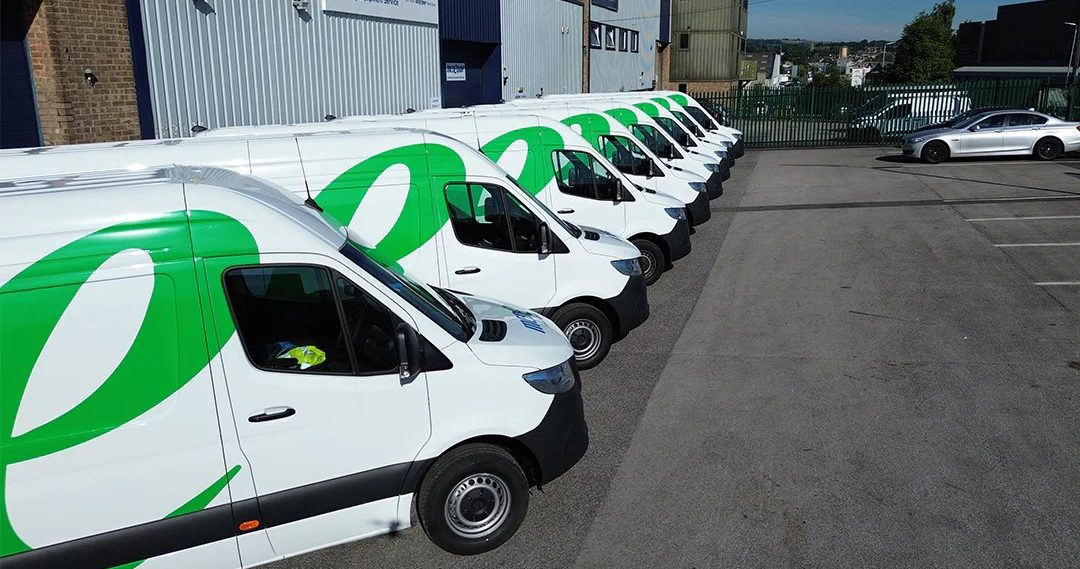
Most commercial fleets now accept that electric vehicles can work operationally. The bigger challenge emerging across the industry is no longer vehicle capability — it is charging control.
As fleets scale electrification programmes, charging activity is expanding rapidly across homes, depots, public networks and near-home charging locations. However, many operators still lack full visibility over how charging is being managed, what it is costing, and whether infrastructure is supporting operational uptime efficiently.
That visibility gap is creating a growing operational risk for fleet operators: charging-related downtime.
Traditional diesel fleet operations evolved around consistency. Fuel cards, bunkering systems and standard reimbursement processes created relatively predictable operational models. EV charging behaves very differently. Every charging environment introduces different tariffs, payment systems, software platforms and user behaviours, creating fragmentation that many fleets are only now beginning to fully recognise.
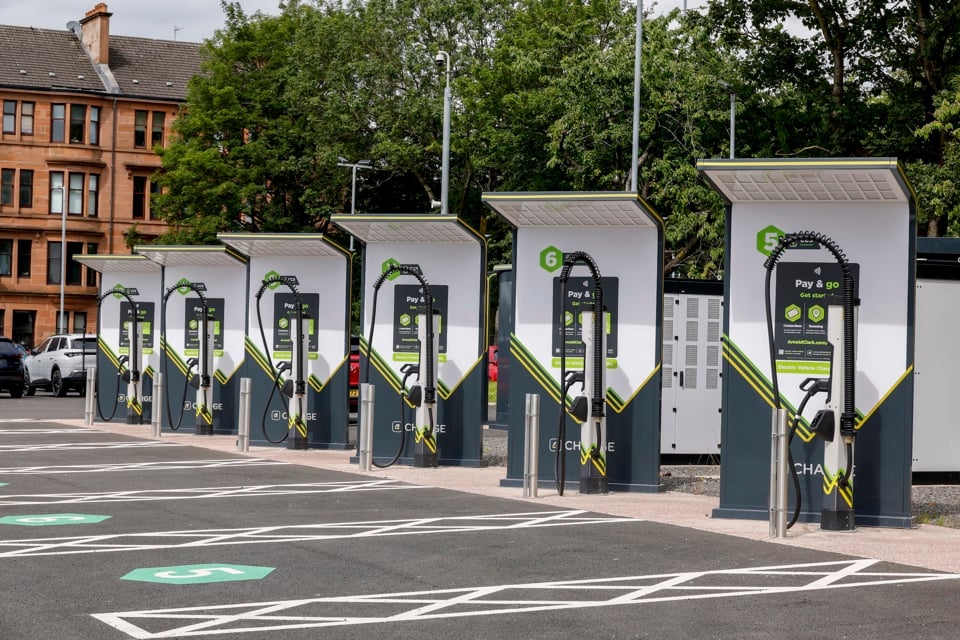
Image: Arnold Clark
Charlie Cook, Founder and CEO of Rightcharge, recently told FleetWise in his Fleet1000 interview said: “90% of our fleet drivers are still on standard electricity tariffs.”
That statistic highlights how immature charging governance remains across parts of the fleet sector. Earlier analysis from The AA and Rightcharge found that fleets could reduce charging costs by up to 35% through improved charging management and tariff optimisation.
At the same time, UK charging infrastructure continues to expand rapidly. According to Zapmap, the country has now surpassed 120,000 public EV chargers across more than 46,000 charging locations. Government support is also accelerating workplace and depot infrastructure investment. The UK’s Depot Charging Scheme now offers fleets up to 70% funding towards depot charging infrastructure and civil works, capped at £1 million per organisation, while Workplace Charging Scheme grants have increased to £500 per socket.
However, infrastructure growth alone does not automatically create operational resilience. Smaller EV fleets may be able to absorb charging disruption relatively easily, but larger operations managing hundreds of vehicles face a far more complex challenge.
For many operators, the issue is no longer simply charger availability. Instead, the focus is shifting towards whether charging systems can reliably support fleet uptime under operational pressure.
This challenge is becoming increasingly visible in depot charging environments. The Road Haulage Association continues to identify depot and public charging infrastructure as major barriers slowing electric van and HGV adoption. Yet beyond infrastructure availability lies a deeper operational scalability issue.
As fleets grow, operators are entering unfamiliar territory involving site power capacity, charging schedules, software integration, energy management and future grid demand. Fleet teams are increasingly having to think like energy managers as much as transport operators.
The pressure becomes particularly acute during peak operational periods when multiple vehicles compete simultaneously for limited charging capacity while still needing to meet strict turnaround schedules.
Reliability is therefore becoming one of the most important factors in EV fleet operations. Concerns are increasingly centred around charger usability, operational resilience and network consistency rather than simply charger numbers.
That issue came into sharper focus recently following criticism of new UK charger uptime regulations, which require rapid chargers to achieve 99% reliability. Some parts of the industry argued the measures do not go far enough to address wider operational reliability concerns.
EVA England chief executive Vicky Edmonds recently summarised the broader challenge facing the sector: “We’ve moved beyond the early adopter phase now. This is no longer just about whether the technology works. It’s about whether the overall system works for people consistently, reliably and conveniently every day. We are now dealing with a consumer systems challenge rather than simply a technology challenge.”
For commercial fleets operating time-sensitive vehicles, inconsistency across charging networks increasingly translates directly into operational risk.
Charging infrastructure itself is also evolving into connected operational technology. Modern charge points are no longer passive hardware assets; they are integrated systems linked simultaneously to vehicles, payment platforms, software environments and energy networks.
In a recent EV Infrastructure News analysis, cybersecurity specialist Claire Maslen warned: “Every connection, whether through wireless entry points or physical connections to charging infrastructure, represents a potential back door for bad actors.”
As a result, charging infrastructure is beginning to resemble enterprise operational technology, bringing new expectations around software resilience, cybersecurity, uptime and systems management.
This shift is one reason Charging-as-a-Service models are gaining traction across the sector. Providers including Impact Energy Global, Mer and bp pulse are increasingly positioning charging as a fully managed operational service that combines infrastructure, software, maintenance and energy management into a single integrated solution.
Increasingly, fleets are becoming less concerned with simply owning charging hardware and more focused on reducing operational uncertainty around charging itself.
The fleets progressing fastest with electrification are often the ones developing the strongest operational control, visibility and resilience around charging management.
Article source: FleetWise









Jeffrey J. McClendon
( Thursday, May 21, 2026 - 11:44 )
“Good point about charging control becoming a major challenge for EV fleets. As more electric buses and commercial vehicles get added to operations, managing charging schedules and vehicle availability efficiently is going to be critical.
I recently came across this resource discussing how digital fleet and transport systems are evolving alongside these changes: https://mobisoftinfotech.com/solutions/bus-transportation-software
The combination of EV adoption and smarter fleet management tools will probably shape the next phase of public transportation.”