

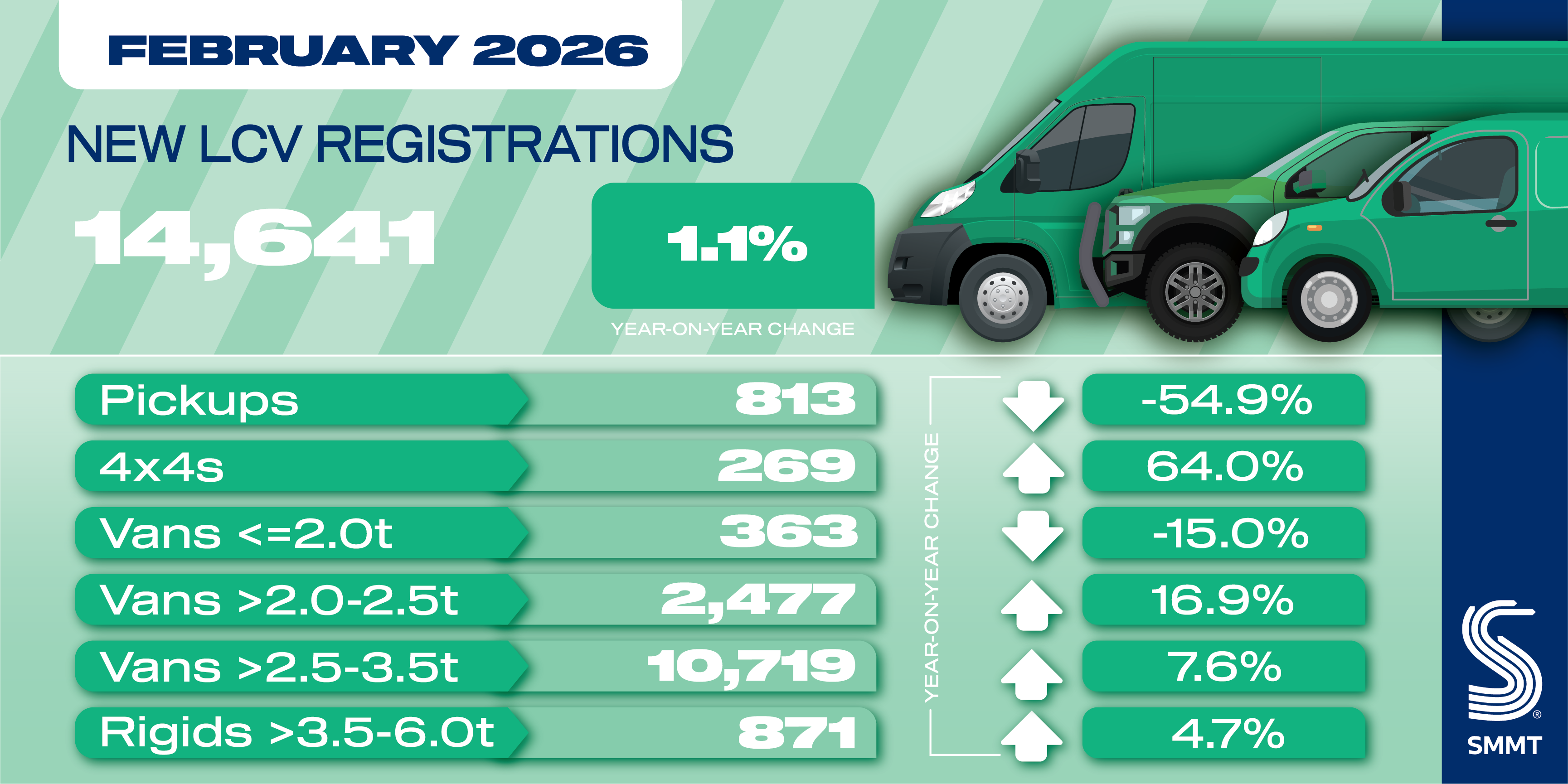
UK new light commercial vehicle (LCV) registrations rose slightly in February, increasing by 1.1% to 14,641 units, according to the latest figures from the Society of Motor Manufacturers and Traders (SMMT). The total includes vans, pickups and 4x4s and marks the second increase in three months following a year-long period of declining registrations.
February traditionally represents a small share of annual volumes, accounting for around 5% of the yearly market as many buyers delay purchases until the March number plate change. While the increase is modest, it suggests some stabilisation in the van market following a challenging period.
Growth during the month was driven largely by the large van segment. Registrations of vans weighing between 2.5 and 3.5 tonnes rose by 7.6% to 10,719 units, representing nearly three quarters (73.2%) of all new vans registered in February. Demand also strengthened in the 2.0–2.5 tonne category, which recorded a 16.9% rise to 2,477 units.
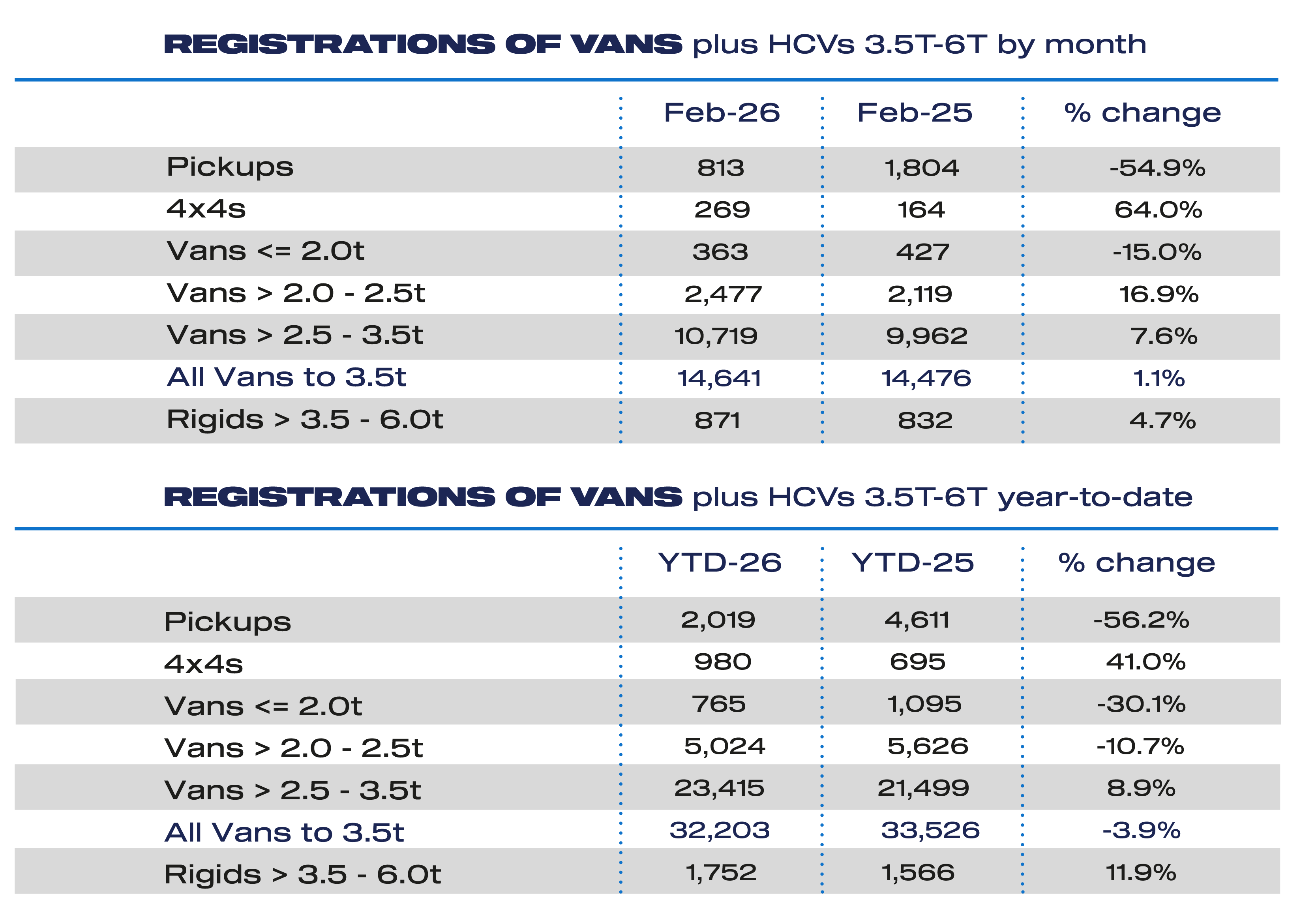 The 4×4 market also experienced significant growth, with registrations increasing by 64.0% to 269 units. However, these gains were partly offset by a continued decline in the pickup sector. Registrations of pickups fell sharply by 54.9% to just 813 units, reflecting the ongoing impact of changes introduced last year to the benefit-in-kind and capital allowance treatment of double cab pickups.
Smaller vans also struggled during the month, with registrations of vehicles weighing under 2.0 tonnes dropping by 15.0% to 363 units.
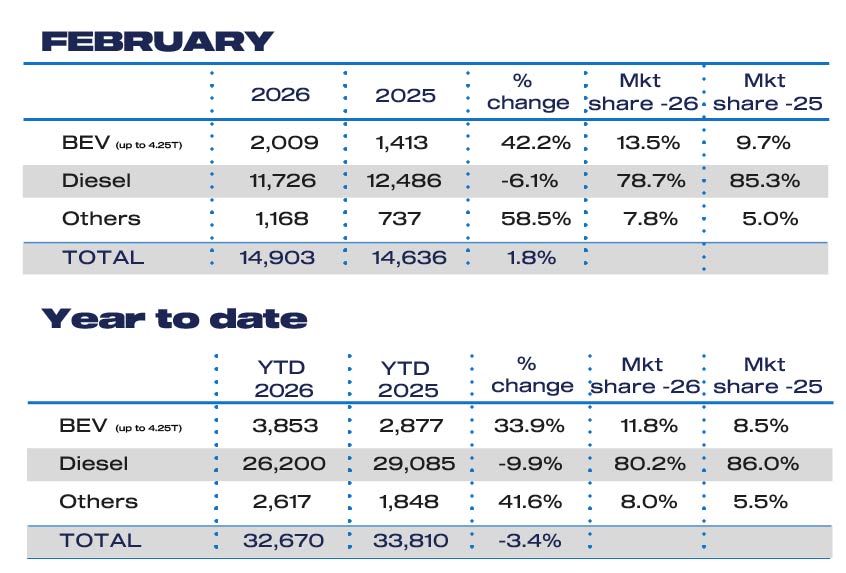 Electrification of the van market continued to gather pace, with battery electric van registrations rising by 42.2% to 2,009 units. This growth increased the segment’s market share to 13.5%. Despite the progress, the figure remains well below the 24% share required this year under the government’s zero-emission vehicle (ZEV) mandate.
Diesel-powered vans still dominate the market, accounting for almost eight in 10 registrations. This highlights the ongoing challenges facing operators and manufacturers as they attempt to transition fleets to zero-emission vehicles, particularly given concerns around charging infrastructure, vehicle costs and operational limitations.
Looking at the year to date, total LCV registrations across January and February reached 32,203 units, representing a decline of 3.9% compared with the same period last year. While battery electric van demand rose by 33.9% to 3,853 units during the first two months of the year, their overall market share of 11.8% remains less than half of the mandated target.
Recent government measures aimed at supporting electrification could help accelerate adoption. These include the extension of funding for the Plug-in Van Grant until 2027, the introduction of a new Depot Charging Scheme and proposed planning reforms designed to make installing private charging infrastructure easier.
However, industry leaders argue that natural market demand is still significantly behind regulatory expectations. As a result, the sector is continuing to call for the government to bring forward a formal review of the transition timetable and the regulations that underpin it.
Mike Hawes, SMMT Chief Executive, said: “The van market’s modest growth in February is welcome, as is another month of rising demand for electric models. Pickup registrations, however, continue to lag given last year’s fiscal changes, while EV uptake remains far below the level required by regulation, despite more than half of all models being available as EVs and with massive discounts on their sale. That is unsustainable and therefore requires a wholesale review of the transition to ensure we have a framework that is realistic, deliverable and affordable.”