
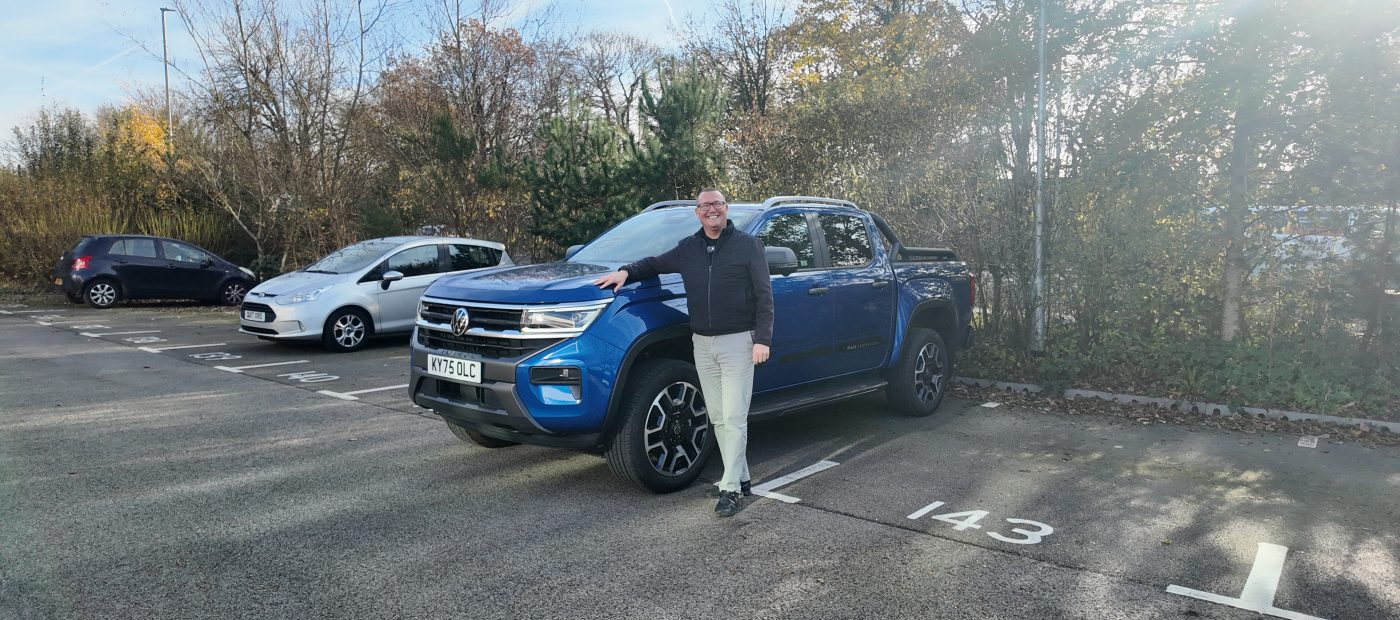
Volkswagen Amarok Review: Is this £46k Pickup REALLY Worth the Money?
Watch the review — click here (opens YouTube in a new tab)
First Impressions
There are pick-up trucks, and then there are pick-up trucks that make you wonder whether you really need an SUV at all.
The Volkswagen Amarok PanAmericana falls firmly into the latter category.
Volkswagen has taken an already successful formula, added a powerful 3.0-litre V6 diesel engine, a sophisticated four-wheel-drive system and a generous equipment list, and created a vehicle that manages to be both a serious working truck and a rather pleasant place to spend a working week.
The latest Amarok shares its underlying platform with the Ford Ranger, following the partnership between Volkswagen and Ford. That’s not necessarily a bad thing. The Ranger is widely regarded as one of the best-driving pick-ups available, and Volkswagen has used that excellent starting point to create something with its own identity.
The PanAmericana sits towards the top of the range, below the Aventura, and is arguably the sweet spot for buyers wanting a premium-looking truck without going completely overboard.
Under the bonnet sits Volkswagen’s 3.0-litre V6 TDI diesel, producing 240PS and a substantial 600Nm of torque. Power is sent through a 10-speed automatic gearbox to Volkswagen’s 4MOTION four-wheel-drive system.
The figures are impressive, but the Amarok isn’t just about performance. It offers a payload of approximately 1,043kg in standard specification and can tow a braked trailer weighing up to 3,500kg.
Prices for the PanAmericana are around £60,565 including VAT and the on-the-road charge, based on the published UK price guide. That’s serious money for a pick-up, but the specification and engineering help explain where much of it has gone.
First impressions are excellent. It looks substantial, feels properly built and has the sort of presence that makes smaller commercial vehicles look rather insignificant.
More importantly, it feels like a vehicle designed to work hard without making the driver suffer in the process.
Design and Interior
The Amarok has always had a distinctive appearance, but this latest generation looks particularly good.
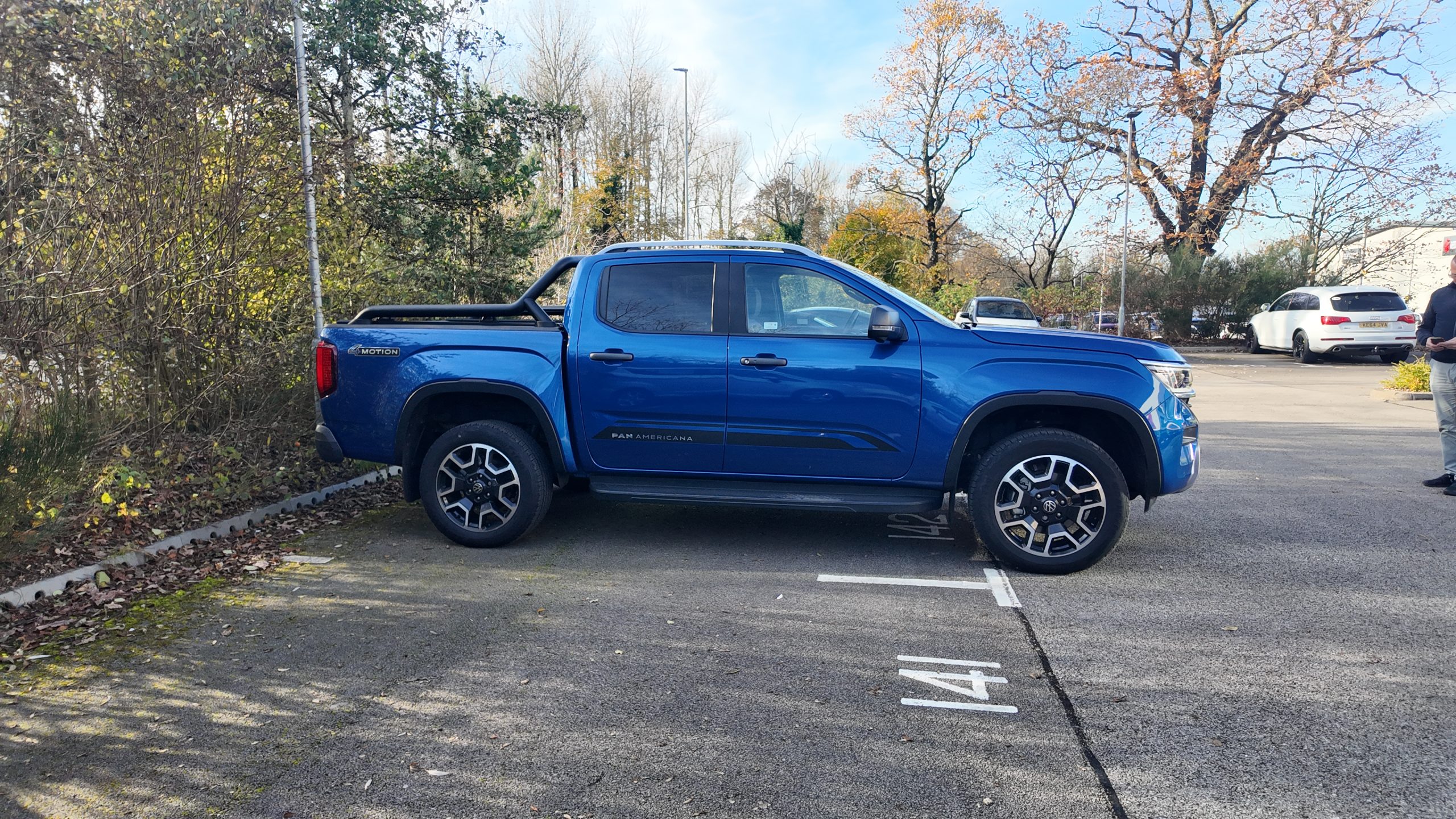
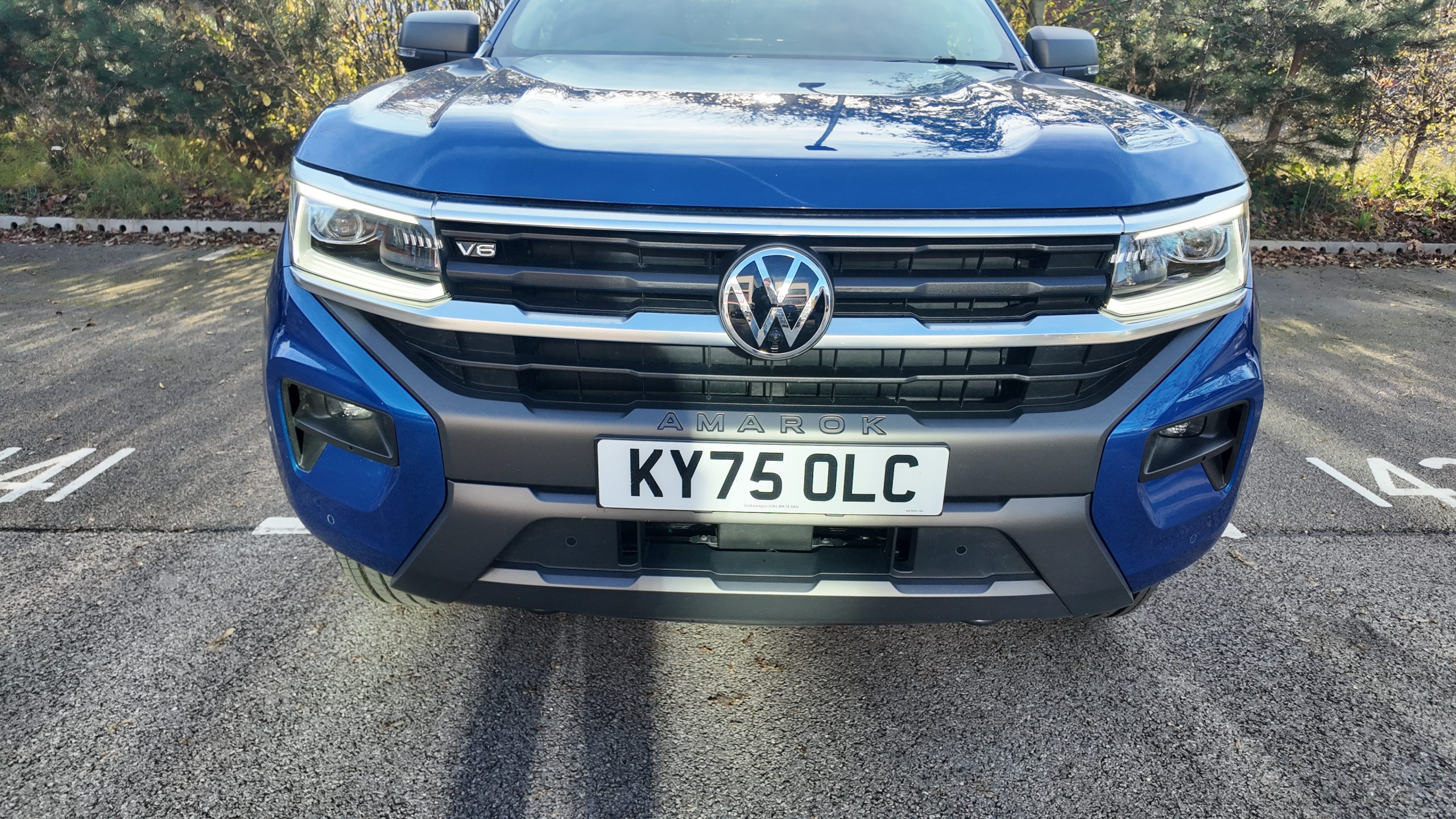
The front end is bold, with a wide grille, strong bonnet lines and distinctive LED lighting. The PanAmericana adds its own styling touches, including black exterior detailing, dark alloy wheels and a more rugged appearance than the more road-focused Aventura.
The X-shaped grille design gives it a recognisable front end, while the wheel arches and substantial bodywork make it look every bit the working pick-up.
It’s a large vehicle, measuring approximately 5.35 metres long and 1.91 metres wide without the mirrors. You certainly know you’re driving something substantial, particularly when negotiating narrow country lanes or multi-storey car parks.
But the real surprise is the interior.
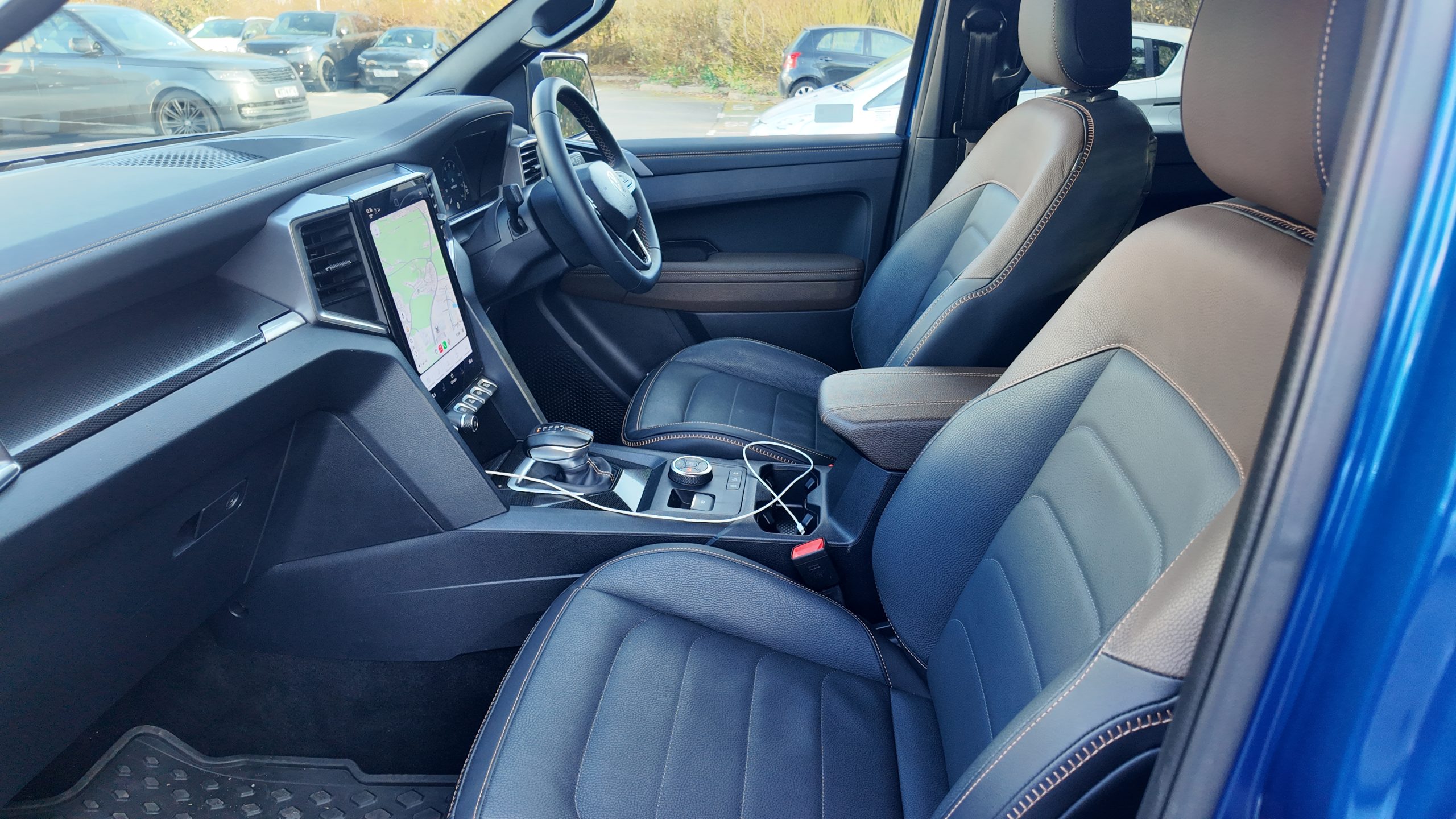
Volkswagen has managed to make the Amarok feel considerably more upmarket than many traditional pick-ups. The dashboard is dominated by a large portrait-style 12-inch infotainment touchscreen, complemented by a 12-inch digital instrument display.
The PanAmericana gets leather upholstery, electrically adjustable front seats, a Harman Kardon sound system and plenty of additional equipment.
The materials and overall finish give the cabin a more premium feel than you might expect from a commercial vehicle. There are some harder plastics in places, and it doesn’t feel quite as consistently polished as a Volkswagen Touareg, but that’s hardly surprising.
The driving position is excellent. You sit high, have a commanding view of the road and benefit from a good range of seat and steering-wheel adjustment.
Storage is plentiful, with useful door pockets, central storage and additional spaces throughout the cabin.
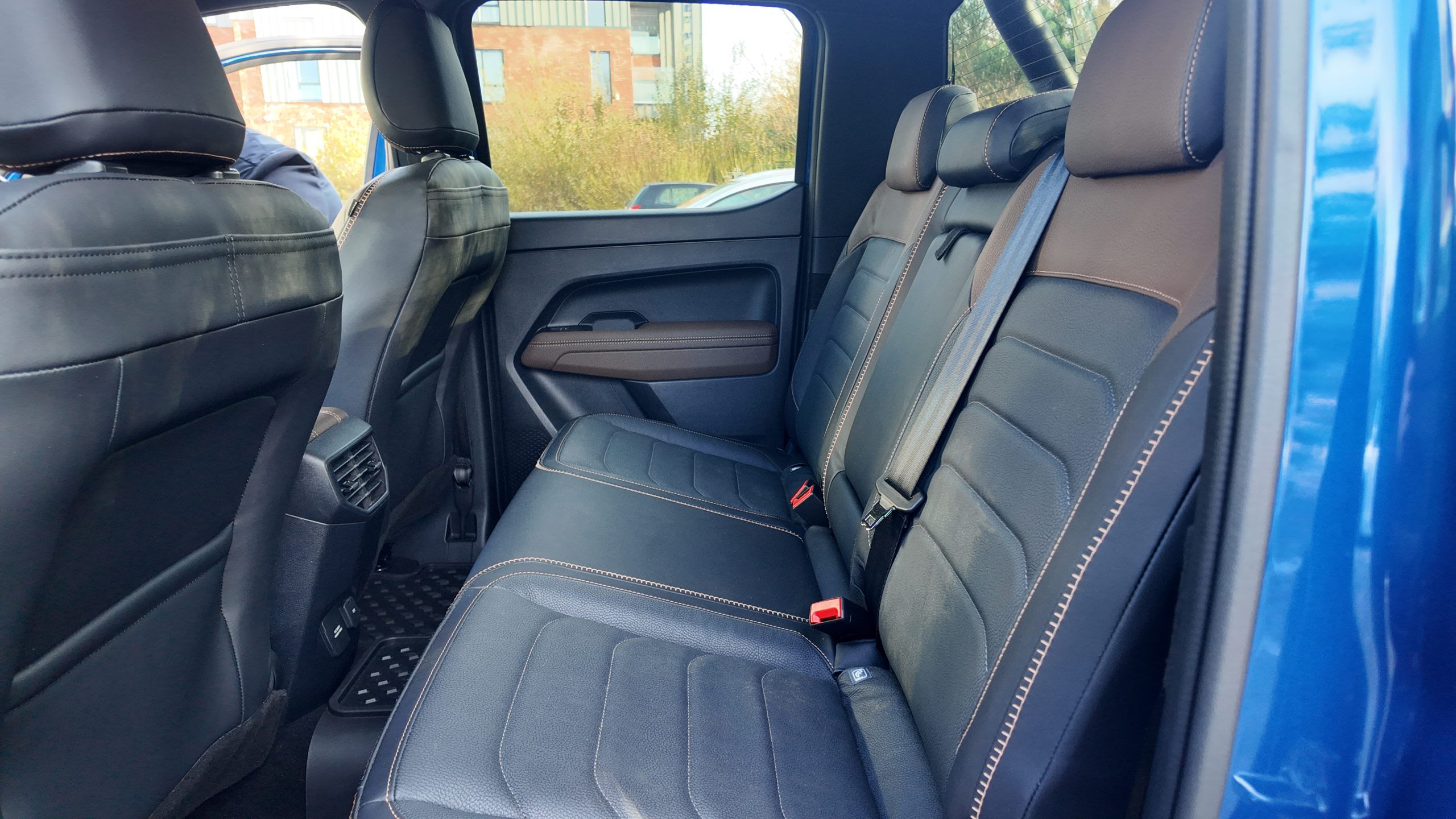
Rear passenger space is another strength. There is room for four six-foot adults to travel comfortably, which is impressive for a double-cab pick-up.
The rear bench is practical, although the seat base is relatively upright compared with a conventional SUV. For occasional passengers or children, it works very well.
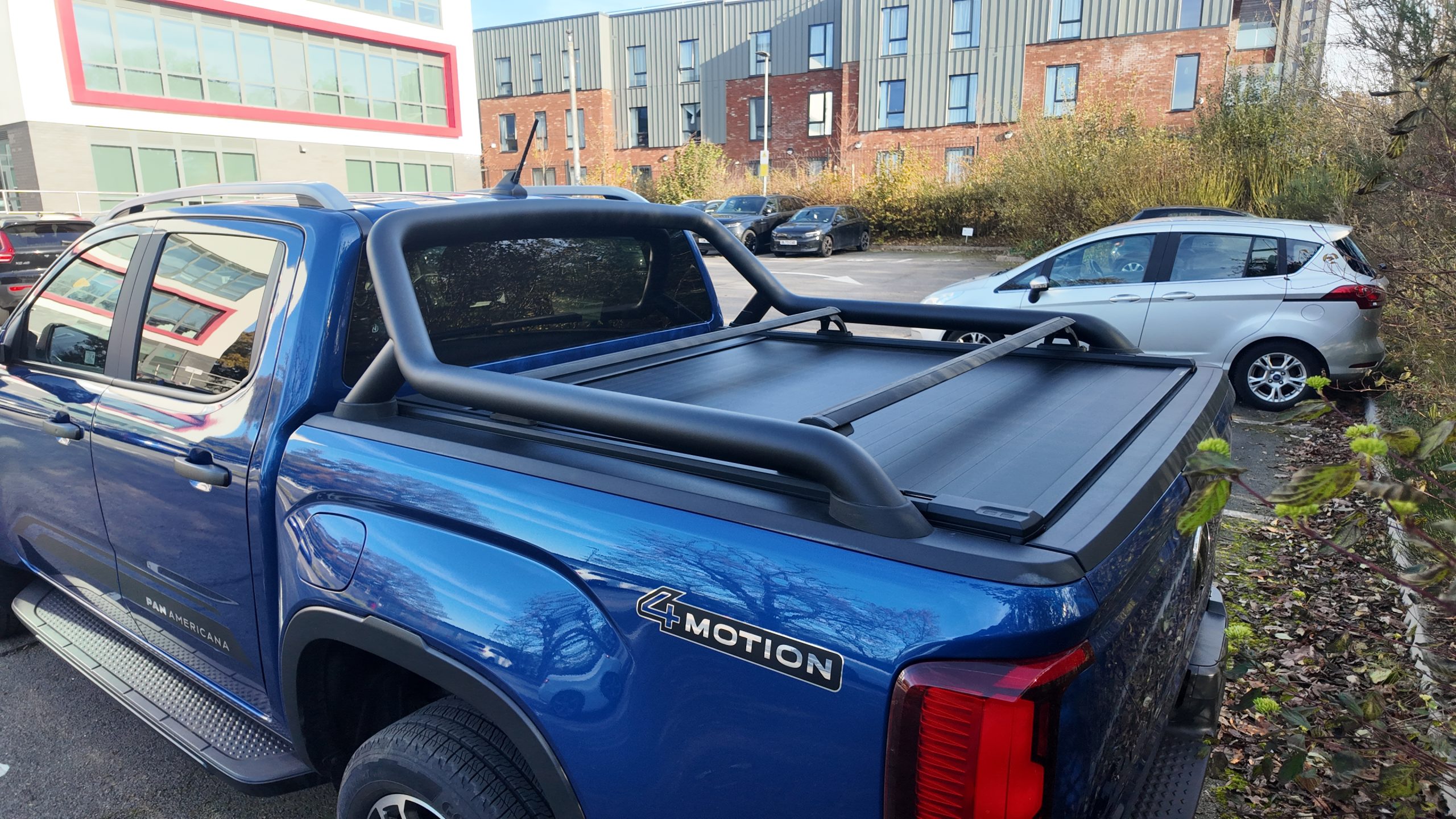
The load bed is equally impressive. Measuring approximately 1,624mm long and 1,584mm wide, it offers enough room to accommodate a Euro pallet sideways between the wheel arches.
The standard payload is approximately 1,043kg, depending on specification and equipment fitted.
For anyone who needs a vehicle that can carry tools, equipment, materials or leisure equipment during the week and still take the family away at the weekend, the Amarok makes an extremely convincing case.
Infotainment and Physical Controls
The Amarok gets a large 12-inch portrait touchscreen, and it certainly makes an impression when you first climb inside.
The system handles navigation, vehicle settings, entertainment and a range of connectivity functions. Wireless smartphone connectivity is available, and the digital instrument display provides a clear view of speed, driving information and vehicle settings.
The screen itself is impressive, although the software isn’t quite as intuitive as it could be.
One of the biggest frustrations is the climate control arrangement. Rather than having a straightforward collection of physical buttons and rotary controls, much of the air-conditioning operation is handled through the touchscreen.
It’s fiddly, particularly when you’re driving, and this is one area where Ford has arguably done a better job with the Ranger.
I would much rather have a dedicated physical temperature control than have to navigate a touchscreen to make a simple adjustment.
The digital instrument display is good, and the steering-wheel controls are sensibly laid out.
The PanAmericana also benefits from the Harman Kardon premium audio system, which provides a much better listening experience than you would normally expect in a working pick-up.
The 360-degree Area View camera is another particularly useful feature. Given the Amarok’s size, being able to see the vehicle from above when manoeuvring makes life considerably easier.
Overall, the technology is impressive, but Volkswagen could certainly make the everyday controls more user-friendly.
On the Road
This is where the Amarok really starts to justify its reputation.
The 3.0-litre V6 TDI produces 240PS and 600Nm of torque, with maximum torque available from relatively low engine speeds.
It is paired with a 10-speed automatic transmission, which sends power to all four wheels through Volkswagen’s 4MOTION system.
The result is a pick-up that feels considerably more powerful and refined than its commercial-vehicle appearance might suggest.
Acceleration from 0–62mph takes approximately 9 seconds, with a maximum speed of 112mph.
Those aren’t sports-car figures, but the Amarok feels much quicker than you might expect from a vehicle weighing well over two tonnes.
The V6 is the star of the show. It delivers strong pulling power, sounds suitably muscular when worked hard and feels particularly well suited to towing and carrying heavy loads.
There is an impressive amount of low-down torque, meaning you rarely need to work the engine particularly hard.
The 10-speed automatic gearbox generally does a good job of keeping the engine in its sweet spot. It can occasionally hesitate when asked to kick down several gears quickly, but once moving, the changes are smooth and largely unobtrusive.
On the road, the Amarok is surprisingly good to drive for a pick-up.
The steering is accurate enough, body control is respectable and the vehicle feels composed at motorway speeds. It is certainly more refined than many traditional commercial vehicles.
The suspension also deserves credit. The PanAmericana benefits from a more comfort-focused set-up than some of the lower specifications, helping it deal with poor surfaces and uneven roads particularly well.
Of course, it’s still a pick-up. There is a degree of movement from the rear suspension, particularly when the load bed is empty, and you are always aware of the vehicle’s size and weight.
But compared with many alternatives, it is an extremely comfortable and capable vehicle.
The four-wheel-drive system is another major strength.
The driver can select between different drive configurations, including two-wheel drive, four-wheel drive and low-range gearing for more challenging conditions. There is also an automatic four-wheel-drive setting that adjusts the power delivery depending on available traction.
Different driving modes help tailor the vehicle to surfaces such as mud, sand and slippery roads.
The PanAmericana also benefits from a rear differential lock and additional underbody protection, making it particularly capable away from the tarmac.
This is a vehicle that can handle a motorway commute, a muddy building site, a farm track and a weekend towing a large trailer without appearing particularly troubled.
For a pick-up, that’s quite an achievement.
Engine, Fuel Economy and Towing
The Amarok’s 3.0-litre V6 is one of its biggest selling points.
Producing 240PS and 600Nm, it provides the sort of effortless pulling power that makes a considerable difference when carrying heavy loads or towing.
The official combined WLTP fuel consumption for the PanAmericana is approximately 27.4–28.0mpg, depending on the approved configuration.
That’s not particularly economical by modern passenger-car standards, but for a large four-wheel-drive pick-up with a powerful V6 diesel engine, it’s reasonable.
Real-world consumption will depend heavily on how the vehicle is being used. Motorway driving at sensible speeds should produce better results than frequent short journeys, while towing or carrying a heavy load will inevitably increase consumption.
The fuel tank holds approximately 80 litres, giving the Amarok a useful touring range between fill-ups.
Towing is another area where the Volkswagen excels.
The maximum braked towing capacity is 3,500kg, with an unbraked limit of 750kg.
Combined with the V6’s 600Nm of torque and 10-speed automatic gearbox, it makes an excellent towing vehicle.
The gross train weight is 6,500kg, which is particularly important for commercial operators who need to calculate the combined weight of the vehicle, occupants, load and trailer.
The PanAmericana also has a payload of approximately 1,043kg in standard specification, although optional equipment can reduce this figure.
For anyone regularly carrying heavy equipment or towing substantial trailers, these figures make the Amarok a very serious proposition.
The Niggles
For a vehicle that gets so much right, the Amarok’s shortcomings are relatively minor.
The biggest frustration is the infotainment and climate control arrangement. The touchscreen looks impressive, but having to use it for basic heating and ventilation adjustments is unnecessarily complicated.
The 10-speed automatic gearbox can also be a little hesitant when asked to respond quickly, particularly when it needs to drop several ratios.
The vehicle’s size is another consideration. At more than 5.3 metres long, it isn’t particularly easy to manoeuvre in tight urban environments or park in smaller spaces.
The ride, although very good for a pick-up, is still not quite as comfortable as a large SUV. An empty load bed can make the rear suspension feel unsettled over certain surfaces.
Then there is the price.
The PanAmericana is considerably more expensive than some alternatives, and the Ford Ranger offers much of the same underlying engineering for less money.
The Ranger also has a slightly more user-friendly interior, particularly when it comes to the climate controls.
And if outright comfort and entertainment are the priority, the Ranger Raptor is arguably the more exciting vehicle to drive.
But these are relatively small criticisms in what is otherwise a very accomplished package.
Safety and Warranty
Volkswagen has equipped the Amarok with an extensive collection of driver assistance and safety technologies.
The package includes autonomous emergency braking, adaptive cruise control, lane-keeping assistance, traffic sign recognition, electronic stability control and tyre-pressure monitoring.
The PanAmericana also benefits from the Area View 360-degree camera, which is particularly useful when parking or manoeuvring in confined spaces.
The high driving position provides excellent forward visibility, although the size of the vehicle means the camera system is something you will quickly appreciate.
The Amarok’s safety package is comprehensive, and there is a strong emphasis on protecting occupants and other road users.
Warranty provision is another positive.
Volkswagen provides a five-year / 124,000-mile manufacturer warranty, whichever comes first, together with five years of breakdown assistance and five free services under the advertised package.
For a commercial operator, that is a useful ownership benefit and helps provide some reassurance when purchasing a vehicle at this price.
The combination of a substantial warranty and servicing package should also be considered when comparing whole-life costs against rivals.
The Fleet and Whole-Life-Cost Case
The Amarok PanAmericana is an interesting proposition for fleet operators, particularly those who need a vehicle capable of carrying heavy equipment and towing substantial trailers.
The V6 engine provides excellent pulling power, the 3,500kg towing capacity is a major selling point and the payload is sufficient for many commercial applications.
However, there is no getting away from the purchase price.
At approximately £60,565 including VAT and the on-the-road charge, the PanAmericana is considerably more expensive than some competing pick-ups.
The Ford Ranger is the obvious comparison, offering much of the same engineering and capability for less money.
Fuel consumption also needs to be considered. An official figure of around 28mpg is reasonable for the vehicle, but businesses covering substantial annual mileages will need to factor in diesel costs.
There are some benefits, though.
The five-year / 124,000-mile warranty and five free services help remove some of the uncertainty around maintenance costs during the initial ownership period.
The Amarok is also a vehicle that can fulfil several roles. It can transport five people, carry equipment, tow a substantial trailer and operate in difficult conditions.
For businesses that would otherwise need a separate car and commercial vehicle, that flexibility can be valuable.
One important tax point: the UK tax treatment of double-cab pick-ups changed from April 2025. They are generally treated as cars for Benefit-in-Kind purposes, with transitional arrangements for qualifying earlier orders and purchases. VAT, capital allowances and business expense treatment need to be considered separately.
The Amarok should therefore be assessed on its actual business use and whole-life cost rather than assuming it automatically receives the historic tax advantages associated with pick-ups.
For businesses that genuinely need its capability, the PanAmericana is a compelling option.
For operators who simply need a basic working truck, a lower-specification Amarok or a less expensive competitor will probably make more financial sense.
The Competition
The Amarok has some very serious competition, but arguably its biggest rival is the vehicle it was developed alongside.
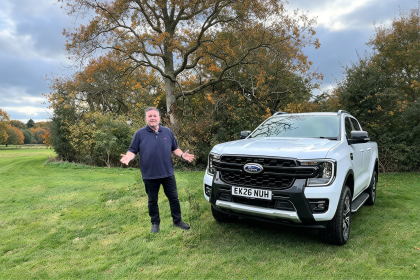
The Ford Ranger is the obvious comparison. It shares the Amarok’s underlying platform and much of its engineering, and offers a similar combination of payload, towing ability and road manners.
The Ranger’s biggest advantage is price and its slightly more user-friendly interior. The Amarok, however, feels a little more premium in certain areas and has a distinctive Volkswagen identity.
The <Entity value=”Isuzu D-Max” category=”vehicle” disambig=”Diesel commercial pick-up”/> is another strong alternative. It has an excellent reputation for durability and offers impressive working capabilities, although it doesn’t quite match the Amarok’s V6 refinement and premium cabin.
The <Entity value=”Toyota Hilux” category=”vehicle” disambig=”Diesel and hybrid commercial pick-up”/> remains one of the most established names in the sector. Its reputation for reliability and durability is a major attraction, although the Amarok is arguably the more sophisticated vehicle to drive.
The <Entity value=”KGM Musso” category=”vehicle” disambig=”Diesel commercial pick-up”/> offers a much more affordable entry into the pick-up market and provides impressive value, but it cannot quite match the Volkswagen’s overall refinement and premium feel.
Finally, there is the Ford Ranger Raptor. It is more expensive and has a very different purpose, but if comfort, performance and driving enjoyment are priorities, it is arguably the most entertaining pick-up in this group.
The Amarok PanAmericana sits in a very appealing position. It offers genuine commercial capability with a more premium ownership experience than many traditional working trucks.
The Verdict
The Volkswagen Amarok PanAmericana is a very fine pick-up truck.
It manages to combine the strength and practicality expected of a commercial vehicle with the sort of refinement, equipment and driving experience that make it perfectly pleasant to use every day.
The 3.0-litre V6 diesel is an excellent engine, delivering 240PS and 600Nm of torque through a smooth 10-speed automatic gearbox. It has plenty of pulling power, feels relaxed on the motorway and makes light work of towing.
The four-wheel-drive system is highly capable, the payload is impressive and the load bed is large enough to handle serious working duties.
Inside, the cabin feels premium, rear passenger space is excellent and the equipment list is generous.
There are compromises. The touchscreen-controlled climate functions are unnecessarily fiddly, the vehicle is expensive and the Ford Ranger offers much of the same capability for less money.
But judged as a complete package, the Amarok is difficult to fault.
Four point eight stars from me.
It loses a little for its high purchase price and some of the frustrating infotainment controls, but the fundamentals are so good that these issues are relatively easy to overlook.
The V6 engine, outstanding towing capability, comfortable cabin and genuinely impressive road manners make this one of the most accomplished pick-ups available.
It’s a proper working vehicle that doesn’t feel like a compromise when you’re using it every day.
For businesses, farmers, contractors and anyone who needs a serious pick-up but doesn’t want to sacrifice comfort, the Amarok PanAmericana is an excellent choice.
Volkswagen has taken the already excellent foundations of the Ford Ranger and given them a more premium feel of their own.
A superb all-round pick-up, a brilliant V6 engine and a thoroughly deserved 4.8 out of 5.