
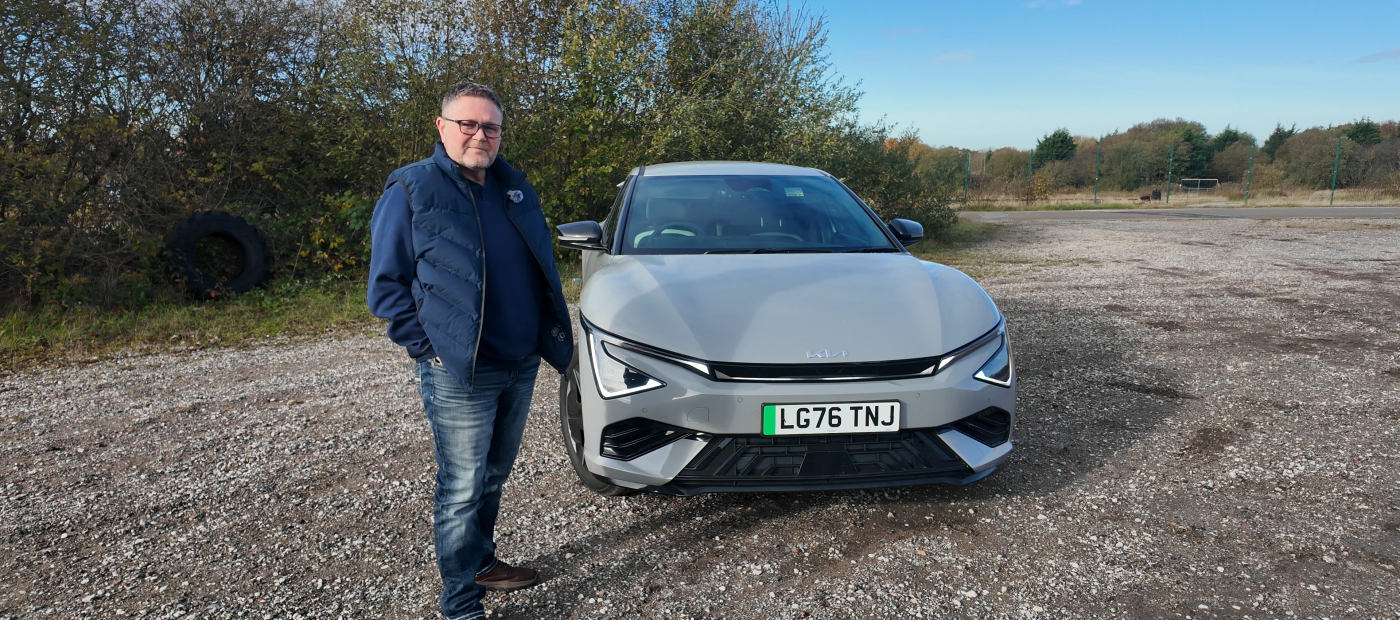
Kia EV6 Review: Is the Kia EV6 Still the Most Underrated EV on Sale?
Watch the review — click here (opens YouTube in a new tab)
First Impressions
Back to something a little more familiar this month, but one that deserves another look. The Kia EV6 has been around since 2021, and when it first arrived it genuinely changed perceptions of what an electric family car could be.
It went on to win What Car?’s Car of the Year award in 2022, and for good reason. It offered striking styling, impressive range, incredibly fast charging and a level of technology that made many established manufacturers look a little behind the curve.
Fast-forward to 2026 and the electric-car market has moved on considerably. There are now more competitors, better ranges and plenty of alternatives from manufacturers who have spent the last few years catching up.
Kia hasn’t stood still, though. The facelift brought revised styling, a larger 84kWh battery, improved charging capability and some interior updates.
The result is a car that remains very competitive, even if it no longer feels quite as revolutionary as it did when it first arrived.
The UK range starts at approximately £45,635 on the road for the Air, with GT-Line and GT-Line S versions costing more. You can choose rear-wheel drive or all-wheel drive, depending on the specification, with the range-topping GT offering considerably more performance.
For this review, I’m concentrating on the standard 84kWh Air rear-wheel-drive model, which is also the version What Car? recommends as the best buy.
At 225bhp, with a claimed range of up to 361 miles and charging from 10–80% in as little as 18 minutes, the numbers make for impressive reading.
First impressions? The EV6 still looks distinctive, feels properly modern and offers a very convincing electric-car package. But at this price, expectations are understandably high.
Design and Interior
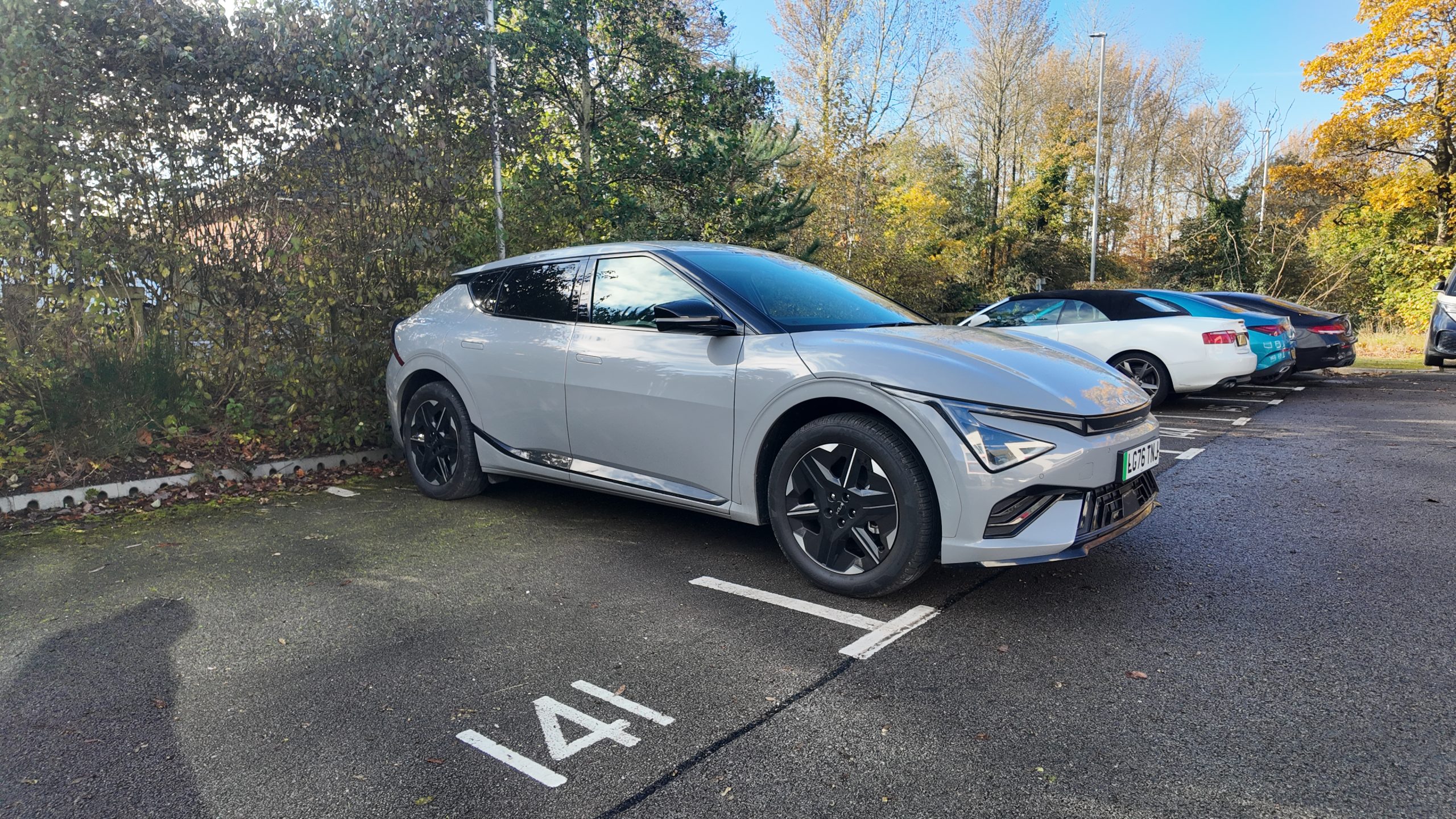
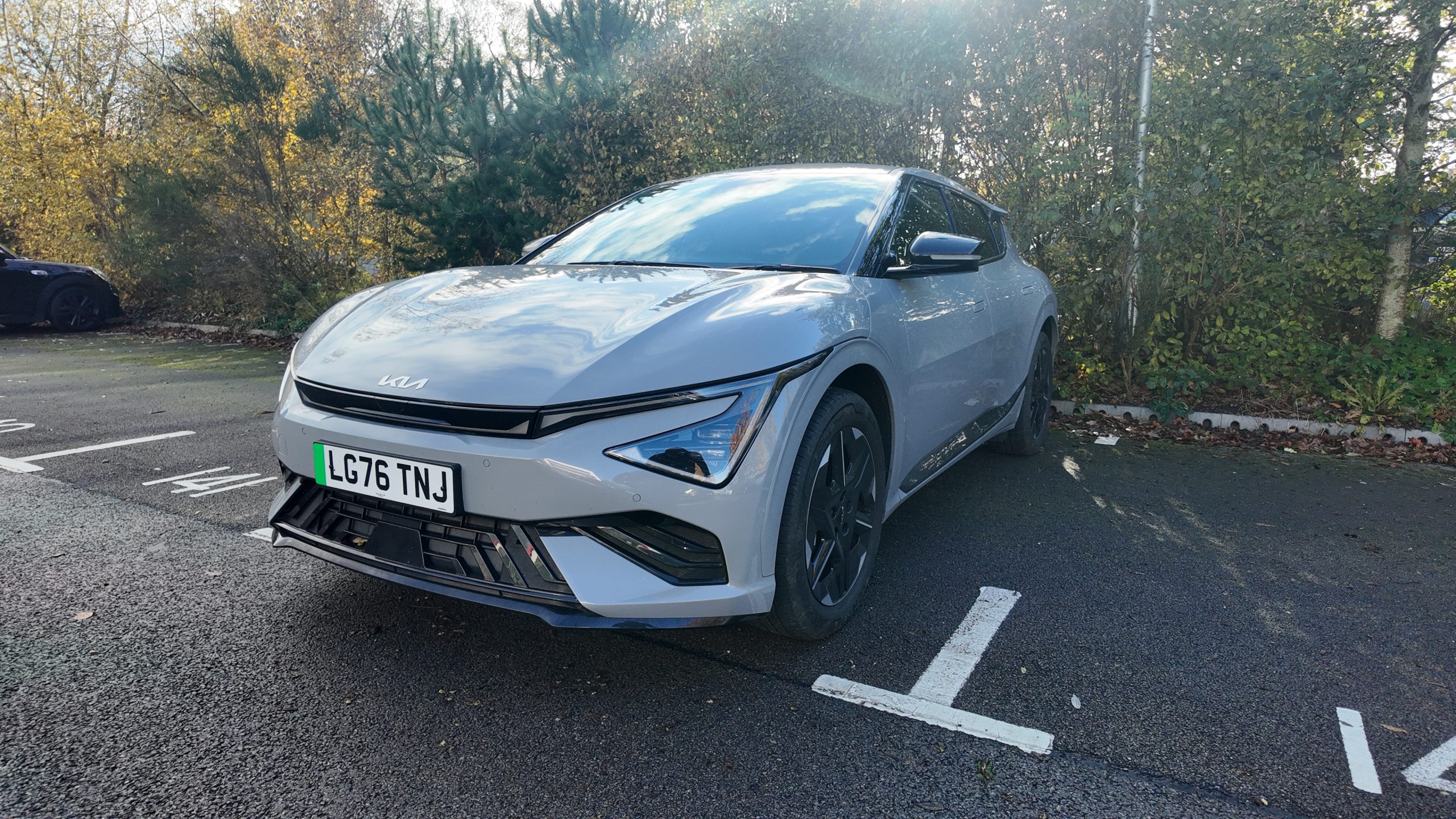
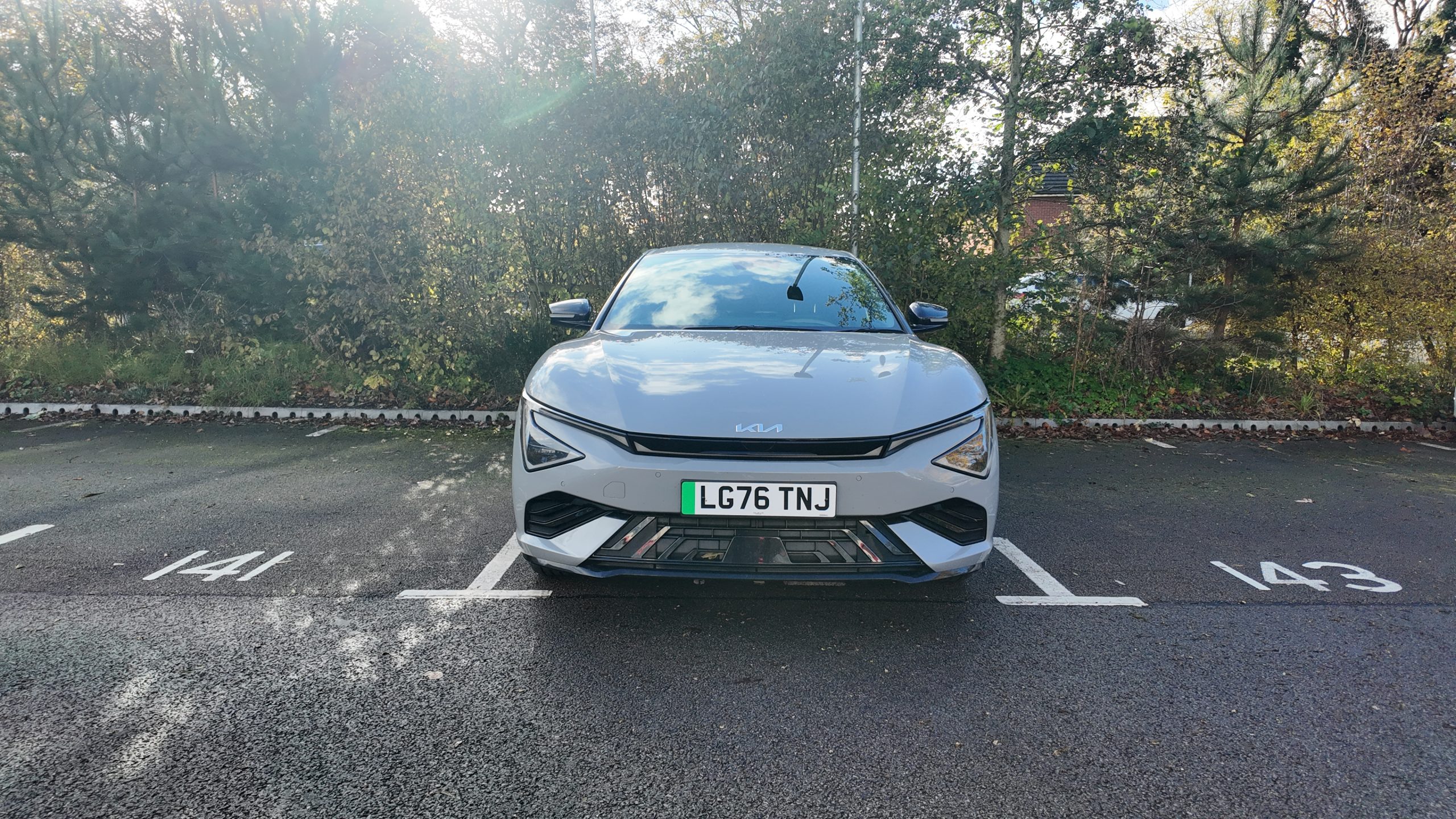
The EV6 has always been a distinctive-looking car, and the facelift has made it even more contemporary.
The original design was quite daring, with its sloping roofline, pronounced rear haunches and unusual rear light arrangement. The updated version sharpens the front end with revised lighting and a more angular appearance, while retaining the distinctive proportions that make it instantly recognisable.
It’s a slightly unusual shape, sitting somewhere between a conventional SUV, a hatchback and a crossover. Personally, I think that’s part of its appeal.
It doesn’t look like every other electric SUV on the road, and that’s becoming increasingly important as the market fills up with increasingly similar-looking alternatives.
The interior is a similarly strong part of the package.
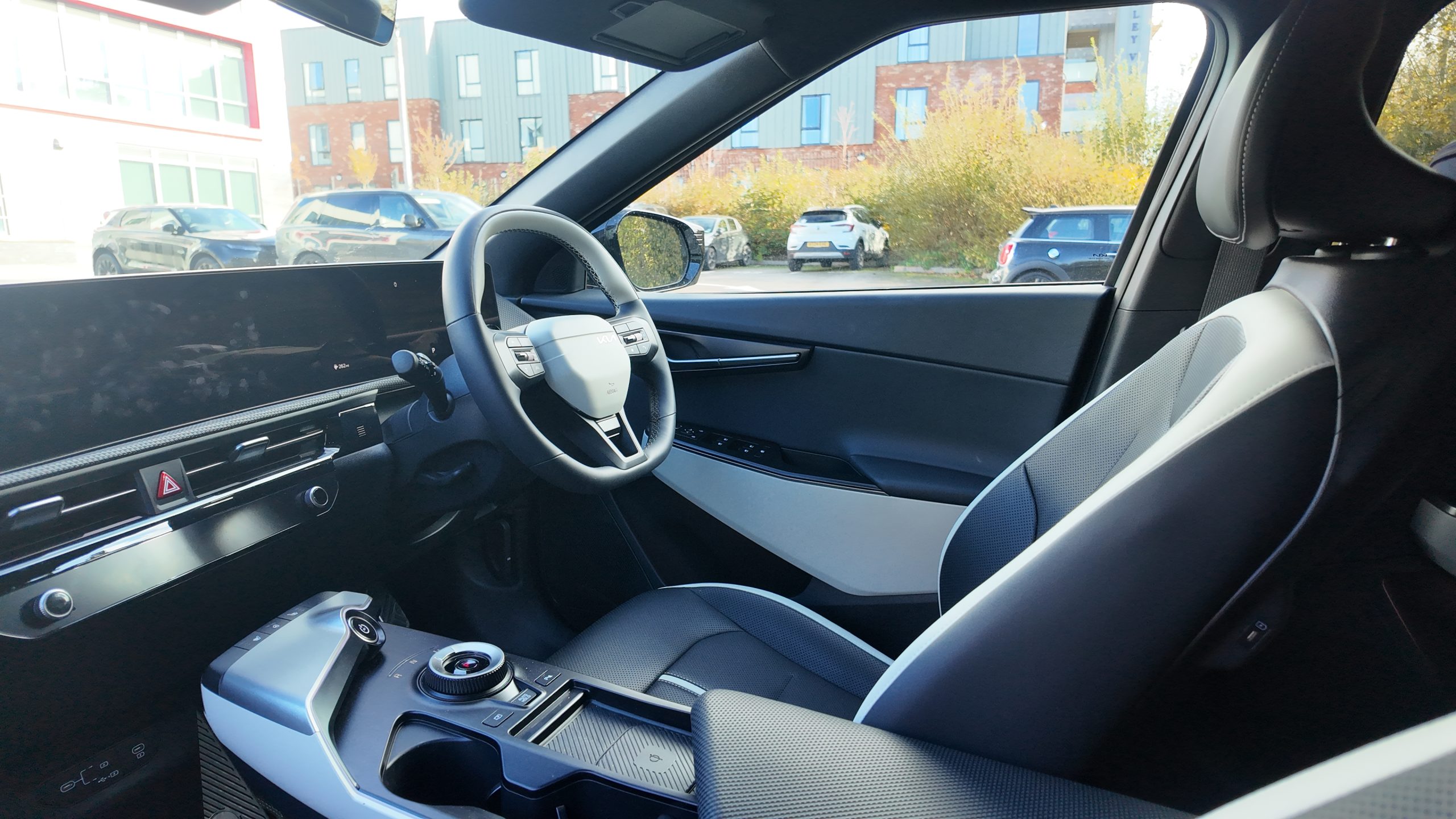
The dashboard is dominated by two curved 12.3-inch displays, one providing the driver information and the other handling infotainment and navigation. They sit neatly together and give the cabin a modern, high-tech appearance without making it feel unnecessarily complicated.
The overall layout is sensible, with a good driving position, comfortable front seats and plenty of room for storage.
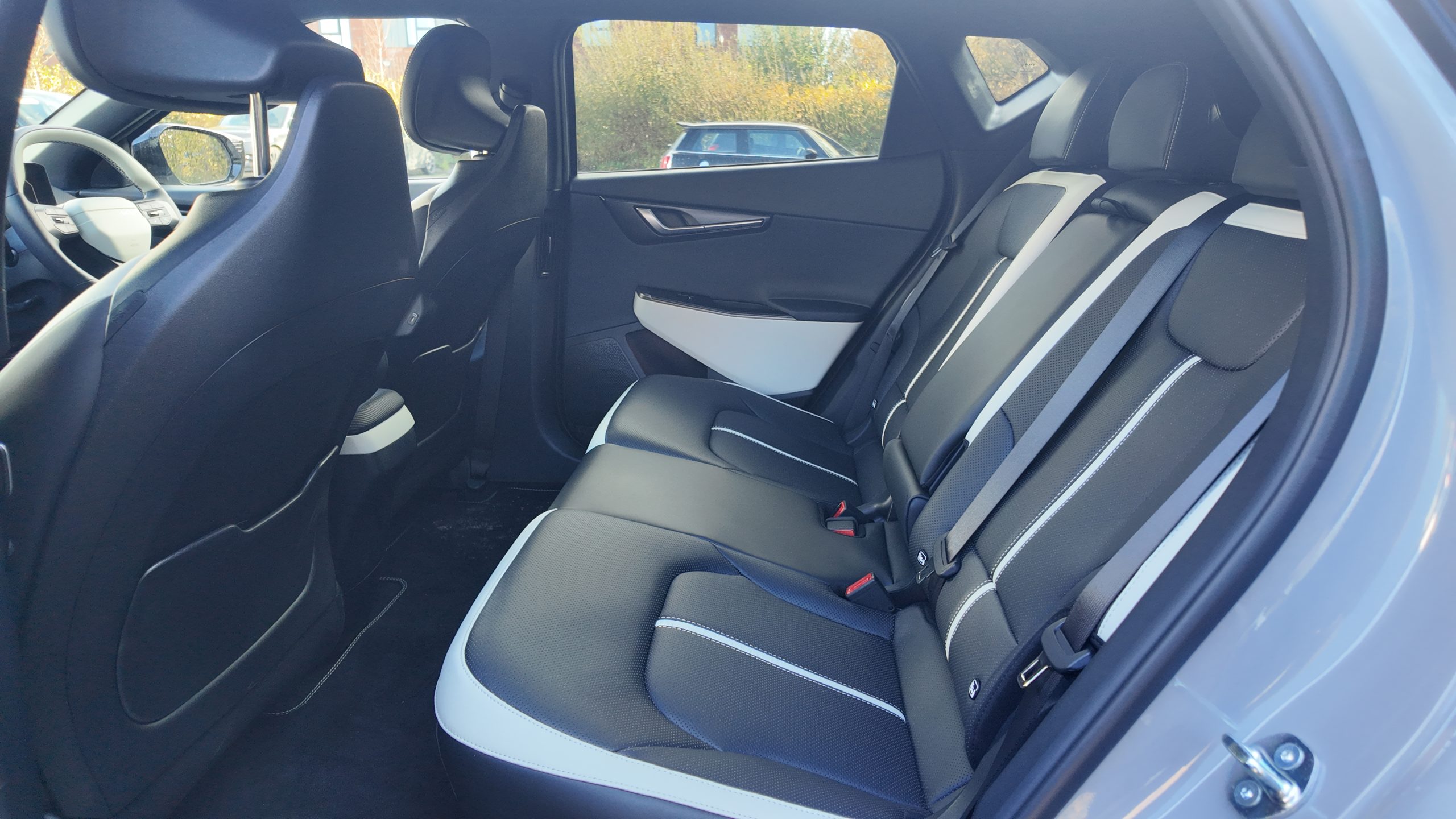
One of the EV6’s biggest strengths is passenger space. Despite the sloping roofline, the cabin is surprisingly generous, particularly in the rear.
There is excellent rear legroom, and even taller passengers should find themselves reasonably comfortable. The flat floor also helps make the middle rear seat more usable than in some conventional SUVs.
The boot is a slightly different story.
At 490 litres, or 480 litres with the premium sound system, it is perfectly respectable, but it isn’t as generous as some rivals. The load area is relatively shallow, which limits how much luggage you can stack below the parcel shelf.
Fold the rear seats and capacity increases to around 1,300 litres.
There is also a small front storage compartment, although its usefulness depends on which drivetrain you choose. The rear-wheel-drive version offers 52 litres, while the all-wheel-drive model has a much smaller 20-litre compartment.
Overall, the EV6 feels spacious, well thought out and nicely finished. It isn’t quite as luxurious as a Genesis GV60, but it doesn’t need to be. It gets the important things right.
Infotainment and Physical Controls
Kia has done a good job with the EV6’s technology.
The twin 12.3-inch displays provide a large amount of information without overwhelming the driver, and the graphics are crisp and modern.
Wireless Apple CarPlay and Android Auto are included, alongside Bluetooth connectivity, navigation and Kia’s connected services.
The system is generally straightforward to use, although Kia retains its dual-purpose control panel for switching between climate and infotainment functions. It works, but can occasionally require a second look to make sure you’re adjusting the right thing.
I would still prefer a few more dedicated physical controls for frequently used functions.
The steering wheel has conventional buttons, and there are useful shortcuts around the dashboard. Regenerative braking can be adjusted using the paddles behind the steering wheel, which is a particularly useful feature.
Higher-spec GT-Line S versions add a head-up display, wireless phone charging, fingerprint recognition, a digital key and a premium 14-speaker Meridian sound system.
The standard Air is less extravagant, but still comes with plenty of technology.
One of the cleverer features is Vehicle-to-Load (V2L), which allows the car’s battery to power external electrical equipment using a suitable adapter. For anyone who enjoys camping or needs to power equipment away from a mains supply, it’s a useful addition.
Overall, the EV6 has a strong technology package. It isn’t necessarily the most exciting infotainment system on the market, but it is functional, modern and well equipped.
On the Road
The EV6 is available with two main powertrain configurations.
The entry-level rear-wheel-drive version produces 225bhp and 350Nm of torque from a single electric motor. The all-wheel-drive version adds a second motor, increasing output to 320bhp and 605Nm.
The rear-wheel-drive Air completes 0–62mph in 7.7 seconds, while the AWD version reduces that to 5.3 seconds.
Neither is going to leave you short of performance in everyday driving.
The electric motor delivers its power smoothly and progressively, and there is enough immediate response to make joining motorways, overtaking and pulling away from junctions straightforward.
The AWD version is noticeably quicker, but for most drivers the rear-wheel-drive model makes considerably more financial sense.
What I particularly like about the EV6 is that it doesn’t feel like an electric car that has simply been designed to get from A to B as efficiently as possible.
It has a lower driving position than many electric SUVs, and the suspension and steering give it a more engaging character.
It grips well through corners, body roll is reasonably controlled and the steering is accurate enough to give you confidence when positioning the car on the road.
It’s not a sports car, and the steering could offer a little more feedback, but it is a pleasant vehicle to drive.
Ride quality is where things become a little less convincing.
The EV6 has a slightly firm suspension set-up, and you notice it over sharper bumps and broken road surfaces. It’s particularly noticeable on poorer British roads, where some of the more comfort-focused alternatives do a better job of absorbing imperfections.
It’s not uncomfortable, but it isn’t quite as supple as you might expect from a family car costing this much.
On 19-inch wheels, the standard Air is the more sensible choice for ride comfort. The larger wheels fitted to GT-Line S models can make the ride firmer still.
Refinement is generally good. As an electric car, there is no engine noise to contend with, and the cabin is reasonably quiet at motorway speeds. There is some tyre and road noise, although nothing particularly unusual for a car in this class.
One small irritation is the artificial sound generator operating at lower speeds to alert pedestrians. It is more noticeable than it needs to be.
Overall, the EV6 remains a very good car to drive. It strikes a sensible balance between comfort, performance and handling, even if the ride isn’t quite as polished as some competitors.
Battery, Range and Charging
This is arguably the EV6’s strongest selling point.
The facelift brought a larger 84kWh battery, with approximately 80kWh of that available as usable capacity.
The rear-wheel-drive Air has an official WLTP range of up to 361 miles, which is an excellent figure and puts it firmly among the more capable electric family cars.
The AWD GT-Line offers up to 339 miles, while the larger 20-inch wheels on GT-Line S models reduce the figures to 347 miles for rear-wheel drive and 324 miles for all-wheel drive.
Those are still very respectable numbers.
But what about real-world driving?
What Car? recorded approximately 272 miles from the rear-wheel-drive model in winter testing, achieving around 3.4 miles per kWh.
That’s a useful indication of what owners might experience when temperatures drop, although warmer conditions should improve the result.
The AWD model also performed well, with approximately 296 miles achieved in more favourable conditions.
For most drivers, the range is more than adequate for everyday commuting and longer journeys.
Charging is another area where Kia deserves considerable credit.
The EV6 uses an 800-volt electrical architecture, allowing it to accept rapid charging at up to approximately 258kW under suitable conditions.
On a compatible ultra-rapid charger, Kia quotes a 10–80% charge in just 18 minutes.
That’s genuinely impressive and remains one of the EV6’s biggest advantages over many competitors.
Of course, you won’t always find a charger capable of delivering that sort of power. On a 50kW charger, Kia quotes approximately 76 minutes for the same 10–80% charge.
At home, an 11kW three-phase AC charger can replenish the battery from 10–100% in around seven hours and 35 minutes.
A conventional home wallbox will take longer, but overnight charging remains perfectly practical.
The EV6 also benefits from its ability to manage battery temperature and charging performance, although actual charging speeds will depend on battery temperature, charger capability and state of charge.
For anyone regularly undertaking longer motorway journeys, this is an extremely capable electric car.
The Niggles
For all its strengths, the EV6 isn’t perfect.
The biggest compromise is the boot. At 490 litres, it is a useful size, but the relatively shallow load area means it isn’t as practical as some alternatives. Families regularly carrying bulky luggage may find the Tesla Model Y or certain other electric SUVs more accommodating.
The ride is also on the firm side. It handles well, but there are rivals that do a better job of smoothing out poor road surfaces.
The rear visibility isn’t particularly good, either. The sloping roofline and styling create some compromises, although the reversing camera and parking assistance help.
The flush-fitting door handles can also be a little awkward to use on the lower specifications. They look smart, but aren’t the most practical design.
The more expensive GT-Line S models are also quite a lot of money, particularly when you consider that some of their additional equipment is available as standard on competing vehicles.
Finally, reliability is worth considering. What Car?’s 2025 reliability survey gave the EV6 a score of 89.5%, placing it 17th out of 27 electric SUVs. Kia as a brand performed considerably better, finishing eighth out of 30 manufacturers.
That doesn’t make the EV6 unreliable, but it does mean the ownership record hasn’t been quite as impressive as Kia’s reputation might suggest.
None of these issues is a deal-breaker, but they are worth considering when comparing the EV6 with newer alternatives.
Safety and Warranty
The EV6 comes with a comprehensive collection of safety equipment.
Standard systems include forward collision avoidance, lane-following assistance, driver attention warning, smart cruise control with stop-and-go functionality and a range of other driver assistance technologies.
Higher specifications add further equipment, including blind-spot collision avoidance, a head-up display, a 360-degree camera and more advanced motorway assistance functions.
The original EV6 achieved a five-star Euro NCAP safety rating in 2022, with strong results for occupant protection.
The warranty is another major advantage.
Kia provides a seven-year / 100,000-mile manufacturer warranty, covering most of the vehicle’s major components, including the high-voltage battery, subject to the manufacturer’s terms and conditions.
That is considerably better than the three-year warranties offered by some manufacturers and gives buyers additional confidence when purchasing an electric car.
For fleet operators considering a four-year ownership cycle, the warranty coverage is particularly attractive.
Kia has also developed a substantial UK dealer network, which is another advantage over some of the newer electric-car manufacturers entering the market.
The Fleet and Salary Sacrifice Case
The EV6 makes a particularly strong case as a company car.
With zero tailpipe CO2 emissions, the EV6 benefits from the low electric-car Benefit-in-Kind rate. For the 2026/27 tax year, fully electric company cars attract a 4% BiK rate.
Using the Air’s £45,570 P11D value, that gives the following approximate monthly figures:
- 20% taxpayer: £30.38 per month.
- 40% taxpayer: £60.76 per month.
These figures exclude any personal tax adjustments and assume the vehicle is available for private use throughout the tax year.
For a car with a list price of more than £45,000, those are attractive numbers.
The EV6 also offers a useful combination of range, charging speed and everyday practicality, making it suitable for employees who regularly travel between offices or customer locations.
On salary sacrifice, the EV6 is an interesting proposition. The relatively low BiK liability can make it considerably more attractive than an equivalent petrol or diesel vehicle, particularly for higher-rate taxpayers.
Actual salary sacrifice costs will depend on the employee’s salary, tax position, annual mileage, employer scheme and whether insurance, servicing and tyres are included.
From a fleet management perspective, the seven-year warranty is also worth highlighting. It offers reassurance over longer operating periods, although residual values and the cost of replacement tyres should still be considered in the whole-life-cost calculation.
The entry-level Air is particularly attractive because it combines the longest official range with a lower purchase price.
The more expensive GT-Line S is a harder proposition to justify unless the additional equipment is genuinely required.
For fleets looking for a well-equipped electric family car with excellent charging performance, the EV6 remains a very sensible choice.
The Competition
The EV6 is competing in an increasingly crowded market, and some of its biggest rivals are very good indeed.
The obvious comparison is the Hyundai IONIQ 5. It shares much of its underlying technology with the Kia, including the 800-volt charging architecture, but has a more spacious, lounge-like interior and a slightly different approach to comfort. The Kia is arguably the more stylish and sportier-looking option.
The Tesla Model Y is another serious rival. It offers a larger boot, impressive range and access to Tesla’s charging network. Its minimalist interior won’t appeal to everyone, though, and the Kia feels more conventional in its layout and controls.
The Cupra Tavascan brings plenty of style and a sporty feel, but the Kia has a particularly strong advantage when it comes to rapid charging.
The Genesis GV60 offers a more luxurious cabin and a more premium ownership experience, although it costs more.
There is also the Nissan Ariya, which offers a more comfort-focused driving experience, but cannot match the Kia’s charging speeds.
The EV6 therefore sits in an interesting position. It isn’t necessarily the best at everything, but it offers a very good combination of range, performance, charging and practicality.
The Verdict
The Kia EV6 remains a very good electric car, and the facelift has done enough to keep it competitive in a market that has moved on considerably since its original launch.
The bigger 84kWh battery, improved charging capability and revised styling have all helped. The official range of up to 361 miles in rear-wheel-drive form is impressive, and the ability to charge from 10–80% in around 18 minutes remains a major selling point.
Inside, it feels modern and spacious, particularly for rear passengers. The technology is good, the driving position is comfortable and the handling is better than you might expect from a family-focused electric crossover.
The seven-year warranty is another significant advantage.
But it isn’t without its shortcomings.
The boot is shallower than we’d like, the ride is slightly firm and the more expensive specifications start to look rather costly. There are also newer rivals that offer more luggage space, a softer ride or a more sophisticated interior.
The EV6 is no longer the obvious class leader it was when it first arrived, but it remains a thoroughly convincing all-rounder.
Four stars from me.
It loses a star for the compromised boot space, slightly firm ride and the fact that some of its rivals have now moved the game on in certain areas.
But the fundamentals are still excellent. The range is strong, the charging is genuinely class-leading, the interior is spacious and the car is enjoyable to drive.
For company-car drivers and private buyers looking for a stylish, capable electric family car, the EV6 should absolutely remain on the shortlist.
It’s not perfect, but it gets an awful lot right.
Kia helped establish what a modern electric family car should look like. The competition may have caught up, but the EV6 is still very much in the game.
A very capable electric car, with excellent range and charging. A deserved four out of five.