
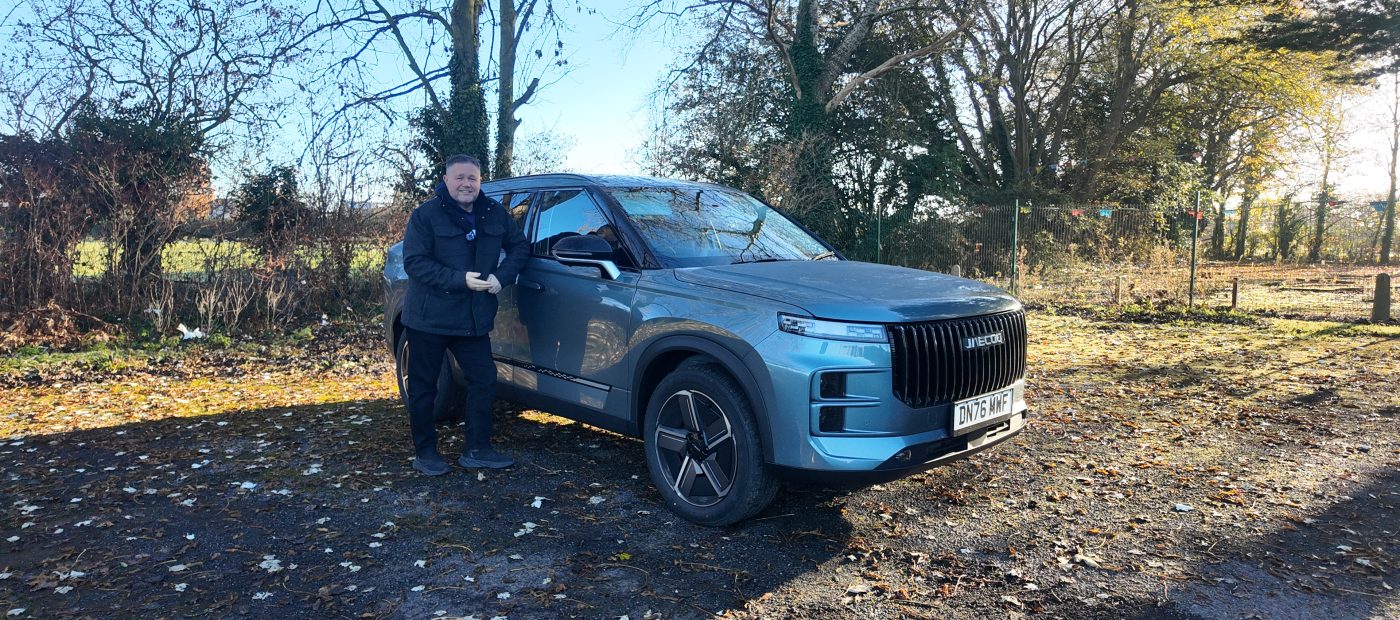
Jaecoo 7 Review: Why Is EVERYONE In Britain Buying This £29k SUV?
Watch the review — click here (opens YouTube in a new tab)
First Impressions
The Jaecoo 7 has become one of the most talked-about new SUVs in Britain, and it’s not difficult to understand why. At a time when family SUVs from established manufacturers can easily cost well over £35,000, Jaecoo has arrived with a car that promises plenty of space, modern technology, a premium-looking interior and a long list of standard equipment for considerably less.
The appeal is fairly straightforward: buyers want the size and presence of an expensive SUV without having to pay an expensive-SUV price. The Jaecoo 7 aims to deliver exactly that.
Jaecoo is part of Chinese automotive group Chery, which also owns Omoda. The brand is relatively new to the UK, but it has made a strong first impression with the 7, a family-sized SUV that takes a deliberately upmarket approach to design.
There are several powertrains available, including a conventional turbocharged petrol engine, a self-charging hybrid and a plug-in hybrid. The entry-level price is particularly tempting, with the range starting at around £29,000 for the self-charging hybrid Pure model.
That means the Jaecoo 7 isn’t simply trying to compete on price. It is attempting to make buyers question why they should spend considerably more on a familiar badge.
There are, however, compromises. The ride can be uncomfortable, the infotainment system isn’t always straightforward and the driving experience lacks the polish of some established rivals.
Nevertheless, the Jaecoo 7 has enough going for it to explain why so many British buyers are taking notice.
Design and Interior
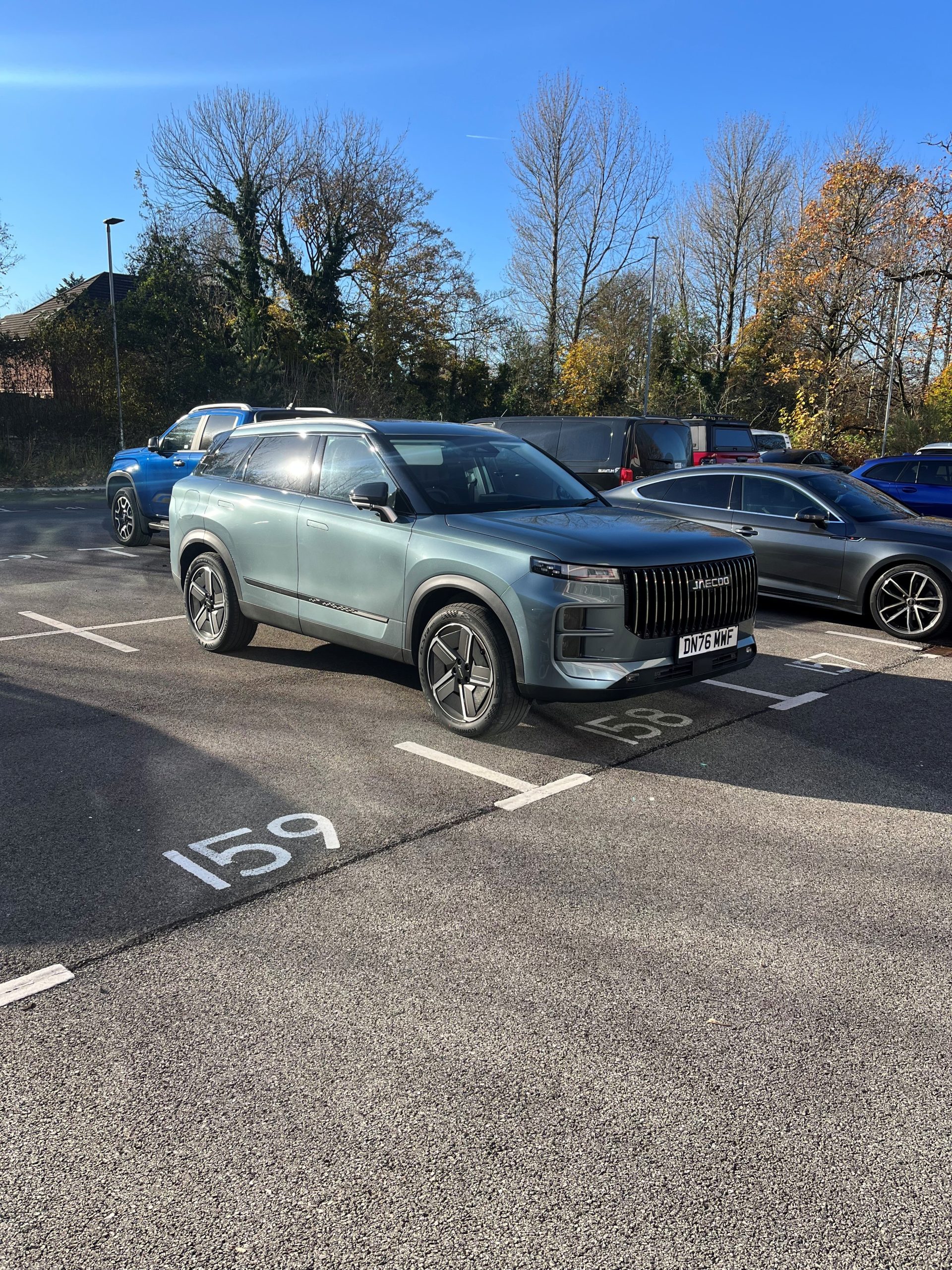
The Jaecoo 7 certainly looks more expensive than its starting price suggests. Its upright proportions, broad front grille, squared-off bodywork and distinctive lighting give it a substantial road presence.
There is an obvious premium-SUV influence to the styling, particularly around the front end and the overall shape. It has the sort of appearance that makes it look more expensive than a conventional family crossover, and that is clearly part of its appeal.
The boxy design also gives the Jaecoo a purposeful stance. It doesn’t look particularly sporty, but it does have the visual presence that many SUV buyers are after.
Inside, the cabin continues the upmarket theme. The dashboard is dominated by a large central touchscreen, while the overall layout is clean and modern. The materials are generally impressive for the price, with soft-touch surfaces and attractive trim in the areas occupants are most likely to notice.
Look a little closer and there are some harder, cheaper-feeling plastics, but that is hardly unusual in this part of the market. The important thing is that the cabin feels well presented and gives a strong first impression.
The front seats are comfortable and offer plenty of adjustment, particularly on higher trim levels. There is also a good driving position, with the relatively upright dashboard and high seating position providing the commanding view that SUV buyers often want.
Storage is another positive. There are useful door pockets, a large glovebox, a substantial central storage area and additional spaces around the centre console. The layout makes it easy to find somewhere for phones, drinks and everyday belongings.
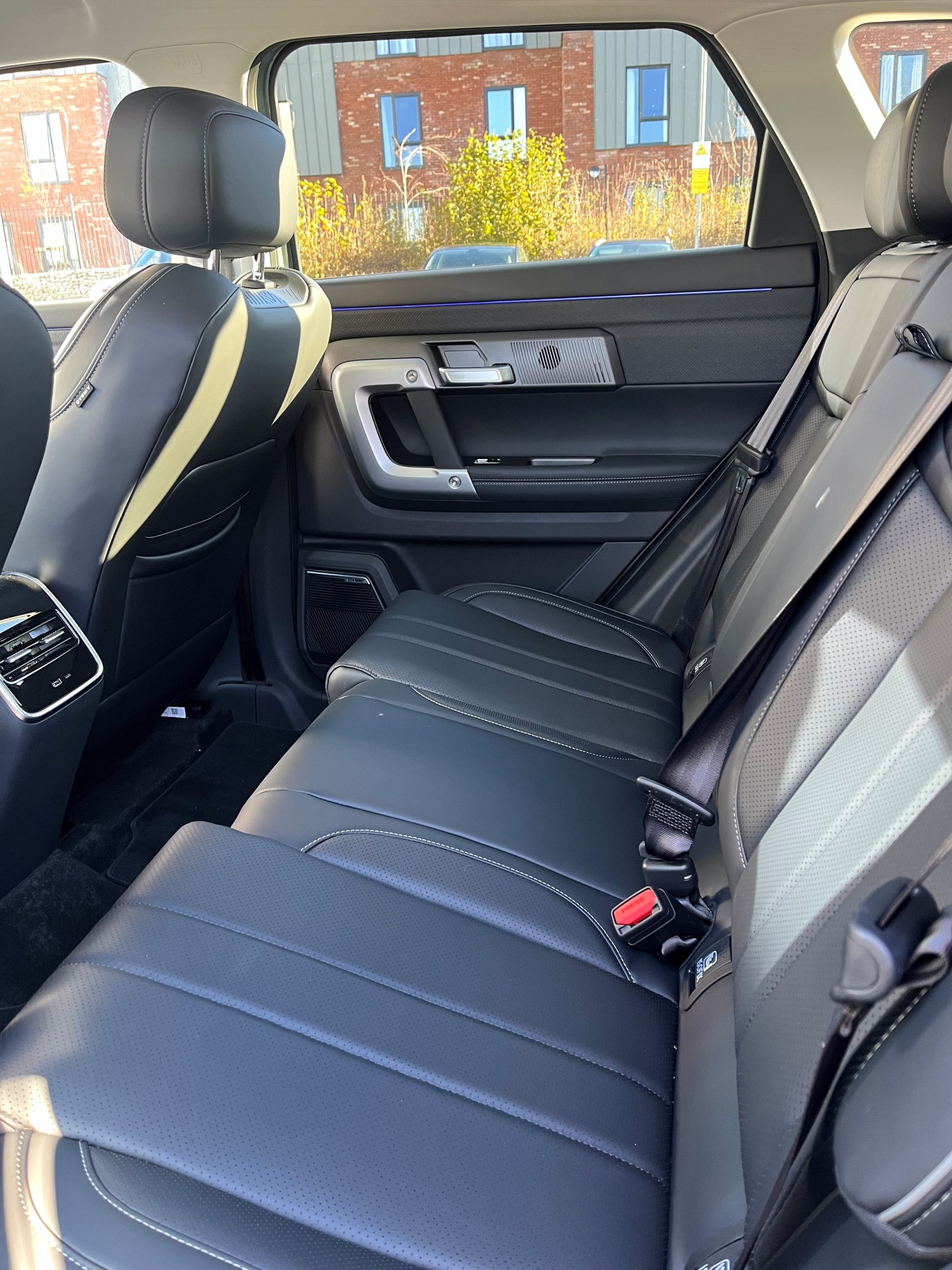
Rear-seat accommodation is also generous. The tall roofline helps provide good headroom, while legroom is sufficient for adults to travel comfortably. The relatively flat floor is useful for passengers sitting in the middle, although three adults will still find longer journeys less comfortable than two.
The boot is less impressive than the cabin. Depending on the powertrain, capacity varies, with the petrol versions offering up to 580 litres and the hybrid versions offering around 500 litres. That is usable, but the boot is relatively shallow and doesn’t provide the most flexible loading space in the class.
Overall, the Jaecoo 7 makes a convincing first impression. It looks modern, feels well equipped and offers a cabin that is more appealing than its price might suggest.
Infotainment and Physical Controls
Technology is one of the Jaecoo 7’s biggest selling points. The dashboard is dominated by a large portrait-style touchscreen, measuring up to 14.8 inches on higher-spec hybrid models, while other versions use a 13.2-inch display.
The screen looks impressive and gives the interior a modern feel. Wireless Apple CarPlay and Android Auto are available, making it straightforward to connect a smartphone for music, calls and navigation.
Higher-specification models also offer features such as a Sony sound system, wireless phone charging and additional comfort equipment.
However, the touchscreen is not perfect. A number of everyday functions are controlled through menus rather than dedicated physical switches. Adjusting certain vehicle settings or finding particular climate controls can involve more steps than it should.
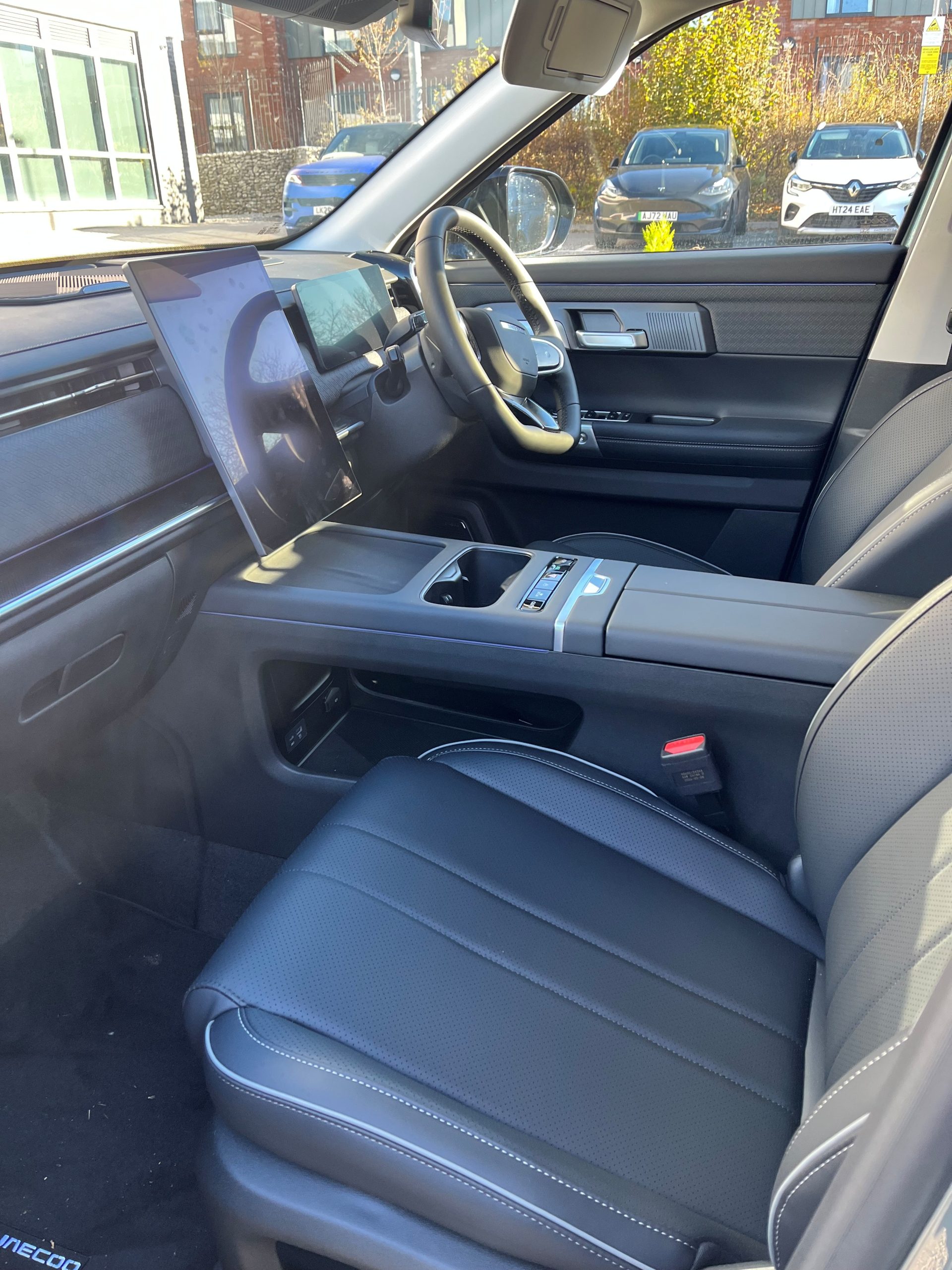
This becomes particularly frustrating when you’re driving and simply want to make a quick adjustment without taking your attention away from the road.
The instrument display is modern, but it isn’t always the easiest to read or configure. Some of the steering-wheel touch controls can also take time to get used to.
The problem isn’t a lack of technology. Quite the opposite: the Jaecoo has plenty of it. The issue is that the technology doesn’t always feel as intuitive as it should.
A few more physical buttons for commonly used functions would make a meaningful difference.
On the Road
The Jaecoo 7 is designed primarily as a family SUV, rather than a car intended to deliver an engaging driving experience. That becomes apparent fairly quickly once you get behind the wheel.
The entry-level self-charging hybrid uses a 1.5-litre turbocharged petrol engine paired with an electric motor, producing a combined 224PS. It is a much more appealing proposition than the conventional petrol engine, offering stronger performance and improved efficiency.
The hybrid system is generally smooth around town, where the electric motor can help the car move away quietly and reduce the need for the petrol engine to work constantly.
When the engine does start, however, it can become more noticeable. Under harder acceleration, the transition between electric and petrol power isn’t always completely seamless, although the system remains perfectly usable in everyday driving.
The plug-in hybrid is another option for buyers who can charge regularly. It offers a larger battery and the ability to complete shorter journeys using electric power alone, making it particularly attractive to drivers with a home charging point.
The conventional 1.6-litre petrol model is less convincing. It offers adequate performance, but it can feel noisy and thirsty, particularly when working hard. The automatic gearbox can also be hesitant, which takes away some of the refinement expected from a modern family SUV.
Ride comfort is the Jaecoo 7’s biggest weakness. Around town, the suspension can feel firm and unsettled over potholes, broken surfaces and smaller bumps. Rather than absorbing imperfections smoothly, the car can thud over them, sending noticeable movement into the cabin.
On faster roads, the ride doesn’t completely settle down either. There can be a fair amount of road and tyre noise, while the steering is light and doesn’t provide much feedback.
It is safe and predictable, but it doesn’t inspire the same confidence as a Kia Sportage, Hyundai Tucson or Volkswagen Tiguan when the road becomes more demanding.
The Jaecoo 7 is easy enough to manoeuvre in town, though. Light steering and the available parking cameras make it straightforward to place on the road, while the elevated driving position provides a good view ahead.
There is also a four-wheel-drive petrol version for buyers who want additional traction, although the Jaecoo 7 is not a serious off-roader. Its styling suggests rugged capability, but its real strengths are in family transport and everyday usability.
Engine, Fuel Economy and Hybrid Technology
The Jaecoo 7 range offers three main powertrain choices, giving buyers a reasonable amount of flexibility.
The self-charging hybrid is arguably the most interesting option for anyone looking at the entry-level price. It combines a 1.5-litre turbocharged petrol engine with electric assistance and produces 224PS. It doesn’t need to be plugged in, as the battery is charged through the car’s hybrid system.
Official fuel economy is around 51.8mpg, making it considerably more appealing than the conventional petrol version for buyers covering a mixture of urban and longer-distance journeys.
The conventional 1.6-litre turbocharged petrol engine produces 147PS and is available with front-wheel drive or four-wheel drive, depending on specification. Official combined economy is around 35.3-37.7mpg, although real-world consumption can be considerably lower.
The plug-in hybrid is the most appealing choice for drivers who can make regular use of home charging. It combines a 1.5-litre petrol engine with an electric motor and an 18.3kWh battery. The system produces around 204PS and offers an official electric-only range of approximately 56 miles.
That should be enough for many daily commutes without needing to use the petrol engine, provided the battery is charged regularly.
The plug-in hybrid also offers the benefit of being able to complete longer journeys without relying entirely on public charging infrastructure. Once the battery is depleted, the petrol engine takes over as required.
However, the PHEV is more expensive to buy, and its advertised fuel economy figures depend heavily on how frequently it is charged. Drivers who rarely plug in are unlikely to achieve the headline efficiency figures.
For most buyers, the self-charging hybrid offers a good balance between purchase price, everyday usability and fuel economy. The plug-in hybrid makes more sense if you have somewhere convenient to charge and regularly undertake shorter journeys.
Practicality and Family Use
The Jaecoo 7 is a sizeable family SUV, measuring approximately 4,500mm long, 1,865mm wide and 1,680mm high.
Those proportions give it a spacious cabin, with plenty of room for passengers in both rows. The rear seats are particularly useful, offering good headroom and enough legroom for most adults.
The relatively flat floor also makes the middle rear seat more usable than in some alternatives, although it is still best treated as an occasional position for longer trips.
The boot is more of a mixed picture. Petrol versions can offer up to 580 litres, while hybrid versions have around 500 litres available. That is enough for everyday family duties, shopping and holiday luggage, but the boot is not especially deep.
The shape can make carrying bulky items more awkward, and some rivals offer a more practical luggage area.
Fold the rear seats down and the available space increases substantially, making it easier to carry larger loads. The rear seats also fold in a 60:40 arrangement, which is useful but not as flexible as some competitors’ split-folding systems.
For family buyers, the Jaecoo 7 offers plenty of passenger space and a useful range of storage solutions. It is not quite as practical as its exterior dimensions might suggest, but it remains a perfectly usable family car.
The Niggles
The Jaecoo 7 gets plenty right, but there are several areas where it needs improvement.
The ride comfort is the most obvious issue. The suspension can feel too firm over poor road surfaces, and the car doesn’t isolate occupants from bumps as effectively as the best family SUVs.
The steering is also rather light, while the handling lacks the composure of more established alternatives. It is easy to drive, but not particularly enjoyable.
The infotainment system looks impressive but can be frustrating to use. Too many everyday functions are buried in touchscreen menus, and the lack of physical controls makes simple adjustments unnecessarily complicated.
The conventional petrol engine is another weak point. It can be noisy and thirsty, while the automatic gearbox isn’t always as responsive as it should be.
Practicality is also slightly disappointing. The cabin is spacious, but the boot is relatively shallow, particularly in the hybrid versions.
Finally, Jaecoo is still establishing itself in the UK. Its long warranty is reassuring, but the brand doesn’t yet have the same long-term ownership reputation or resale history as Toyota, Kia or Hyundai.
These issues don’t make the Jaecoo 7 a bad car, but they do explain why its low price and equipment list aren’t the whole story.
Safety and Warranty
Safety equipment is another area where the Jaecoo 7 makes a strong impression.
The car comes with a comprehensive range of driver-assistance systems, including autonomous emergency braking, adaptive cruise control, lane-keeping assistance, blind-spot monitoring and driver monitoring technology.
Parking assistance is also well covered, with cameras and sensors helping to make the relatively large SUV easier to manoeuvre. Higher trim levels offer a 360-degree camera system, which is particularly useful in tight spaces.
The plug-in hybrid version received a five-star Euro NCAP safety rating in 2025, with strong scores across adult occupant, child occupant, vulnerable road user and safety assistance categories. It is worth noting that this rating applies specifically to the tested plug-in hybrid version, rather than automatically covering every powertrain.
The warranty is a major selling point. Jaecoo offers seven years or 100,000 miles of cover, whichever comes first, providing additional reassurance for buyers considering a relatively new brand.
The high-voltage battery on the plug-in hybrid has separate warranty coverage, and roadside assistance is also offered subject to the manufacturer’s terms and servicing requirements.
For buyers who are unsure about choosing a newer manufacturer, that warranty is an important part of the overall package.
Fleet and Salary Sacrifice
The Jaecoo 7’s value proposition is one of the biggest reasons behind its popularity.
With prices starting at around £29,000, it offers the size and equipment of a family SUV without requiring the sort of budget associated with some established competitors.
The entry-level Pure self-charging hybrid is particularly interesting because it combines a relatively affordable purchase price with a 224PS hybrid powertrain and a generous level of standard equipment.

Move up the range and the Deluxe and Luxury models add features such as upgraded upholstery, electrically adjustable seats, heated and ventilated front seats, a panoramic roof, improved audio and additional camera technology, depending on specification.
The plug-in hybrid is more expensive, but it can be attractive to company-car drivers because of the tax treatment available to qualifying plug-in hybrids. The precise benefit depends on the vehicle’s official emissions, electric range, tax year and the driver’s circumstances.
For private buyers, the lower purchase price is the more straightforward attraction. The long warranty and generous equipment list also help make the monthly ownership proposition look appealing.
However, buyers should consider depreciation, insurance, servicing and the availability of local dealers rather than focusing entirely on the showroom price.
The Jaecoo 7 makes a strong case on initial value, but its longer-term cost of ownership is something that will become clearer as more examples enter the used-car market.
Competition
The Jaecoo 7 competes in one of the most crowded areas of the car market, facing established family SUVs such as the Nissan Qashqai, Kia Sportage, Hyundai Tucson and Volkswagen Tiguan.
The Nissan Qashqai remains a popular choice for its easy-going driving experience and sensible family packaging. The Kia Sportage and Hyundai Tucson offer more polished interiors, good practicality and established dealer networks.
The Volkswagen Tiguan is more expensive in comparable specifications, but it delivers a more sophisticated driving experience and a better overall sense of refinement.
There are also increasingly competitive Chinese alternatives, including models from MG, BYD and Geely, which are challenging established manufacturers with generous equipment and attractive pricing.
The Jaecoo 7’s biggest advantage is the amount of car it appears to offer for the money. Its styling is distinctive, its interior feels modern and its equipment list is generous.
However, the Kia, Hyundai and Volkswagen alternatives still have the advantage when it comes to ride comfort, handling and overall polish.
The Jaecoo is therefore best suited to buyers who prioritise equipment, appearance and value over the last word in driving refinement.
The Verdict
The Jaecoo 7 is a convincing example of how quickly the competitive landscape is changing.
It offers a bold design, a spacious cabin, plenty of technology and a generous equipment list at a price that makes many established family SUVs look expensive. The self-charging hybrid is particularly appealing, while the plug-in hybrid provides an interesting alternative for drivers who can charge regularly.
There is no denying that it makes a strong first impression. The interior looks smart, the driving position is comfortable and the amount of standard equipment is impressive for the money.
But it isn’t quite the complete package. The ride can be uncomfortable, the touchscreen is too complicated in places and the driving experience lacks the polish of the best family SUVs. The boot could also be more practical.
Those are meaningful shortcomings, especially when buyers have plenty of established alternatives to choose from.
Even so, the Jaecoo 7 deserves credit. It brings a lot of equipment and technology to a price point that is increasingly difficult for traditional manufacturers to match.
It might not be the best family SUV to drive, but it is easy to understand why so many people are buying one.
Overall Rating: 4.5/5 Stars.