
Isuzu D-Max EV Cross Review: Can an electric pick-up actually replace a diesel one?
Watch the review — click here (opens YouTube in a new tab)
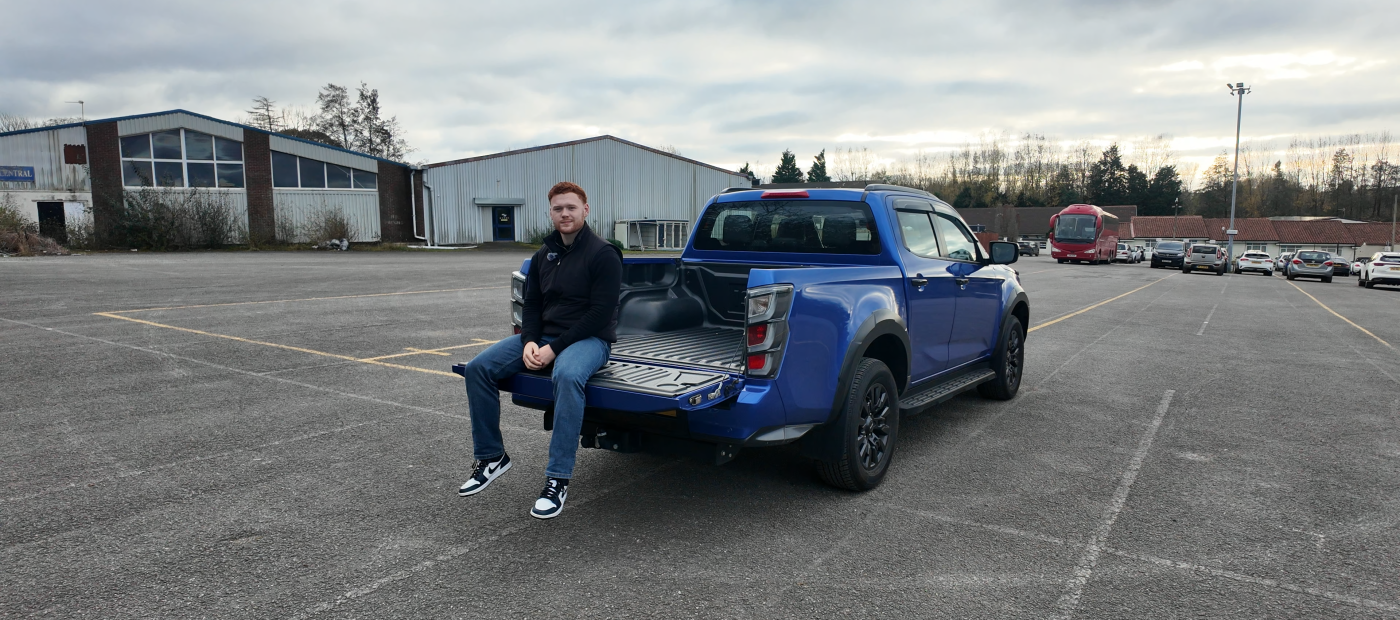
A week with the Isuzu D-Max EV Cross, reviewed by Matt Smith.
First Impressions
This is an interesting one. Isuzu has built its reputation on making tough, dependable pick-up trucks that are designed to work rather than simply look good outside a country pub. The D-Max has long been a favourite with farmers, construction companies, utility operators and anyone who needs a vehicle that can take a bit of punishment.
Now, for the first time, Isuzu has brought a fully electric version to the UK market.
Meet the D-Max EV eV-Cross.
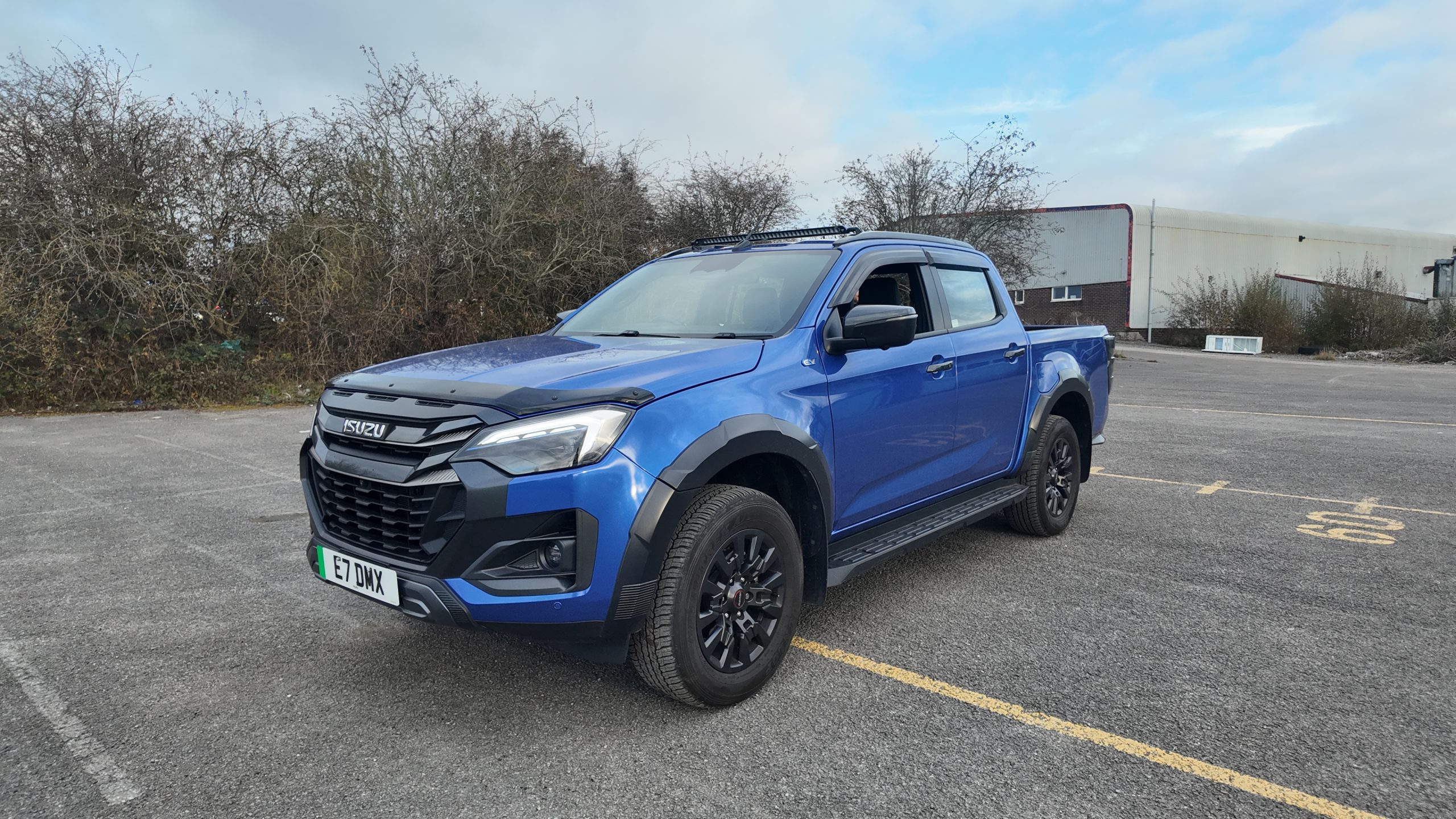
And this isn’t simply a diesel D-Max with an electric motor bolted in. Isuzu has had to rethink quite a lot of the engineering to accommodate the battery and electric drivetrain while retaining the capabilities that have made the D-Max such a popular working vehicle.
The headline figures are impressive. A 66.9kWh battery, permanent four-wheel drive, more than a tonne of payload and a maximum braked towing capacity of 3,500kg. That’s particularly important because one of the biggest problems with electric pick-ups so far has been the considerable reduction in payload and towing capacity compared with their diesel equivalents.
Isuzu is determined not to make that compromise.
The eV-Cross is the range-topping version, available exclusively as a Double Cab, and comes with a more premium specification and distinctive exterior detailing.
Prices are substantial. The original list price is £62,495 excluding VAT, although Isuzu’s current advertised price is £57,495 excluding VAT with the Zero Emission Van Grant included, subject to the applicable terms.
That’s a considerable amount of money for a D-Max, particularly when the diesel equivalent costs significantly less.
But the electric version is aimed at a different type of buyer. Businesses operating predictable daily routes, utility companies, local authorities and fleets looking to reduce emissions without losing the practicality of a proper working pick-up are the obvious target market.
The big question is whether electric power can genuinely replace diesel in this part of the market.
Design and Interior
From the outside, the electric D-Max remains unmistakably an Isuzu.
It’s a proper-looking pick-up, with a high bonnet, substantial wheel arches, a prominent front grille and the sort of proportions that suggest it is quite happy getting dirty.
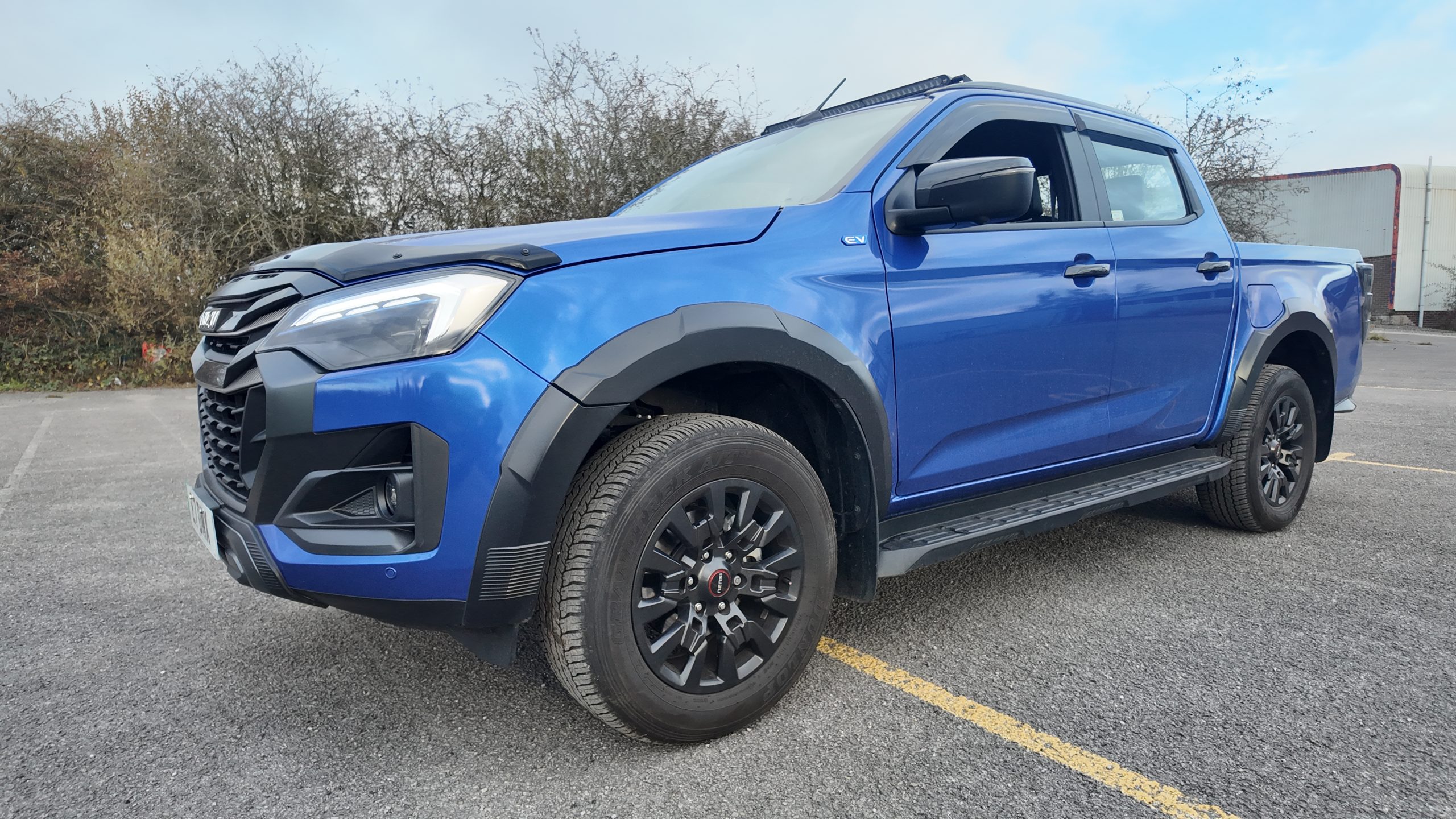
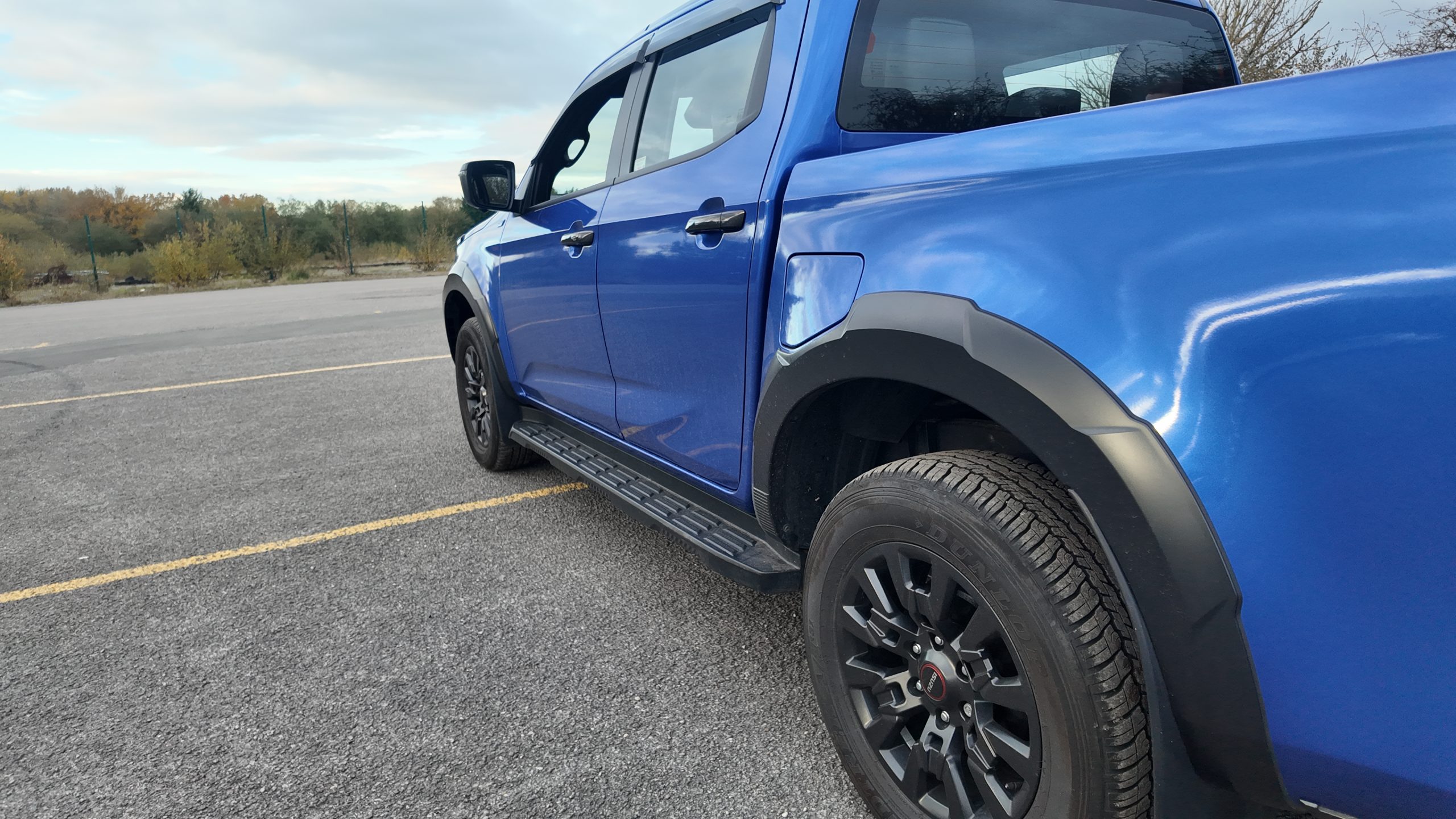
The eV-Cross gets its own styling details, including a dark grey radiator grille, dark grey door handles, black side steps and matt dark grey 18-inch alloy wheels.
There are also LED front fog lights and some revised detailing that help distinguish it from the more work-focused eDL40.
It looks suitably purposeful without going overboard with electric-vehicle styling gimmicks. There are no strange aerodynamic additions or futuristic design flourishes. It looks like a D-Max, which is exactly what most buyers will want.
The electric powertrain does bring some significant engineering changes underneath the bodywork.
The traditional leaf-spring rear suspension has been replaced by a newly developed De-Dion arrangement to accommodate the additional battery weight while maintaining the truck’s payload capabilities.
Isuzu also claims that the new suspension and associated refinements reduce cabin noise and vibration by up to 10% under full acceleration.
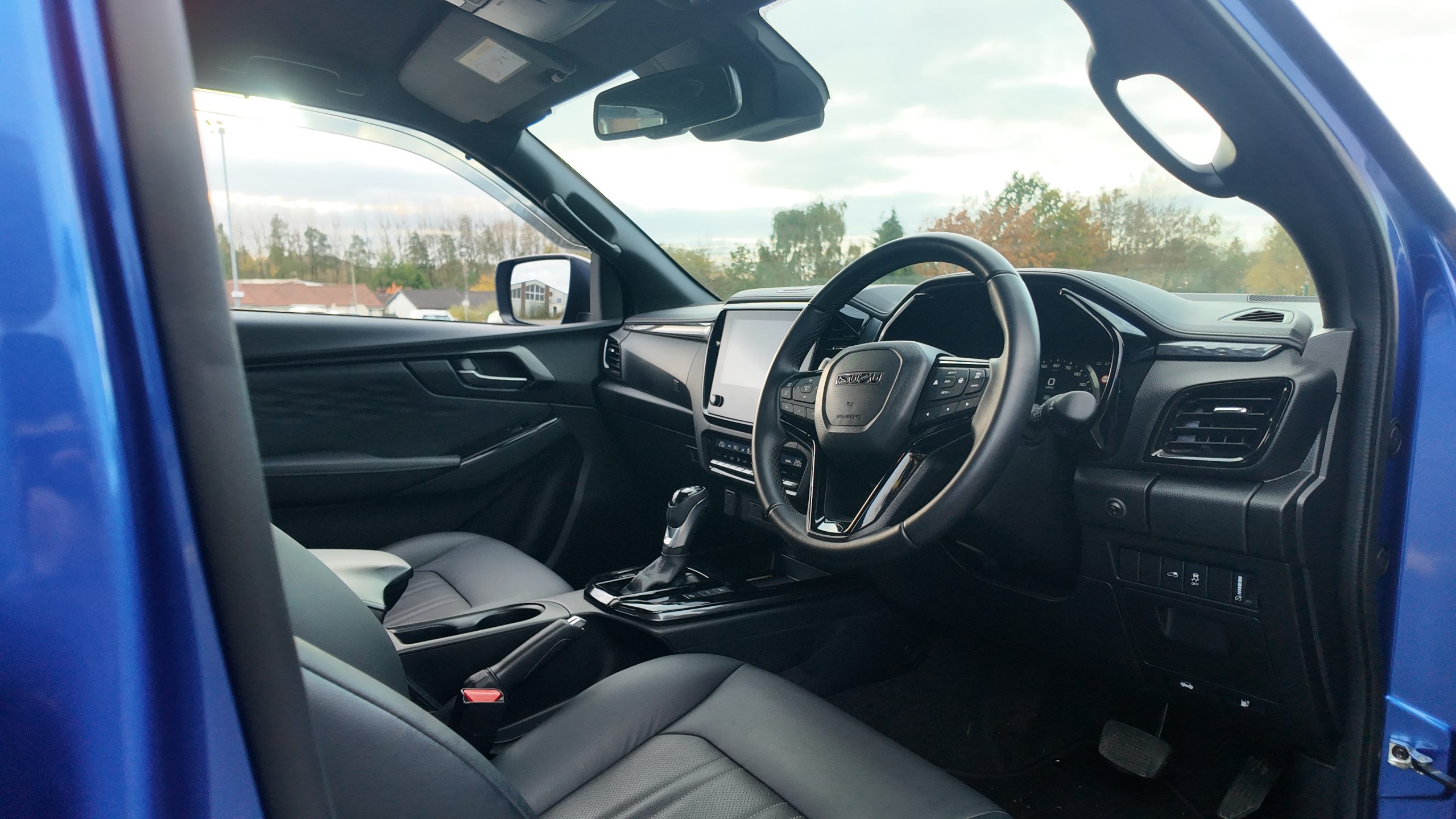
Inside, the eV-Cross is a familiar D-Max environment, and that’s not necessarily a bad thing.
This is still a working vehicle, so the emphasis is on durability and practicality rather than trying to create a luxury SUV cabin.
The eV-Cross gets leather-trimmed upholstery, heated front seats, dual-zone climate control and an auto-dimming rear-view mirror. The seats are comfortable, the driving position is commanding and visibility is generally good for a vehicle of this size.
The dashboard is straightforward, with a 7-inch digital driver display and a larger 9-inch central infotainment screen.
There are useful storage areas, USB-C connections and plenty of practical touches for people who spend their working day in the vehicle.
The Double Cab provides seating for five, with a decent amount of room in the front and usable space in the rear. It isn’t quite as spacious as a large SUV, but that’s not really the point.
The load bed measures approximately 1,520mm in length on the Double Cab, so you still have a useful working area behind the passenger compartment.
One thing worth remembering is that this is a pick-up first and an electric vehicle second. The interior is robust, functional and designed to withstand everyday use.
Infotainment and Physical Controls
The eV-Cross gets Isuzu’s larger 9-inch infotainment touchscreen, compared with the 8-inch unit fitted to the eDL40.
Wireless Apple CarPlay and Android Auto are included, alongside Bluetooth connectivity, DAB radio and an eight-speaker audio system.
The system does the basics, but this is an area where Isuzu could have done better.
The graphics and interface feel a little behind the latest passenger-car systems, and the layout isn’t always as intuitive as it could be. It’s functional rather than particularly impressive.
That said, I would rather have a straightforward system with physical controls than a vehicle where every function is buried inside a touchscreen.
There are plenty of conventional buttons and switches, which makes operating the vehicle while wearing work gloves considerably easier.
The digital driver display is useful, particularly as it replaces the traditional rev counter with an electric power and energy regeneration display.
There are also steering-wheel controls and paddles that allow the driver to adjust regenerative braking.
Overall, the technology is perfectly adequate for a working pick-up, but it isn’t a particular highlight.
On the Road
This is where things get interesting.
The D-Max EV uses two electric motors, one on each axle, providing permanent four-wheel drive. The 66.9kWh lithium-ion battery sits within the chassis rails, keeping the weight relatively low and helping protect it from the sort of knocks and impacts that a working pick-up might encounter.
Isuzu’s original published technical specification quotes a maximum output of 140kW (188PS) and 325Nm of torque.
Some later independent UK road tests quote approximately 200bhp and 348Nm, reflecting differences in published specification figures. The important point is that the electric D-Max has plenty of immediate response for everyday work.
The 0–62mph time is approximately 10.1 seconds, with a maximum speed of 84mph.
Nobody is going to mistake this for a performance pick-up, but the electric motors deliver their power smoothly and immediately.
The absence of a diesel engine makes a noticeable difference to refinement. There is no traditional diesel clatter, no gear changes and no waiting for the engine to build up its power.
Pulling away is smooth, and the instant torque makes manoeuvring trailers and negotiating difficult terrain feel more straightforward.
On the road, the D-Max EV is noticeably quieter than its diesel sibling. Wind and tyre noise are still present, as you would expect in a vehicle of this shape, but the lack of engine noise makes longer journeys more relaxing.
The revised rear suspension also helps improve refinement, although this is still a proper pick-up rather than a luxury SUV.
At lower speeds, the ride can feel a little unsettled, particularly over poor road surfaces. With an empty load bed, the rear can still bounce around, and there is noticeable body movement through corners.
It isn’t particularly entertaining to drive, but that’s not what it was designed for.
Where the electric drivetrain really makes sense is off-road.
The permanent four-wheel-drive system distributes power between the front and rear axles, with a rear-biased set-up that helps when traction becomes difficult.
The Rough Terrain Mode helps the vehicle manage loose surfaces, while the instant response from the electric motors makes crawling over difficult ground feel controlled and predictable.
There is also an advantage when towing. Electric torque is available immediately, making pulling away with a trailer considerably more effortless than in a conventional diesel vehicle.
The D-Max EV retains a maximum braked towing capacity of 3,500kg, which is a major achievement for an electric pick-up.
This is where Isuzu deserves considerable credit. It hasn’t simply produced an electric truck that looks like a D-Max. It has worked hard to retain the abilities that make the D-Max useful in the first place.
Battery, Range and Charging
This is probably the most important section of the review, because the battery and range will determine whether the D-Max EV makes financial and practical sense for a business.
The battery has a capacity of 66.9kWh, which is relatively modest for an electric vehicle of this size.
Isuzu quotes a combined WLTP range of approximately 163 miles (263km).
There is also a quoted urban driving range of up to 224 miles, reflecting the fact that electric vehicles can be considerably more efficient in slower, stop-start conditions.
However, let’s be realistic. A pick-up is not an aerodynamic vehicle, and the range will be affected by driving speed, temperature, payload, terrain and, particularly, towing.
If you’re regularly carrying a tonne in the back or pulling a heavy trailer, expect the available range to reduce significantly.
For a business operating within a relatively small geographical area, 163 miles may be perfectly adequate. For someone covering 200 miles a day between customer sites, it could become a problem.
Charging is another area where the D-Max EV is not quite as competitive as some passenger electric vehicles.
DC rapid charging is limited to 50kW, with a 20–80% charge taking approximately one hour under suitable conditions.
It also supports 11kW three-phase AC charging, which is particularly useful for businesses with their own charging facilities.
A full charge using a suitable three-phase supply takes approximately six hours, while a standard 7kW home or workplace wallbox will take closer to ten hours.
There is no DC rapid-charging performance to get excited about, and an hour to reach 80% is fairly slow by modern electric-car standards.
However, the target customer is important here.
A utility company returning its vehicles to a depot every evening can simply plug them in overnight. A farmer or contractor with a dedicated charging point at their premises may find the arrangement perfectly workable.
For those businesses, charging becomes part of the working routine rather than a major inconvenience.
The D-Max EV is not designed to be a long-distance motorway cruiser. It’s designed to undertake predictable working journeys, return to base and recharge.
Get that usage pattern right and the battery makes considerably more sense.
The Niggles
There are some obvious compromises with the electric D-Max.
The biggest is range. At 163 miles officially, it is considerably less than many modern electric cars, and real-world range will fall when carrying heavy loads or towing.
The 50kW DC charging limit is another weakness. An hour to charge from 20% to 80% is a long time if you’re working away from base.
The purchase price is also difficult to ignore. Even with the available government grant, this is an expensive pick-up, particularly when compared with the diesel D-Max.
The infotainment system feels dated, and the touchscreen could be more intuitive.
The ride quality is also not perfect. Although the electric version benefits from revised rear suspension, it can still feel unsettled over poor surfaces, particularly when the load bed is empty.
Finally, there is the question of weight and payload. The Double Cab offers a payload of approximately 1,015kg, which is impressive for an electric pick-up, but operators need to check the precise plated payload of their individual vehicle and account for accessories, occupants and equipment
None of these issues makes the D-Max EV a bad vehicle. They simply mean that buyers need to understand exactly what they’re purchasing.
Safety and Warranty
Isuzu has equipped the D-Max EV with a comprehensive collection of safety and driver assistance technology.
The package includes autonomous emergency braking, adaptive cruise control, lane-keeping assistance, blind-spot monitoring, rear cross-traffic alert and a 360-degree camera system.
The camera system is particularly useful when manoeuvring in tight spaces or positioning the vehicle on difficult terrain.
There is also a range of driver assistance functions designed to reduce fatigue during longer journeys.
The D-Max has an established reputation as a tough working vehicle, and the electric version retains much of the same underlying chassis architecture.
However, buyers should note that safety ratings awarded to diesel versions should not automatically be treated as a separately confirmed Euro NCAP rating for the EV.
Warranty provision is another important consideration.
The D-Max EV comes with a five-year / 125,000-mile vehicle warranty, alongside an eight-year / 125,000-mile battery warranty, subject to the manufacturer’s terms and conditions.
Isuzu also includes five years of roadside assistance.
For commercial operators, that is reassuring. Battery longevity is one of the biggest considerations when purchasing an expensive electric commercial vehicle, and an eight-year battery warranty provides useful peace of mind.
The Fleet and Salary Sacrifice Case
This is where the D-Max EV becomes particularly interesting.
For businesses, the decision to move to electric power is not always about saving money on fuel. Increasingly, it is about reducing emissions, meeting environmental targets and maintaining access to urban areas.
The D-Max EV offers something that many electric pick-ups struggle to deliver: a genuine working payload and 3.5-tonne towing capacity.
That makes it particularly relevant for utility companies, construction businesses, local authorities, infrastructure operators and organisations that need a proper working truck.
The purchase price is high, but businesses should look at the wider operating costs.
Electricity can be considerably cheaper than diesel when charging at a depot or using an appropriate business tariff. Servicing requirements may also be lower because there is no conventional combustion engine, engine oil or traditional exhaust system.
However, tyres, brakes, suspension and other commercial-vehicle maintenance costs remain.
There is also an important tax consideration.
The UK tax treatment of double-cab pick-ups changed from April 2025, and the distinction between commercial-vehicle treatment and company-car Benefit-in-Kind treatment needs careful consideration.
Electric power does not automatically mean every D-Max EV buyer receives the same tax treatment. VAT recovery, capital allowances and company-car taxation depend on the circumstances and the applicable HMRC rules.
For a fleet manager, I would strongly recommend obtaining a whole-life cost calculation before placing an order.
The other consideration is vehicle utilisation.
If the truck is covering 80–100 miles a day, returning to a depot overnight and operating within a relatively predictable area, the electric version could make a very compelling case.
If it is regularly travelling 200 miles, towing heavy equipment across the country and spending much of its life away from charging facilities, the diesel D-Max may still be the more sensible choice.
This is a vehicle where understanding the duty cycle is absolutely essential.
The Competition
The electric pick-up market is still relatively small, but competition is beginning to arrive.
The most obvious alternative is the KGM Musso EV.
The Musso offers a larger battery and a considerably longer official range, making it more attractive for buyers who prioritise driving distance. However, its payload and towing capabilities are lower than those of the Isuzu.
The Maxus eTerron 9 is another alternative, with a substantially larger battery and an official range of up to approximately 267 miles. However, its payload is considerably lower, and its towing capacity is also below the D-Max’s 3.5-tonne figure.
The forthcoming Toyota Hilux BEV is another important competitor, although its working capabilities and market availability need to be assessed against the final UK specification.
Of course, there is also the conventional diesel D-Max itself.
For buyers who regularly cover long distances, need maximum flexibility and cannot guarantee access to charging, the diesel remains a very compelling alternative.
But for operators who need a capable working vehicle with zero tailpipe emissions, the D-Max EV has a particularly strong selling point.
It is one of the few electric pick-ups that genuinely takes commercial capability seriously.
The Verdict
The Isuzu D-Max EV eV-Cross is an important vehicle, and not simply because it happens to be electric.
Isuzu has taken one of the UK’s established working pick-ups and successfully adapted it for electric power without losing the features that make it useful.
The ability to carry more than a tonne, tow 3,500kg and offer permanent four-wheel drive is a considerable achievement.
The electric drivetrain also brings some genuine advantages. It is quieter, smoother and more responsive than the diesel, while the instant torque makes low-speed manoeuvring and off-road driving particularly appealing.
The specification is generous, the eV-Cross looks the part and the warranty package provides useful reassurance.
But there are compromises.
The 163-mile official range is relatively modest, the 50kW rapid-charging capability is disappointing and the purchase price is high. The infotainment system could also do with an update, and the ride quality isn’t quite as refined as some of the more road-focused alternatives.
The important thing is to buy this vehicle for the right reasons.
For a business operating predictable routes, with access to overnight depot charging and a genuine need for a one-tonne payload and 3.5-tonne towing capacity, the D-Max EV makes a lot of sense.
For someone regularly travelling long distances, towing across the country or working far away from charging infrastructure, the diesel version is still likely to be the better option.
Four and a half stars from me.
The D-Max EV loses half a star for its relatively limited range, slow rapid charging and high purchase price. But what Isuzu has achieved deserves real recognition.
This is a proper working pick-up that hasn’t sacrificed its core abilities simply to become electric. More than a tonne of payload, 3,500kg towing capacity, permanent four-wheel drive and the refinement of an electric drivetrain make it a seriously compelling proposition.
It won’t suit every operator, and the diesel D-Max will remain the better choice for some. But for businesses with predictable routes and access to charging, this is a very convincing alternative.
Isuzu has shown that electric power and genuine commercial capability can work together.
A proper working truck, a significant step forward for electric pick-ups, and a thoroughly deserved 4.5 out of 5.