
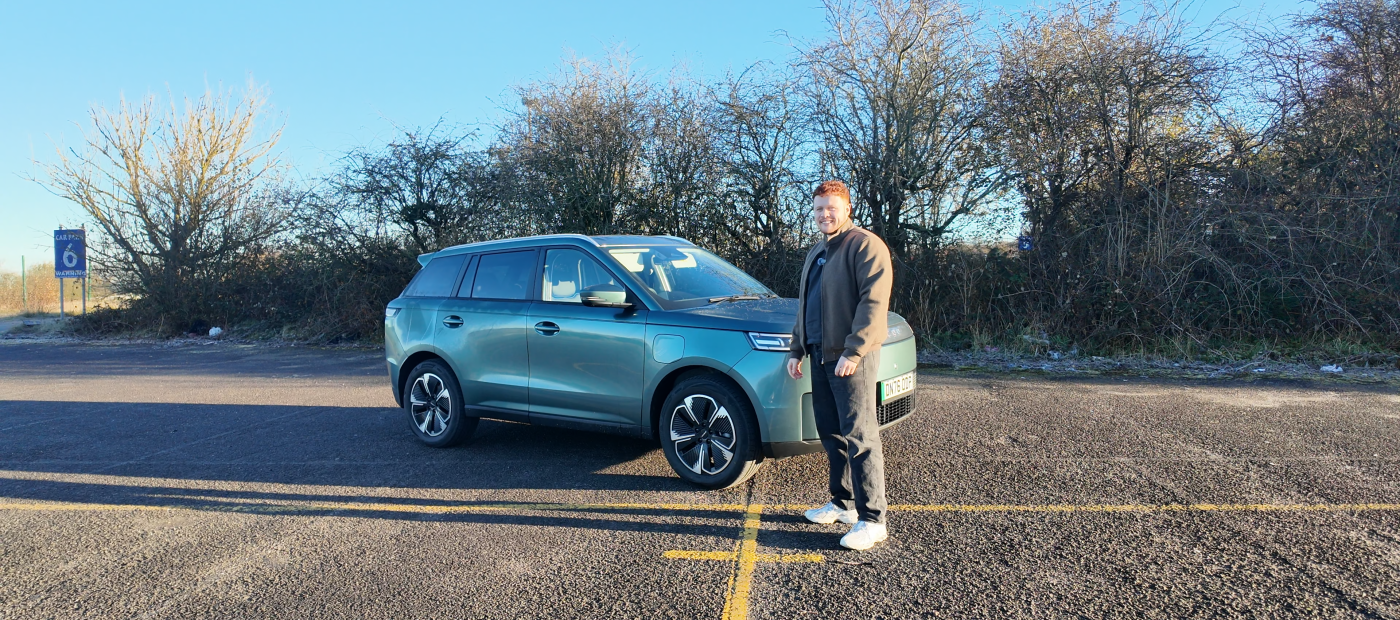
Jaecoo E5 Review: The £27k Electric SUV Crashing the UK Top 10 Sales Charts!
Watch the review — click here (opens YouTube in a new tab)
First Impressions
The electric SUV market is becoming increasingly competitive, with manufacturers fighting to offer more range, better technology and greater practicality for less money. The Jaecoo E5 arrives with a fairly simple proposition: give buyers a good-sized electric family SUV, pack it with equipment and price it below many of the familiar alternatives.
It is part of the growing Jaecoo family, a brand owned by Chinese automotive group Chery. While the larger Jaecoo 7 has helped establish the name in Britain, the E5 takes a different approach, offering a smaller, fully electric SUV aimed at buyers looking for affordable everyday transport.
With prices starting at around £27,500, the E5 undercuts several well-known electric rivals. It also offers a claimed range of up to 248 miles, a 480-litre boot and a cabin that feels surprisingly spacious for a vehicle of its size.
There is plenty to like on paper, particularly when you consider the standard equipment and seven-year warranty. The E5 also has a few unusual features designed to make it more appealing to families and pet owners.
However, it isn’t without its compromises. The charging speed is relatively slow, the handling lacks polish and the ride can become unsettled on rougher roads. It doesn’t quite have the all-round sophistication of the best electric SUVs.
Nevertheless, the Jaecoo E5 makes a strong case for itself. It offers a lot of car for the money, and for buyers who value practicality and equipment over driving excitement, it is a genuinely interesting alternative.
Design and Interior
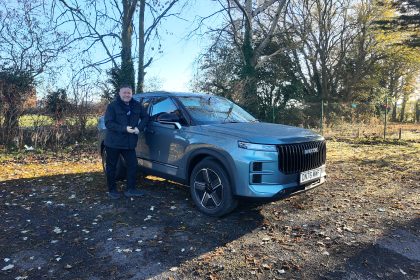
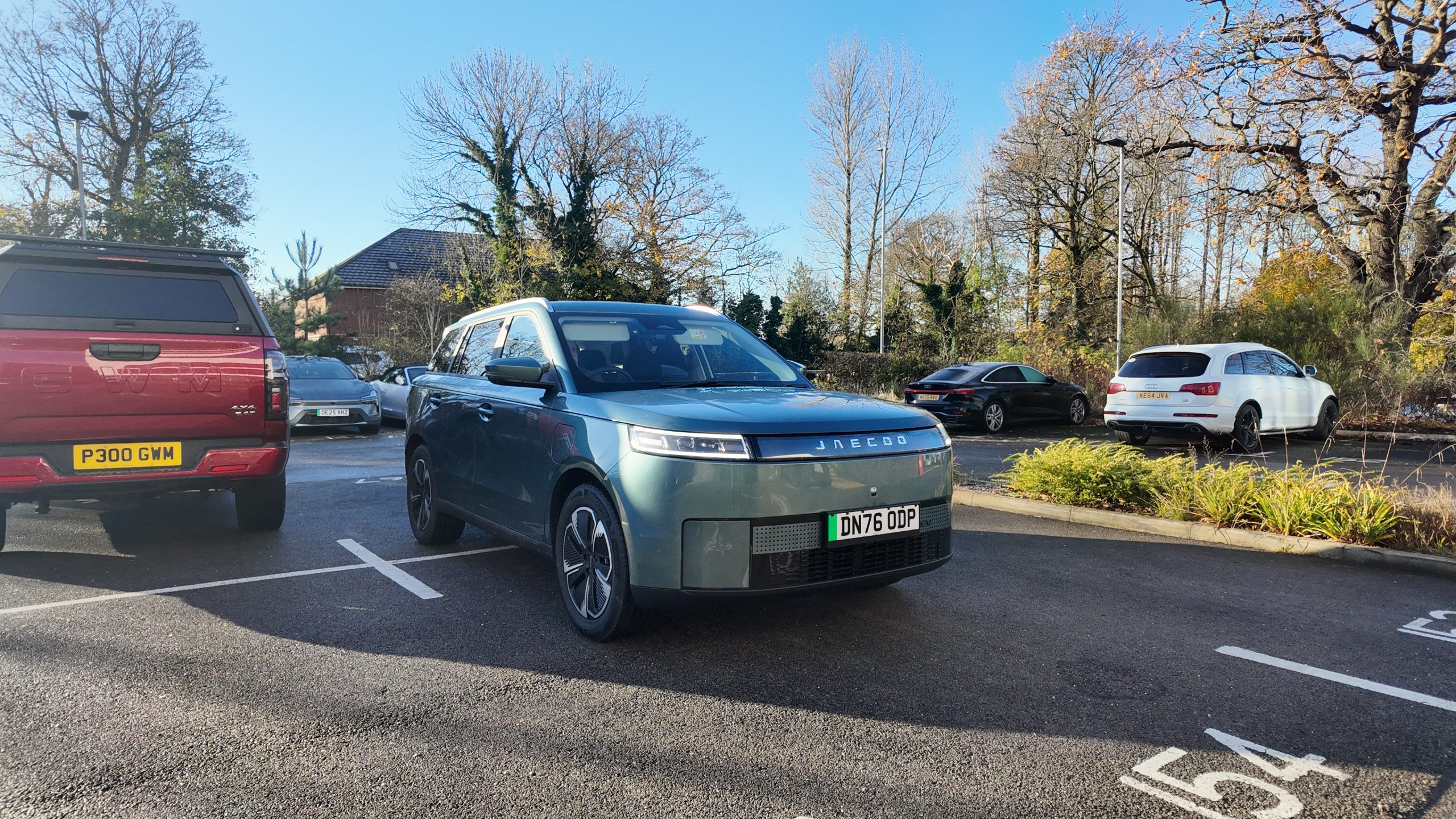
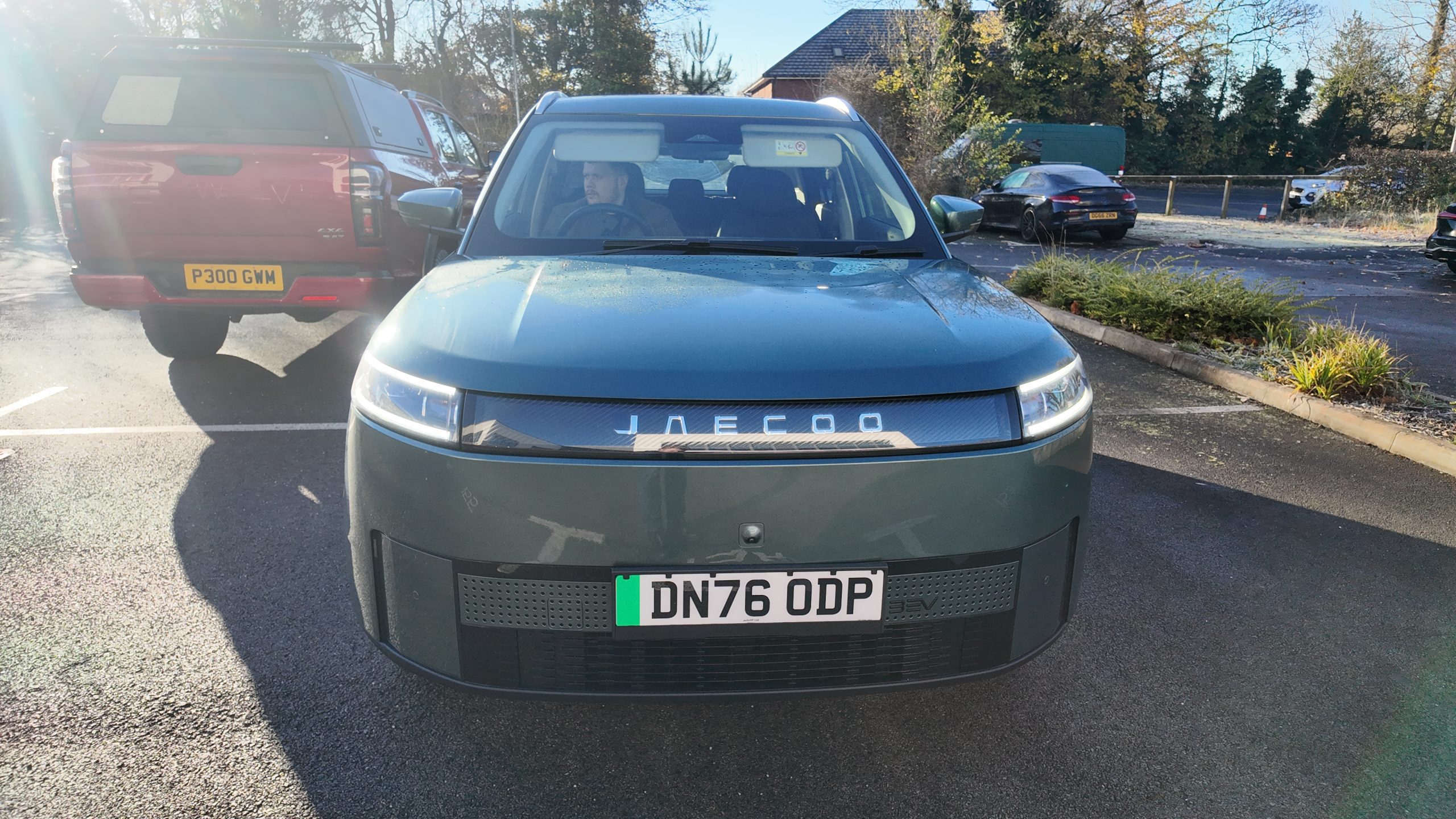
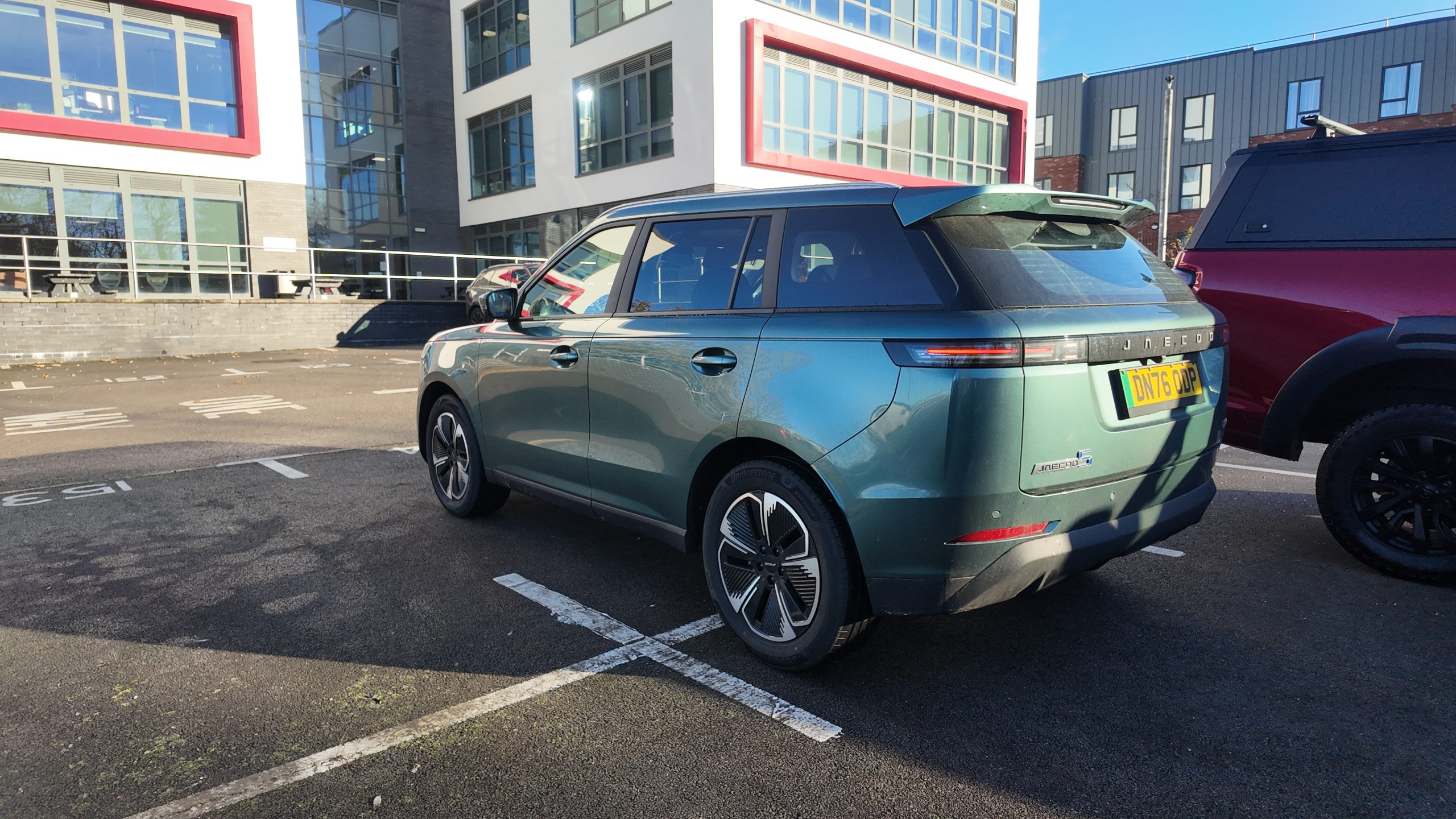
The Jaecoo E5 has a distinctive appearance, although its styling is unlikely to be everyone’s cup of tea. Its upright proportions, squared-off bodywork and relatively clean surfaces give it the appearance of a more expensive SUV.
There are clear influences from premium British off-roaders, particularly around the rear styling and overall shape. The front end is more understated, with a smoother design that distinguishes the electric E5 from its petrol-powered Jaecoo 5 counterpart.
It isn’t particularly adventurous, but it looks substantial enough to stand out in a car park. The proportions also give it a more traditional SUV appearance than some of the swoopier electric crossovers currently on sale.
Inside, the E5 continues the straightforward approach. The dashboard is dominated by a large central touchscreen, while the overall layout is modern and relatively uncluttered.
The materials are better than you might expect at this price. There are some harder plastics lower down, but the areas you regularly touch feel reasonably well finished. It doesn’t quite have the premium atmosphere of a more expensive electric SUV, but it certainly doesn’t feel like a cheap car.
The front seats are comfortable, and there is plenty of room for the driver and passenger. The driving position is relatively high, giving you the commanding view that many SUV buyers appreciate.
Storage is another strong point. There are useful door pockets, a decent central storage area and plenty of places to keep everyday items. The cabin feels designed around family use rather than simply looking attractive in a showroom.
One particularly interesting feature is the E5’s pet-friendly equipment. Depending on specification and accessories, Jaecoo offers features designed to make travelling with animals easier, including durable upholstery and a dedicated Pet Mode.
The rear cabin is a little more mixed. Headroom is generous, but legroom is less impressive, particularly for taller passengers. Adults will fit, but anyone sitting behind a tall driver may find their knees getting close to the front seat.
The nearly flat rear floor helps, although the car isn’t particularly wide, so carrying three adults across the back will be a squeeze.
Overall, the interior is a pleasant place to spend time. It is spacious at the front, reasonably well equipped and offers a good level of perceived quality for the money.
Infotainment and Physical Controls
Technology is a major part of the Jaecoo E5’s appeal. The dashboard features a large central touchscreen, measuring 13.2 inches on the entry-level Pure and up to 14.8 inches on higher-specification versions, depending on model specification.
The screen provides access to the main infotainment functions, vehicle settings and various convenience features. The graphics are modern, and the system responds reasonably quickly to inputs.
Wireless Apple CarPlay and Android Auto are included, which is particularly useful for drivers who prefer using their own navigation and music applications.
The digital driver’s display is also a welcome addition, providing the key information you need without making the dashboard feel overly complicated.
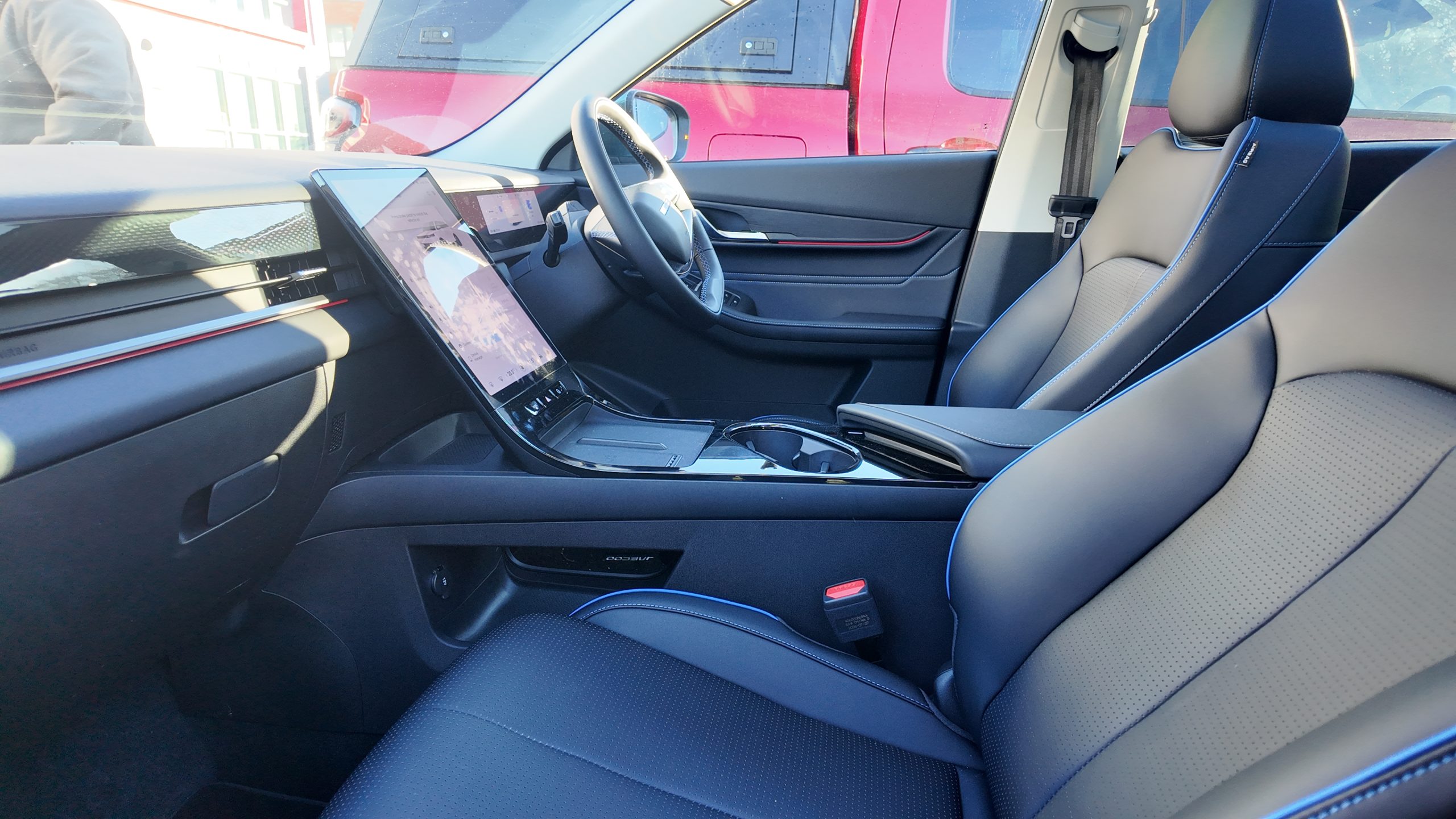
However, the touchscreen-heavy approach does have its drawbacks. Some everyday functions are buried within menus, and the absence of dedicated physical climate controls is frustrating.
Adjusting the temperature or changing certain settings can require more attention than it should, particularly when you’re driving. Permanent shortcuts and a more straightforward menu structure would improve the experience considerably.
The system also doesn’t always feel as polished as the best infotainment setups from Kia, Hyundai or Tesla.
Higher-specification Luxury models add a Sony sound system, wireless phone charging and further comfort features, making them more appealing for buyers who spend a lot of time in the car.
Overall, the technology offering is generous, but Jaecoo needs to make the interface easier to use. A large screen is welcome, but it shouldn’t come at the expense of simple physical controls.
On the Road
The Jaecoo E5 is powered by a single electric motor driving the front wheels. It produces 155kW, equivalent to approximately 211PS, with 288Nm of torque.
That gives the E5 enough performance for everyday driving. Electric power delivery is immediate, allowing it to move away smoothly from traffic lights and make reasonably quick progress around town.
The claimed 0-62mph time is 7.7 seconds, which is more than adequate for a family SUV. It isn’t particularly quick by modern electric-car standards, but there is enough acceleration to make overtaking and joining faster roads straightforward.
The electric motor is generally quiet and smooth, as you’d expect, and the absence of a conventional gearbox makes the E5 easy to drive in stop-start traffic.
Where things become less impressive is when the road starts to twist or the surface deteriorates.
The suspension can feel unsettled over potholes and broken tarmac, with the car occasionally becoming jittery rather than absorbing imperfections cleanly. It isn’t uncomfortable all the time, but it doesn’t have the sophisticated ride quality of the best family EVs.
Body movement is also noticeable through corners. The steering is light and easy to manage, but it doesn’t provide much feedback, while the car can lean more than you’d ideally want when changing direction quickly.
The E5 is therefore better suited to relaxed driving than enthusiastic progress along country roads.
On the motorway, it settles into a reasonably comfortable cruise. The electric motor remains quiet, and the higher driving position makes it easy to see what is happening around you. However, wind and road noise can become more noticeable at higher speeds.
Regenerative braking is available to help recover energy when slowing down, although the transition between regenerative and conventional braking could be smoother.
The E5 isn’t a driver’s car, and it doesn’t pretend to be one. It is easy to operate, sufficiently quick and perfectly capable of handling everyday journeys. It simply lacks the refinement and composure of some more expensive alternatives.
Engine, Fuel Economy and Electric Range
As a fully electric vehicle, the Jaecoo E5 has no petrol engine. Instead, it uses a 61.1kWh battery and a front-mounted electric motor producing 155kW and 288Nm.
The official WLTP range is up to 248 miles, which is respectable for an electric SUV at this price.
During independent testing, efficiency of around 3.7 miles per kWh has been reported. That suggests a realistic driving range of approximately 225 miles in suitable conditions, although colder weather, motorway speeds, heating use and driving style will all affect the result.
For drivers mainly covering local journeys, commuting and occasional longer trips, that should be sufficient. However, those regularly undertaking lengthy motorway journeys may find themselves stopping to charge more frequently than they would in a longer-range rival.
The E5 supports AC charging at up to 11kW, while rapid DC charging is limited to 80kW.
That DC figure is one of the car’s biggest weaknesses. Many newer electric vehicles now offer charging rates comfortably above 100kW, making the Jaecoo’s maximum speed relatively modest.
A 10-80% rapid charge is quoted at around 35 minutes under suitable conditions, although actual charging times depend on the charger, battery temperature and state of charge.
For home charging, the E5 is much more convincing. Connected to a suitable home wallbox, it can be charged overnight, making it easy to start each morning with a full battery.
The key question is how you intend to use it. If most of your driving involves commuting, school runs and local journeys, the range should be perfectly workable. If you regularly cover long distances and rely on public rapid chargers, the slower charging speed becomes more of a compromise.
Practicality and Family Use
Practicality is one of the Jaecoo E5’s strongest selling points.
Measuring approximately 4,380mm long, 1,860mm wide and 1,650mm high, it is a relatively compact SUV, but the cabin makes good use of the available space.
The front seats offer plenty of room, while the high roofline provides generous headroom for occupants in both rows.
Rear legroom is less impressive, and taller passengers may find themselves sitting closer to the front seats than they would in a Kia EV3 or some larger alternatives. Nevertheless, the rear bench is perfectly usable for children and average-sized adults.
The boot is a particularly strong feature. At 480 litres, it is impressively large for an SUV of this size, providing enough room for shopping, pushchairs and family luggage.
There is also useful underfloor storage, helping keep smaller items organised, while a 35-litre front boot provides somewhere to store charging cables.
That additional front storage is a welcome touch, particularly because some rivals don’t offer a front boot at all.
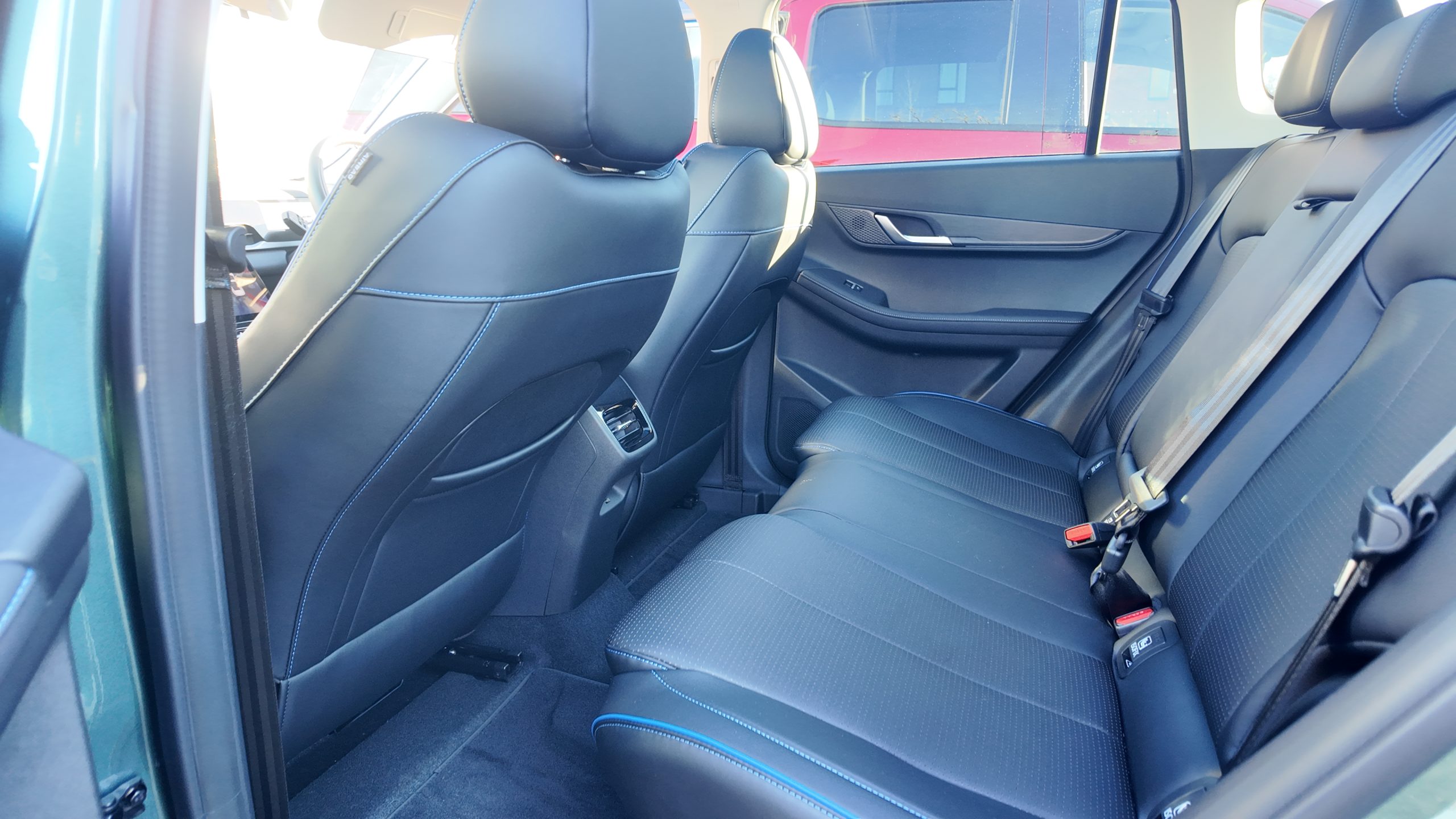
The rear seats fold down to create more space when carrying larger items, making the E5 reasonably flexible for everyday family life.
Jaecoo has also included some features aimed at owners who enjoy outdoor activities. Camping Mode allows the car to remain powered for certain functions while stationary, while the Pet Mode helps maintain a suitable cabin environment for animals.
These features won’t be essential for everyone, but they add a little character to what is otherwise a fairly conventional family SUV.
The E5 doesn’t offer the largest rear passenger area in its class, but the combination of a generous boot, front storage and useful cabin space makes it a practical choice.
The Niggles
The Jaecoo E5 is an appealing package, but there are some areas where it falls short.
The biggest issue is its charging speed. An 80kW maximum DC rate is relatively slow by current electric-car standards, particularly for drivers who regularly use motorway charging stations.
The ride and handling are also disappointing. The suspension can become unsettled on rough roads, while body roll and light steering mean it isn’t particularly engaging to drive.
The infotainment system looks modern, but too many functions are controlled through the touchscreen. The lack of dedicated climate controls is especially frustrating.
Rear legroom could be better, too. Although there is plenty of headroom, taller passengers may find the rear seating position less comfortable than in some competitors.
The E5 also lacks the longer-range battery options offered by certain rivals. Its 248-mile official range is reasonable, but buyers who regularly travel long distances may want something capable of going further between charges.
Finally, Jaecoo is still establishing its reputation in Britain. The warranty provides reassurance, but there is not yet enough long-term ownership data to judge reliability with the same confidence as more established manufacturers.
None of these issues is necessarily a deal-breaker, but they are worth considering before making a purchase.
Safety and Warranty
The Jaecoo E5 comes with a broad selection of driver-assistance and safety equipment, including autonomous emergency braking, lane assistance, adaptive cruise control and parking sensors.
The exact equipment varies between trim levels, but the overall package is competitive for the price.
Higher-specification versions also benefit from additional convenience technology and camera systems, helping make the car easier to manoeuvre in tight spaces.
One important consideration is that the E5 does not currently have a published Euro NCAP rating to rely on. Buyers should therefore avoid assuming it has achieved the same independent safety assessment as some established rivals.
The warranty is a significant positive. Jaecoo offers seven years or 100,000 miles of vehicle cover, while the high-voltage battery has separate warranty protection of up to eight years or 100,000 miles, subject to the manufacturer’s terms.
That is reassuring for anyone considering an electric car from a relatively new UK-market brand.
As with any new manufacturer, the real test will be how the cars perform over several years of ownership and how effectively the dealer network supports customers.
Fleet and Salary Sacrifice
The Jaecoo E5’s pricing is one of its biggest advantages.
With the Pure starting at around £27,505 and the Luxury costing approximately £30,505, it offers a relatively affordable way into a practical electric SUV.
The Pure is reasonably well equipped, with alloy wheels, a large touchscreen, digital driver’s display and a good selection of safety equipment.
However, the Luxury model is tempting. For the additional outlay, it adds features including electrically adjustable front seats, heating and ventilation, a panoramic roof, powered tailgate, Sony audio system and ambient lighting.
For buyers who want their electric SUV to feel a little more premium, the Luxury is arguably the more attractive version.
The E5 could also make sense for company-car drivers. As a fully electric vehicle, it benefits from the low Benefit-in-Kind rates available to qualifying zero-emission company cars. The exact tax liability will depend on the relevant tax year and the employee’s circumstances.
For salary-sacrifice schemes, the combination of a relatively low list price and electric-car tax treatment could make the E5 an attractive option, although the actual monthly cost will depend on the employer’s scheme, insurance, maintenance and any other deductions.
Private buyers should also consider the cost of home charging, public charging and insurance, alongside the purchase price.
The seven-year vehicle warranty and eight-year battery cover provide additional reassurance, although resale values and long-term reliability remain less established than those of more familiar brands.
Overall, the E5 offers a strong financial argument for buyers who want an electric family car without spending considerably more on a recognised badge.
Competition
The Jaecoo E5 enters a busy electric SUV market, where it faces some very capable alternatives.
The Kia EV3 is one of its most obvious rivals. It offers a more polished driving experience, good technology and the option of a longer-range battery, although comparable versions can cost more.
The Renault 4 E-Tech is another interesting alternative. It has more distinctive styling and a characterful interior, but its boot is smaller and the Jaecoo offers more luggage capacity.
The MG S5 EV is also worth considering. It provides competitive pricing, a more mature driving experience in some respects and longer-range versions for buyers prepared to spend more.
The Nissan Leaf is another established name in the electric-car market, offering a familiar badge and a comfortable driving experience, although the exact comparison depends on specification and price.
The Jaecoo’s advantage is its combination of purchase price, equipment and practicality. A 480-litre boot, front storage compartment, generous standard specification and long warranty make it an appealing package.
However, the Kia and MG are more convincing choices for buyers who prioritise driving refinement and charging performance.
The Jaecoo E5 is therefore not necessarily the best electric SUV in its class, but it is one of the more interesting value-focused options.
The Verdict
The Jaecoo E5 is a good example of how much electric-car buyers can now get for their money.
It offers a spacious front cabin, a generous 480-litre boot, plenty of standard equipment and a claimed range of 248 miles. The interior feels reasonably well finished, the technology offering is impressive and the long warranty provides welcome reassurance.
It is also easy to drive, sufficiently quick for everyday use and particularly appealing for buyers who can charge at home.
There are compromises, though. The 80kW rapid-charging limit is disappointing, the ride can become unsettled on rough roads and the handling lacks the polish of the best electric SUVs. The touchscreen also tries to do too much, while rear legroom could be better.
Those shortcomings prevent the E5 from being a class leader, but they don’t take away from its overall value.
For buyers who want an affordable electric SUV with plenty of equipment and a genuinely useful boot, the Jaecoo E5 makes a lot of sense. It isn’t the most refined or exciting option, but it delivers where many buyers will care most.
Overall Rating: 4/5