
Ford Ranger PHEV Wildtrak Review: Does Hybrid Power Deliver Without Compromise?
First Impressions
The Ford Ranger has been the UK’s best-selling pickup for years, and the Wildtrak is the one most of them leave the showroom as. So the question with the plug-in hybrid version was never whether it looks the part. It was whether bolting a battery and a motor into a working truck would take anything away from it.
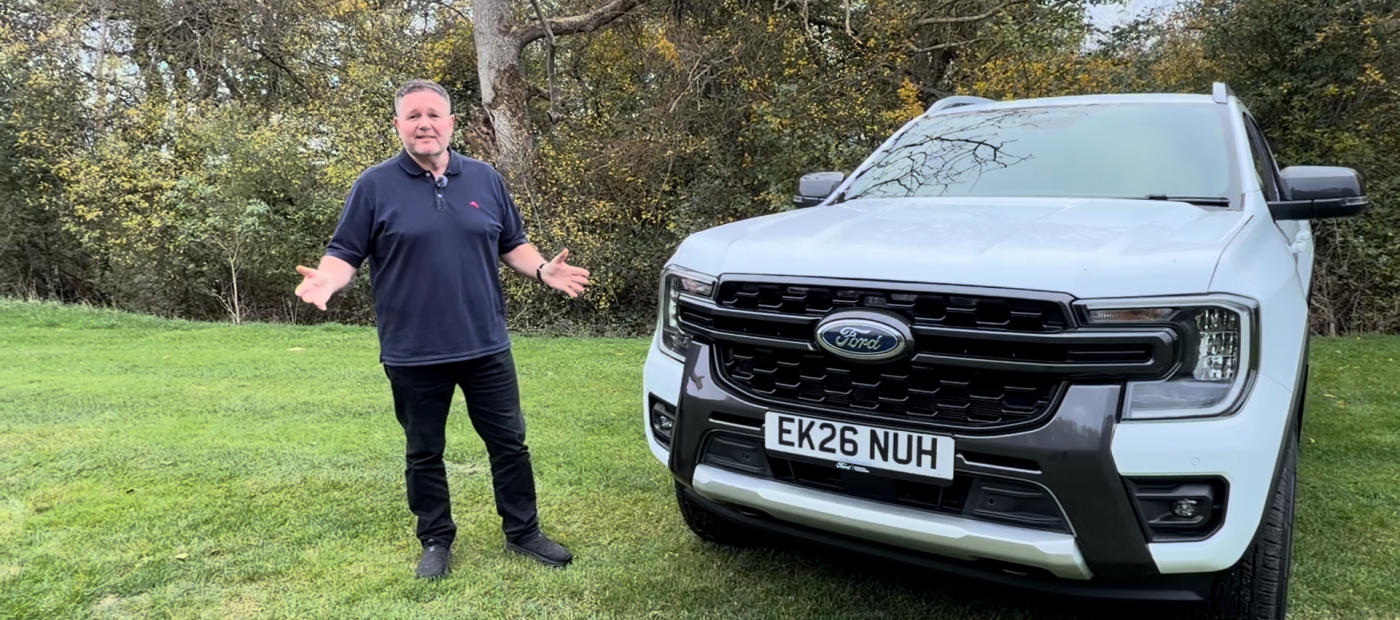
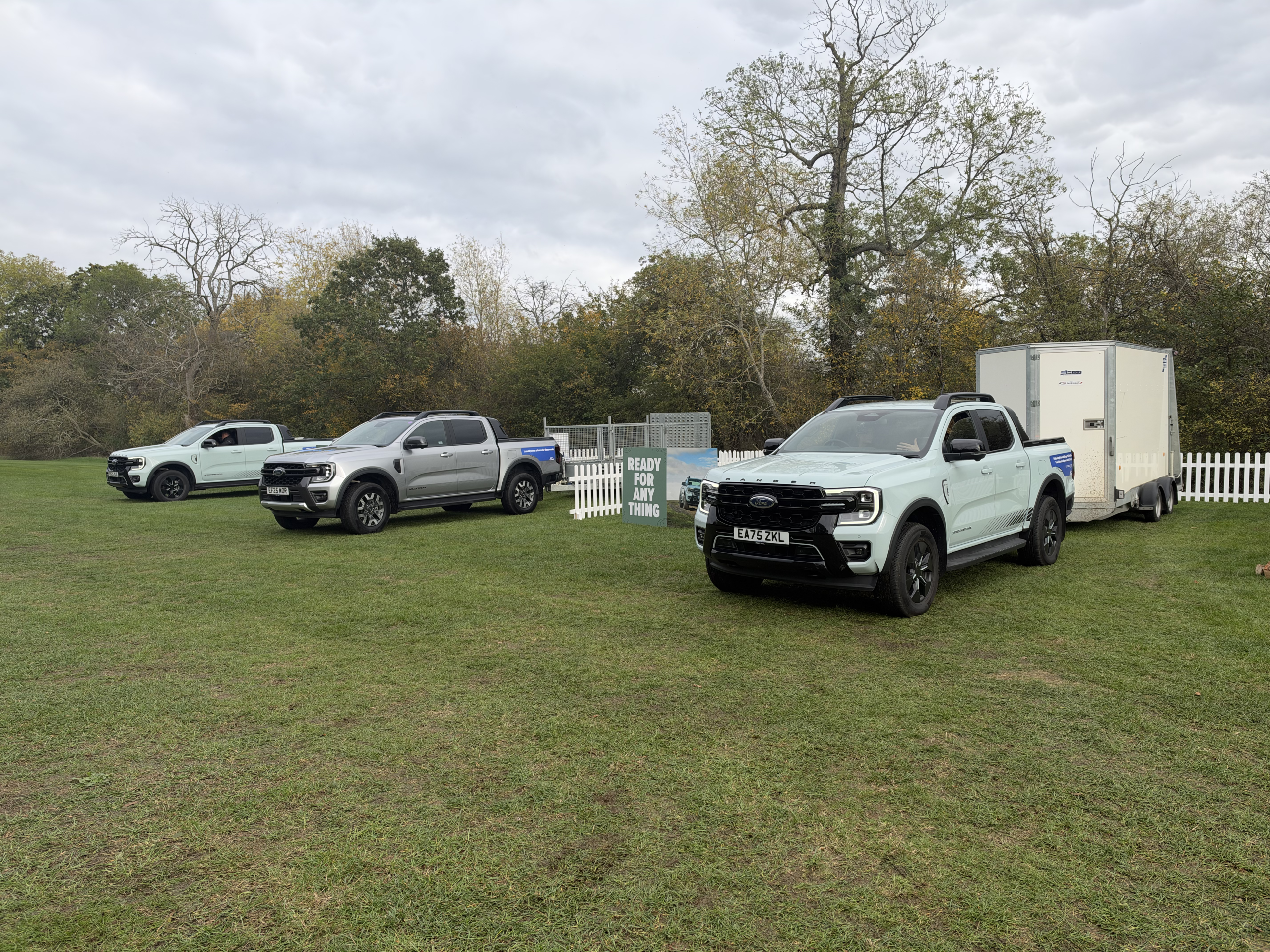
After a solid test with the Wildtrak PHEV, towing, off-roading and doing the school run in it, the short answer is no. It felt solid, it felt reliable, and it did everything I asked of a Ranger while running on electricity for a good chunk of the time.
Ford calls it Europe’s first plug-in hybrid pickup, and it has already picked up the International Pick-Up Award, the first hybrid to do so. The Wildtrak PHEV lists at £46,256 OTR excluding VAT on the current price list, which is £1,850 less than the equivalent V6 diesel. Read that again, because it matters later.
Design and Interior
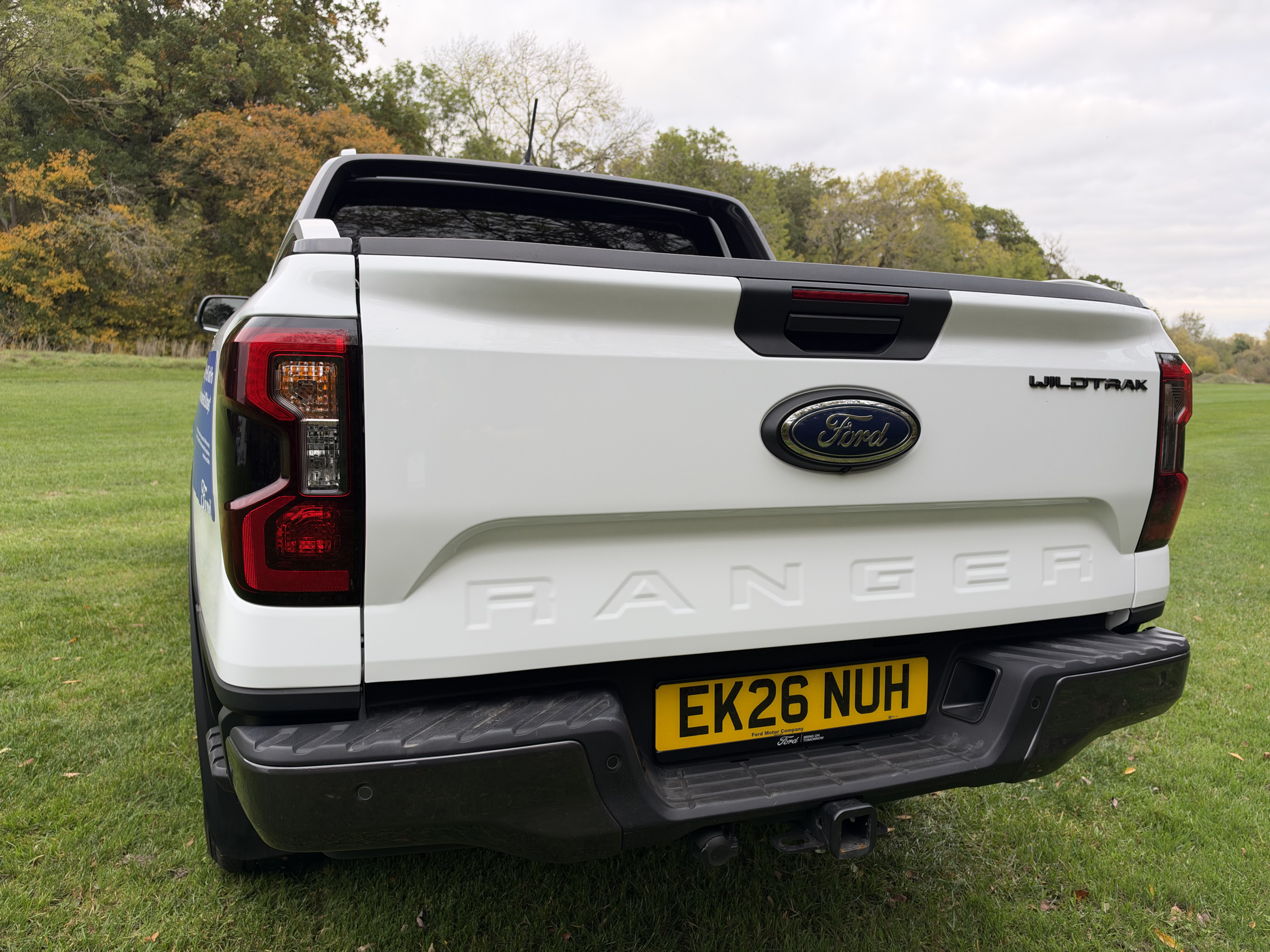
From the outside you would struggle to tell this from a diesel Wildtrak, and I think that is the point. The sports hoop, the grey accents and the big grille are all there, and the only giveaway is a charging flap on the rear wing. New for 2026 is Ignite Orange paint and stitching if you want people to notice you.
The cabin is where the current Ranger pulled away from the Hilux and the D-Max, and the Wildtrak gets the full treatment: part-leather seats, heated leather steering wheel, dual-zone climate, keyless start and ambient lighting. It feels like an SUV that happens to have a load bed, not a van with a nicer radio.
The back seats take two adults comfortably, three at a push. There are two gloveboxes, a deep lidded centre bin, more cup holders than you will ever use and, usefully for a working truck, a 230V socket in the back of the cab.
The load bed is the standard Double Cab box: 1,638mm long at the floor, 1,224mm between the arches, so a Euro pallet goes in, and the tailgate takes 750kg. The test truck had the electric roller shutter, which is great for security but slow, and the housing eats into the front of the bed. Side steps and a rear bumper step help you climb in, although it is still a bit of a scramble.
Then there is Pro Power Onboard. Tick the 6.9kW option and you get mains sockets in the bed and the cab, running straight off the battery. Tools, lighting, a compressor, a kettle: it turns the truck into a generator you do not have to tow to site. For anyone working remotely it is the single best thing about the PHEV.
Infotainment and Physical Controls
Every 2026 Ranger now gets the 12-inch portrait touchscreen running SYNC 4A and a 12.4-inch digital cluster. Wireless Apple CarPlay and Android Auto worked first time, every time, and the 360-degree camera is excellent when you are lining up a hitch.
Ford has kept proper physical buttons for the radio and the climate, which I will always applaud, although the temperature dials are small and feel a bit cheap for a truck at this money. The screen itself is sharp but menu-heavy, and it can be slow to respond when you are trying to do something quickly.
The drivetrain controls are old-school and all the better for it: a rotary dial for 2H, 4H and 4L, a separate button for the rear diff lock, and a mode dial for the Terrain Management System. The hybrid side gets its own button with four modes: Auto EV, EV Now, EV Later and EV Charge. You will learn them in a day.
On the Road
Under the bonnet is Ford’s 2.3-litre EcoBoost turbo petrol with a 75kW electric motor sandwiched between the engine and the 10-speed automatic. Together they make 277bhp and 697Nm, which is more torque than any Ranger has ever had, V6 diesel included. 0-62mph takes 9.2 seconds, and in a 2.4-tonne truck that feels brisk.
What struck me most was how settled it is. Pull away and it is silent on the motor, the engine joins in without a lurch, and the gearbox drops a couple of ratios the moment you ask for an overtake. Active noise cancellation keeps the cabin calm at 70mph. This is a truck you could do 500 miles in and get out feeling fine.
It felt solid, too. There is none of the shimmy or looseness you get in some pickups; everything from the door shut to the way it sits on the road feels engineered to last. Over a week of mixed use nothing rattled, nothing threw a warning and nothing needed explaining.
It is still a pickup, mind. Unladen, broken tarmac sends a thump through the cab and the leaf-sprung rear can fidget on a poor surface. The steering is well weighted but wants a little correction at speed. Put some weight in the back or hook up a trailer and most of that disappears. Push hard and the petrol engine gets gruff, which is the one place you miss a diesel’s lazy pull.
Towing
This is where the PHEV earns its keep. The braked towing limit is 3,500kg, exactly the same as the diesel, and Ford has lifted the gross vehicle mass to 3,500kg so the payload still comes in at 1,067kg on the Wildtrak. The only caveat is the 6,600kg gross train mass: at a full 3.5-tonne tow you have about 670kg of payload left, so you cannot max both at once. No Ranger can.
Towing was a dream. Select the Tow/Haul mode and the gearbox holds ratios rather than hunting, and the instant torque from the motor means pulling away on a slope with a loaded trailer is undramatic in a way no diesel manages. 697Nm from a standstill does that.
The tow assist tech is what turned a chore into something I enjoyed. The 360-degree camera makes hitching up a one-person job. Trailer sway control is there in the background, the blind-spot monitoring extends to cover the length of the trailer, which is a real help on the motorway, and the Ford app will even tell you if someone is trying to unhitch your trailer overnight.
On a long motorway run with a trailer the hybrid system does something clever. EV Charge mode uses the engine to top the battery up on the cruise, so you can arrive at a site, a show or a yard with a full battery and run tools or creep about silently. Economy with a trailer drops to the high 20s, which is what the diesel does unladen.
Off Road
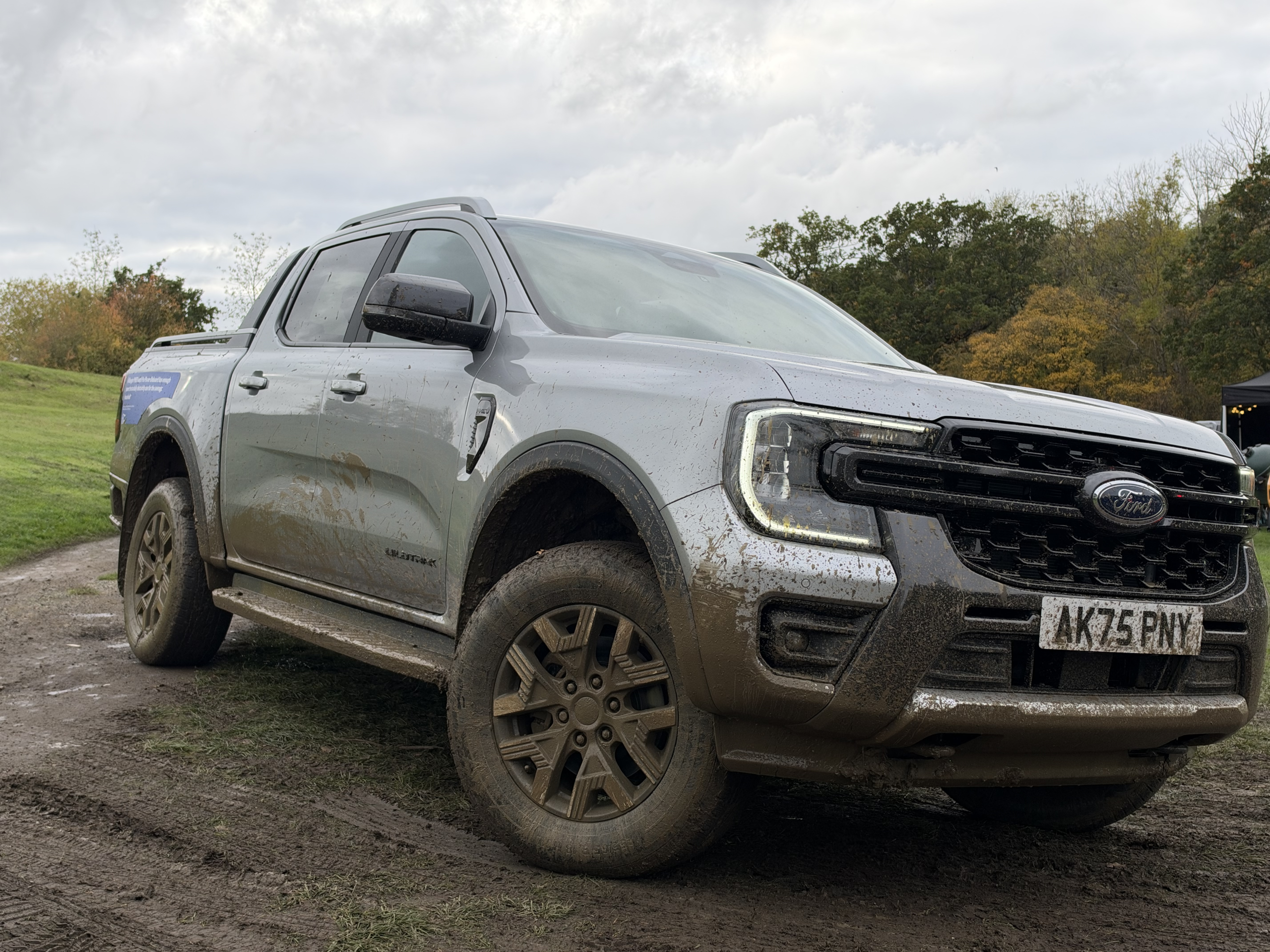
If anyone tells you a plug-in hybrid cannot do proper off-road work, send them my way. The Wildtrak PHEV more than proved itself: steep, greasy climbs, rutted farm tracks, loose stone and a couple of stream crossings, and not once did I think about the fact that there was a battery under the floor.
The hardware is all there. Full-time electronic four-wheel drive with a proper low-range transfer case, a locking rear differential, 800mm of wading depth and around 230mm of ground clearance. The Terrain Management System gives you Slippery, Mud and Ruts and Sand modes on top of the road settings, and the 360 camera doubles as a forward-facing spotter when the bonnet is pointing at the sky.
What the motor adds is control. In low range on a slow crawl the electric torque is delivered so smoothly that there is no need to feather the throttle or fight the gearbox. You can inch up a bank in near silence, which is also rather good if you are a gamekeeper, a ranger or anyone else who would rather not announce their arrival.
Hill descent control takes care of the way back down. The approach angle is around 30 degrees and departure around 25 without a tow bar; fit one and watch the rear bumper on a sharp crest, as with any Double Cab.
Battery, Range and Charging
The battery is 11.8kWh, which is small by family-SUV PHEV standards, and Ford quotes up to 27 miles of electric range. I saw around 20 in mixed driving in November, closer to 25 pottering around town. That is enough for a lot of local site visits, deliveries and school runs to be done on electricity, and it means the truck qualifies for low-emission zone access that a diesel does not.
Charging is AC only at up to 7kW, so a flat battery takes just under four hours on a home or depot wallbox. There is no rapid charging and I do not think it needs it; plug in overnight and start every day full. Ford was including a free home charger with PHEV orders when I tested it, which is worth checking with your dealer.
Economy depends entirely on how often you plug in. Starting full and doing local work I saw figures in the 60s. Run it as a petrol truck on the motorway with a flat battery and it settles at about 35mpg, which still beats the 27mpg a V6 diesel returns. Charged every night, mid-40s is a fair real-world average. Ignore the 90-plus mpg headline figure; nobody will see it.
Safety and Warranty
The current Ranger carries a five-star Euro NCAP rating, and the Wildtrak comes with the full driver-assistance suite as standard: autonomous emergency braking, lane keeping, adaptive cruise with stop and go, blind-spot monitoring with trailer coverage, and the 360-degree camera with front and rear sensors. BlueCruise hands-free motorway driving is an option on the Wildtrak PHEV and standard on the Platinum, and it works well on the M6.
The warranty is Ford’s standard three years or 60,000 miles, with the high-voltage battery covered for eight years or 100,000 miles. Servicing is every two years. Every Ranger now has an embedded modem, so the truck can report its own health to the fleet manager and to Ford before it goes anywhere near a workshop, and there are around 120 Ford commercial authorised repairers set up specifically for vans and pickups.
The Fleet and Sal-Sac Case
This is the bit every fleet manager needs to read twice. Since April 2025 a double cab pickup is treated as a car for benefit-in-kind and capital allowances, while still being a van for VAT and VED as long as the payload stays over 1,040kg. The flat van benefit is gone; the driver now pays tax on a percentage of the P11D.
That makes the PHEV’s CO2 figure the whole argument, and here you need to check the paperwork. Ford’s current 2026 figure under the new WLTP test is 143 to 145g/km, which puts the PHEV in the 34% band for 2026/27 against 37% for the V6 diesel. On a P11D of roughly £54,000, 34% is a taxable benefit of around £18,400, which costs a 20% taxpayer about £3,700 a year and a 40% taxpayer about £7,300. The diesel, on a higher P11D at 37%, comes out around £500 to £1,000 a year worse.
Earlier Ranger PHEVs were certified at around 71g/km, and a truck registered on that figure sits in a band under 20%, which is a different proposition altogether. The number on the V5C is the one HMRC uses, so ask the dealer for the certificate of conformity before you order.
The rest of the case is clearer. The PHEV is cheaper to buy than the diesel, it is cheaper to fuel if it is charged, it gets into low-emission zones, and it cuts the fleet’s reported CO2 roughly in half. For a user-chooser it is the only Ranger that makes sense now. For a pure working fleet where BIK is not in play, the Wildtrak 2-Seat Double Cab, built to qualify as a commercial vehicle again, is worth a conversation.
As always, this is a summary of published guidance and not tax advice; the position depends on how the vehicle is used and financed.
The Competition
There is not much of it. The Toyota Hilux is tough and has a loyal following, but its 2.8 diesel cannot touch the Ranger’s cabin, refinement or tax position, and the battery version is still on the way. The Isuzu D-Max is the value choice and a fine working truck, and the new electric D-Max tows 3,500kg, but at around £60,000 and 163 miles of range it is a niche buy. The VW Amarok is a Ranger underneath, built in the same factory, but there is no plug-in hybrid version. The Maxus eTerron 9 shows a fully electric pickup can tow 3.5 tonnes, if you can live with the range on a cold day with a trailer behind you.
Right now, if you want a pickup that tows, carries, goes off road and keeps the tax bill down, the Ranger PHEV is in a class of one.
The Verdict
Ford’s John Dewar told us the aim was a true workhorse Ranger that happens to run on electricity for part of its day, and that is exactly what the Wildtrak PHEV is. It tows 3.5 tonnes, it carries a tonne, it proved itself off road, and it does all of that while feeling solid, reliable and nicer to sit in than anything else with a load bed. READ HIS INTERVIEW HERE
The towing assistance is the highlight. Hitching, reversing, motorway miles and pulling away on a slope with a loaded trailer were all easier than in any pickup I have driven, and the electric torque is a big part of that. Add Pro Power Onboard and the whole thing starts to look less like a compromise and more like the better truck.
If your business needs a pickup, this is the one to look at first.
FleetPoint rating: 4.5 out of 5