
Samsara: Why fleet safety technology must put the driver first
During Road Safety Week, Fleetpoint spoke to Kingsley Hughes-Morgan, Senior Director of Solutions Engineering at Samsara. He explained why the company believes technology works best when it supports drivers rather than polices them and how this can lead to better road and driver safety.

A technologist with a transformation background
Kingsley Hughes-Morgan covers the EMEA region for Samsara. His team of around 32 solutions engineers works across Germany, the UK, France, the Netherlands and Luxembourg. They support customers to reduce risk, increase efficiency and digitally transform their business by partnering with them to uncover positive business outcomes that can be delivered through Samsara technology.
He has spent almost three years at Samsara. Before that, he worked in consulting and big tech, including a spell as a director and CTO at Cisco Systems and a period as a Director at KPMG. He describes his career as “always focused on transformation” to deliver business benefits.
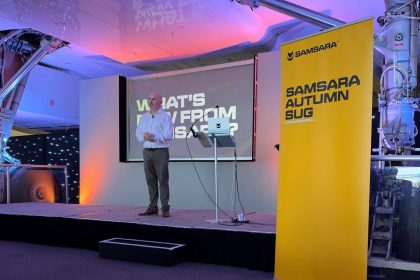
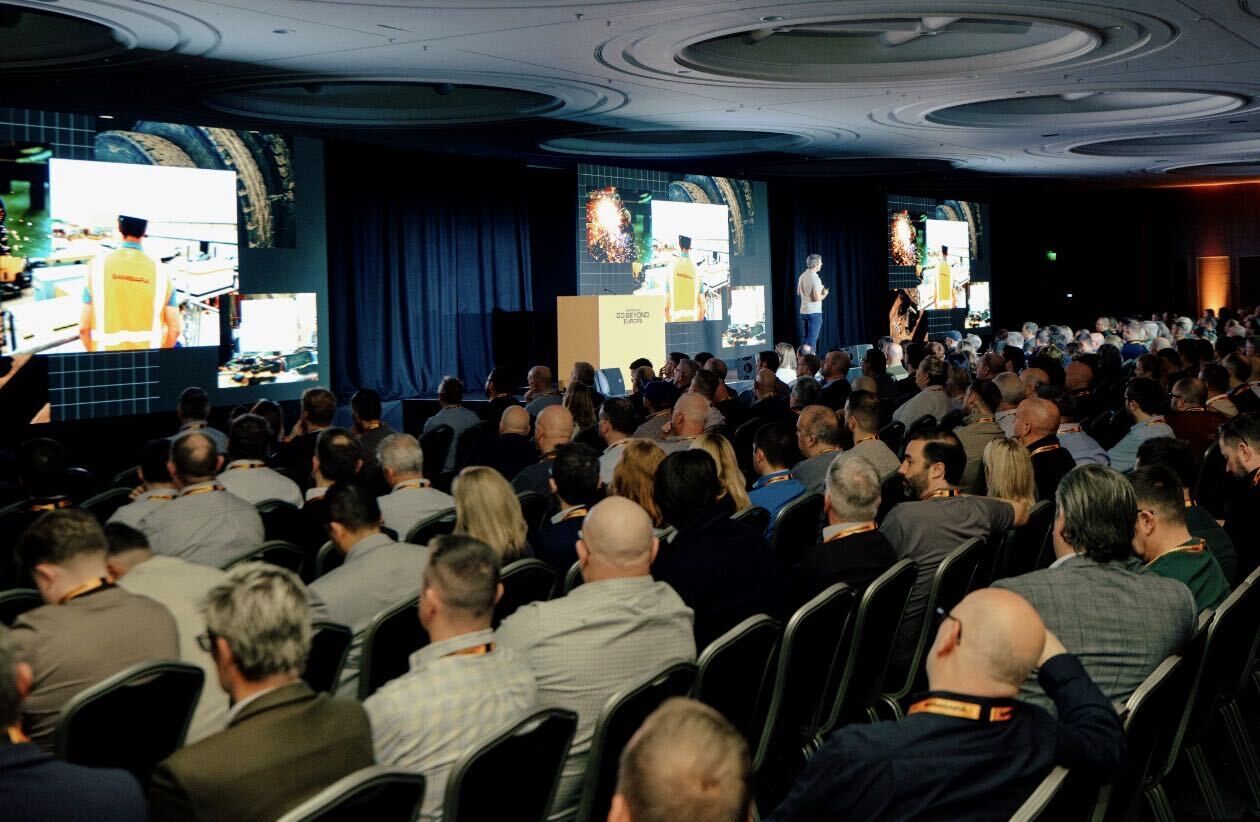
Road Safety Week coincided with Samsara’s GoBeyond event, which gave him a busy few days of media interviews, analyst briefings and customer conversations. “The benefit of GoBeyond is that you can meet a lot of people in a very short space of time, so you learn a lot,” he said. Three messages kept surfacing in those conversations.
Road harm is not inevitable
The first message is that road harm does not have to happen. Kingsley points out that many serious crashes come down to behaviours that someone can spot early and change. Speeding, mobile phone use, failing to wear a seatbelt and drowsiness top that list.
He put the scale of the problem in human terms. Almost 30,000 people were killed or seriously injured on Britain’s roads over the past 12 months. “It’s a staggering number,” he said, “but there’s a family behind each and every one of those people.”
Fleetpoint’s Mark Salisbury noted that progress on killed and seriously injured figures has plateaued. A downward trend has flattened out, and further gains have stalled. Kingsley agreed, and said that this is where many of his conversations have gone. Samsara focuses on three areas: reducing risk, improving operational efficiency and digital transformation. During Road Safety Week, the emphasis fell firmly on reducing risk.
From customers and prospects, he heard one theme repeatedly: prevention beats reaction. Drivers need feedback in the moment, but it must come with a coaching approach and feel fair and supportive, rather than punitive”, he explained.
The data behind prevention
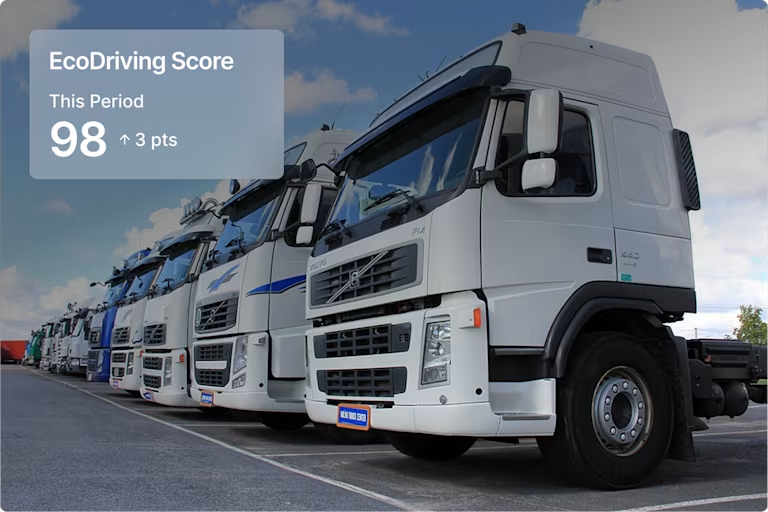
Kingsley pointed to Samsara’s fleet safety report, which analysed over 2,600 medium to large fleets, each with more than 175 vehicles. The findings stood out. Fleets that used cameras, in-cab alerts and coaching cut their crash rate by 37% after just six months. Those that kept going for close to three years, reduced it by 73%.
“Those are quite staggering numbers in and of themselves,” he said. They suggest that society needs to catch risk earlier, help drivers correct themselves in the moment and then follow up with fair coaching.
Human-centric, driver-first
The third message concerns how companies roll the technology out. Kingsley admits that his technology background might tempt him towards a tech-led view. Even so, he insists that a deployment “cannot be tech-only”. It must be human-centric and driver-first.
When a business gets this right, drivers see the technology as support. It then protects pedestrians, cyclists and everyone else around the vehicle, and it builds a fairer culture inside the organisation.
He illustrated the point with a driver he met at the Tuesday event. The driver won Samsara’s driver event reward and spoke on stage. He understood that the goal is not surveillance but getting him home to his family safely. He enjoys the in-the-moment coaching because it makes him feel protected in a large HGV. He also values the end-of-day briefing on his phone, which recognises good habits and flags moments such as a harsh brake and can highlight that its defensive driving when appropriate.
The driver also described how footage proved he was not at fault after another vehicle hit the side of his lorry. “You could see the pressure as he was talking through this,” Kingsley recalled. The driver said he will not get into a vehicle without the system now. “That spoke volumes to the audience, and candidly to me.”
From tachographs to dash cams: changing attitudes
Mark has seen attitudes shift over the years. He wrote articles two or three years ago in which drivers felt their privacy was under threat. The move from analogue tachographs to digital cards was a big jump for some. Dash cams followed, and then cameras facing the driver. Many drivers worried that someone was watching them constantly.
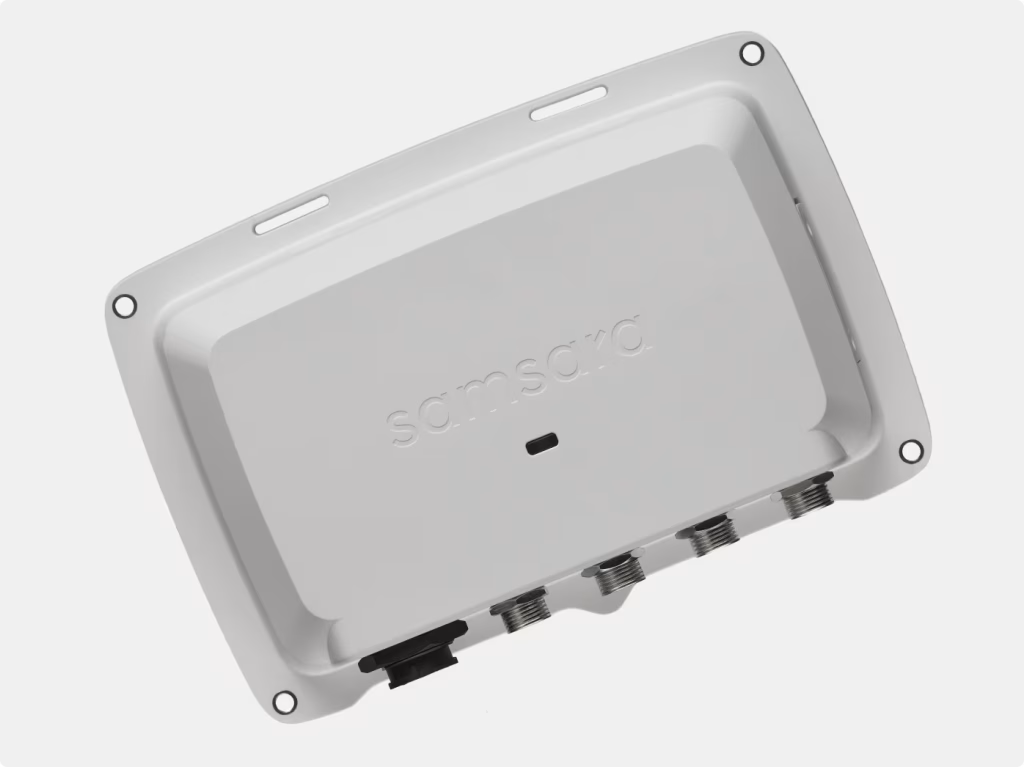
Kingsley believes the industry has largely moved past the dash cam debate. A groundswell is forming, and society is making drivers aware that they need this technology to protect them. He added that the camera carries a blue button. A driver can press it to trigger a driver-generated video, which suits the brake-checking scenario Mark described. The footage then sits in the cloud platform straight away.
Easing concerns about AI
Mark feels that AI remains the biggest bump in the road. Drivers are asking what it records, where the information goes and whether it reaches only the fleet manager or Samsara as well. Some worry that the system will bleep at them if they reach for a cigarette, and that the freedoms they once enjoyed will vanish. The industry must help drivers see AI as a tool, like any other. If a driver sets off without a seatbelt, it beeps.
Kingsley confirmed that this is exactly how the system works, and he stressed that customers can configure all of it. Samsara suggests starting with in-cab nudges. A nudge is an audio message from the dash cam, such as a polite request to put a seatbelt on, and nothing uploads to the platform. After around three nudges for the same event, the system records a video and uploads it. Even then, it does not necessarily go to the fleet manager. Instead, the driver receives the event on their mobile device and can review it at the end of the shift to self-coach.
The fleet manager only steps in when a driver repeats the behaviour many times on a single trip, with the organisation setting the threshold. The next step is a training course sent to the driver’s phone. If the driver ignores that over time, the fleet manager gets involved. “It’s not a punitive measure, it’s actually a supportive measure for the driver,” Kingsley said.
Policy matters as much as technology
Mark stressed that company policy is just as crucial. Fleets need to explain why they are introducing the technology, who it serves and what safeguards protect driver data. Kingsley agreed. The first thing Samsara advises customers to do before a rollout is remind everyone of the policy.
When Mark asked whether Samsara helps customers develop a policy, Kingsley explained that the company offers a Driver Comms Change Management Pack. It draws on patterns Samsara has seen across thousands of customers. Samsara cannot give advice on policy, he said, but it can share what tends to work. Most customers already have a policy, although many shared it once and never refreshed it.
He described a smart use of the platform here. A fleet can load its policy in and AI will turn it into a two-minute learning video, which reaches drivers through the Samsara driver app. That replaces a 20-page PDF that few people want to read. It also gets drivers into the app before the technology arrives.
New launches: wellness checks, O-licences and maintenance
Kingsley highlighted several launches that did not feature at the recent user group. A driver wellness check uses an AI agent that Samsara’s team configures on the platform. It carries out a verbal check through the speaker and camera, and the driver can respond. Kingsley called it “a great step in the right direction” because it shows support for drivers.
Samsara also launched an O-licence dashboard. Kingsley helped build a prototype with an existing customer. The dashboard shows the current status of all licence adherence and suggests what to do next. Mark noted that it serves the fleet manager directly, and Kingsley agreed. Many fleet managers have told him how hard it is to keep compliance records current and to produce them on request.
Other launches include label tracking, which is now available in the UK, and connected maintenance, which Kingsley sees as a safety play as well as a margin play for operators. It covers everything from proactive fault code management to defect management.
Smarter walkarounds and a single platform
Mark raised the topic of the vehicle walkaround checks, which he feels no longer keeps pace with the technology inside modern vehicles. Kingsley said Samsara has relaunched its walkaround tool in the US, and it is heading to his region. A driver takes photos of the vehicle with a phone, and AI analyses them to highlight areas of concern.
A major defect then feeds into the maintenance platform. The platform checks when the next scheduled service falls due and whether the vehicle has a fault code. It then creates one smart work order and places the vehicle into the workshop workflow. Kingsley said that without this loop, a vehicle can sit in the workshop twice as long as necessary because nobody checks for a service interval or fault code. As Mark put it, a vehicle that stands still is not earning.
Licence checks and MOT checks now sit inside the platform as well. Customers can license only the elements they need, and everything runs through a single interface. “The great thing about Samsara is everything’s integrated,” Kingsley said. Users see vehicles, expensive assets and even labelled boxes in one view.