
Renault Master Review: The Large Van That Makes Serious Sense for Fleets
First Impressions
The Renault Master has always been one of those vans you see everywhere without necessarily giving it much thought. Builders, delivery fleets, engineers, utilities — you name the job and chances are somebody has run a Master doing it. But this latest generation feels like Renault has decided that simply being familiar isn’t enough. After a week looking at what it brings to a working fleet, I came away impressed. This is a seriously accomplished large van.
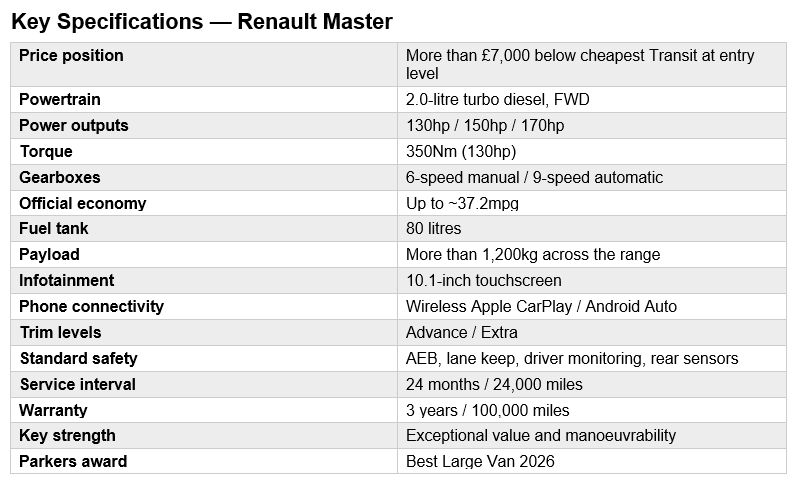
Let’s deal with the basics first. The Master arrived as an all-new model in 2024 after its predecessor had been around since 2010. Diesel buyers get Renault’s 2.0-litre Blue dCi four-cylinder engine in 130hp, 150hp and 170hp outputs. The 130hp comes with a six-speed manual, the 150hp can be ordered with either the six-speed manual or nine-speed automatic, while the 170hp is paired with the nine-speed automatic. Payload depends on body and specification, but the current Master panel-van range offers serious carrying capacity, with Renault quoting up to 1,600kg depending on configuration. Official economy reaches just over 37mpg and Renault has managed to keep the pricing remarkably competitive.
What impressed me most is that Renault hasn’t tried to reinvent what a large van is supposed to do. Instead, it has concentrated on making the Master better at the things that matter when you’re running one every day. The cabin is more comfortable, the technology has moved on considerably and a surprising amount of work has gone into improving the aerodynamics to reduce fuel consumption and wind noise. Add in the competitive purchase price and you’ve got a large van that starts making a lot of sense before you’ve even loaded anything into the back.
For fleet managers, that’s the important bit. A large van has to earn its keep from the moment it goes on the road, and on paper at least, the Master gives you plenty of reasons to believe it will.
Design and Interior
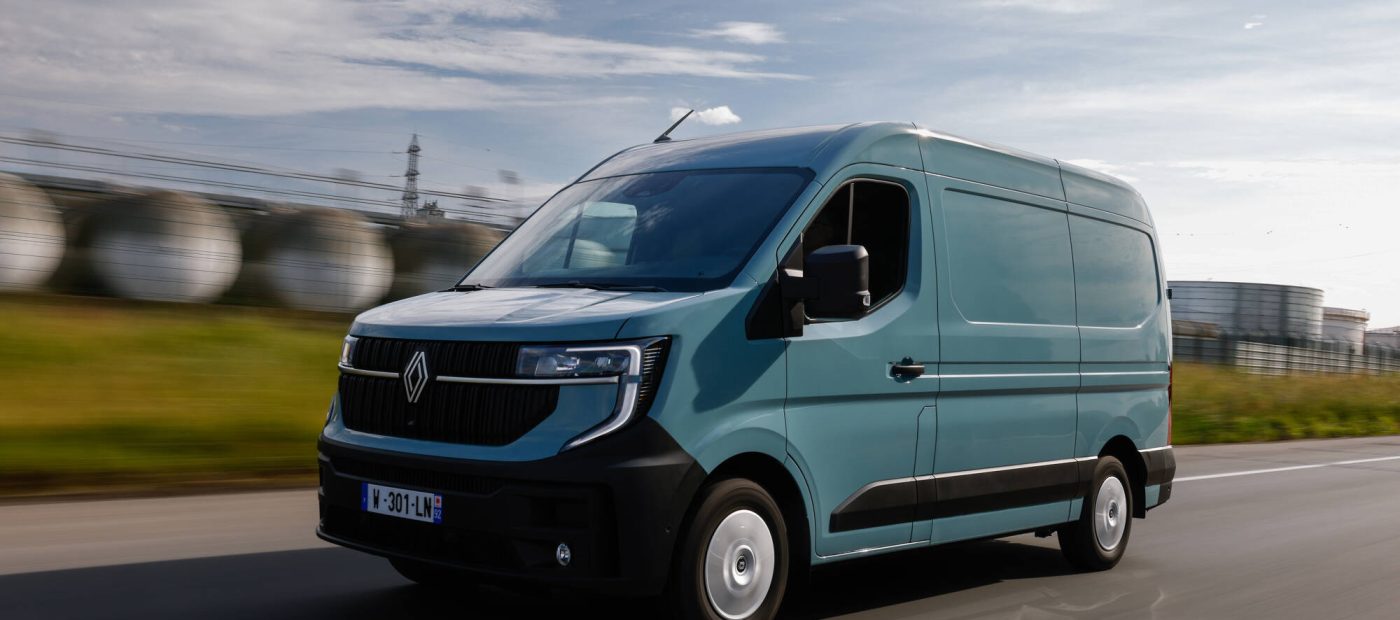
Honest answer first — there is only so much excitement you can inject into the shape of a large panel van. But the latest Master looks much sharper than the one it replaces. The front is cleaner and more modern, and Renault has worked surprisingly hard on the bits you would normally ignore. The mirrors have been reshaped and the rear edge of the roof slopes slightly downwards, all in the name of cutting drag, wind noise and fuel consumption. For fleet use, that is styling with a purpose.
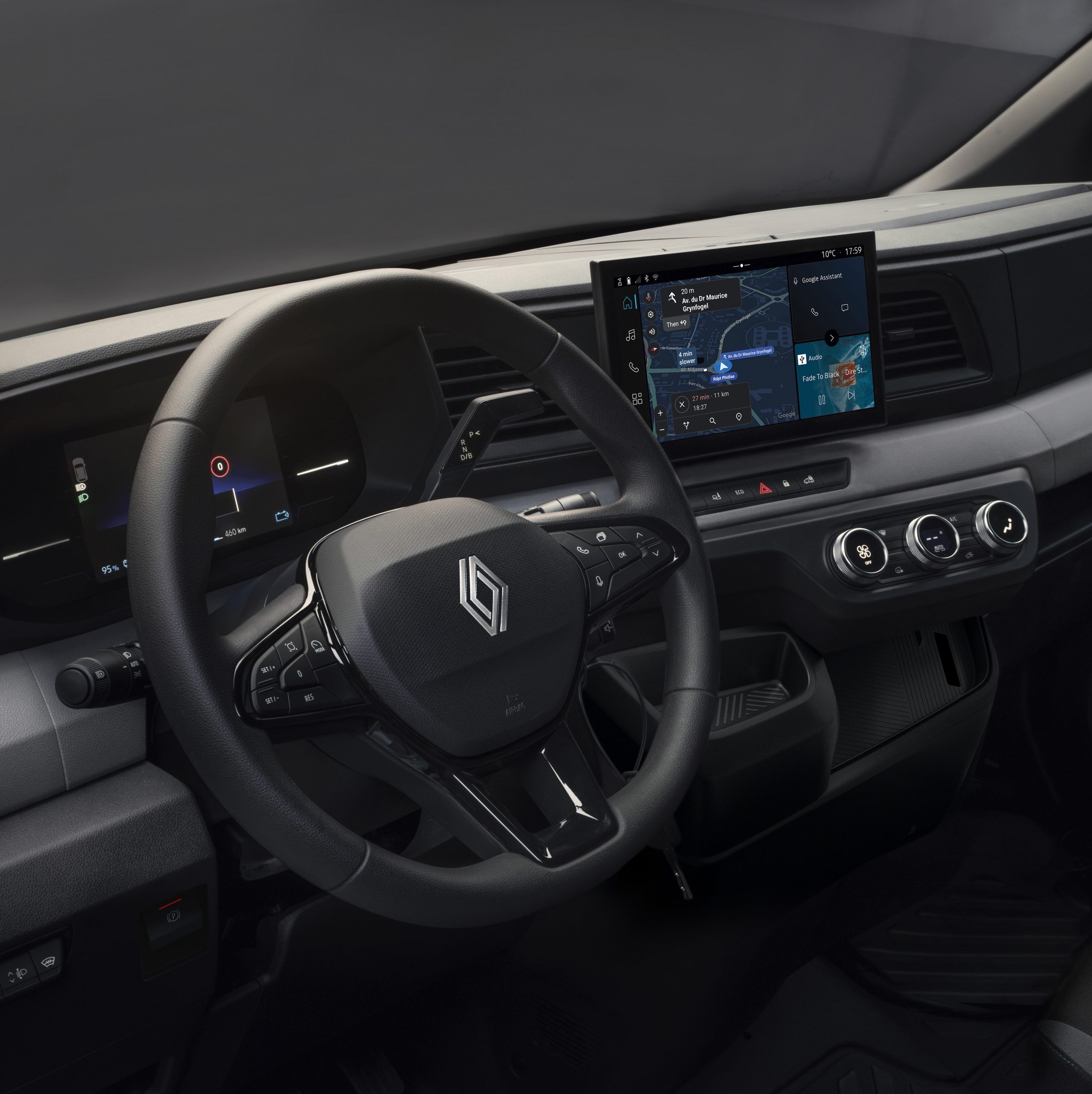
Step inside, though, and the change is much more obvious. The dashboard feels as though somebody from Renault’s passenger-car team was finally allowed into the commercial-vehicle department. The 10.1-inch touchscreen is angled towards the driver, wireless Apple CarPlay and Android Auto are standard, and the climate controls are proper physical dials borrowed from the Clio. They are big enough to use in work gloves too, which is exactly the sort of detail a van gets judged on after six months rather than six minutes.
There are physical shortcuts for the driver-assistance systems, the load bay and media controls, plus useful storage around the doors and dashboard. The phone shelf beneath the screen holds a handset securely, although a wireless charging pad would have finished it off nicely.
The frustration for UK drivers is the glovebox. Left-hand-drive vans get a clever drawer-style arrangement; right-hand-drive models lose it because the fuse box takes up the space. Come on Renault — move the fuses.
It’s a small complaint, but this is a working environment rather than somewhere most drivers spend twenty minutes at a time. When you’re living in a van for eight or nine hours a day, somewhere sensible to put paperwork, gloves, chargers, keys and all the other bits that accumulate during a working week matters more than you might think.
Overall, though, this is a very good cabin. It feels modern without becoming unnecessarily complicated, and Renault has resisted the temptation to put absolutely everything behind a touchscreen. For a working van, that’s the right decision.
On the Road
For most fleets I think the 130hp diesel is the one to start with. It produces a healthy 350Nm of torque from just 1,500rpm, while the 150hp steps up to 360Nm and the 170hp automatic delivers 380Nm. Unless you are planning a heavy conversion, regularly towing machinery or running close to maximum weight, I am not convinced most drivers will need to spend more.
The 150hp gives you a choice of six-speed manual or nine-speed automatic, while the 170hp comes with the automatic as standard. Both give you extra headroom when the Master is working hard, and that nine-speed gearbox is a very smooth addition. The selector sits on a small stalk behind the steering wheel, freeing up dashboard space and making the whole cab feel that little bit less commercial.
The real surprise is how manageable the Master feels. It is a big van on the outside but does a convincing impression of something smaller from behind the wheel. Huge windows give you an excellent view, the A-pillars are not excessively thick and the steering is light enough around town without becoming vague on faster roads.
Then there is the steering lock. The front wheels seem to turn through an absurd angle, giving the Master the sort of turning circle you would expect from something considerably shorter. In tight town centres, industrial estates and awkward customer yards, that matters.
It sounds like a small thing until you’ve spent half your working day getting in and out of places that were clearly designed before anybody imagined a modern large panel van. Being able to get the Master turned around without a seven-point shuffle is a genuine advantage.
The suspension can be a little lively with nothing in the back, but load it up and it settles down nicely. That’s hardly unusual for a commercial vehicle, and I’d much rather have a van that behaves properly with a working load on board than one optimised to drive beautifully when completely empty.
The only thing I would want drivers warned about is the brake pedal, which is very sharp at the top of its travel. You would get used to it, but the first few stops can be more dramatic than intended.
Beyond that, this is a remarkably easy large van to drive. It isn’t pretending to be a hot hatch and it isn’t going to make you search out the long way home, but it feels secure, predictable and considerably less intimidating than its exterior dimensions suggest.
For a fleet putting drivers into a large van for the first time, that counts for quite a lot.
Fuel Economy and Running Costs
Renault quotes up to around 37mpg from the diesel Master and, unusually, the real-world reports suggest you can get quite close to it. That is where all the aerodynamic work starts making sense.
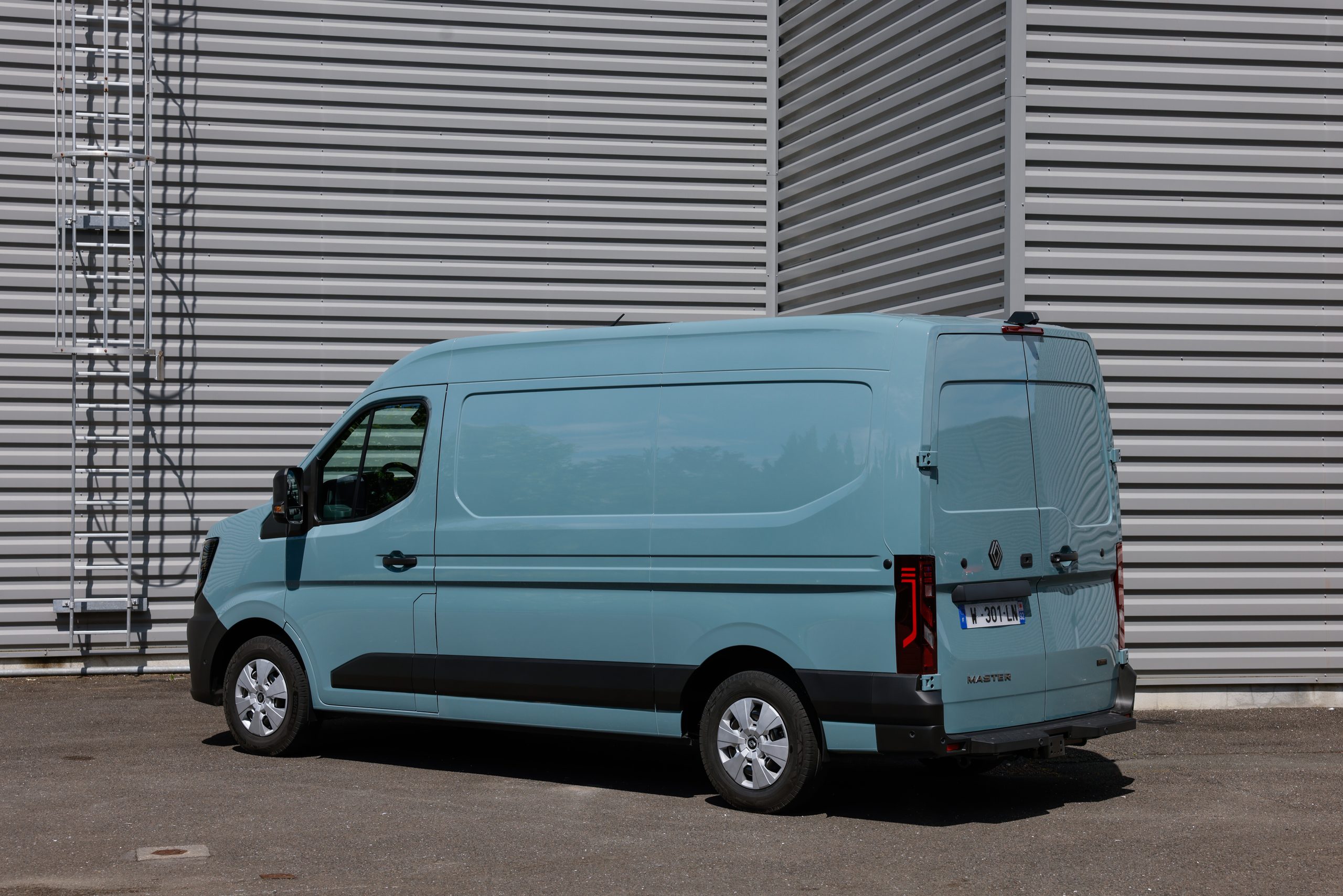
The previous Master could be had with a 105-litre fuel tank; this one uses an 80-litre tank, yet the improved efficiency means the reduction is less painful than it sounds. Renault hasn’t simply chopped 25 litres out of the tank and asked operators to visit the filling station more often — the van itself has become more efficient.
And here’s the thing — the Master is not just economical for a big van, it is aggressively priced too.
The current MY26 Master Panel Van starts at around £42,275 MRRP for the MM35 Blue dCi 130 Advance. That puts Renault firmly into the conversation for businesses where acquisition cost matters just as much as what happens at the fuel pump.
When you are buying ten or twenty vans rather than one, relatively small differences in purchase price become very serious money. A few thousand pounds multiplied across a fleet replacement programme can fund a lot of fuel, servicing, charging infrastructure or even another vehicle.
Servicing is straightforward too, with intervals of 24 months or 24,000 miles. For a fleet manager trying to minimise planned downtime, that is another useful number.
Add the strong standard equipment, competitive fuel consumption and sensible service intervals together and whole-life cost becomes one of the Master’s strongest arguments.
The Niggles
The right-hand-drive storage compromise is the one that would irritate me most. Continental drivers get a genuinely useful drawer-style glovebox while UK vans get a much smaller conventional one because Renault will not relocate the fuse box.
It is a small detail, but this is a mobile workplace and storage matters.
The diesel instrument cluster also looks a little old-fashioned alongside the otherwise modern cabin, and the main beam could be stronger for drivers doing regular rural work at night.
Then there’s the traditional handbrake lever. In isolation there’s absolutely nothing wrong with a manual handbrake — plenty of drivers will probably prefer it — but it feels strangely dated sitting alongside the big touchscreen, wireless smartphone connectivity and otherwise thoroughly modern dashboard.
Add the grabby brakes and there are a handful of things Renault could absolutely sharpen up.
None of them are deal-breakers, but they are worth flagging if drivers will live in these vans every day. That’s the difference between looking at a van in a showroom and actually running one on a fleet. The little annoyances are the things drivers will tell you about six months later.
Safety and Warranty
The standard safety offering is strong, with active emergency braking including pedestrian and cyclist detection, lane-departure warning and the usual stability and driver-assistance systems.
Renault also offers additional technology including blind-spot warning, front and side parking assistance, a rear-view camera and permanent rear-view assistant, depending on specification and options.
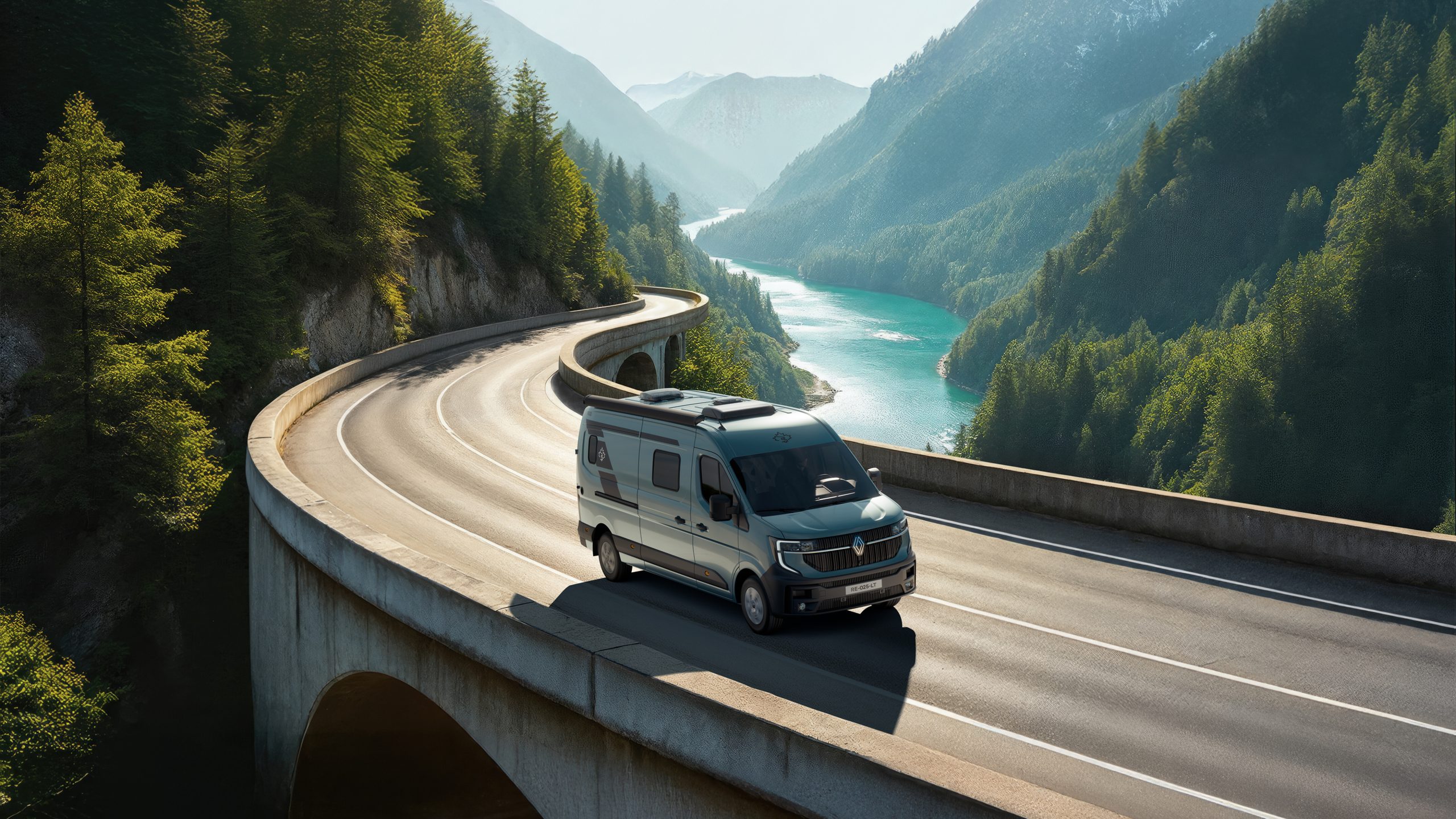
For a vehicle this size, the parking and visibility technology is worth considering carefully. The Master might be surprisingly manageable from behind the wheel, but it’s still a large panel van, and avoiding one low-speed accident could easily justify the cost of additional parking assistance.
Warranty is less impressive.
Renault gives you three years and 100,000 miles, which is acceptable rather than exceptional in this class. For a high-mileage fleet that 100,000-mile ceiling could arrive sooner than you think, so it is one of the few areas where rivals can make a stronger headline case.
If you’re running vans for three or four years at relatively modest mileage, it probably won’t trouble you. If your vehicles spend their lives hammering up and down the motorway, it’s something I’d put into the whole-life-cost calculation.
The Fleet Case
Now we’re at the bit that matters.
The Master combines three things fleet managers rarely get together in a large van: serious payload, modern equipment and a purchase price that does not immediately ruin the spreadsheet.
Payload varies by body and specification, but Renault quotes up to 1,600kg for the current panel van, giving fleets plenty of scope to match the Master to the job. The 130hp diesel also has enough torque for the vast majority of normal fleet work without forcing operators into the more powerful versions simply for the sake of it.
I would start with the Advance trim.
Despite being the entry point, it already brings automatic lights and wipers, heated and powered mirrors, a passenger bench with under-seat storage, air conditioning, a solid bulkhead and the 10.1-inch touchscreen with wireless Apple CarPlay and Android Auto.
That’s the important equipment covered before you’ve started ticking boxes.
Extra adds equipment such as Google-based navigation and voice control, along with further convenience features depending on specification. Useful, yes, but not necessarily essential for every fleet.
For a large fleet order, I’d rather spend the money on equipment that genuinely makes a driver’s working day easier than load every van with technology that gets used twice in three years.
Now, on price — this is the bit that makes the Master difficult to ignore.
It competes aggressively with the established large-van names while feeling anything but a budget alternative. That’s an important distinction. Saving money on the purchase price is one thing; saving money and then asking your drivers to spend four years in something obviously inferior is another.
The Master doesn’t give that impression.
The Stellantis large vans remain another obvious comparison and can be extremely competitive on purchase price, but Renault’s advantage is that the Master is a genuinely fresh design. The platform, cabin, aerodynamics and technology have all moved forward together rather than simply being another update of something that’s been around for years.
For fleet managers, that combination of value and modernity is probably the Master’s biggest weapon.
Master vs Transit: Which Is Right for Your Fleet?
This is the question I have been chewing over, because the Ford Transit remains the name most fleet operators instinctively put at the top of a large-van shortlist.
And with good reason.
The Transit has built its reputation over decades, drivers know them, workshops know them and the Ford remains one of the better large vans to drive.
If outright driving enjoyment and familiarity are the priorities, the Ford still has a lot going for it.
But the Renault is the newer proposition from the ground up, and that shows in the cabin, the efficiency work and the way it packages such a large vehicle into something that feels remarkably manageable around town.
Then there is the money.
When you’re talking about fleet purchases, you cannot look at the difference between two vans as though you’re a private buyer choosing one vehicle. Multiply even a modest saving across ten, twenty or fifty vans and suddenly you’ve got a figure the finance director is going to notice.
The Master also brings that exceptional steering lock, competitive real-world economy and strong payload capacity, with up to 1,600kg available depending on panel-van configuration.
I’d also argue the Renault cabin deserves serious consideration for drivers who spend most of their working day behind the wheel. The large touchscreen, wireless smartphone connectivity, proper physical climate controls and excellent visibility make it an easy environment to get along with.
The Transit remains a benchmark.
But Renault has given fleet managers a very good reason not to order one automatically.
The Verdict
The Renault Master is not a perfect van.
The right-hand-drive storage is compromised, the diesel instruments look dated next to the rest of the cabin, the headlights could be better and the warranty is only average. The brake pedal takes some familiarisation too.
But you have to weigh that against what you actually get: a comfortable, spacious and genuinely modern large van, a strong range of diesel engines, competitive fuel economy, serious payload capability, excellent manoeuvrability and a cabin that is a far nicer place to spend a working day than the old Master ever was.
The 130hp Blue dCi looks like the sweet spot for many fleets. Its 350Nm of torque should be enough for most everyday work and the six-speed manual keeps things straightforward. Operators carrying heavier loads or wanting an automatic have the 150hp and 170hp alternatives waiting further up the range.
For fleets, though, the combination of price and capability is what seals it.
Renault has produced one of the newest large vans on the market and priced it aggressively against the established names. Throw in the long service intervals, useful standard equipment and the fact that it doesn’t feel enormous from behind the wheel, and the Master starts ticking an awful lot of boxes.
If you are replacing Transits, Crafters or an ageing batch of previous-generation Masters, this absolutely belongs on the demonstration list.
Parkers naming it Best Large Van for 2026 suddenly does not look like much of a surprise. Renault has moved the Master from an ageing contender to one of the strongest fleet propositions in the class.