
Renault Kangoo Review: The best car-like van for mobile service fleets
First Impressions
Stepping away from the usual noise around hybrid and electric SUVs, the test fleet keys this time belong to something far more grounded: the Renault Kangoo, a small van that has been quietly getting on with the job for years.
And after a week of looking at what the current Kangoo offers, I can see the appeal. This is not the biggest small van you can buy, nor is it the one with the heaviest payload. But Renault has got an awful lot right where it matters day to day. The cab is comfortable, the controls make sense, the engine range is sensible and, crucially for anyone who spends all day behind the wheel, it feels much more like a car than a traditional workhorse.
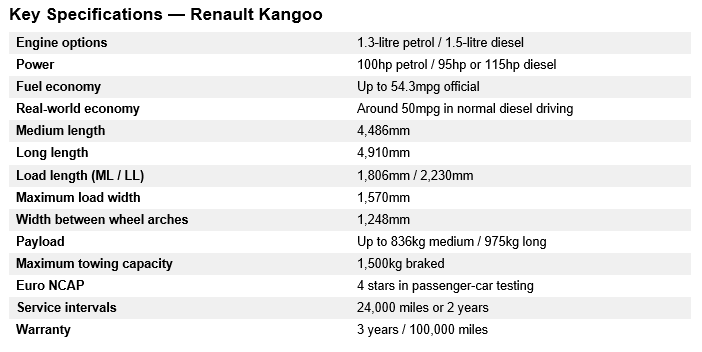
Let’s deal with the basics first. The Kangoo is available in medium and long-wheelbase forms, with a choice of three conventional engines: a 100hp 1.3-litre petrol, plus 95hp and 115hp versions of Renault’s familiar 1.5-litre diesel. The medium van measures 4,486mm long, while the long version stretches to 4,910mm and puts virtually all of that extra length into the load area.
If you’re expecting Renault to have built the toughest van in the small-van class, though, think again. The Kangoo’s medium-wheelbase payload tops out at 836kg, while the most capable long-wheelbase version can manage up to 975kg. A Citroën Berlingo can carry more in some specifications. But payload isn’t the whole story, and after looking at the Kangoo as a complete fleet proposition, I think Renault knows exactly what it is doing here.
This is a van for drivers who spend as much time travelling between jobs as they do loading the thing. And I suspect that’s a lot of you.
Design and Interior
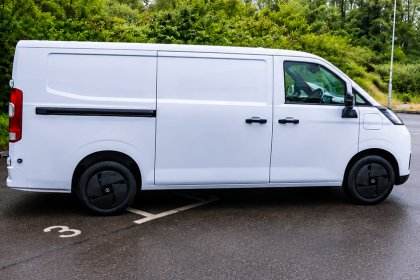
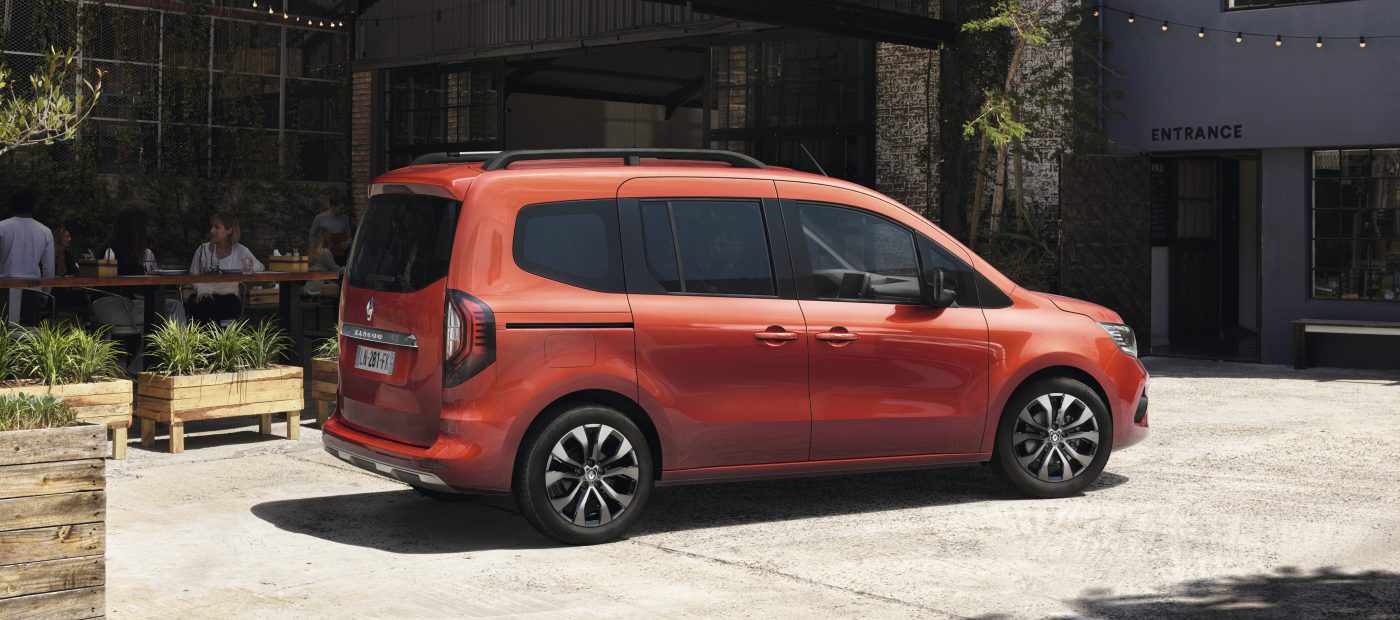
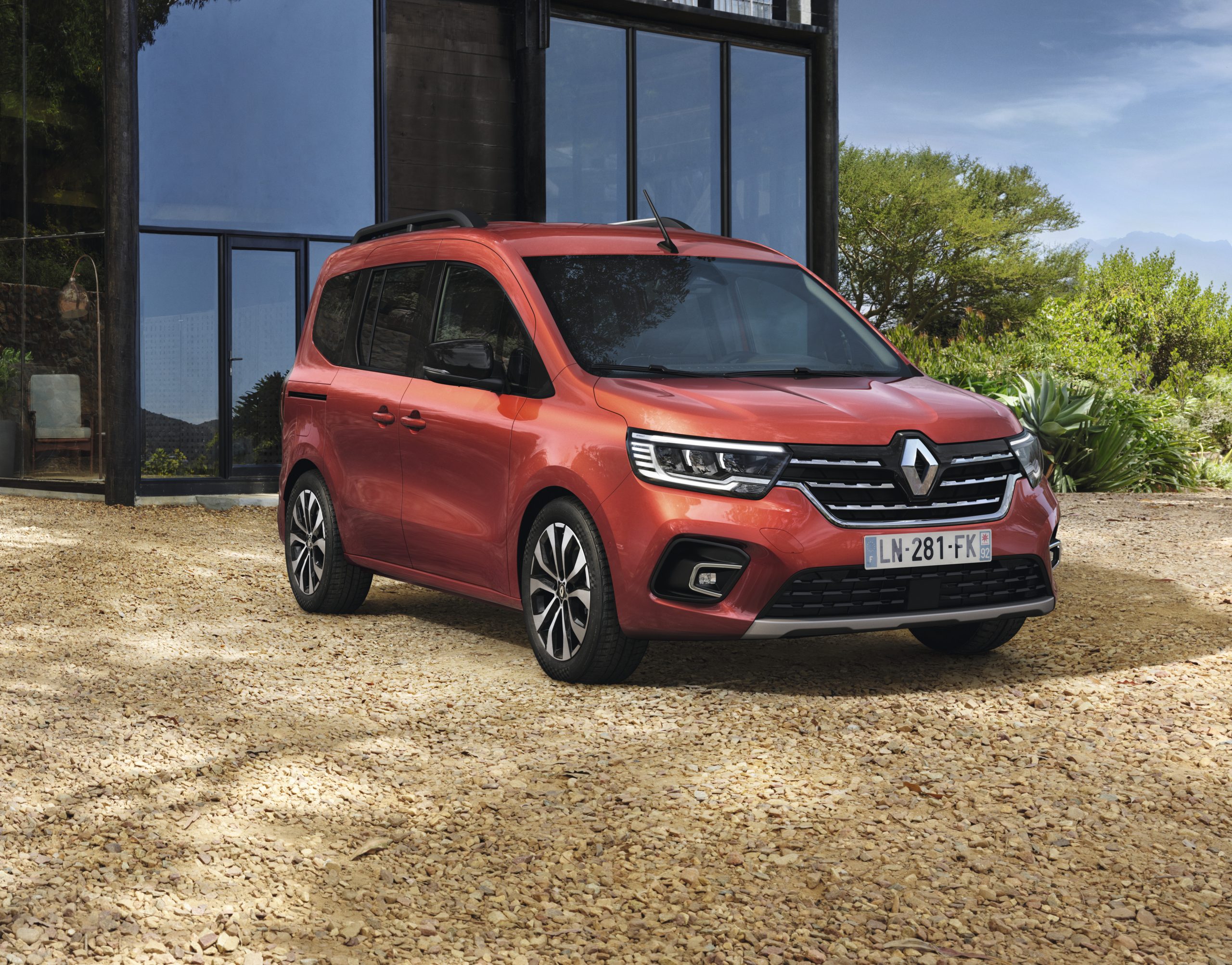
Honest answer first — there’s only so much you can say about the styling of a white small van without getting yourself into trouble. The Kangoo is a Kangoo. It’s a compact box with wheels, sliding doors and a big Renault badge on the front.
But that’s not meant as an insult. The current model is actually quite smart by van standards, with a more car-like front end than the old Kangoos I remember bouncing around in years ago. More importantly, the proportions are right. The medium-length version is compact enough to make sense in town, while the long-wheelbase model gives businesses that need it a useful extra 424mm of body length.
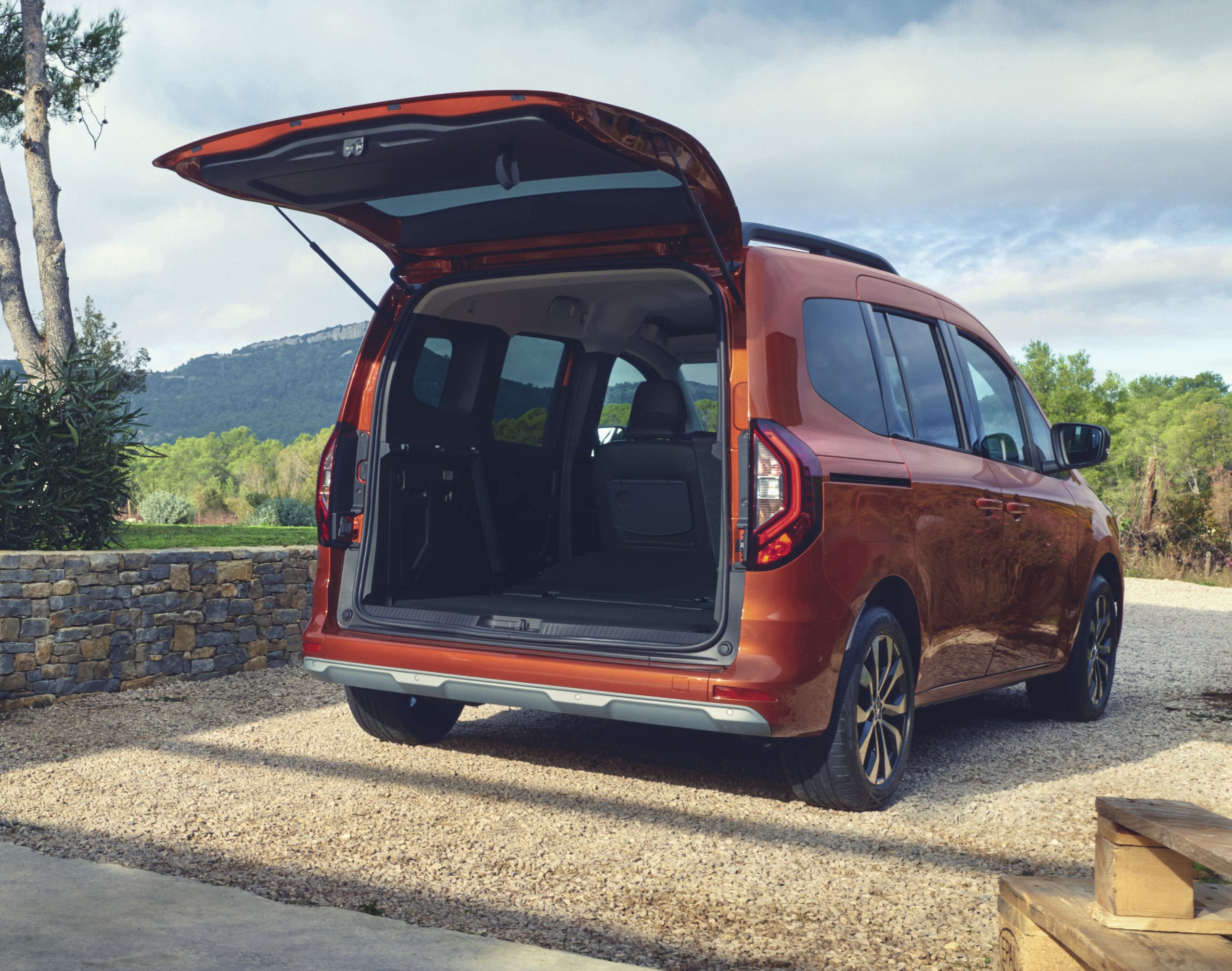
Twin sliding side doors come as standard, which is exactly what you’d want on a working van, and the rear gets conventional barn doors. Loading access is generally good, with a maximum internal width of 1,570mm and 1,248mm between the wheel arches. Load length is 1,806mm in the medium van and 2,230mm in the long one. For most trades and service fleets, that’s a perfectly usable amount of space.
Where things get slightly frustrating is that Renault offers some genuinely clever loading solutions in other markets that we don’t get here. UK buyers miss out on the sort of proper load-through arrangement that helps some rivals deal with longer items. That’s a shame, because if you regularly carry long pipes, timber or awkward equipment, it could make a real difference.
You can, however, get an internal roof rack. Now, I know what you’re thinking — an internal roof rack? But bear with me. It allows long items such as ladders to be stored securely inside the van, above the load area, rather than strapped to an external rack. For electricians, builders and maintenance fleets, I can see that being genuinely useful.
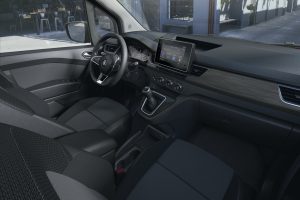
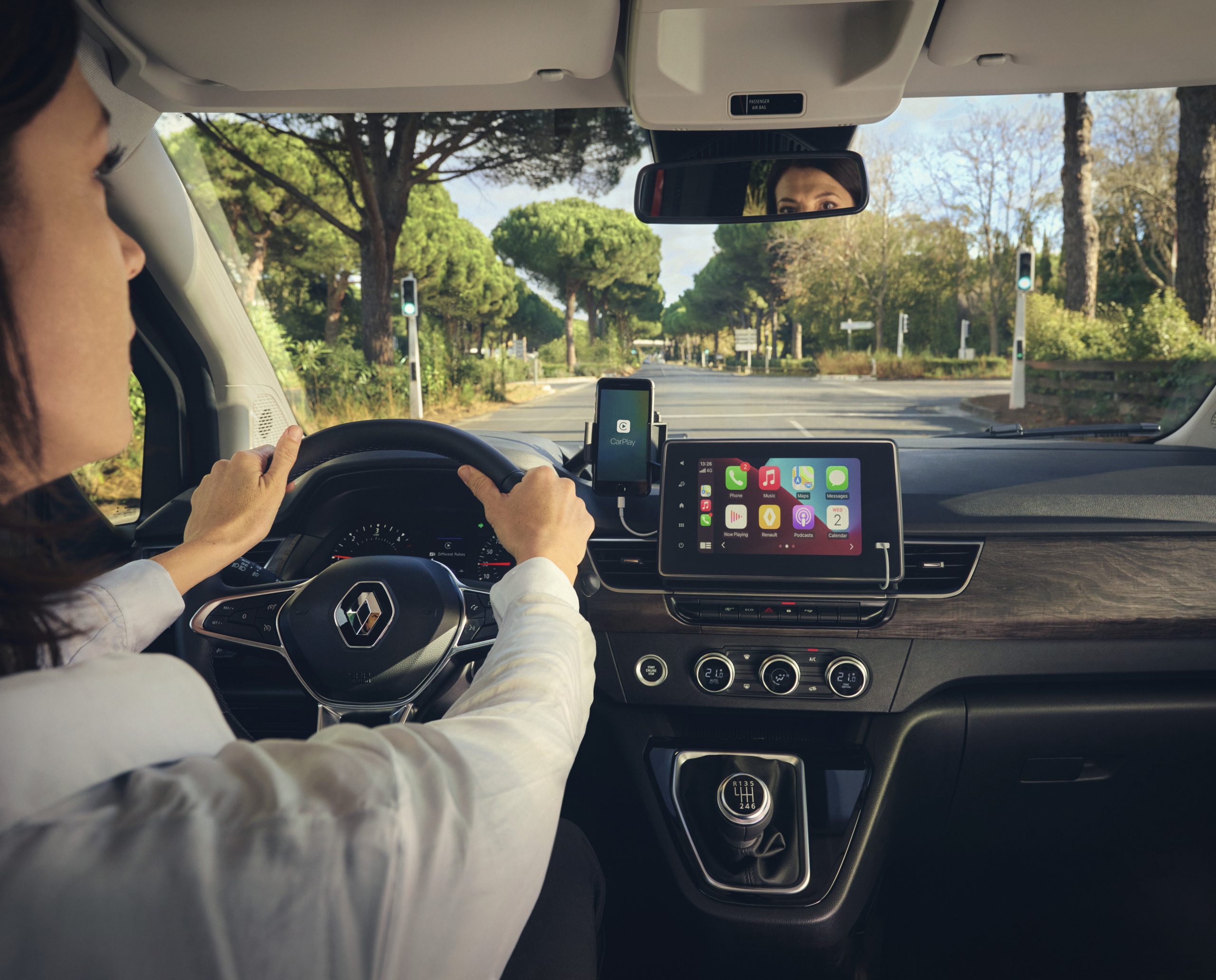
Step inside, though, and this is where the Kangoo starts to win you over. The cab feels remarkably car-like. The driving position is low and natural rather than perched high above everything, and there is plenty of adjustment in the driver’s seat. The steering wheel is sensibly positioned, the gear lever sits high up in its own little pod and the basic ergonomics make sense almost immediately.
Then there are the physical heating controls. Yes, I’m making a point of mentioning them. In an age where manufacturers seem determined to bury the most basic functions three menus deep in a touchscreen, Renault has left you with proper controls that can be adjusted quickly. Sometimes simple is better.
The 8.0-inch touchscreen is not the last word in modern infotainment, but wireless Apple CarPlay and Android Auto are both included, which means most drivers will connect their phone and never give Renault’s own software a second thought.
Storage is reasonable rather than brilliant. There are cupholders, shelves and cubbies around the cabin, although the glovebox is a little on the small side. And I’d think carefully before ordering the optional double passenger seat. The Kangoo is simply not wide enough for three large adults to sit across the front in comfort.
On the Road
The Kangoo is available with a choice of a 100hp petrol engine and two 1.5-litre diesels producing 95hp and 115hp. For light loads and short journeys, the petrol has a genuine case. It costs less to get into and makes more sense than a diesel if the van spends its entire life doing short runs around town.
For most traditional fleet users, though, I’d be looking at the diesels. The 95hp engine is the economy choice and should suit operators who are more concerned with keeping fuel bills down than winning traffic-light grands prix. The 115hp version gives you more useful performance and is available with an automatic gearbox — something I’d seriously consider if the van is going to spend most of its working life on the motorway or crawling through city traffic.
And this is where the Kangoo’s car-like character really comes into its own. It’s not trying to be sporty. It doesn’t want to be hustled through a B-road. It’s a working van, and it wants to get you, your tools and whatever you’ve loaded in the back to the next job without making the journey any harder than it needs to be.
The low driving position should feel natural to anyone coming out of a passenger car, and the compact dimensions ought to make life easier around town and in tight customer car parks. After a full day behind the wheel, that’s worth more than anyone wants to admit.
I’ve driven plenty of commercial vehicles where the cabin feels like an afterthought — somewhere the driver is expected to sit because, technically, somebody has to operate the van. The Kangoo doesn’t feel like that. Renault has clearly put some thought into the person sitting in the front.
Fuel Economy and Running Costs
The most economical Kangoo on paper is the 95hp diesel, which can return up to 54.3mpg officially. In normal driving, around 50mpg looks like a sensible expectation. That’s the whole argument for the diesel right there.
For a fleet covering serious mileage, 50mpg from a small working van is exactly the sort of figure the person responsible for the fuel card account wants to see.
The more powerful automatic diesel is officially rated at up to 52.3mpg. That’s not a huge penalty for the convenience of an automatic, and if your drivers spend a lot of time on the motorway, there’s an argument that the lower engine speeds at cruising pace could make it the more relaxed option.
The petrol model is officially rated at 40.9mpg. That sounds significantly worse, but context matters. If the van spends its days doing short urban trips, the petrol engine will warm up faster than the diesels and could make more sense for that particular operating pattern.
Diesel models also use an 18.6-litre AdBlue tank, so that’s another small running-cost and maintenance consideration to add to the spreadsheet. For me, the choice is fairly straightforward. Short trips and lighter loads? Look at the petrol. Higher mileage and regular longer runs? The diesel is where the Kangoo makes most sense.
The Niggles
Same old story with commercial vehicles, really — the things that annoy you are often the things you know could have been fixed.
The biggest issue is the payload. The Kangoo simply isn’t the strongest van in the small-van class, particularly in medium-wheelbase form. If maximum carrying capacity is your number-one priority, you need to look closely at the alternatives.
Then there’s the loading technology we don’t get in the UK. Renault has access to cleverer bulkhead arrangements in left-hand-drive markets, but British buyers miss out. It does mean the Kangoo cannot match some rivals when it comes to carrying particularly long items.
The cab is comfortable, but storage could be better. The glovebox is small, the door bins are shaped more around bottles than general clutter, and the optional three-seat arrangement feels optimistic in a van of this width.
Finally, the touchscreen feels a little old-fashioned. Wireless smartphone connectivity saves it, but Renault’s own system isn’t going to impress anyone who has recently stepped out of one of the latest passenger cars. None of these are deal-breakers. But if you’re putting drivers in this van day after day, they’re worth knowing about.
Safety and Warranty
The safety offering is good. All Kangoos come with driver and passenger airbags, plus lateral and curtain airbags. That’s joined by electronic stability control, lane-departure warning, autonomous emergency braking, a rear-view camera, rear parking sensors and automatic high-beam assist.
You can add adaptive cruise control, blind-spot assistance and a digital rear-view mirror, depending on specification. The Kangoo was tested by Euro NCAP in passenger-car form and received a four-star rating. Not quite the maximum five, then, but broadly respectable for this type of vehicle.
Warranty is three years and 100,000 miles, with service intervals set at 24,000 miles or every two years, whichever comes sooner. That 100,000-mile warranty limit is worth paying attention to if you’re running high-mileage vehicles.
Renault’s commercial vehicle support network is also part of the appeal. When a van is off the road, it’s not just an inconvenience — it’s potentially a lost day’s work. Access to dedicated commercial support counts for something when you’re looking at the whole-life cost rather than just the purchase price.
The Fleet Case
Now we’re at the bit that matters. The Renault Kangoo is not a one-size-fits-all fleet van. And that’s actually one of the reasons I like it.
The right Kangoo depends entirely on what you’re asking it to do. For an urban service fleet covering shorter distances with relatively light loads, the petrol model has a genuine case. It’s simpler, it warms up quickly and you avoid putting a diesel through a lifetime of short journeys it probably won’t enjoy.
For the typical high-mileage fleet driver, though, the 95hp diesel is likely to be the sweet spot. Around 50mpg in normal use is a sensible running-cost figure, and the Kangoo’s comfortable cab means the driver should be happy enough spending long days in it.
If motorway miles are a big part of the job, I’d take a serious look at the 115hp diesel and its automatic gearbox. It costs more, but driver comfort and reduced fatigue are not things I’d dismiss just because they don’t fit neatly into a monthly fuel calculation.
The choice between medium and long wheelbase is equally important. The medium Kangoo is easier to live with in town and offers enough space for many businesses. The long version gives you a useful increase in load length, taking it from 1,806mm to 2,230mm, and it can carry more weight too.
Don’t automatically order the biggest van because more space sounds better. Order the one your drivers can actually use efficiently every day.
Kangoo vs Berlingo: Which Is Right for Your Fleet?
This is the comparison I’ve been chewing over, because the two vans suit slightly different priorities.
If maximum load capacity is what matters to you, the Citroën Berlingo is difficult to ignore. Some versions can carry more than a tonne, and its clever load-carrying solutions give it a versatility the UK-spec Kangoo can’t quite match. If your drivers are regularly loading heavy materials or long items, the Citroën probably wins.
The Kangoo, though, has a different appeal. Its cab is exceptionally car-like, the driving position is comfortable, the controls are straightforward and Renault has sensibly kept physical heating controls rather than burying everything in a touchscreen. For drivers spending all day behind the wheel, those things matter.
The Kangoo can also tow up to 1,500kg braked, which is a strong figure in this class. So if your fleet is about carrying the maximum possible load, I’d look closely at the Berlingo. If your fleet is about engineers, service staff, technicians or delivery drivers who spend all day travelling between jobs with tools and moderate loads in the back, I’d put the Kangoo very high on the test-drive list.
They’re both good vans. They just answer slightly different questions.
The Verdict
The Renault Kangoo is not the perfect small van. Its payload trails the best alternatives, the UK market misses out on some genuinely clever loading features, and the touchscreen is starting to show its age. If you need maximum carrying capacity or the most flexible load area possible, there are better options.
But you have to weigh that against what you actually get: a comfortable, car-like cab, sensible physical controls, a useful choice of petrol and diesel engines, up to around 50mpg in normal diesel driving, a strong 1,500kg towing capacity, twin sliding doors as standard, decent safety equipment, and a long-wheelbase option that gives businesses considerably more room when they need it.
The Kangoo’s biggest strength is that it feels designed around the driver as much as the cargo. And for the right fleet, that’s a winning combination.
If you’re carrying heavy loads day in and day out, look carefully at the Berlingo and the other class leaders before you sign anything. If your drivers spend long days travelling between customers with tools, parts or moderate loads, the Kangoo deserves serious consideration.
It may not win the payload war. But as an everyday place to work from, Renault has got a lot right.