
Nissan Townstar Review: Is This the Smarter Small Van for Fleets?
First Impressions
The Nissan Townstar is one of those vans that makes more sense the longer you look at it. From the outside it is a compact small van, easy enough to picture squeezing into a town-centre loading bay or a customer’s driveway. Open the back doors, though, and there is a useful amount of space hiding inside. Add a five-year warranty, a strong standard equipment list and a petrol engine that should suit plenty of urban fleets, and the Townstar starts to look like rather more than just another small van.
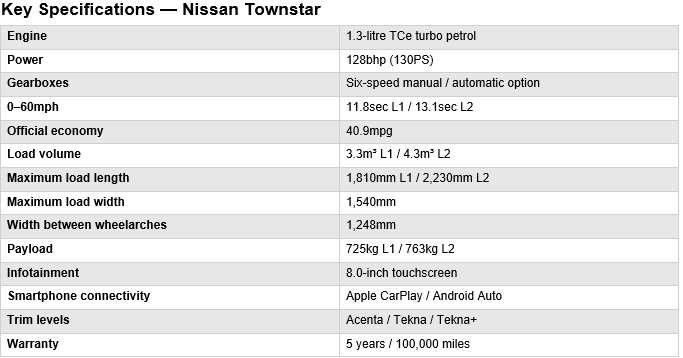
Let’s deal with the basics first. The current Townstar was developed alongside the Renault Kangoo and Mercedes-Benz Citan, so there is plenty of shared engineering underneath. In the UK, the conventional version is refreshingly simple: you get Nissan’s 1.3-litre TCe 130 petrol engine, producing 128bhp, with a six-speed manual gearbox or an automatic option. There is also the fully electric Townstar EV, but that is a separate proposition for fleets ready to go battery-only.
There are two body lengths. The L1 gives you 3.3 cubic metres of load space, while the longer L2 stretches that to 4.3 cubic metres. Payload is 725kg for the L1 and 763kg for the L2. Those numbers tell you something important straight away: this is not a heavy-duty little van built to carry a tonne of bricks. It is aimed more at service fleets, engineers, couriers and businesses carrying bulky rather than exceptionally heavy loads.
And that is where I think the Townstar makes its case. It is compact outside, genuinely useful inside and, unlike some rivals, comes with a five-year, 100,000-mile warranty. For a fleet manager trying to keep acquisition cost and downtime under control, that is a useful combination before you have even turned a wheel.
Design and Interior
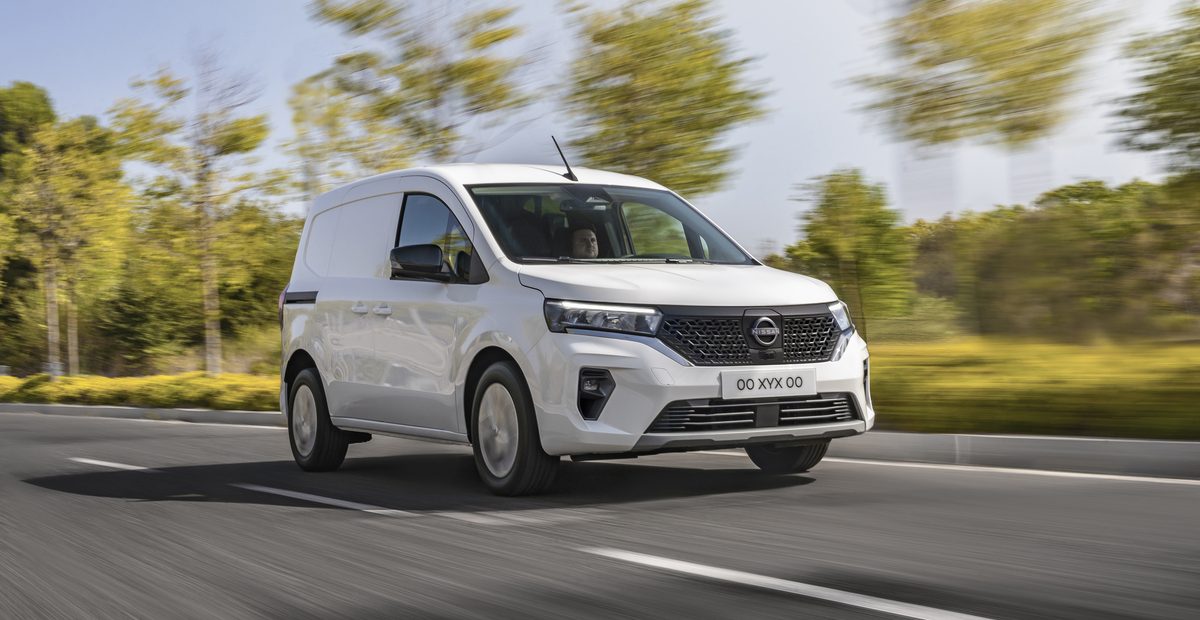
Honest answer first — if you park a Townstar next to a Renault Kangoo, you are going to spot the family resemblance immediately. That is hardly surprising given how closely related the two vans are. Nissan has given the Townstar its own nose and detailing, but the basic proportions are shared, and for fleet use I cannot see that being a problem. It looks neat, modern and suitably businesslike without trying too hard.
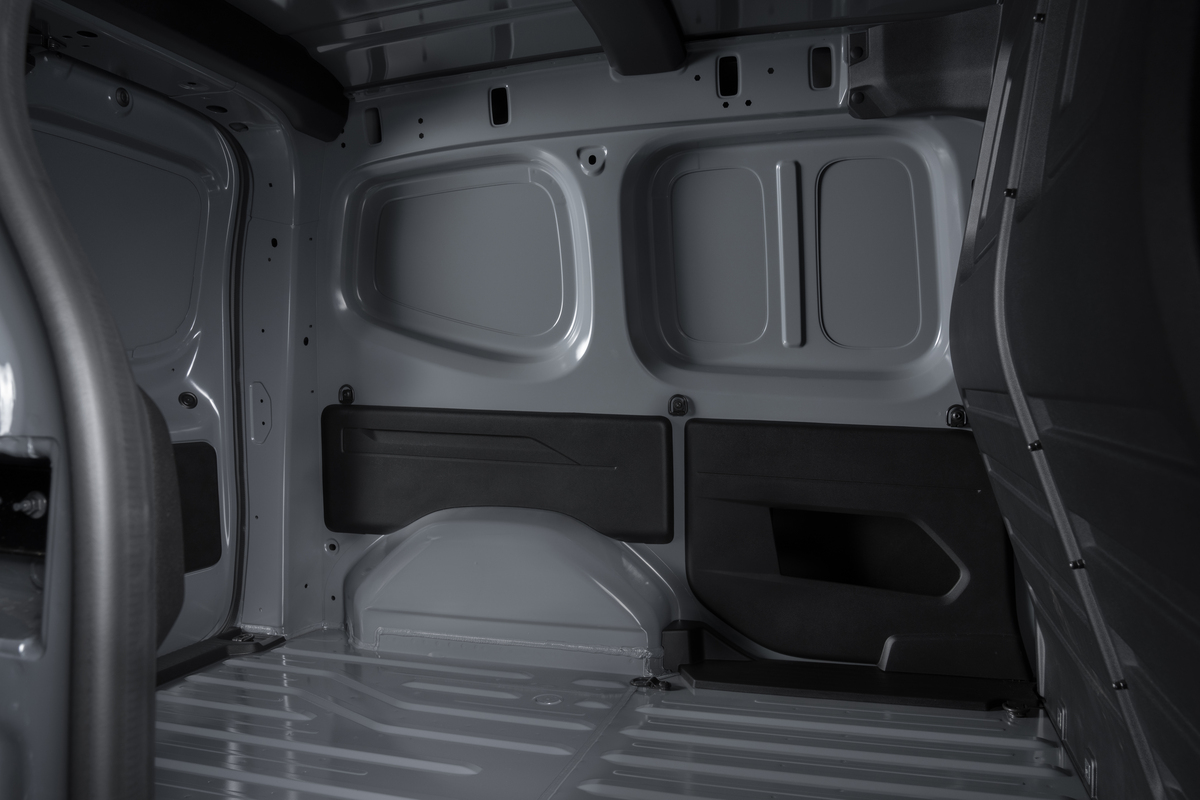
The clever bit is how much working space Nissan has packed into a relatively compact footprint. The L1 load bay measures 3.3m³, while the L2 gives you 4.3m³. Maximum load length is 1,810mm in the L1 and 2,230mm in the L2, with 1,540mm of maximum width and 1,248mm between the wheelarches. The longer version also gets wide sliding side-door apertures, which makes a difference when you are loading boxes or equipment from the pavement side.
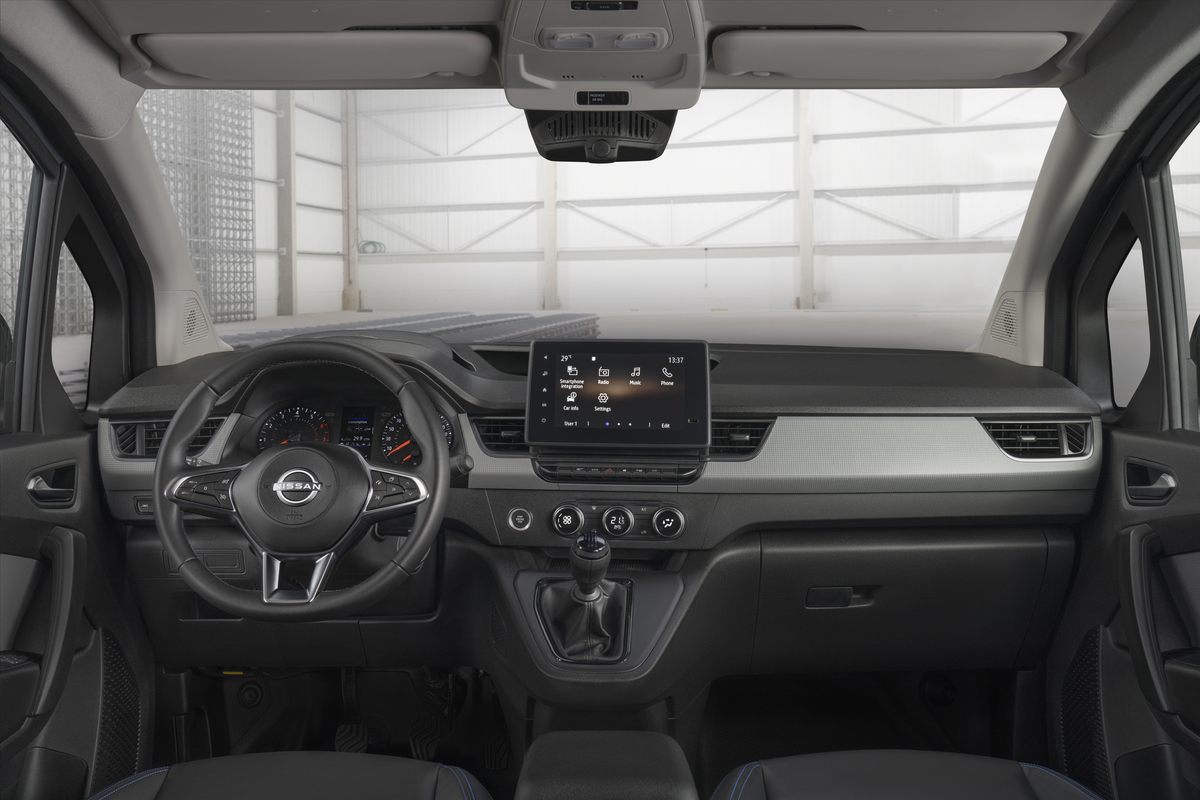
Step into the cab and things feel familiar in a good way. The driving position lines the seat, pedals and steering wheel up naturally, and there is plenty of adjustment in the wheel for reach and rake. The seat is supportive enough for a long motorway run, although very tall drivers may find that the fixed bulkhead limits how far it can slide backwards. If you are six-foot-five and all leg, I would definitely sit in one before signing the order form.
The dashboard is straightforward rather than flashy. Physical climate-control dials remain, and they are chunky enough to use while wearing gloves. That alone earns Nissan a few points from me. There are proper steering-wheel buttons for cruise control and other functions, and Tekna versions get a 7.0-inch digital instrument display with configurable information.
The 8.0-inch touchscreen is less convincing. It does the job and supports Apple CarPlay and Android Auto, but the resolution and graphics already feel a generation behind the best passenger-car systems. The menus are simple enough, although reports of occasional lag and flaky Bluetooth behaviour mean it is not the bit of the Townstar I would be showing off to a driver on handover day.
Storage, on the other hand, is excellent. The door pockets are properly useful, there are cupholders between the seats, a deep lidded centre cubby, rubberised trays around the dashboard and a lidded compartment above the instrument cluster with USB and 12V power nearby. There is even a full-width shelf above the windscreen. The glovebox is tiny, but almost everywhere else you look Nissan has found somewhere sensible for the clutter that accumulates in a working van.
On the Road
Power comes from a 1.3-litre turbocharged petrol engine producing 128bhp. On paper that sounds modest, but around town it has a useful amount of pulling power low down and does not need to be thrashed just to keep up with traffic. In the L2, Nissan quotes 0–60mph in 13.1 seconds, while the shorter L1 manages it in 11.8 seconds. Nobody is buying a Townstar for the stopwatch, but it is useful to know that the shorter van has a little more spring in its step.
The six-speed manual gearbox is one of the better parts of the package. The lever sits close to the steering wheel, the shift is quick and precise and the clutch is progressive enough that a day of stop-start driving should not become a chore. There is also an automatic option if your fleet spends its life crawling through traffic.
At motorway speeds the Townstar settles down nicely. The engine becomes fairly subdued once you are cruising, wind noise is well controlled and the tyres only really make themselves heard on rougher surfaces. That makes this a calmer long-distance companion than its compact dimensions might suggest.
You do need to plan overtakes. If you are sitting behind slower traffic on the motorway or arrive at a long incline with freight in the back, you may need to drop a gear and let the engine work. Push it hard and you hear more of it, but I would rather have an engine that is quiet at a steady 70mph and needs the occasional downshift than one droning away all day.
The suspension is softly tuned by small-van standards, which suits the Townstar. It is not as sharp through bends as a Volkswagen Caddy Cargo or Ford Transit Connect, and there is a little more body movement, but the trade-off is a more comfortable ride. For most fleet drivers, particularly those spending eight hours a day bouncing between jobs, I think Renault-Nissan have got that balance about right.
The steering deserves a mention too. It has enough weight to feel natural rather than over-assisted, and the van remains tidy enough on a rural road that you can make decent progress without feeling as though the back is going to join you in the front. It is not a van you buy for entertainment. It is a van you buy because it makes a working day easy.
Fuel Economy and Running Costs
Nissan quotes 40.9mpg for the petrol Townstar and real-world motorway running appears to get surprisingly close to that figure. Around 40mpg from a petrol-powered working van is perfectly respectable, particularly if your operation involves shorter journeys where a diesel may never get properly warm.
And here is the thing — the lack of a diesel is not automatically a weakness. For a high-mileage motorway fleet, yes, I would still want to compare the numbers carefully with a diesel Kangoo or another rival. But for local delivery work, service engineers and vans that spend their day covering relatively short distances, petrol can be a very sensible choice. It is quieter when cold, warms up quickly and avoids some of the complications that come with diesel emissions equipment.
The Townstar also arrives with a generous amount of standard kit. Even entry-level Acenta brings automatic dual-zone climate control, automatic LED headlights and wipers, cruise control, rear parking sensors and the touchscreen infotainment system. That is a decent starting point and means fleets do not need to climb halfway up the range just to make the van tolerable for drivers.
Then there is the warranty. Five years and 100,000 miles is one of the strongest headline figures in this class and gives the Townstar a clear advantage over the closely related Kangoo, which offers three years with the same mileage ceiling. For operators keeping vehicles four or five years, that extra factory cover has real value.
The Niggles
The biggest limitation is obvious: if you want a diesel Townstar, you cannot have one. Nissan has gone petrol or electric in the UK, which keeps the range simple but immediately rules the van out for some high-mileage operators who still want diesel economy and range.
The infotainment system is the next weak spot. The 8.0-inch screen looks dated beside the latest systems, and occasional lag or Bluetooth quirks are the sort of thing that becomes more irritating when a driver uses the van every day. Smartphone mirroring helps, but I would like to see Nissan give the system a proper update.
Payload is respectable rather than class-leading. The L1 carries 725kg and the L2 763kg, so businesses regularly running close to a tonne will need to look elsewhere. The rear doors also stop at 180 degrees rather than folding right back through 270 degrees, which can be inconvenient in tight loading areas.
And while the cab storage is generally excellent, the glovebox is almost comically small. It is largely occupied by the owner’s manual, which rather defeats the point of having a glovebox in a working van. None of these are deal-breakers, but they are exactly the sort of details worth knowing before you order twenty of them.
Safety and Warranty
The Townstar comes well equipped from the bottom of the range. Acenta gives you cruise control, rear parking sensors, automatic LED headlights and automatic wipers, while Tekna adds a rear-view camera, keyless entry and start, navigation and additional parking sensors at the front and sides. Tekna+ then brings further driver-assistance equipment, including blind-spot assistance and an automated parking function.
For fleet use, I would pay particular attention to the parking equipment. Small vans spend their lives squeezing into places that were never designed for them, and a camera plus front and side sensors can save a lot of low-speed damage over a three- or four-year cycle.
Warranty is where the Nissan really earns points. Five years or 100,000 miles is a strong package for the class. The mileage limit means very high-mileage fleets can still burn through the cover before five years are up, but for the sort of mixed urban and regional work this van is likely to do, it is a useful piece of reassurance.
The Fleet Case
Now we are at the bit that matters. The Townstar’s fleet case is built around simplicity. One petrol engine, two useful body lengths, three sensible trim levels and enough standard equipment that the cheapest version does not feel deliberately stripped out.
For most fleets I would start with Acenta. It already gives you the equipment drivers will actually notice — climate control, cruise control, LED headlights, rear parking sensors and smartphone-compatible infotainment. That makes it a strong value proposition without paying for kit your drivers may never use.
Tekna becomes interesting if vans are regularly working in tight urban environments because the rear-view camera and additional parking sensors have obvious practical value. The navigation and keyless start are useful bonuses. Tekna+ is harder to justify purely on fleet cost, although the extra safety systems could make sense depending on your risk policy and insurance requirements.
The choice between L1 and L2 is more important. The L1 is easier to manoeuvre and still gives you 3.3m³ of cargo space. The L2 jumps to 4.3m³ and a 2,230mm load length while adding only a modest amount of payload. So if your business carries bulky boxes, tools or equipment rather than very heavy materials, the L2 makes a lot of sense.
The five-year warranty is the final piece. On a four-year fleet cycle, having factory warranty cover potentially running for the whole ownership period is exactly the sort of thing that makes a spreadsheet look healthier.
Townstar vs Kangoo: Which Is Right for Your Fleet?
This is the obvious comparison because the two vans share so much underneath. From the driver’s seat and in the load bay, the family connection is impossible to miss. Both are comfortable, practical and easy to live with, so the decision comes down to some very fleet-specific differences.
If you want diesel power, the Kangoo wins immediately because Nissan does not offer a diesel Townstar in the UK. That makes the Renault easier to justify for high annual mileages or fleets that still have a strong diesel use case.
If petrol suits your operation, though, the Nissan starts fighting back. The Townstar offers a long five-year, 100,000-mile warranty compared with the Kangoo’s three-year cover, and its standard equipment is generous. For fleets keeping vans for four or five years, that warranty difference is not something I would dismiss.
The load spaces are effectively the same because of the shared engineering, so there is no magic advantage hiding in the back. This really is a question of engine preference, specification, dealer support and warranty.
My view? High-mileage fleet that wants diesel: Kangoo. Urban and regional fleet happy with petrol and valuing longer warranty cover: Townstar. Sometimes the answer really is that straightforward.
The Verdict
The Nissan Townstar is not trying to dominate the small-van market with one headline number. It does not have a diesel engine, it is not the sharpest van through a corner and its infotainment system could do with being dragged into the present day.
But you have to weigh that against what you actually get: a comfortable driving position, a well-designed cab, excellent storage, a genuinely useful load area and enough performance from the 1.3-litre petrol engine for the sort of work most Townstars will actually do. Around 40mpg is achievable, the ride is comfortable and the five-year warranty is one of the best reasons to put it on a fleet shortlist.
The L2 is particularly appealing for operators who need volume rather than maximum weight. A 4.3m³ load bay and 2,230mm load length in something that remains compact enough for urban work is a useful combination.
If your vans spend all day hammering motorways with heavy loads, the lack of diesel and modest payload may send you elsewhere. If you run engineers, local delivery drivers, maintenance teams or other staff carrying equipment around towns and regional routes, the Townstar makes a lot more sense.
And for fleet managers, that five-year warranty may be the detail that tips the decision. The Townstar might share plenty with the Kangoo, but Nissan has given it enough of its own fleet argument to deserve serious consideration.