
UK-EU Summit could reshape logistics and transport
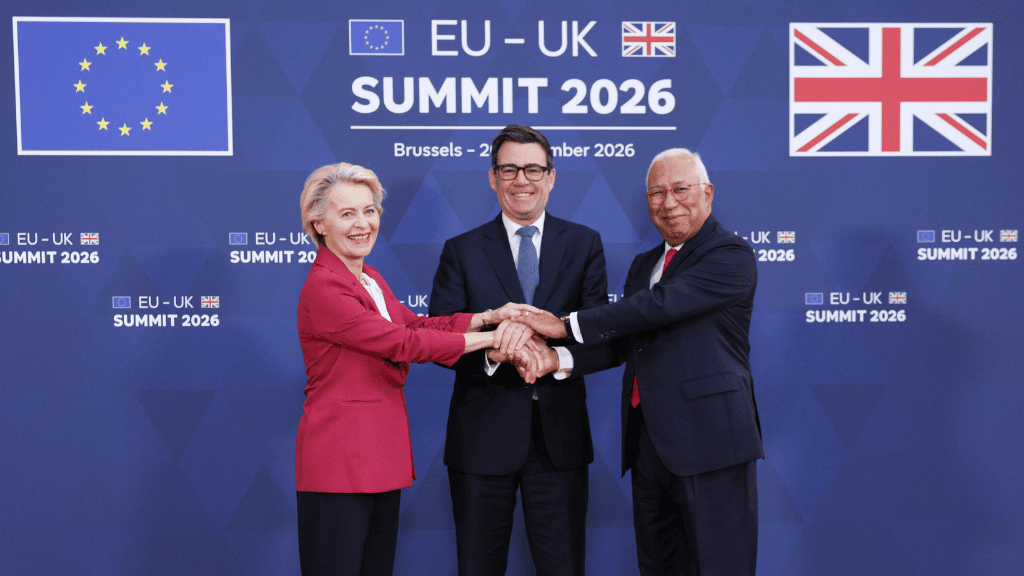
The second UK-EU summit in Brussels on 20 November has delivered a concrete boost for logistics. The headline is the conclusion of negotiations on a sanitary and phytosanitary (SPS) agreement, which both sides aim to apply from 1 March 2028. The joint statement also welcomes a deal to link the UK and EU emissions trading systems. Industry leaders welcome the progress. Many also point out that the statement says nothing on professional driver mobility, which remains one of the sector’s biggest frustrations.
What the SPS agreement means for hauliers
The SPS agreement is the centrepiece for transport firms. The joint statement describes a common sanitary and phytosanitary area. It would allow the vast majority of movements of animals, animal products, plants and plant products between Great Britain and the EU to take place without today’s certificates or controls. The same benefits extend to Great Britain to Northern Ireland movements, through the interplay between the deal and the Windsor Framework.
Government guidance says the agreement should cut border delays and make planning easier. Hauliers should find it simpler to combine SPS and non-SPS goods in one mixed load. Groupage operators stand to gain most, because they currently pay charges on each consignment. Hauliers moving food could see less paperwork, fewer stops at border control posts and lower costs per load.
The timing matters. Negotiations have concluded, but the agreement is not yet in force. The 1 March 2028 target falls later than the mid-2027 date in earlier government guidance, so operators should plan around the new date.
Carbon border costs and the wider prize
The statement also welcomes the conclusion of talks on linking the UK and EU emissions trading systems. The link would allow mutual recognition of allowances. It would also exempt EU and UK goods from each other’s carbon border adjustment mechanisms. Both sides aim to apply it from 2028. For exporters, and the hauliers who serve them, that could remove a costly layer of paperwork.
The economic stakes are high. The EU buys about 40% of UK exports. Logistics UK points to a potential benefit of £10bn a year by 2040.
What logistics leaders say
Logistics UK chief executive Ben Fletcher called the agreement “very positive news for businesses trading, and wanting to start trading, between the UK and EU”. He said it marks “an important shift from political negotiation to practical progress”. Logistics moves goods worth £1 trillion into and out of the UK every year, so the border matters enormously.
The cost of the current arrangements is stark. Logistics UK analysis shows that weaker alignment with key trading partners, including Brexit frictions, has held back the UK economy by an estimated £12 billion a year. That equals around £400 per household. Separate analysis by MDS Transmodal found that UK exports to the EU have fallen by 15.9% by volume in the ten years since the 2016 referendum.
Fletcher stressed that the work is far from over. “This agreement should be seen as an important step forward, not the end of the journey,” he said. The joint statement itself says the Trade and Cooperation Agreement works effectively, but that certain barriers need further effort. Fletcher also urged government to cut the red tape that still affects trade between Northern Ireland and Great Britain.
Driver mobility remains unresolved
Road Haulage Association (RHA) managing director Richard Smith welcomed the progress on reducing trade barriers. He was “disappointed that the announcements so far do not appear to address the 90-in-180-day restriction affecting professional drivers”.
The joint statement supports his concern. It does not mention the rule. On people movement, it commits only to continued dialogue on business travel, including short-term business visitors. Any improvements would come where both sides see mutual interest. Smith called the restriction “a significant issue for businesses operating internationally”. The RHA continues to press for practical solutions on driver mobility, the Entry/Exit System, border processes and international coach operations.
Logistics UK shares the worry. Fletcher noted that frictions still limit the days HGV drivers and other logistics workers can spend in the EU. He also pointed to inefficient digital border processes. The SPS deal helps with goods, but it does little for the people who move them.
Technology can turn policy into efficiency
Microlise chief executive Nadeem Raza said closer cooperation “has the potential to deliver significant benefits” for a sector that plays “a vital role in keeping goods moving and supporting economic growth”. He added a warning. In his view, the success of any agreement “will ultimately be measured by the difference it makes on the ground”.
Raza highlighted the pressure on operators from rising costs and weak productivity. Technology can help. Operators need visibility and intelligence to optimise journeys, reduce unnecessary mileage and build more resilient supply chains. Fewer border delays only help fleets that can see where their vehicles are and plan around disruption.
How operators should prepare
Firms have time to get ready, but they should not wait. The government advises logistics companies and hauliers to check whether the agreement affects their operations. That includes Great Britain to Northern Ireland routes and domestic journeys. UK businesses will also need to meet EU rules within the scope of the agreement, even if they serve only the UK market.
Operators should watch for further guidance on border processes, inspections and mixed loads. Fleet managers should also review their data and tracking systems now, so they can adapt quickly when the new rules start.
A step forward with work still to do
The summit offers real hope for hauliers and freight forwarders who handle food and agricultural goods. Fewer checks, lower costs and simpler mixed loads would make a tangible difference. The carbon border exemption adds further relief for exporters.
Yet the sector’s message is consistent. The agreement is a start, not a finish. Driver mobility, the Entry/Exit System and Northern Ireland trade still need answers. Until the SPS measures work in practice, the logistics industry will judge the summit by what changes at the border.