
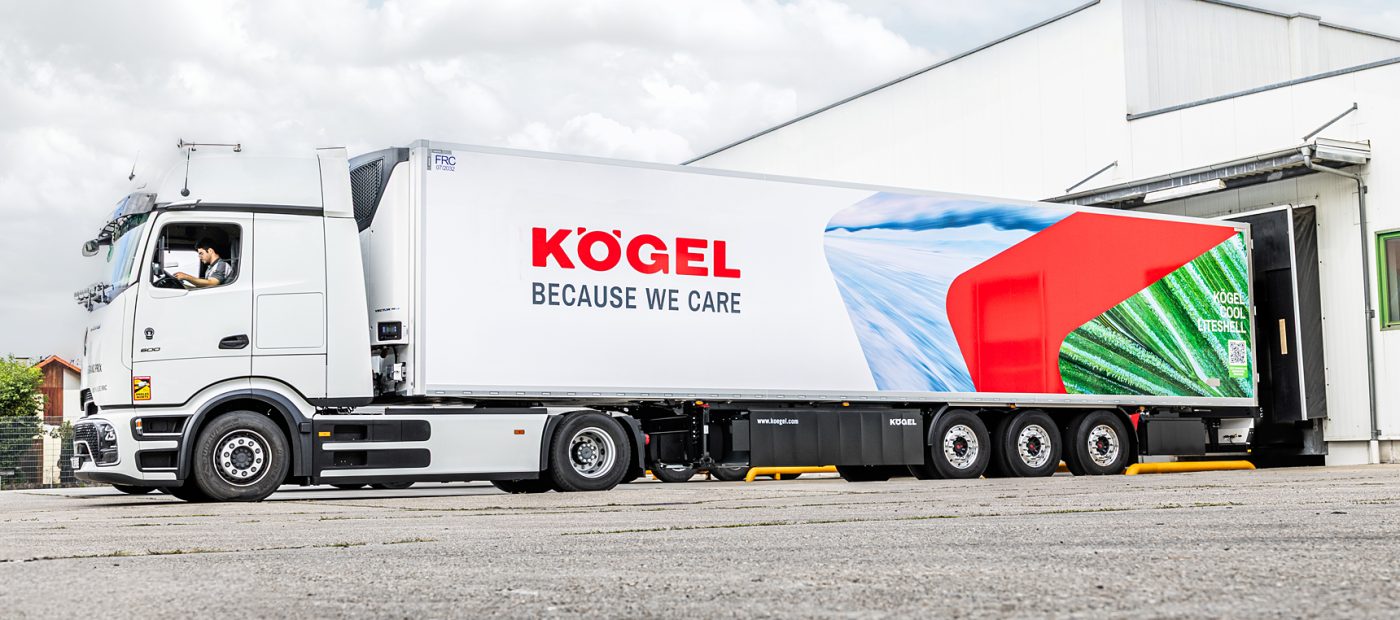
Kögel trailers target payload gains and efficiency
Kögel Trailer GmbH is showcasing how trailer design can improve the efficiency of the entire transport operation at IAA Transportation 2026, with two vehicles demonstrating its latest approach to trailer development.
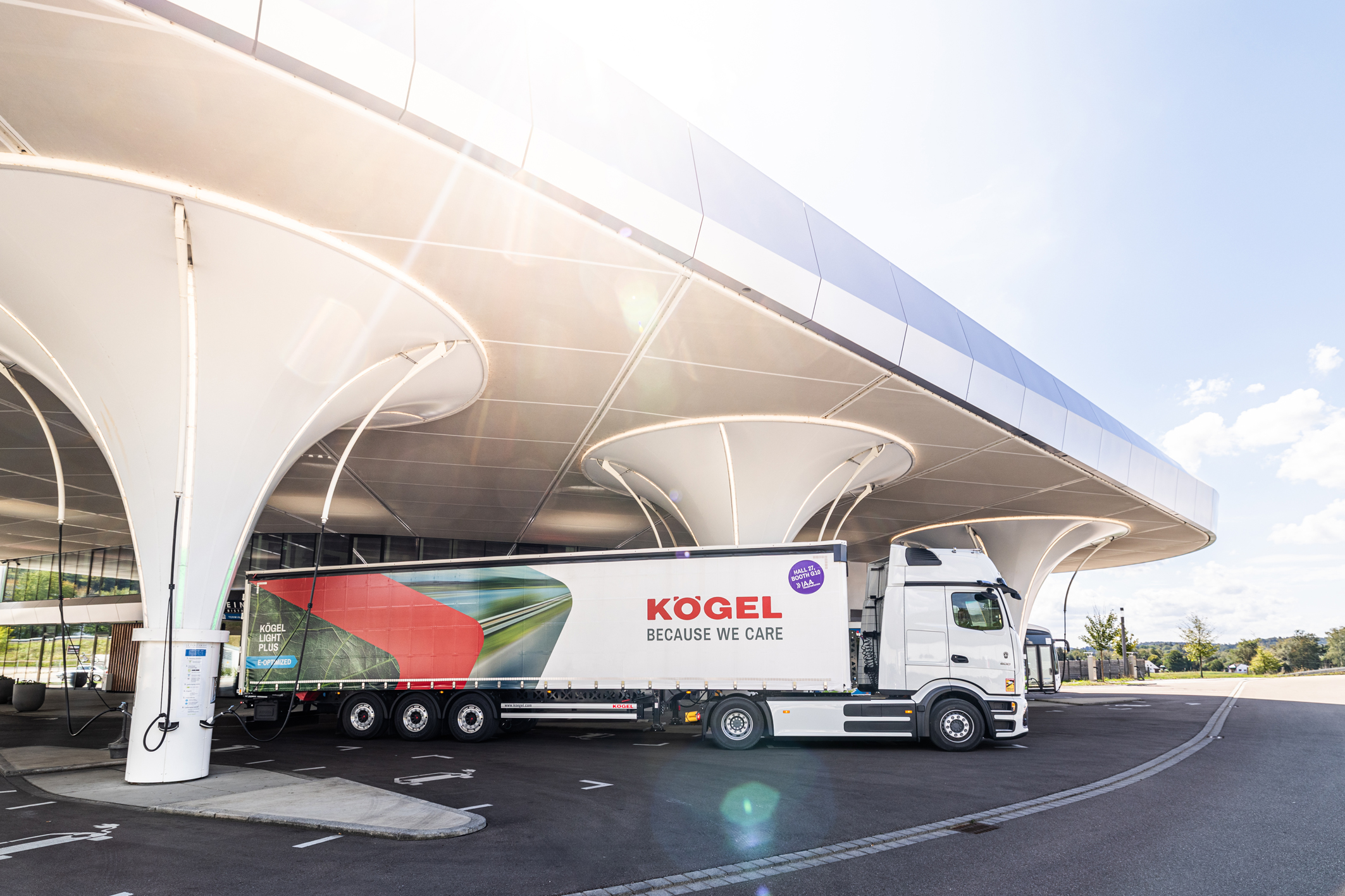
Under the motto “We deliver your success”, the manufacturer is presenting the KÖGEL COOL LITESHELL refrigerated trailer and the e-optimised KÖGEL LIGHT PLUS. Both models highlight how vehicle weight, payload capacity and integration with the tractor unit can influence fleet efficiency.
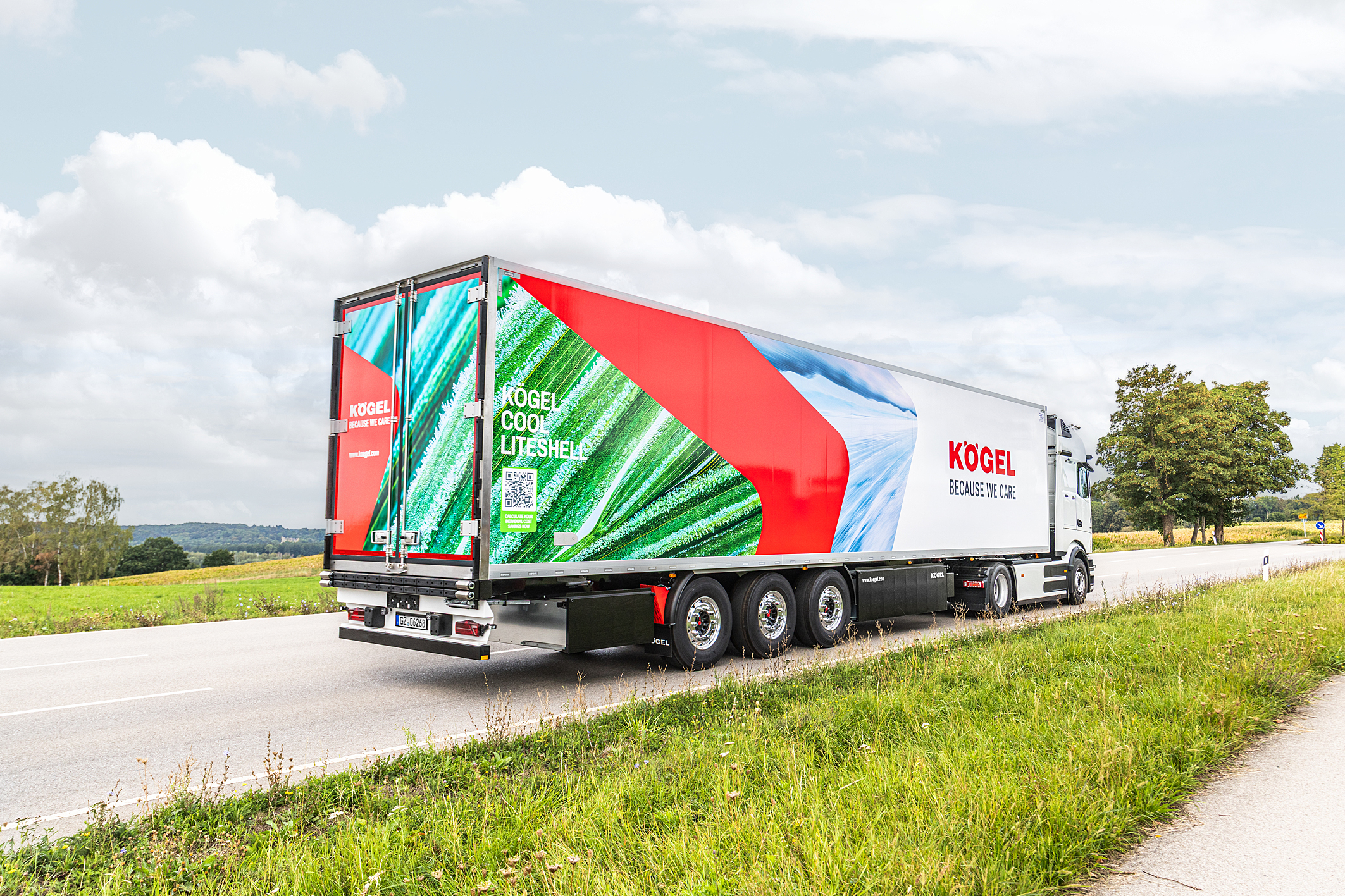
For the multiple award-winning KÖGEL COOL LITESHELL, efficiency starts with reducing vehicle weight. Its LITESHELL panels, used in the side walls and roof, eliminate the need for a conventional steel outer skin.
As a result, the refrigerated trailer is around 700 kilograms lighter than its predecessor. This creates additional payload capacity while also reducing energy consumption.
Kögel says fuel savings of 0.30 litres per 100 kilometres and emissions reductions of 0.8 grams of CO₂ per kilometre are possible. If the additional payload is fully utilised, the manufacturer estimates that around one trip in every 32 could theoretically be eliminated.
The COOL LITESHELL demonstrates the relationship between vehicle weight, payload, fuel consumption and CO₂ emissions in road freight transport.
The e-optimised KÖGEL LIGHT PLUS applies the same efficiency principle to heavy-duty electric transport. The trailer was awarded first place in the Chassis category at the International Trailer Award 2027.
The additional battery weight of electric tractor units changes the weight distribution of a vehicle combination. Although EU regulations allow zero-emission tractor units to operate at a permissible gross combination weight of up to 42 tonnes under certain conditions, axle load limits remain unchanged.
This means the tractor’s drive axle can become the limiting factor for payload, even where the overall permitted gross combination weight is higher.
Rather than simply reducing tare weight, the e-optimised LIGHT PLUS addresses the issue through optimised load distribution.
Kögel has shortened the wheelbase from the kingpin to the first trailer axle by around 300 millimetres. This shifts the load distribution and reduces the load on the tractor’s drive axle, helping to accommodate the weight of the electric powertrain.
With a standard trailer, an electric truck can achieve a maximum payload of around 20 tonnes under even load distribution. Depending on the tractor unit, Kögel says the e-optimised LIGHT PLUS can enable up to four tonnes of additional payload.
For operators considering electric HGVs, the approach highlights the importance of matching trailer configuration to the characteristics of the tractor unit, rather than assessing the trailer in isolation.
Both vehicles form part of Kögel’s Efficiency Engineering approach, which considers the interaction between tractor unit, trailer, payload and operating conditions.
For the COOL LITESHELL, vehicle weight is the key efficiency lever. For the e-optimised LIGHT PLUS, the focus is on matching the trailer to the weight distribution of an electric vehicle combination.
Kögel is extending the approach to other models in its LIGHT family. The KÖGEL MEGA LIGHT will be available in an e-optimised version from the end of 2026, with further models to follow.
The trailer manufacturer is also expanding its collaboration across the transport value chain. The traditional relationship between Kögel, trailer and customer is evolving into a partner network combining expertise in technology, digitalisation, services and tractor-unit integration.
As transport operators face increasing pressure to improve payload utilisation, reduce energy consumption and manage the transition to zero-emission vehicles, Kögel sees the trailer as an increasingly important component of the wider transport system.
Its “We deliver your success” motto reflects an ambition to focus not only on individual product features, but also on the contribution a trailer can make to the economic efficiency of the entire transport operation.
![Carrier Transicold launches [R]eCool](https://www.fleetpoint.org/wp-content/uploads/2026/07/010-03-Carrier-Transicold-ReCool-Launch-1200x849-1-e1785319567169-420x280.jpg)