
HGV registrations dip in Q1 as zero emission uptake falls
New HGV registrations in the UK fell by 2.7% in the first quarter of 2026, with 9,471 new trucks joining the road network, according to the latest figures from the Society of Motor Manufacturers and Traders (SMMT).
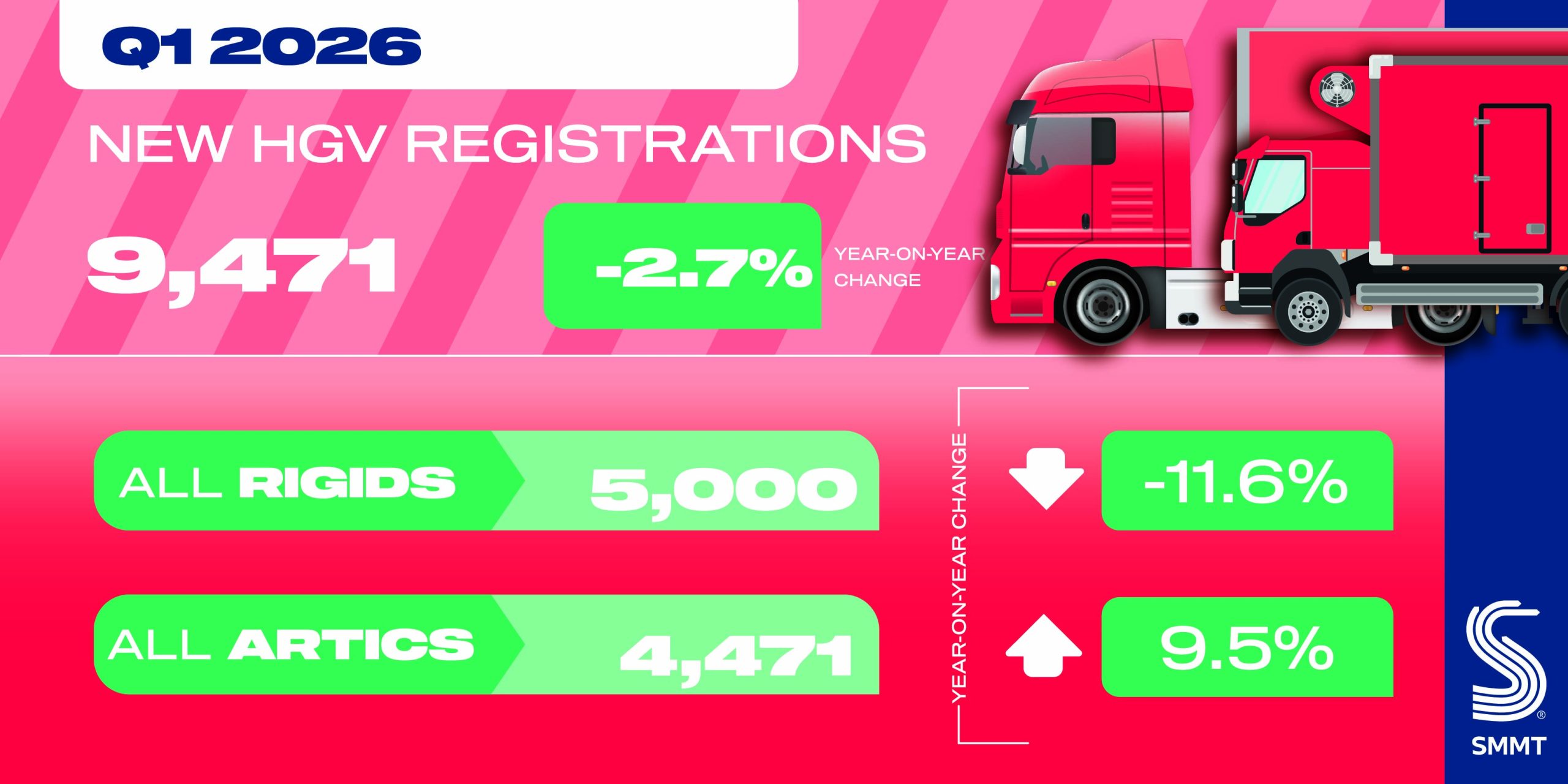
The decline follows a modest 1.7% rise in the previous quarter, highlighting a market that is gradually normalising after three years of post-pandemic pent-up demand. However, the SMMT notes that broader economic pressures continue to weigh on fleet renewal decisions across the sector.
Market performance remains mixed across vehicle categories. Demand for box vans fell sharply by 20.1% to 766 units, while curtain-sided truck registrations dropped by 31.6% to 525 units. In contrast, the tractor unit segment showed resilience, rising 9.1% to 4,313 units and accounting for nearly 60% of all new HGV registrations.

Other segments saw modest gains, with tipper registrations increasing by 2.1% to 865 units and refuse disposal vehicles rising significantly by 47.1% to 765 units, indicating stronger demand in local authority and specialist operations.
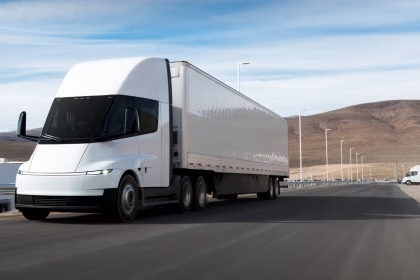
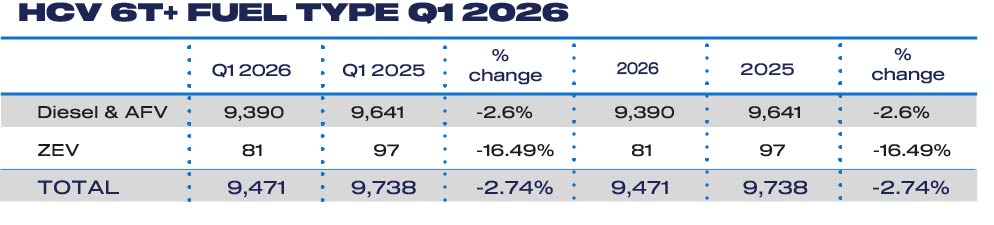
However, the most concerning trend is the slowdown in zero-emission HGV uptake. Registrations of electric and other zero-emission trucks fell by 16.5% year-on-year, dropping from 97 units to 81. Despite this decline following a record year in 2025, the segment still represents less than 1% of the overall market.
Manufacturers continue to expand their offerings, with more than 40 zero-emission HGV models now available. Yet operator demand remains constrained by high upfront costs, limited charging infrastructure and long lead times for grid connections. In some cases, depot electrification projects face waits of up to 15 years, creating significant uncertainty for fleet operators.
Government funding schemes, including support for depot charging and the Plug-in Truck Grant, have helped stimulate adoption, but industry leaders argue that further action is needed to accelerate progress. Calls are growing for faster grid connection approvals for transport depots, aligning them with priority infrastructure projects such as data centres and renewable energy developments.
Mike Hawes, Chief Executive of the Society of Motor Manufacturers and Traders, said: “A tough economic environment continues to hamper new HGV demand and a return to growth is needed to keep Britain moving while reducing emissions. A weak start to the year for ZEV uptake is particularly concerning, despite impressive model rollout, reflecting the substantial cost and infrastructure challenges facing operators. With government consulting on new regulation to decarbonise the sector, a realistic and long-term approach will be essential, recognising the barriers and the technological solutions necessary for reducing emissions.”
The data highlights a sector at a critical crossroads, balancing economic pressure with the long-term transition towards decarbonisation. While model availability is improving, the pace of infrastructure development and investment will be key to determining whether the UK can meet its future emissions targets while sustaining freight capacity.