
Could water shortages increase fleet maintenance costs?
Industrial cleaning equipment firm Harrison Hire & Sales urges UK bus operators to adopt low-water vehicle washing methods ahead of 2027.
Five successive heatwaves and the hottest year on record have left a marked impact on Britain’s domestic water supply, which experts expect to last well into the new year. Transport operators caught in the crosshairs, including bus networks responsible for billions of local passenger journeys, now face the issue of water security on top of rising utility costs, a national skills shortage, fleet electrification, and driver safety amid record-breaking temperatures. But will water scarcity make a perceptible dent in bottom lines?
Yorkshire’s leading commercial cleaning equipment specialists think so. “Keeping your buses and coaches road-ready is an ongoing challenge for operators, as they juggle scheduled maintenance with increasingly stretched services,” says Ben Corner from Harrison Hire & Sales. “Yet, in our experience, bus washing is often overlooked in conversations around network efficiency and resilience. By optimising these essential, admittedly unglamorous tasks, companies can recoup significant spend through water and labour savings.”
Why Water Preservation Matters
The scale of the water problem is difficult to overstate. In the long term, the government forecasts a shortfall of over five billion litres of water a day in public water supplies by the middle of this century for England and Wales – plus a further 1 billion litres a day deficit for the wider economy.
In the short term, the Environment Agency predict that 120% of typical rainfall is needed by April 2027 to break the ongoing drought in parts of the country. Zooming in on national bus services and tourist travel, this could spell unprecedented disruption to regular vehicle cleaning.
The usual hosepipe bans will not mean anything for commercial operations, but if the situation continues indefinitely, Ofwat may be forced to impose temporary limits on commercial water usage to conserve resources for other essential services, such as energy production or fire and rescue. These restrictions, also known as a non-essential use ban or NEUBs, are already in place under South East, Southern and South West Water and include vehicle cleaning, if deemed non-essential.
As the price of British water continues to rise, it’s in bus and coach companies’ best interests to reduce their consumption. By slashing their mains usage, the impact is three-fold: operators mitigate the brunt of the financial burden; they help ease the stress on supply; and they shrink wastage, thereby serving their environmental obligations.
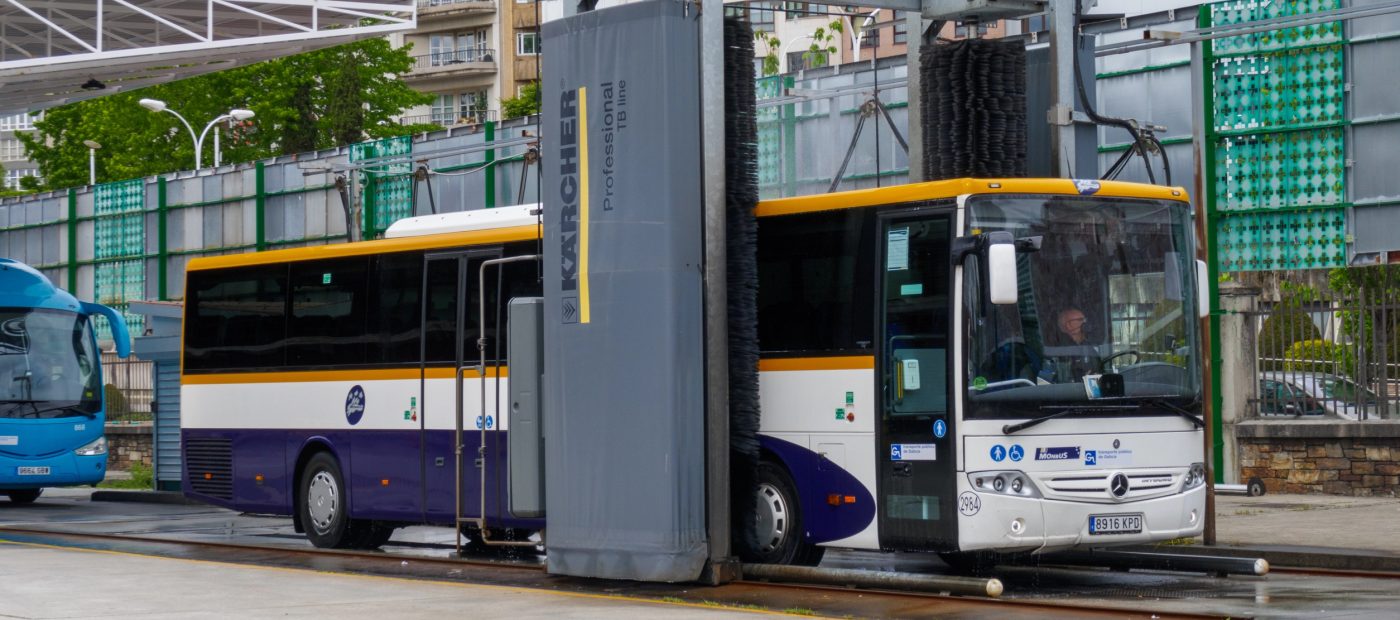
By simply updating wasteful manual methods, replacing them with more efficient, water-wise alternatives like brush machinery, operators can remain compliant whilst reducing overheads.
Water is the Hidden Hero of Vehicle Maintenance
Traditionally, fleet maintenance has focused primarily upon mechanical issues, with flashy predictive maintenance technology outshining the pivotal role cleaning plays in day-to-day operations.
Stephen French of Harrison Hire and Sales urges transport network operators not to fall into that trap: “Quality maintenance depends upon timely, thorough cleaning, and effective cleaning depends on water security”, he says.
“On both the driver and consumer level, grimy vehicles are a health and safety hazard, not to mention a compliance issue. Poor hygiene, low visibility and unsightly marks spell serious consequences for brand reputation, and can permanently put customers off from travelling with you.”
Then there is the maintenance issue; dirt and road contamination can make it harder for staff to spot developing bodywork damage, corrosion, leaks and other defects during inspections, thus adding another barrier to vehicle longevity. Conversely, efficient, effective cleanliness ensures buses and coaches are maintained or brought out of circulation at the optimal times.
“Without properly managed water supply, this wouldn’t be possible,” continues French.
How Operators Can Shrink Water Footprints and Slash Costs
Fortunately, high cosmetic and hygiene standards and lower water consumption are not mutually exclusive. Indeed, they often come in pairs.
This is something Harrison Hire & Sales knows all too well. Ben Corner shared that the firm is seeing an uptake in customers concerned about how they can minimise water use across the board:
“Currently, we’re working with numerous transport providers, onboarding them as users of our Iteco iWash system. The mobile solution relies on a high-accuracy brush system and only requires 125 litres of water compared to the 340 that manual methods guzzle up, which is all part of the appeal.”
The machine, a hydraulically propelled vertical brush cleaner, is but one solution among a handful; however, local bus companies are drawn to it thanks to its ease of operation. You simply walk the equipment around your stationary vehicles, and the filtered nozzles handle the rest.
For bus depot staff, automation is best implemented on repeatable tasks, which standardised, save cumulative time, labour and resources, and they need not be overly complex. Higher entry requirements for operation often translate into inconsistent or incorrect use – and that does not serve companies in the long run. Thus, automation should be simple to maintain and use, alongside reducing your mains water demand and detergent usage.
Looking Ahead: Adaptation is Both a Differentiator and an Operational Necessity
The climate emergency is affecting all industries, but the transport sector is especially vulnerable to increasing water scarcity, as it undermines company image and vehicle safety on the roads.
Rather than taking a pessimistic stance, though, fleets of all sizes should view the operational challenge as a catalyst for needed innovation. Early adopters stand to gain a differential advantage as Britain’s water infrastructure continues to strain; ultimately, for future generations, it will no longer be a choice.
Water Shortage FAQs
How Will Ongoing Droughts Impact Vehicle Cleaning?
Depending on the severity, droughts may force water companies to impose restrictions on non-essential commercial water use, including vehicle cleaning, or at the very least encourage operators to reduce their consumption where practicable. This will likely lead to the broader adoption of cleaning automation, such as mobile brush wash machines or fixed gantry-type systems.
Are Commercial Water Costs Increasing?
Unfortunately, yes, water bills are set to rise for many operators as Ofwat has given water companies the green light to go ahead with a major investment programme designed to meet increased infrastructural and environmental pressures.
How Can Bus and Coach Operators Reduce Their Water Footprints?
For one, maintenance crews can be supplied with the most efficient cleaning products and equipment. Mobile bus washers, for example, can achieve consistent, professional results in a fraction of the time that manual cleaning with a hose, mop and brushes typically takes. Combined with conservation efforts like water reclamation and recycling, you can reduce your footprint significantly.