
Volkswagen starts production of updated Caravelle and California
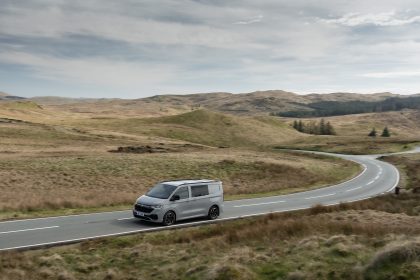
Volkswagen Commercial Vehicles has started production of its revised Caravelle and California models, bringing a major technology, styling and equipment upgrade to two of its most important VW Bus ranges.
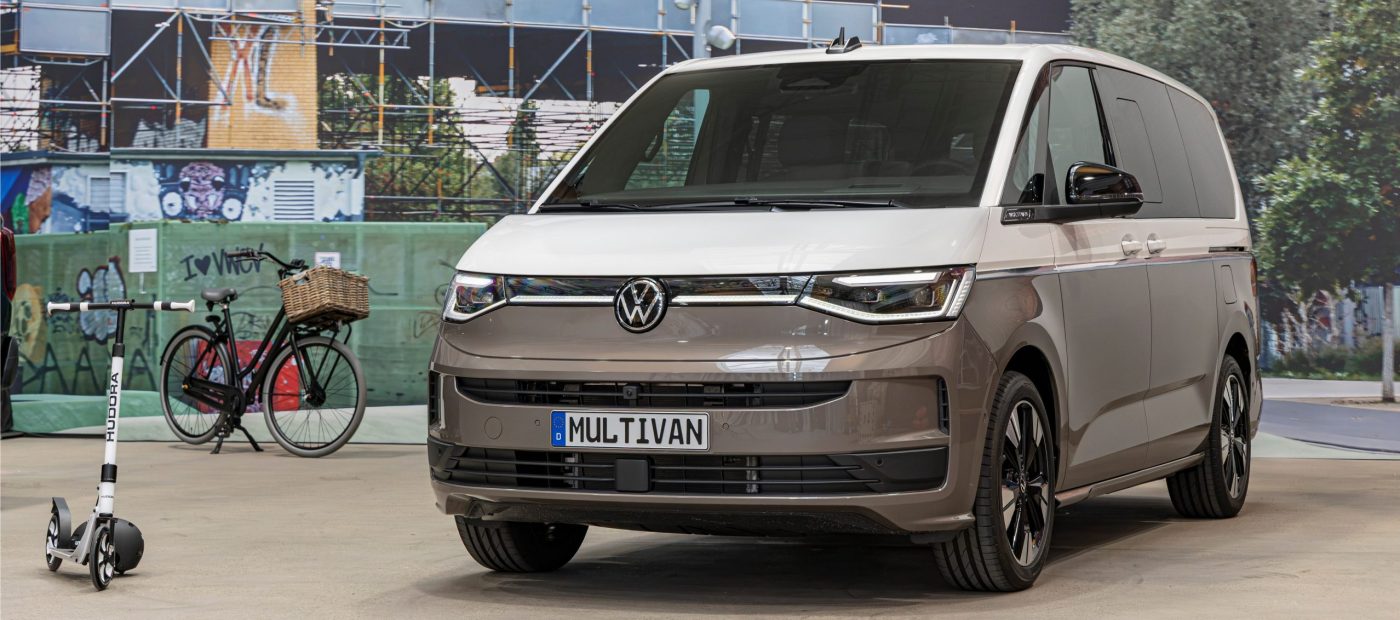
The Caravelle, which replaces the outgoing Multivan nameplate in the UK, and the California both receive a redesigned front end, a new cockpit, upgraded lighting technology, additional convenience features and an expanded suite of driver assistance systems.
The updated models are available in two body lengths and continue to offer a choice of powertrains, including Volkswagen Commercial Vehicles’ eHybrid 4MOTION plug-in hybrid system.
The Generation special edition has also joined the existing Trend, Life, Style and Edition grades. However, this model is not currently planned for the UK market.
The revised Caravelle marks the return of a familiar nameplate to the UK market, replacing the Multivan designation. The vehicle will continue to be sold as the Multivan in Germany.
The change also comes after a record year for the model line. Volkswagen Commercial Vehicles delivered 38,700 Caravelles/Multivans to customers globally in 2025, the highest annual total recorded for the model.
Power comes from a range of petrol, diesel and plug-in hybrid drivetrains. The eHybrid 4MOTION, introduced in 2025, combines a 19.7kWh lithium-ion battery with all-wheel drive and produces 180kW (245PS)¹.
Both models can also be specified with front-wheel drive and either a 110kW (150PS)¹ turbodiesel TDI or a 150kW (204PS)¹ turbocharged petrol TSI engine. All Caravelle and California models feature a direct shift gearbox (DSG).
Volkswagen Commercial Vehicles has redesigned the front end of both vehicles below the bonnet, with larger LED headlights creating a sharper interpretation of the familiar VW Bus design.
The new headlights also offer increased light output, providing brighter and more even illumination ahead of the vehicle. The width of the light cone has been improved for both straight-line driving and cornering, while entry-level versions benefit from a wider range of lighting functions.
The redesigned bumper incorporates the engine cooling and air-conditioning ventilation intakes into its lower section. Two horizontal air intakes and a body-coloured section between them are designed to emphasise the width of the Caravelle and California while contributing to aerodynamic efficiency.
Volkswagen has also expanded the colour palette. Six of the 16 available colour combinations are new, including three new two-tone finishes. For the first time, a matt finish is also available on both models in the form of Indium Grey Matt.
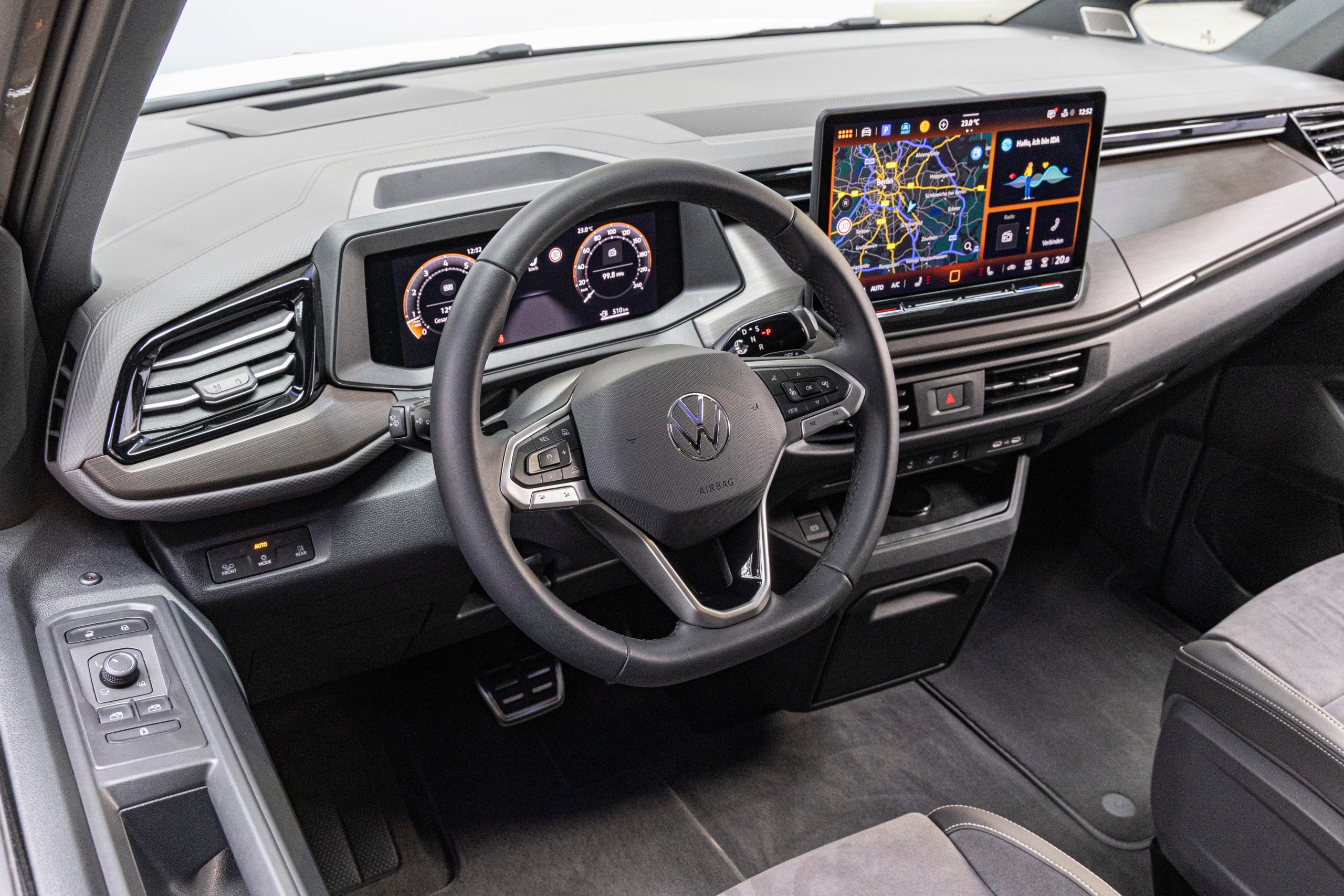
The biggest changes inside the updated VW Bus are centred on the dashboard and technology.
A newly developed dashboard features higher-quality surfaces and integrated topstitching, while the Digital Cockpit and infotainment systems have both been upgraded.
The Digital Cockpit offers three display layouts, selectable using the View button on the multifunction steering wheel. It is joined by a free-standing 12.9-inch (32.8cm) infotainment touchscreen.
Below the screen are illuminated touch sliders for controlling the audio and air-conditioning functions, providing a more integrated and modern control layout.
Volkswagen Commercial Vehicles has expanded the range of driver assistance technology available for the Caravelle and California.
The latest generation of Travel Assist now incorporates traffic-light recognition for the first time and can provide assisted lane changing on motorways.
Emergency Assist has also been integrated. If the system detects that the driver is experiencing a medical emergency, it can steer the vehicle through several stages towards the hard shoulder or outermost lane before bringing it to a controlled stop2.
The additional assistance technology is designed to improve both driver convenience and safety, particularly during longer journeys.
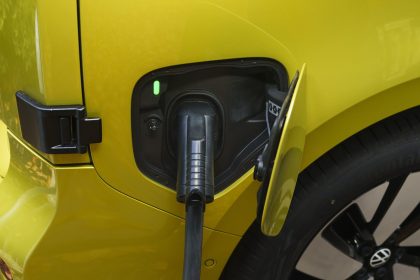
The eHybrid 4MOTION versions of both vehicles gain an electric stationary air-conditioning system capable of cooling, ventilating or heating the cabin for up to eight hours while the vehicle is charging, parked or being used for camping.
The California eHybrid 4MOTION also features a conventional auxiliary heater operating through the vehicle’s fuel system. It is standard on the California Ocean and available as an option on other versions.
The updated range also introduces AGR ErgoComfort front seats with memory and massage functions, including the front passenger seat for the first time.
The new Caravelle also gains additional flexibility with the introduction of an eight-seat vis-à-vis configuration. This allows two groups of three passengers to sit facing each other in the rear compartment.
New interior finishes are also available, including fully dark ArtVelours and leather options alongside the existing two-tone interior design. These versions feature matching dark headliners and door pillar trims for a more premium appearance.
The California receives its own model-specific interior fabric and colour scheme.
Production of the revised Caravelle and California represents a further development of Volkswagen Commercial Vehicles’ core VW Bus range, combining electrified powertrains with upgraded digital technology, driver assistance and improved practicality.
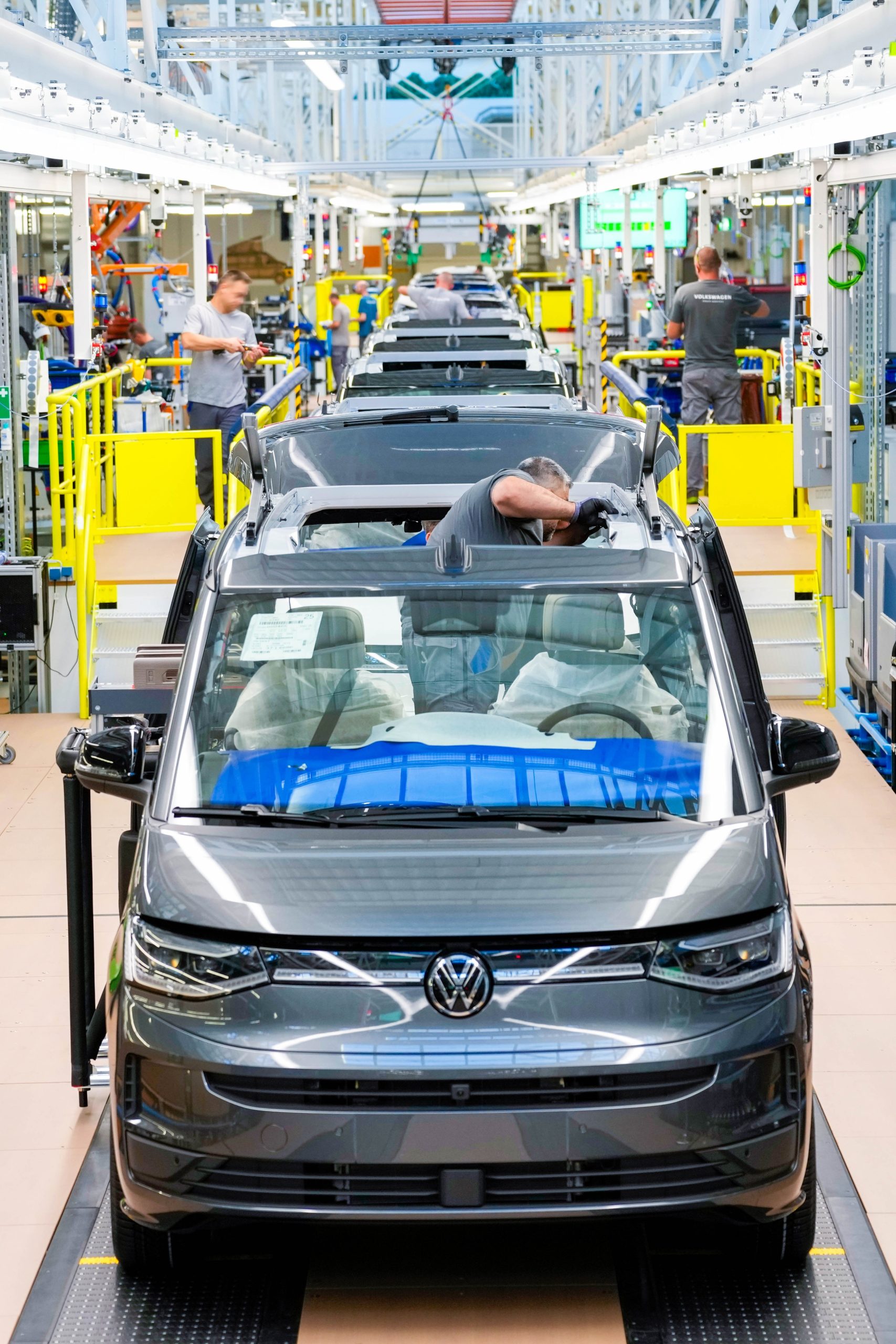
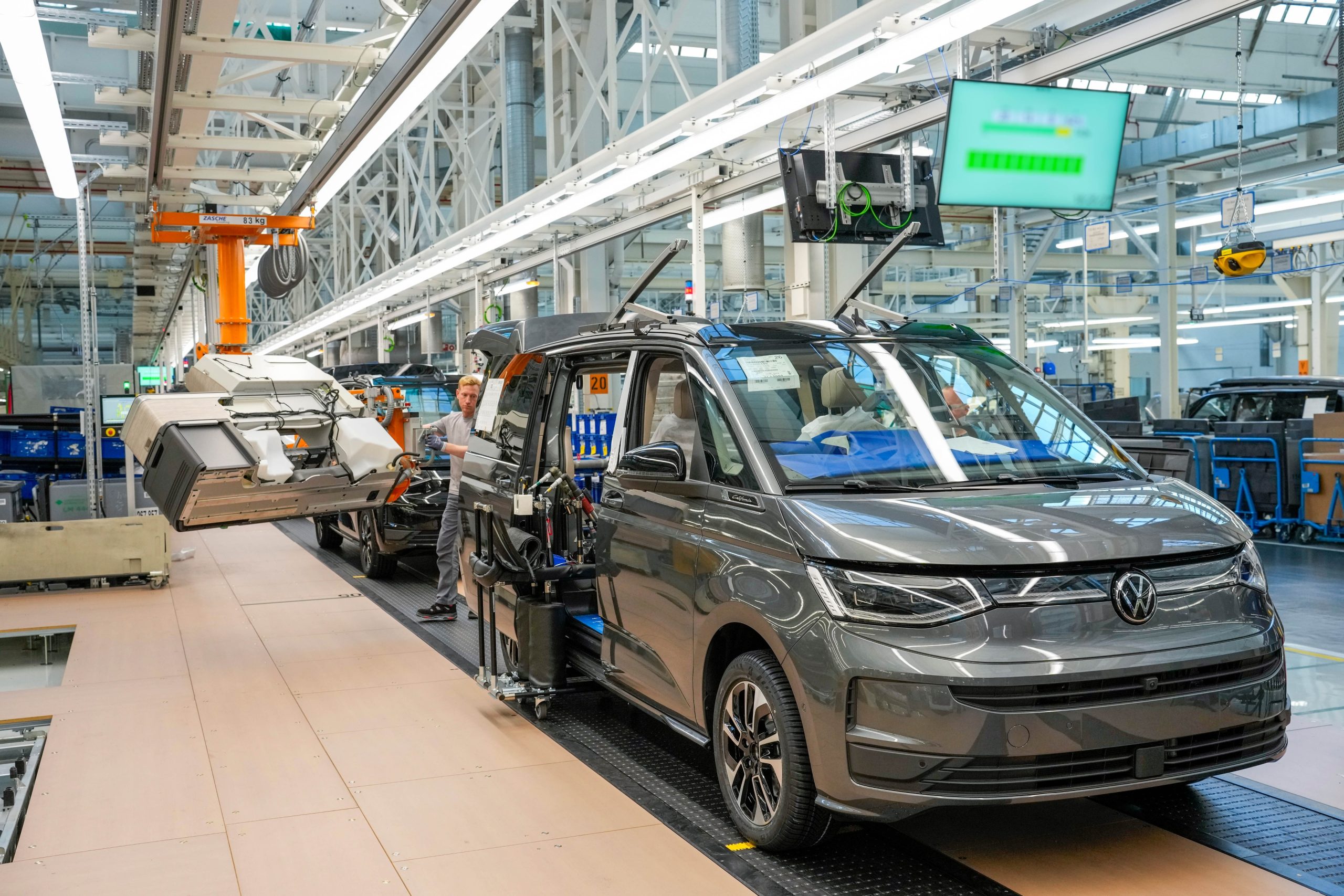
The production changes are particularly significant for the California. Since August, campervan manufacturing has been brought entirely onto new production lines at Volkswagen Commercial Vehicles’ Hanover plant for the first time. Previously, camper conversion work was completed outside the main plant.
Bringing vehicle production and camper conversion together is intended to improve manufacturing efficiency and provide closer integration between the two processes.
1Consumption/emissions:
Caravelle/California:
Combined energy consumption: 5,3-7,1 l/100km; combined CO₂ emissions: 167-215 g/km; CO₂ classes: F-G
Caravelle eHybrid/California eHybrid (PHEV):
Weighted combined energy consumption: 15.6-16.4 kWh/100 km plus 2.6-3.2 l/100 km; combined fuel consumption with discharged battery: 7.4 – 8.2 l/100 km; weighted combined CO₂ emissions: 60-73 g/km; weighted combined CO₂ classes: B; with discharged battery: E.
2Within the system limits.