


Why are the Conservatives trying to scrap the ZEV Mandate
The Conservative Party has dramatically changed its position on electric vehicles by proposing legislation to scrap the UK’s Zero Emission Vehicle (ZEV) Mandate – a policy introduced by the Conservatives themselves.
Mark Salisbury, Fleetpoint Editor, looks at what is being proposed and the arguments both for and against the absolution of the ZEV Mandate. This is not just a political and ideological proposal, it also would directly affect manufacturer and charging infrastructure companies’ investment policies.

Shadow Transport Secretary Richard Holden has tabled the Vehicle Emissions Trading Schemes Order 2023 (Revocation) Bill, which seeks to revoke the legislation underpinning the ZEV Mandate. The Bill has completed its first reading in the House of Commons and is sponsored by Holden.
The move comes at an interesting moment. The Labour Government has already accepted that the ZEV Mandate needs reviewing and launched a consultation in August, with the stated aim of making changes to the system while maintaining the transition towards zero-emission vehicles.
At the same time, electric vehicle sales are growing rapidly. Battery electric cars accounted for 29.8% of new car registrations in August 2026, with 28,063 registrations – a 27.7% increase on August 2025. Year-to-date, BEVs account for 25.6% of the UK new car market, up from 21.9% a year earlier.
So why are the Conservatives seeking to abolish the mandate now? And is the party genuinely responding to concerns among motorists, manufacturers and fleets, or is it pursuing a political argument that is increasingly disconnected from what is happening in the vehicle market?
What is the ZEV Mandate?
The ZEV Mandate is effectively a sales mechanism designed to force the automotive industry to accelerate the transition from internal combustion engines to zero-emission vehicles.
It was introduced by the Conservative Government and came into force in January 2024. The original legislation established annual minimum targets for the proportion of new cars and vans sold by manufacturers that must be zero-emission.
For cars, the target started at 22% in 2024, rising to 28% in 2025 and 33% in 2026. It then increases to 38% in 2027, 52% in 2028, 66% in 2029 and 80% in 2030.
For vans, the trajectory is 10% in 2024, 16% in 2025, 24% in 2026, 34% in 2027, 46% in 2028, 58% in 2029 and 70% in 2030.
The eventual objective is for all new cars and vans to be zero-emission by 2035, although the Government is currently consulting on how the 2030 and 2035 milestones should operate.
The system is more complicated than simply telling manufacturers that they must sell a certain number of electric vehicles.
Manufacturers receive allowances and can trade, bank and borrow credits. Companies that exceed their permitted non-ZEV registrations can acquire allowances from other manufacturers or use other flexibilities. Ultimately, manufacturers can also make compliance payments if they cannot meet their obligations through the available mechanisms.
The system was deliberately designed to give manufacturers flexibility while still creating a strong incentive to increase EV sales.
And there is an important historical point here.
When the Conservative Government introduced the mandate in 2023, then Transport Secretary Mark Harper described it as a “world leading” piece of legislation. He said manufacturers had helped shape it and that the certainty provided by the targets would support investment and jobs.
That makes the Conservatives’ current position particularly striking.
Why have the Conservatives changed direction?
The central Conservative argument is that the ZEV Mandate interferes with consumer choice and places excessive pressure on manufacturers to sell electric vehicles before the market is ready.
Richard Holden’s argument is straightforward.
“If you want an electric car, buy one. If you want a hybrid, petrol or diesel car, you should be free to buy that too. The choice should be yours, not forced on you whether it’s suitable or not by misguided ministers in the Labour Government.
“Now, I am putting legislation before the House of Commons to scrap the ZEV mandate.”
The argument has some support from the automotive industry’s own concerns.
The Society of Motor Manufacturers and Traders (SMMT) has repeatedly warned that the original assumptions behind the ZEV Mandate have not materialised as expected. It has pointed to weak consumer confidence, high energy costs, affordability pressures and the wider uncertainty affecting the global automotive industry.
In August, the SMMT welcomed the Government’s decision to review the mandate, arguing that its original trajectory was based on assumptions about market conditions, falling costs and consumer demand that had not been realised.
There is particularly strong evidence of the problem in the van market.
The latest SMMT figures show that electric vans achieved a record 16.3% market share in August, but the year-to-date figure is only 11%. That remains less than half the 24% ZEV Mandate target for 2026.
For fleet operators, that gap is significant.
Electric vans can work extremely well for predictable urban and regional operations, but payload, range, charging availability, acquisition cost and operating patterns mean they are not yet suitable for every application.
The problem is therefore not necessarily that manufacturers cannot build electric vans. There are now dozens of electric LCV models available, and manufacturers are offering increasingly competitive products.
The issue is whether customers want to buy them in sufficient numbers.
The Conservatives are effectively arguing that governments should not dictate the pace of that decision.
But the car market tells a different story
The difficulty with the Conservative argument is that the passenger car market is now moving considerably faster than it was when the ZEV Mandate was introduced.
In August, battery electric vehicles accounted for almost 30% of all new car registrations. That was despite August traditionally being a relatively low-volume month ahead of the September numberplate change.
Year-to-date BEV registrations have reached more than 355,000, an increase of 28.6% on the same period in 2025.
That does not look like a market rejecting electric vehicles.
Indeed, the Government’s August review announcement noted that more than one in four new cars were already electric and that EV sales in July were 45% higher than a year earlier. More than two million electric vehicles are now registered on UK roads.
The market is therefore presenting a more complicated picture than either political side suggests.
It is true that the ZEV Mandate is putting pressure on manufacturers.
It is also true that EV demand is growing rapidly.
Both statements can be correct at the same time.
The Conservative contradiction
This is where the Conservative position becomes politically vulnerable.
The party is seeking to abolish a policy that it introduced.
The original ZEV Mandate was not imposed on an unwilling industry overnight. The Conservative Government consulted manufacturers, charging companies, energy businesses and other stakeholders before introducing it.
The Government’s consultation received 146 responses, including from manufacturers, trade associations, chargepoint operators, energy companies, fleet operators and other organisations. The final framework was presented as a mechanism for providing certainty to both manufacturers and infrastructure providers.
Mark Harper’s 2023 statement went even further, saying the mandate was “a product of partnership” between government and industry.
That history makes it difficult for the Conservatives to argue that the concept of the mandate itself is fundamentally flawed.
A more credible Conservative position would arguably be to argue for a different trajectory, greater flexibility or a slower pace of increase.
Indeed, that is broadly what many manufacturers are now asking for.
Scrapping the entire system is a much more radical proposition.
Labour’s response
The Government has predictably seized on the Conservative U-turn.
A government spokesperson said:
“The Tories are tying themselves in knots with cheap stunts to overturn a policy they introduced in the first place.
“It’s never been easier or cheaper to own an EV. More than 1.8 million EV drivers are saving up to £1,400 per year in running costs compared to petrol, boosting our energy security and protecting consumers from volatile fuel prices.”
The Government’s position is that the ZEV Mandate is working, but that it needs to be adapted to reflect market conditions.
That distinction is important.
Labour has not simply rejected the concerns raised by manufacturers.
In August, it launched a formal review of the ZEV Mandate, with the consultation running until 23 October 2026 and the Government aiming to conclude the process by early 2027.
The review is considering the annual targets, compliance flexibilities and alternative approaches to the transition.
The Government is therefore already considering changing the rules that Holden wants to abolish.
Transport Secretary Heidi Alexander said the EV market was strong but acknowledged that the ZEV Mandate had been conceived under “vastly different conditions”.
She said the review was intended to ensure the transition remained commercially sustainable, supported UK competitiveness, investment and jobs, and provided greater choice and affordability for motorists.
That is a considerably more nuanced position than simply defending the existing mandate.
Is the ZEV Mandate actually failing?
That depends on how success is measured.
If the objective is to increase the number of electric vehicles being sold, the evidence suggests the mandate is having an effect.
The first year of the scheme saw manufacturers achieve a 24.3% compliance rate against the 22% car target.
And the 2026 car market is now recording BEV penetration of more than 25% year-to-date.
However, compliance does not necessarily mean manufacturers are selling EVs because consumers independently want them.
Manufacturers have considerable flexibility within the scheme and can use discounts, incentives, finance offers and other measures to stimulate demand.
That can make the market more competitive for consumers, but it also creates a financial cost for manufacturers.
The SMMT has warned that those costs cannot continue indefinitely.
Its argument is essentially that manufacturers can support the transition, but the cost of stimulating demand cannot simply be absorbed by the automotive industry forever.
That is particularly important for fleets.
Manufacturers can discount electric cars to achieve regulatory targets, but that does not necessarily translate into comparable discounts for every commercial vehicle application.
Electric vans remain more challenging because the economics are different and operating requirements are more demanding.
The latest figures demonstrate the problem: electric van registrations are growing, but the market is still nowhere near the mandated 2026 level.
The charging infrastructure argument
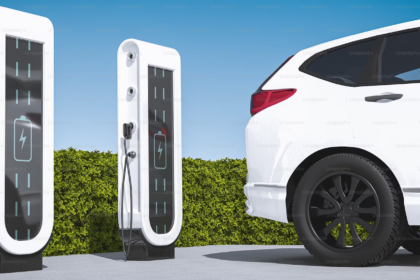
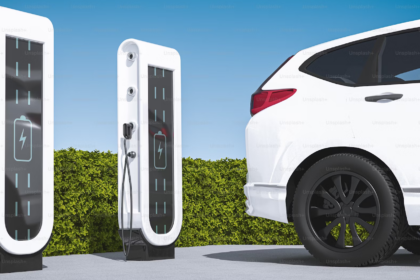
Charging infrastructure is another critical part of this debate.
The Conservative argument implicitly assumes that consumers should be free to choose whatever vehicle suits them.
But that choice is only meaningful if electric vehicles are supported by an adequate charging network.
The Government says there are now more than 120,000 public chargepoints and more than one million chargers in homes and workplaces. It has also announced £600 million of additional funding for charging infrastructure, on top of £400 million already being used to deliver more than 100,000 additional public chargers.
That investment requires confidence that demand for charging will continue to grow.
And this is where scrapping the ZEV Mandate could have consequences beyond vehicle sales.
Charging operators make investment decisions based on expected future utilisation. Building a rapid charging site is a long-term infrastructure investment. The economics depend on sufficient numbers of EVs using it.
The Government’s own original ZEV consultation recognised this relationship. Chargepoint and energy companies warned that excessive flexibility could reduce early EV sales and therefore undermine certainty for infrastructure investment.
That means the charging industry is unlikely to welcome wholesale abolition of the mandate.
It does not necessarily mean every charging company supports the existing targets.
Indeed, some infrastructure businesses may support reform if they believe unrealistic vehicle targets are damaging the wider transition.
But the industry’s overriding concern is likely to be certainty.
If manufacturers, fleets, consumers and infrastructure companies all believe the direction of travel can be reversed at relatively short notice, investment decisions become more difficult.
What will vehicle manufacturers think?
The likely response from manufacturers will be more complicated than simply supporting or opposing the Conservatives.
Many manufacturers have publicly argued that the current trajectory is too demanding.
The SMMT has called for the Government’s review to produce “meaningful change, not marginal adjustment”, saying that the assumptions underpinning the existing trajectory have not materialised.
That means manufacturers have legitimate reasons to welcome a rethink.
But scrapping the ZEV Mandate altogether is another matter.
Manufacturers have spent years planning product programmes, factories, supply chains and investment strategies around electrification.
The ZEV Mandate provides a predictable regulatory framework.
Removing it could make it easier for manufacturers to sell petrol, diesel and hybrid vehicles in the short term, but it would also make future demand for EVs harder to predict.
That could affect investment decisions.
The irony is that the Conservatives’ original argument for the mandate was precisely that long-term certainty would encourage investment.
The automotive industry is therefore unlikely to want Westminster to swing between intervention and deregulation every time the political balance changes.
What manufacturers are more likely to want is a credible, long-term framework with targets that reflect actual market conditions.
The fleet industry’s perspective
Fleet operators do not choose vehicles simply because a politician says they should be electric.
They choose vehicles based on whole-life cost, taxation, payload, range, charging availability, driver requirements, residual values and operational suitability.
That means the ZEV transition will ultimately succeed only if electric vehicles make commercial sense.
For company car fleets, the argument is increasingly straightforward. Benefit-in-kind taxation, salary sacrifice, running costs and the growing range of electric models have made EVs increasingly attractive.
For vans, the picture is more complicated.
A delivery van covering a predictable urban route and returning to base every evening can be an excellent candidate for electrification.
A van covering long distances, carrying heavy payloads and operating away from reliable charging infrastructure faces a different proposition.
This is why the current debate should arguably be less about whether the ZEV Mandate is “good” or “bad” and more about whether its targets are appropriately calibrated for different segments of the market.
Is Richard Holden right about consumer choice?
There is a legitimate point in Holden’s argument.
Consumers should not be forced into unsuitable vehicles.
If a household does not have access to home charging, regularly drives long distances or has particular towing requirements, an EV may not yet be the right choice.
The same principle applies to fleets.
But there is a distinction between consumer choice and manufacturer supply.
The ZEV Mandate does not directly prevent a consumer from buying a petrol or diesel car today.
It requires manufacturers to change the overall mix of vehicles they sell.
That is an important distinction.
Without intervention, manufacturers would naturally continue selling the products that generate the strongest combination of consumer demand and profit.
The purpose of the mandate is to change those incentives because the environmental cost of continuing to sell internal combustion vehicles is not reflected fully in the retail price.
The same logic has historically applied to vehicle emissions standards, fuel economy regulations and safety requirements.
The argument is therefore not simply “government versus consumer choice”.
It is a question of how government balances consumer choice, industrial policy, environmental objectives and the wider costs of vehicle emissions.
Are the Conservatives out of touch?
There is certainly a political argument that they risk appearing so.
If the Conservatives were arguing that the current ZEV trajectory needs changing, they would have substantial evidence on their side.
Manufacturers are complaining about compliance costs. Electric van sales remain well below their mandated trajectory. Charging infrastructure still needs investment. The SMMT itself has called for meaningful reform.
But calling for the entire mandate to be scrapped at the very moment EV sales are accelerating creates a different impression.
August’s 29.8% BEV market share is difficult to reconcile with an argument that Britain is simply being forced into technology it does not want.
Nor does the proposal acknowledge the international direction of the automotive industry.
Manufacturers are investing billions in electric platforms, batteries and software. China has established itself as a major EV manufacturing power. European manufacturers are electrifying their product ranges. Charging networks are expanding.
The UK cannot simply remove its own targets and assume the global automotive industry will stand still.
There is also the Conservative Party’s own record.
The ZEV Mandate was introduced by a Conservative Government. The party’s ministers described it as world-leading and argued that it would provide certainty for industry.
The current proposal therefore looks less like a considered rejection of the principle of a ZEV mandate and more like a response to the political pressures created by the transition.
That does not make the industry’s concerns illegitimate.
It does, however, make the proposed solution questionable.
What happens next?
The Richard Holden Bill faces a difficult parliamentary journey.
It is a private member’s Bill and has only completed its first reading. Parliament records its next stage as second reading, with committee, report, third reading and Lords stages still to come.
More importantly, the Government is already conducting its own review.
The consultation asks whether the current trajectory is appropriate, whether existing compliance flexibilities are effective and whether alternative approaches should be considered. Evidence from the review could lead to amendments to the VETS Order
That makes wholesale abolition less likely than reform.
The most realistic outcome is probably a revised ZEV Mandate rather than no mandate at all.
The Government could reduce some annual targets, extend flexibilities, adjust the compliance mechanism or provide greater support for sectors such as electric vans where adoption is lagging.
That would address many of the industry’s concerns without abandoning the long-term objective.
A better debate is needed
The danger for both sides is that the ZEV Mandate becomes another political culture war.
The Conservatives can point to manufacturers struggling with compliance, electric van sales missing their target and consumers who remain reluctant to switch.
Labour can point to rapidly increasing EV sales, lower running costs, expanding charging infrastructure and the need to decarbonise road transport.
Both have evidence.
But neither position on its own answers the practical question facing Britain’s fleets: what is the most effective way to move millions of vehicles towards zero emissions without damaging businesses or forcing operators into vehicles that do not work for their operations?
That is the debate the Government’s review should address.
The Conservatives are right that the current system has problems.
They are also right that consumer choice matters.
But scrapping the ZEV Mandate entirely risks throwing away the certainty that has helped drive investment in EVs, charging infrastructure and new vehicle technology.
Equally, the Government would be wrong to ignore the industry’s concerns simply because EV sales are increasing.
The answer is likely to be somewhere between the two positions: retain a clear long-term direction towards zero-emission transport, but make the route sufficiently flexible to reflect market reality.
The future of fleet electrification will not ultimately be decided by Richard Holden, the Labour Government or the ZEV Mandate.
It will be decided by whether electric cars and vans become the most practical, affordable and commercially attractive option for the people and businesses that use them.
The latest sales figures suggest that, for passenger cars at least, that process is already well under way.
The political question is whether Westminster can provide enough certainty to keep it moving without moving faster than the market can realistically support.


2 comments
A very interesting and detailed article. However, you appear to have missed that the underlying legislation is devolved and would require each legislature to pass amending legislation following the review. Given the minority governments elsewhere in the UK, and earlier Net Zero ambitions of those nations, the omission of the legislative process of the review is not addressed.
Thank you Dave. The devolution aspect is one that I considered, but I wanted to remain close to the central thesis of what the Conservative party is advocating, rather than how that policy could be implemented if passed.
Also, I felt that I had rambled on long enough! I’m glad you did find the article interesting.
Thanks for the support. Mark
Comments are closed on this article.