
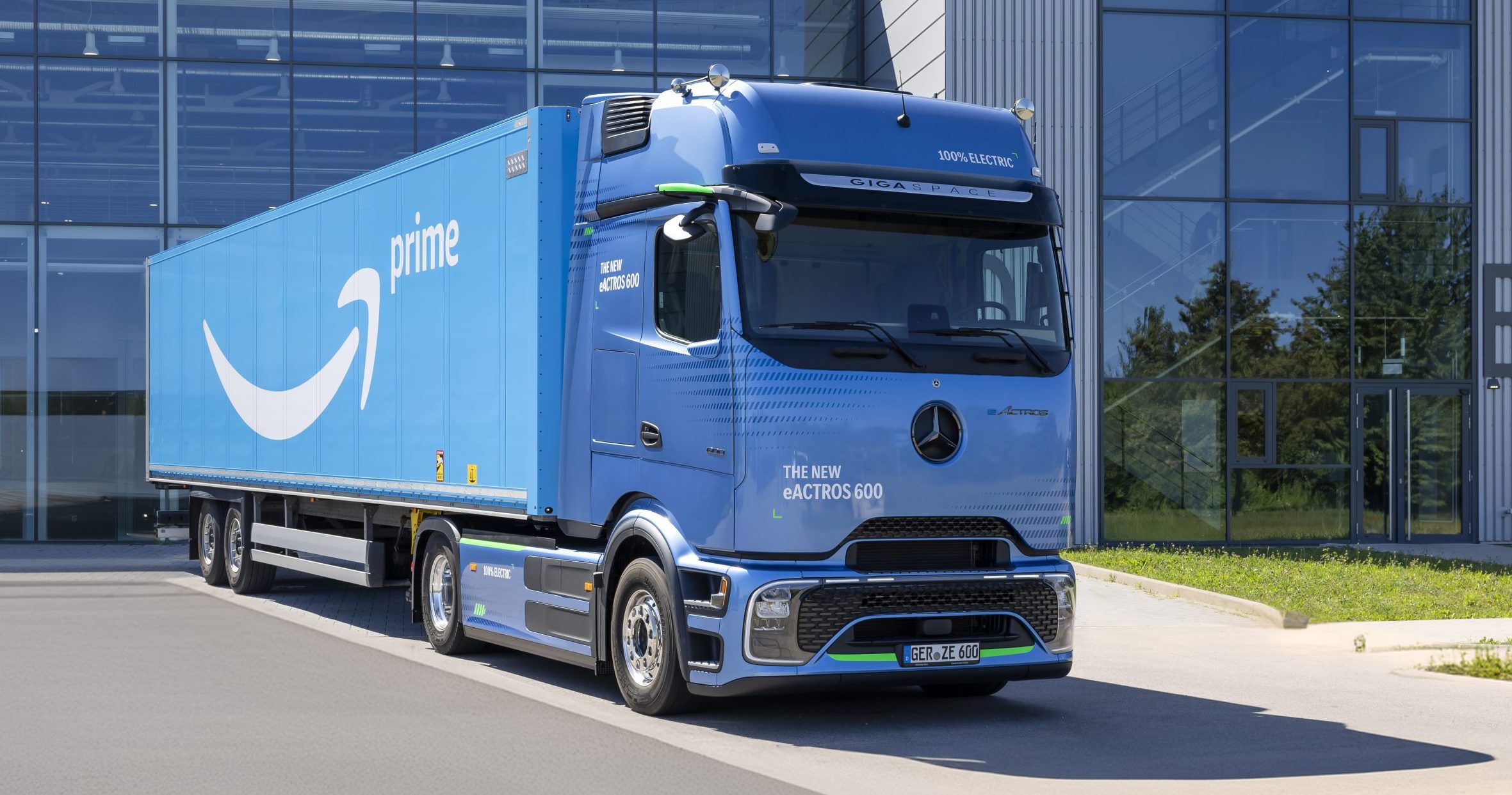
The UK Government has announced an additional £18 million of funding to the Department for Transport’s (DfT) Plug-in Truck Grant, enhancing support for hauliers and fleet operators transitioning to electric heavy goods vehicles (HGVs). The move, confirmed on 6 January 2026, is designed to cut the upfront cost of new electric lorries by up to £120,000, reduce emissions and help deliver long-term economic growth in the logistics sector.
This latest investment forms part of a wider £318 million “green freight” plan, aimed at accelerating the uptake of zero emission commercial vehicles while boosting jobs and investment across the UK economy.
Image: GOV
Electric trucks typically cost considerably more to buy than diesel equivalents, even though they can offer lower daily operating costs once on the road. The additional £18 million for the Plug-in Truck Grant will help bridge this gap for businesses by increasing the level of subsidy available until March 2026.
Under the refreshed grant structure:
- Smaller electric trucks (4.25–12 tonnes) could save up to £20,000.
- Mid-sized trucks (12–18 tonnes) up to £60,000.
- Larger trucks (18–26 tonnes) up to £80,000.
- Largest HGVs (26 tonnes and above) up to £120,000
For many operators, this level of support significantly improves the business case for electrification, making zero emission trucks more affordable and financially viable.
Transport Minister Keir Mather highlighted the strategic importance of the additional funding, saying: “We’re backing British businesses to go green by making electric lorries more affordable, helping hauliers to make the switch whilst turbo-charging growth, investment and jobs in the sector. Our proposals will provide the certainty the industry has been calling for so that Britain becomes the best place for green investment.”
The investment aligns with broader government commitments to reduce transport emissions and stimulate sustainable economic growth. Alongside the grant boost, the DfT has launched a consultation on a roadmap to phase out new non-zero emission HGVs by 2040, a regulatory shift intended to give the industry greater clarity and long-term planning certainty.
The logistics sector has broadly welcomed the announcement. Amazon UK’s country manager, John Boumphrey, emphasised the value of ongoing government support, noting: “Amazon welcomes the government’s continued commitment to supporting the electrification of commercial fleets. The UK will be home to the largest number of electric heavy goods trucks in Amazon’s global transportation network and the first of our record-breaking order of eHGVs are already on the road.”
Head of Decarbonisation Policy at business group Logistics UK, Lamech Solomon commented about the scheme’s potential impact: “The Plug-in Truck Grant is fundamental to the continued uptake of electric HGVs, and today’s announcement increasing the grant for electric HGVs up to £120,000 per vehicle is a welcome step forward that can help support the business case for industry to invest. However, with long procurement cycles, the sector needs certainty that these new rates will be maintained far beyond March 2026, so it has confidence to plan and invest: our recently published report highlighted that over 60% of industry respondents believed the government had not provided adequate funding to support the decarbonisation of their fleets.
“Commercial and operational viability will always be the main driver for logistics operators and alongside the cost of buying new vehicles, one of the main barriers they still face to fleet electrification is the lack of charging infrastructure: 85% of operators who responded to Logistics UK’s recent survey expressed low confidence in the availability of suitable public charging and more than 80% disagree they can install chargers with sufficient capacity at their operating sites. The logistics sector is committed to decarbonising but needs the government to provide sufficient support to make this transition a realistic possibility for industry.
“These are the factors that need to be considered during the consultation, also announced today, regarding the regulatory roadmap to phase out sales of new, non-zero emission HGVs. The voice of industry must be heard and government should work with our sector to create a viable pathway to decarbonisation that includes all viable technology routes, ensuring the goods that businesses and consumers across the country rely on, continue to move smoothly through the UK supply chains.”
Major retailers like Marks & Spencer are also rolling out electric trucks, supported through related programmes such as the Zero Emission HGV and Infrastructure Demonstrator (ZEHID), which has helped deploy nearly 300 zero emission HGVs by March 2026.
Industry bodies have also underscored the importance of financial incentives in encouraging HGV electrification. The Road Haulage Association and fleet operators have previously called for stable and enhanced grant support, particularly as commercial vehicles remain more expensive than their diesel equivalents.
The UK logistics sector — employing over 1.2 million people and supporting the wider economy — faces mounting pressure to decarbonise. Government incentives such as the Plug-in Truck Grant are crucial to lowering adoption barriers for zero emission trucks and helping businesses manage upfront costs.
Aside from cost reductions, electric HGVs offer benefits such as lower fuel costs, reduced maintenance and improved air quality, which can be significant for urban freight operations. While infrastructure challenges (such as depot charging) remain, complementary schemes like the Depot Charging Scheme offer further support for fleets installing chargepoints.
With this enhanced funding in place through March 2026, fleets have a clearer pathway to electrification. The consultation on the 2040 phase-out of non-zero emission HGVs is expected to shape future policy and may influence investment decisions across the logistics ecosystem.
The success of the Plug-in Truck Grant, alongside other government initiatives aimed at reducing transport emissions, will be closely watched by industry and policymakers alike as the UK seeks to balance economic growth with climate commitments into the next decade.