
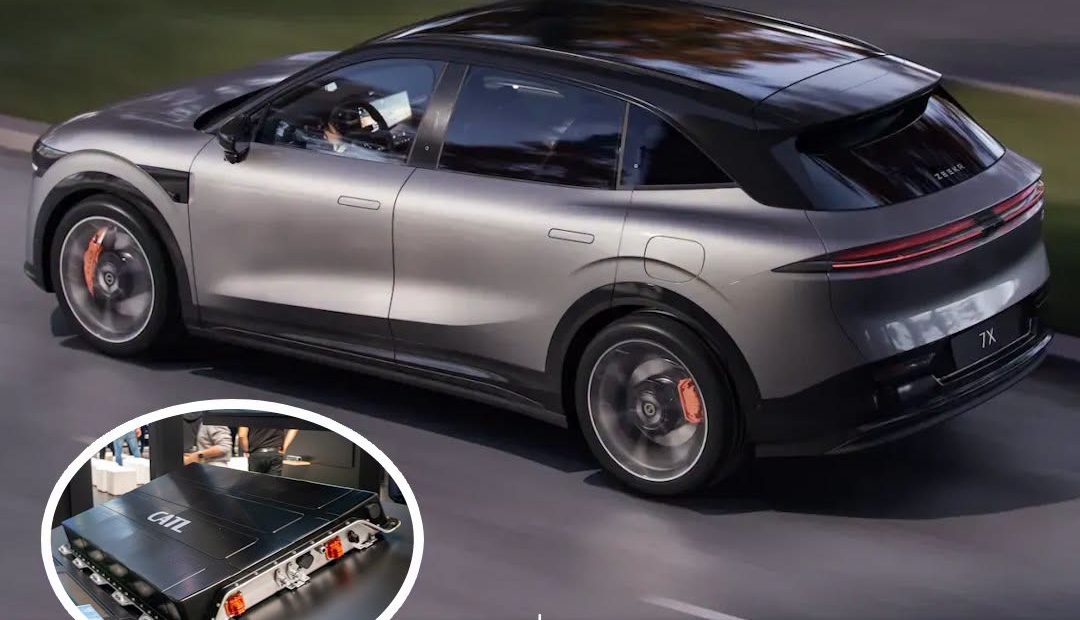
Lithium-Air Battery: could the 2,000 km car become a reality
Range, payload and charging time still shape every electric fleet decision. That explains the growing interest in lithium-air battery technology. Researchers call these cells “breathing” batteries because they draw oxygen from the air. In theory, they could store several times more energy than today’s lithium-ion packs. CATL has publicly backed the chemistry as its long-term strategic direction, and laboratories in the United States, Japan and the UK continue to push the science forward. Here is what you need to know.
What Is Lithium-Air Battery Technology?
A lithium-air battery uses lithium metal as the anode and takes oxygen from the surrounding air as the cathode reactant. It is also known as a lithium-oxygen battery. During discharge, lithium ions travel through an electrolyte and react with that oxygen. Charging reverses the process. Because the cell uses air instead of a heavy cathode material, it weighs far less than a conventional battery.
The theoretical numbers explain the excitement. CATL puts the chemistry’s potential at up to 12,000 Wh/kg, close to petrol, while mainstream lithium-ion cells manage roughly 250 to 270 Wh/kg. Even a fraction of the theoretical figure would change how much energy a vehicle can carry.
The idea itself is not new. Researchers first explored it in the 1970s, and IBM launched its Battery 500 project in 2009, aiming to power an electric car for 500 miles. Progress stalled because the chemistry is difficult. Lithium reacts badly with moisture and carbon dioxide in ordinary air, and unwanted by-products clog the cathode. Cells also tended to fail after only a few charge cycles.
Who Is Leading Lithium-Air Battery Research?
No single organisation owns this field, and each group tackles a different obstacle. In China, CATL, the world’s largest battery maker, named lithium-air as a long-term direction at its 2026 Powering the Nation Forum. Chief scientist Wu Kai placed it after sodium-ion and solid-state batteries on the company roadmap. CATL has not announced a 2,000 km production-car target or a launch schedule, so those range figures remain theoretical.
In the United States, researchers from the University of Illinois Chicago and Argonne National Laboratory made a notable advance in 2018. Their cell ran in a realistic air atmosphere and kept working after 700 cycles. “Our lithium-air battery design represents a revolution in the battery community,” said Amin Salehi-Khojin of UIC. In 2023, Illinois Institute of Technology and Argonne scientists built a solid-state version that recharged for at least 1,000 cycles at room temperature. Argonne’s Larry Curtiss expects the design to reach 1,200 Wh/kg with further development, although the team has not yet demonstrated that figure.
Japan’s National Institute for Materials Science, working with SoftBank, built a cell above 500 Wh/kg that charges and discharges at room temperature. In the UK, Professor Clare Grey’s team at the University of Cambridge showed in 2015 that a lithium-oxygen cell could exceed 90% efficiency. That laboratory cell recharged more than 2,000 times, although it only worked in pure oxygen. Grey admits the battery’s high theoretical capacity is “very difficult to achieve” in practice.
How Does Lithium-Air Differ From Lithium-Ion?
The biggest difference is weight. Many lithium-ion cells store lithium inside heavy compounds of nickel, manganese and cobalt. A lithium-air cell swaps that cathode for oxygen from the air, so the battery carries far less dead weight. A lighter pack can deliver the same range with less mass, or much more range at the same mass.
Other chemistries offer different trade-offs. CATL expects small-scale solid-state production from 2027, and solid-state cells target around 500 Wh/kg with better safety. Lithium-sulphur sits between lithium-ion and lithium-air on theoretical energy density. Iron-air batteries suit grid storage, where weight matters less. Lithium-air offers the highest ceiling of the group, but it also faces the longest road to market.
Lithium-air also operates as an open system, which brings demands that lithium-ion never faces. The cell needs clean air, because carbon dioxide and moisture damage the lithium. Engineers must also manage air flow, efficiency, power output and durability before the cells suit commercial vehicles. Safety matters too. Lithium metal can grow spindly fibres called dendrites, which risk short-circuiting a cell. Solid electrolytes, like the one Argonne tested, also reduce fire risk.
What Could Lithium-Air Mean for Fleets?
For fleet managers, the appeal is clear. Higher energy density could extend range, shrink battery weight and protect payload on vans and lorries. Fewer charging stops would also cut downtime and ease pressure on depot power supplies. Argonne researchers say the technology could eventually power trucks, boats and aircraft as well as cars.
When Could Lithium-Air Batteries Arrive?
Patience is essential, though. Today’s cells exist only in laboratories, and commercial vehicles need thousands of reliable cycles. Recent headlines have revived claims of 2,000 km ranges, yet CATL has not demonstrated such a vehicle. Most estimates place any commercial use after 2030. Fleets should keep planning around lithium-ion, sodium-ion and solid-state options, while watching lithium-air progress closely. Fleetpoint will keep tracking each breakthrough as it emerges.