
Driverless cars depend on an invisible network to succeed
Not long ago, robotaxis were a handful of test cars with a safety driver ready to take over. Now, they’re carrying hundreds of thousands of passengers a week. San Francisco, Phoenix and Los Angeles all have driverless cars picking up paying passengers as a matter of routine. Much of the media attention has focused on the sensors and the AI that let the car drive itself. That’s understandable. They’re the two things most people already associate with self-driving cars.

Marco Bijvelds
However, in this article, Marco Bijvelds, Vice President and Global Head of Tata Communications MOVE™ discussed the background systems required to keep driverless cars running.
But running a robotaxi service also means running a fleet, a dispatch system, a remote support team. An app that has to work every time someone taps “request ride.” All of it depends on an infrastructure layer most people never think about, until it fails.
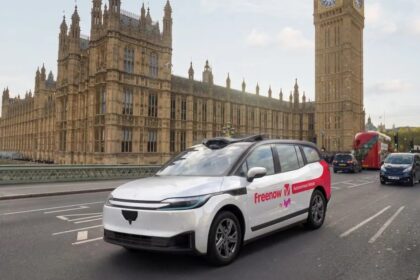
That layer enables the 24/7 connectivity these services rely on. It gets far less attention, yet it will be the determining factor whether these services can scale into something passengers trust. This includes in London, where Waymo’s driverless cars are already being tested, with a public launch potentially coming as early as September.
Where the network fails
The car can drive perfectly, but the passenger can still get stranded. Maybe dispatch can’t reach the vehicle. Maybe remote support can’t step in when something unexpected happens. Maybe the app won’t confirm the ride. The passenger sees a failure, even though the driving system performed exactly as it should. It’s the network underneath it that’s given way.
This isn’t unique to robotaxis. The same network challenges already exist across connected commercial fleets. Over-the-air software updates, remote diagnostics and AI-assisted routing all depend on resilient, low-latency connections, as do increasingly automated vehicles. Robotaxis bring these challenges into sharper focus since there’s no driver to compensate when that connection fails.
This is where conventional mobile connectivity starts to show its limits. Every time dispatch needs to reach a vehicle or remote support needs to step in, that’s a stream of data moving in real-time. Traditional infrastructure wasn’t built to carry it at the volume and speed AI now demands.
Scale a fleet from a handful of test vehicles to a full public rollout, and the infrastructure that couldn’t keep up becomes an operational risk. One dead zone. One overloaded cell tower at rush hour. Suddenly, a fleet that looked flawless in testing is generating delays, support requests and frustrated passengers.
Why a single network is a fragile bet for AI
What seems like the obvious answer is to pick one good mobile network and build on it. But no single network, however good, covers everywhere a robotaxi fleet needs to run, all the time. Coverage gaps, congestion and outages happen everywhere, for every operator.

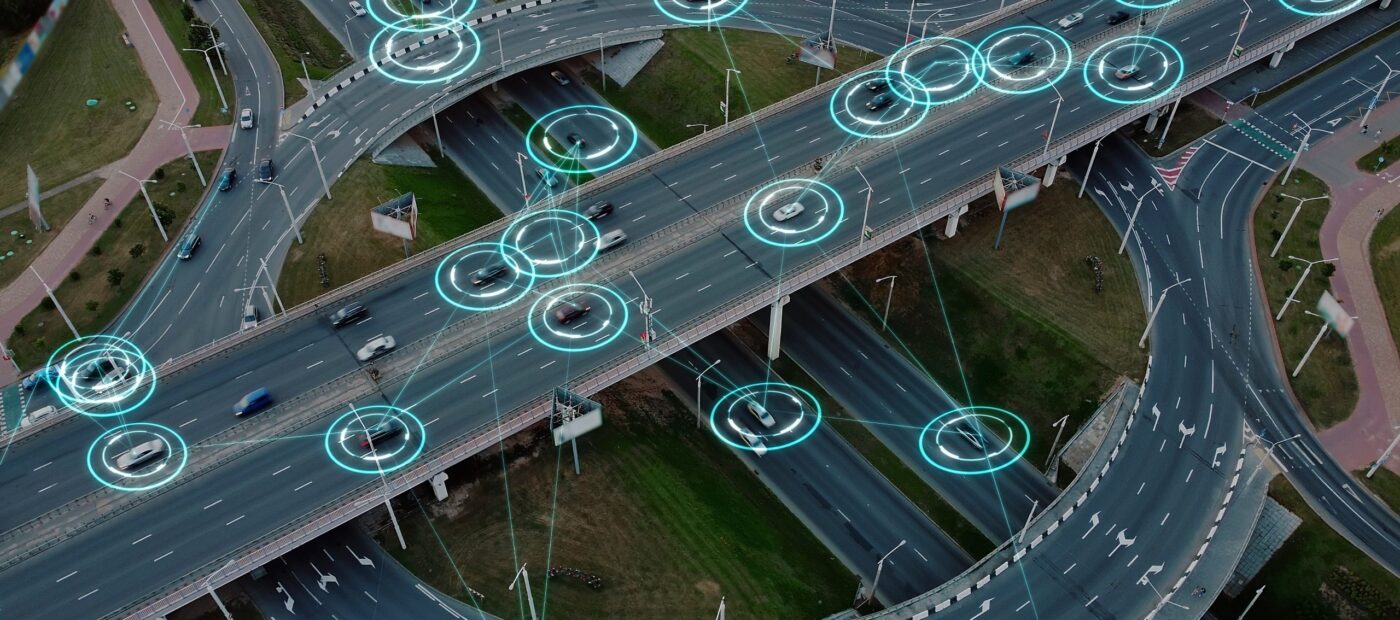
Image: Shutterstock 1781926982 – all rights reserved by Tata Communications.
To overcome this, fleets require multi-network orchestration. That means dynamically selecting and managing connectivity across multiple networks, based on coverage, performance and service requirements as they change.
While fully autonomous fleets are still emerging, today’s connected vehicle programmes already illustrate the scale of the connectivity challenge. As vehicles become increasingly software-defined, manufacturers are also adopting architectures that allow vehicles to switch seamlessly between mobile network operators, the same principle behind multi-network orchestration, helping maintain continuous connectivity as they move between coverage areas. Autonomous fleets will only increase the importance of that resilience.
Managing that scale, without it breaking down across clouds, vendors and legacy systems, needs an active network orchestration behind the scenes. That orchestration also determines where workloads are processed – on the vehicle, at the edge or in the cloud – based on the latency, availability and cost requirements of the application, as conditions change.
Keeping the connection alive is only part of the picture. To cut the latency that real-time AI decisions need, processing also has to happen closer to the vehicle, not in a distant data centre. Sending every interaction back to a central cloud can introduce delays that matter when vehicles need rapid updates or remote intervention.
5G alone doesn’t solve this
It’s tempting to assume 5G solves the connectivity challenge outright. In reality, it’s an important part of the solution, but it isn’t enough on its own. While it offers high speeds and low latency, coverage can still vary depending on location and network conditions.
Resilience means more than staying connected. It’s whether the network holds steady, performs predictably and can catch its own decline before it affects the service. AI is increasingly part of that answer, helping monitor network conditions in real time and step in before a weak signal becomes a failed ride.
That means combining multiple layers of connectivity, coordinated together rather than relied on individually. 5G where it’s available, 4G and even 3G as a fallback. And satellite to cover the gaps terrestrial networks can’t reach. The ability to orchestrate across networks and technologies according to the application requirements, is what keeps an AI-driven fleet online when any single technology drops out. It’s a less glamorous story than 5G on its own, but it’s the version that keeps a fleet running when it matters most.
Interoperability, security and visibility
None of this works as a one-off build. At scale, fleets need interoperability across different vehicle platforms, mobile networks, cloud environments and technology providers. Otherwise, every new market or region risks requiring a bespoke integration.
The goal is to identify problems before passengers do. That means real-time security monitoring of both the vehicle and the cloud services & systems behind it. And observability that turns monitoring into visibility that helps spot and predict degradation before it becomes a fleet or passenger issue. All of this must work within the regulatory requirements that come with operating at scale.
What it takes to scale reliably
AI is turning the last mile, the final link between connected vehicles and the wider digital ecosystem, from a passive connection into an intelligent, orchestrated infrastructure layer spanning the vehicle, network, edge and cloud. It can make decisions about which network to use, where to process a request and when to intervene before a passenger notices something is wrong.
That becomes increasingly important as autonomous vehicle operators move from trials to public launches. Safety, regulation and public trust will rightly dominate the conversation, but the infrastructure underneath the service will also determine whether it can perform reliably at scale. Operators who treat multi-network orchestration, edge processing, security and observability as core infrastructure, from day one, will be better placed to build a service that passengers can rely on.