
Lidl and Einride put Germany’s first cab-less electric truck on public roads
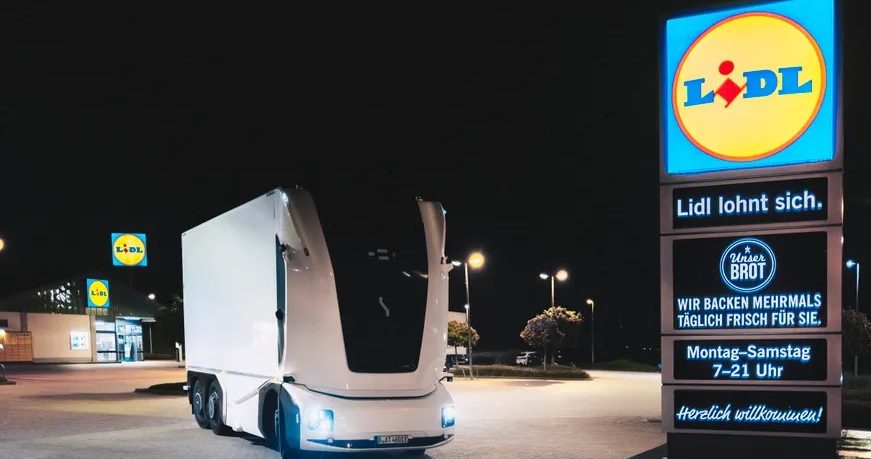
Lidl and autonomous freight technology company Einride have deployed Germany’s first cab-less electric truck with SAE Level 4 autonomous driving capability on public roads, marking a significant step towards driverless commercial freight operations in Europe.
The vehicle is operating in daily logistics operations in Edermünde, near Kassel in Hesse, transporting goods from Lidl’s local administration and distribution centre directly to a nearby Lidl supermarket. The deployment is being carried out under an official permit from Germany’s Federal Motor Transport Authority, the Kraftfahrt-Bundesamt (KBA), which Lidl and Einride describe as the first authorisation of its kind granted in Germany.
Unlike many autonomous vehicle trials, the truck is not operating solely as a technology demonstrator. It is being used to move real retail freight as part of Lidl’s operational logistics network, with no driver or safety operator on board.
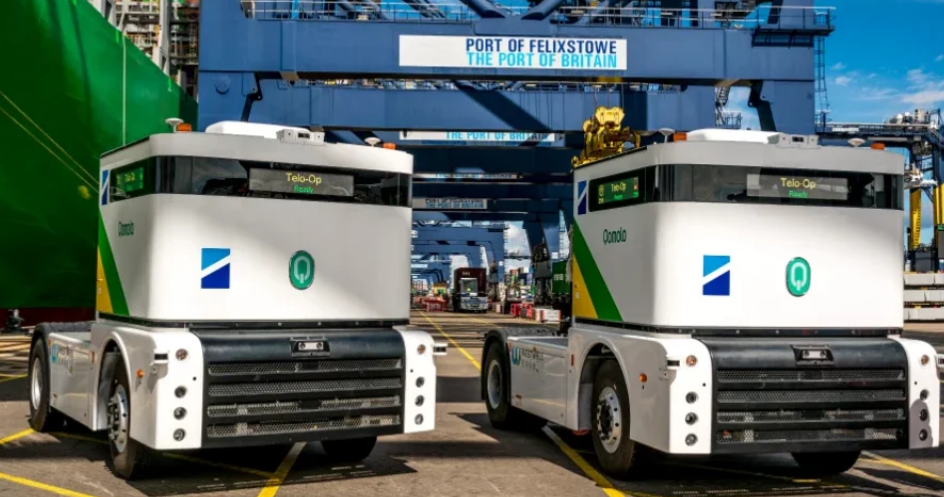
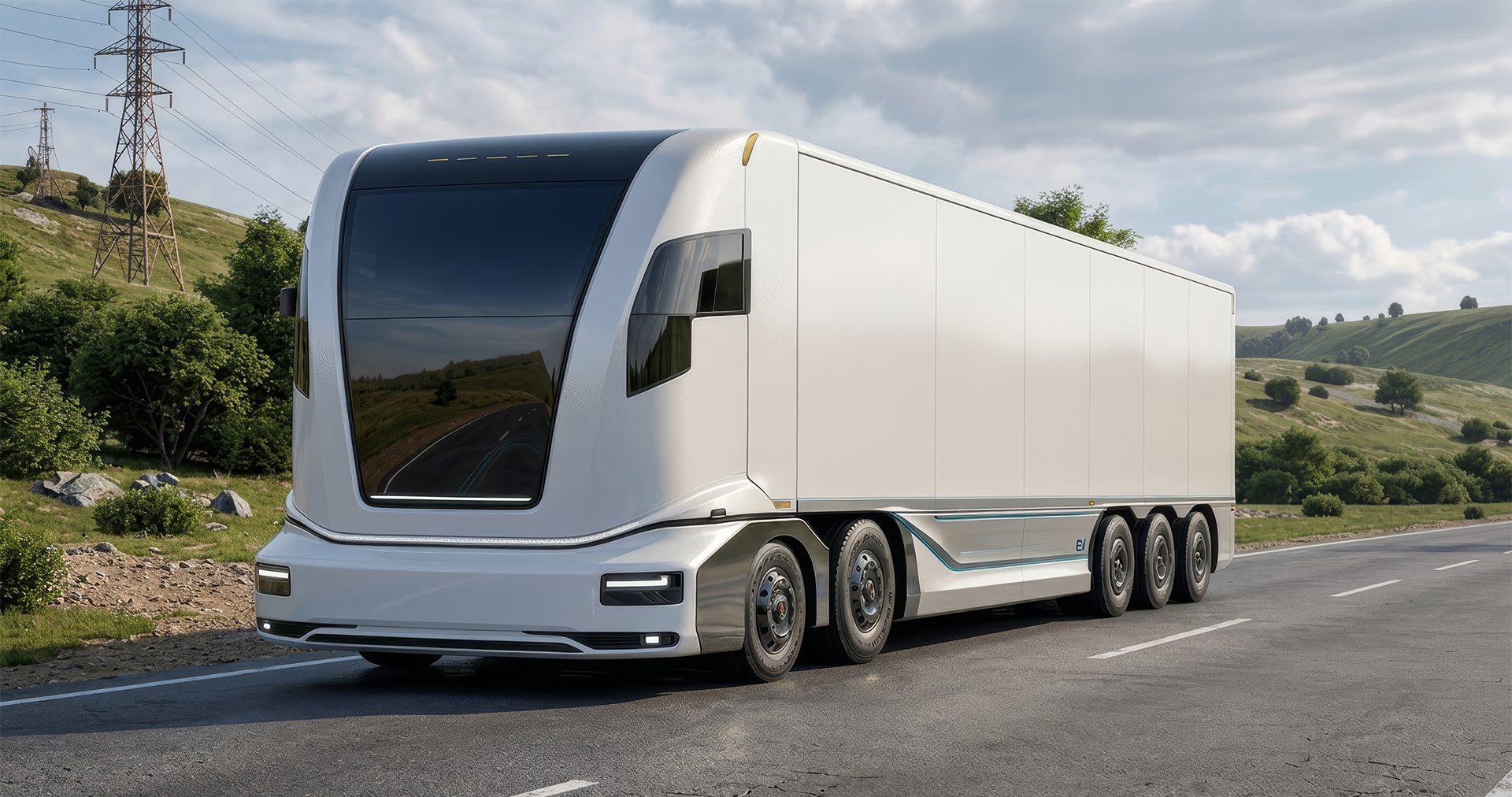
The deployment also differs from conventional autonomous truck designs because the Einride vehicle has no cab. Its purpose-built architecture removes the traditional driver’s position entirely, allowing the vehicle to be designed around its freight and autonomous operating systems rather than around a human driver.
Level 4 autonomy enters German retail logistics
The truck operates at SAE Level 4, meaning that it can perform the complete driving task without human intervention within a defined and approved operating environment. Unlike Level 2 or Level 3 systems, a driver is not required to remain ready to take control while the autonomous system is operating within its approved conditions.
Level 4 does not mean that the vehicle can operate anywhere and in all circumstances. Germany’s legal framework requires autonomous vehicles to operate within a specifically defined and approved operating area. The vehicle must also be capable of recognising system limits or problems and moving itself into a safe, or “risk-minimal”, state when necessary.
German legislation also provides for technical supervision of autonomous vehicles. This is distinct from having a safety driver physically sitting in the vehicle, and the Edermünde deployment has no driver or safety operator on board.
The regulatory framework is one reason the KBA authorisation is significant. German law requires both approval of the autonomous vehicle and authorisation of its defined operating area, with requirements covering the vehicle’s technical capabilities, infrastructure and safety arrangements.
Einride and Lidl said the KBA approval followed an extensive safety validation process designed to establish that the technology could operate reliably under real-world road conditions.
Lidl puts autonomous technology into everyday operations
For Lidl, the project is designed to examine how autonomous electric transport can be incorporated into an established retail distribution network rather than simply demonstrate the technology.
The initial vehicle has space for 15 Euro pallets and can make up to three journeys a day. During the four-month project period, Lidl expects the truck to move more than 3,000 pallets, giving the companies a substantial volume of real-world operational data.
Thomas Dangelmayer, Head of Operational Logistics at Lidl Germany, said the project is focused on using technology to support the retailer’s supply chain and product availability.
“Intelligence creates efficiency, and that is the backbone for permanently reliable product availability. We ensure that the products for our customers are always at the right place, at the right time, and in the right quality. With this innovative project, we are testing a technological milestone step by step and safely in real-world operations to examine how future-proof solutions can be optimally integrated into our site logistics.”
The initial route is deliberately controlled, linking a distribution centre with a nearby supermarket. If the project proves successful, Lidl and Einride plan to develop the operation into a multi-stop “milkrun” model, allowing a single autonomous vehicle to serve several locations on a scheduled route.
Further autonomous deployments involving companies across Schwarz Group are also under discussion.
Tackling driver shortages and supply chain resilience
The project comes as fleet operators and logistics companies across Europe continue to face challenges around driver availability, operating costs and the need to maintain reliable deliveries.
For a retailer such as Lidl, autonomous transport could eventually provide another option for predictable, repetitive freight movements between distribution centres and stores. Fixed routes and highly structured logistics operations are particularly suited to autonomous technology because the operating environment can be defined and validated more precisely than for unrestricted long-distance transport.
The combination of autonomy and electrification also gives the project a second dimension. The vehicle is not simply intended to remove the driver from the cab; it forms part of a wider move towards lower-emission and increasingly automated freight operations.
Einride CEO Roozbeh Charli said Germany represents an important market for the company and that the regulatory approval provides a platform from which autonomous freight operations can potentially expand.
“Einride is already running real autonomous deliveries, with real volumes on real schedules with customers in the US and Europe. Germany is one of Einride’s key markets and we’re excited to now bring this technology to public roads in Europe’s largest road transport market, and to prove its value together with Lidl and the broader ecosystem of Schwarz Group. Germany’s approval process is among the toughest in the world, and obtaining clearance there gives us a foundation to scale with confidence.”
From autonomous truck trials to commercial operations
Einride has been developing cab-less autonomous electric trucks for several years, but the Lidl project represents an important transition from demonstrations and controlled trials towards regular commercial logistics operations on public roads.
The company previously demonstrated cab-less electric truck technology in Sweden, while autonomous freight projects have also been developed in the US and other markets. The German deployment provides a new test of the technology under one of Europe’s most closely regulated road transport environments.
Lidl’s network provides a substantial potential operating environment if the technology can be successfully validated. The retailer has 39 administrative and distribution centres and more than 3,250 stores in Germany, creating a large network of repetitive freight movements that could potentially support future autonomous applications.
However, the Edermünde deployment remains tightly defined. The Level 4 system is authorised only within its approved operating domain, meaning the project should not be viewed as equivalent to a truck capable of autonomous driving anywhere on public roads.
For the fleet and logistics sector, the significance lies in the move from what autonomous trucks might eventually do to what they can now do in a live commercial operation. Lidl and Einride are using an electric, cab-less vehicle to perform scheduled supermarket deliveries without a driver on board, under a German regulatory approval that is the first of its kind.
If the Edermünde operation successfully demonstrates reliable performance, the planned move towards multi-stop deliveries could provide a further indication of how autonomous electric trucks might be integrated into mainstream retail and distribution networks.
For Germany’s road freight industry, the project therefore represents more than a technology showcase. It is an early real-world test of how autonomous, zero-emission freight vehicles could become part of everyday fleet operations.