
Tesla European Semi electric truck set for IAA Hannover reveal
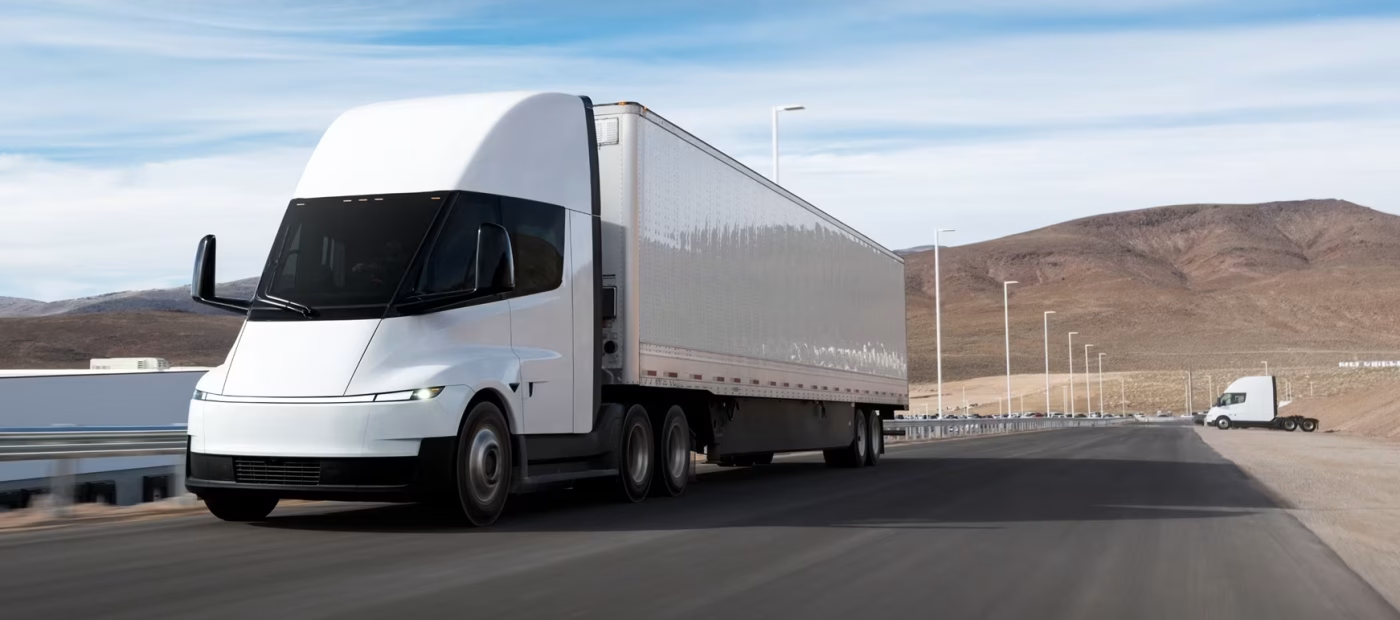
Tesla is finally preparing to bring its long-delayed Semi electric truck to Europe, with the company confirming that the European version will be officially unveiled at IAA Transportation in Hannover in September.
The announcement marks a significant step for Tesla, which first revealed the Semi in 2017 and originally planned to begin production in 2019. Series production of the truck finally began in Nevada in April 2026, with the company now turning its attention to the European commercial vehicle market.
Tesla’s official Semi account announced that “specs & launch details for Semi in Europe” will be unveiled at IAA Transportation in Hannover. The show takes place from 15 to 20 September 2026, with a Semi confirmed for display.
For fleet operators, the European launch could be particularly significant because Tesla is entering a market already moving towards electric long-haul trucks, with established manufacturers including Mercedes-Benz, Volvo Trucks, Scania and MAN offering battery-electric alternatives.
Tesla Semi range and charging
Tesla currently lists two Semi versions for the North American market. The Standard Range has an estimated range of 325 miles, equivalent to around 523 kilometres, while the Long Range version is rated at up to 500 miles, or approximately 805 kilometres. Both use three independent electric motors and offer up to 800kW of drive power.
Tesla’s Canadian specification page provides a useful indication of how the truck may be presented in metric markets. It lists the Standard Range at 500km and the Long Range at 750km, both at a 40-tonne gross combination weight. Energy consumption is quoted at 1.1kWh/km.
The precise European range figures should therefore be treated as unconfirmed until the Hannover reveal. Tesla’s UK website currently lists a range of approximately 550km for its Semi specification, suggesting that European-market specifications may differ from the US truck.
Charging is potentially one of the Semi’s strongest advantages. Tesla says its Megacharger can deliver up to 1.2MW and recover up to 60% of the truck’s range in 30 minutes. The truck uses the MCS 3.2 charging standard, which is increasingly becoming the basis for high-power electric truck charging in Europe.
Central driving position and cameras
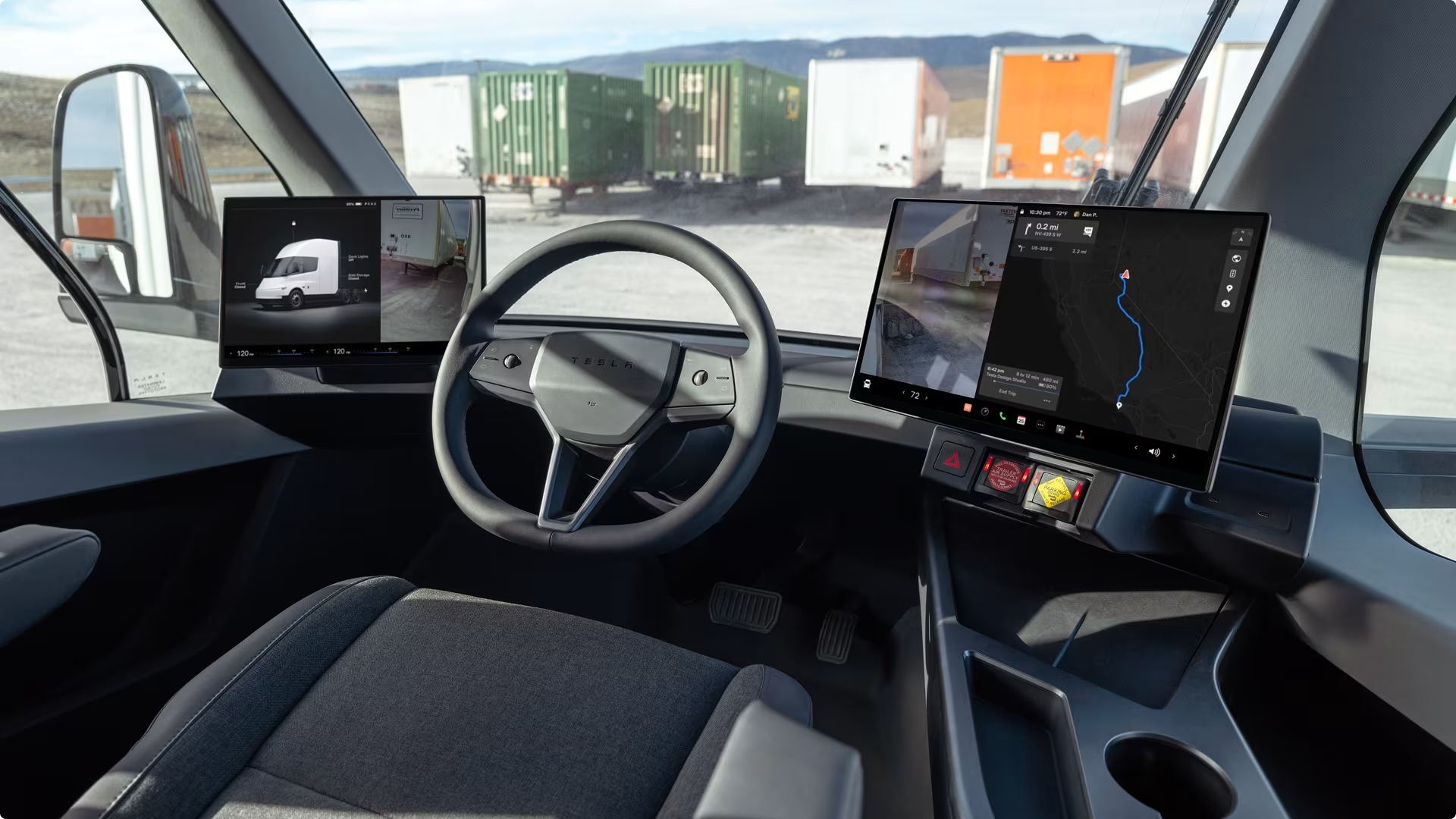
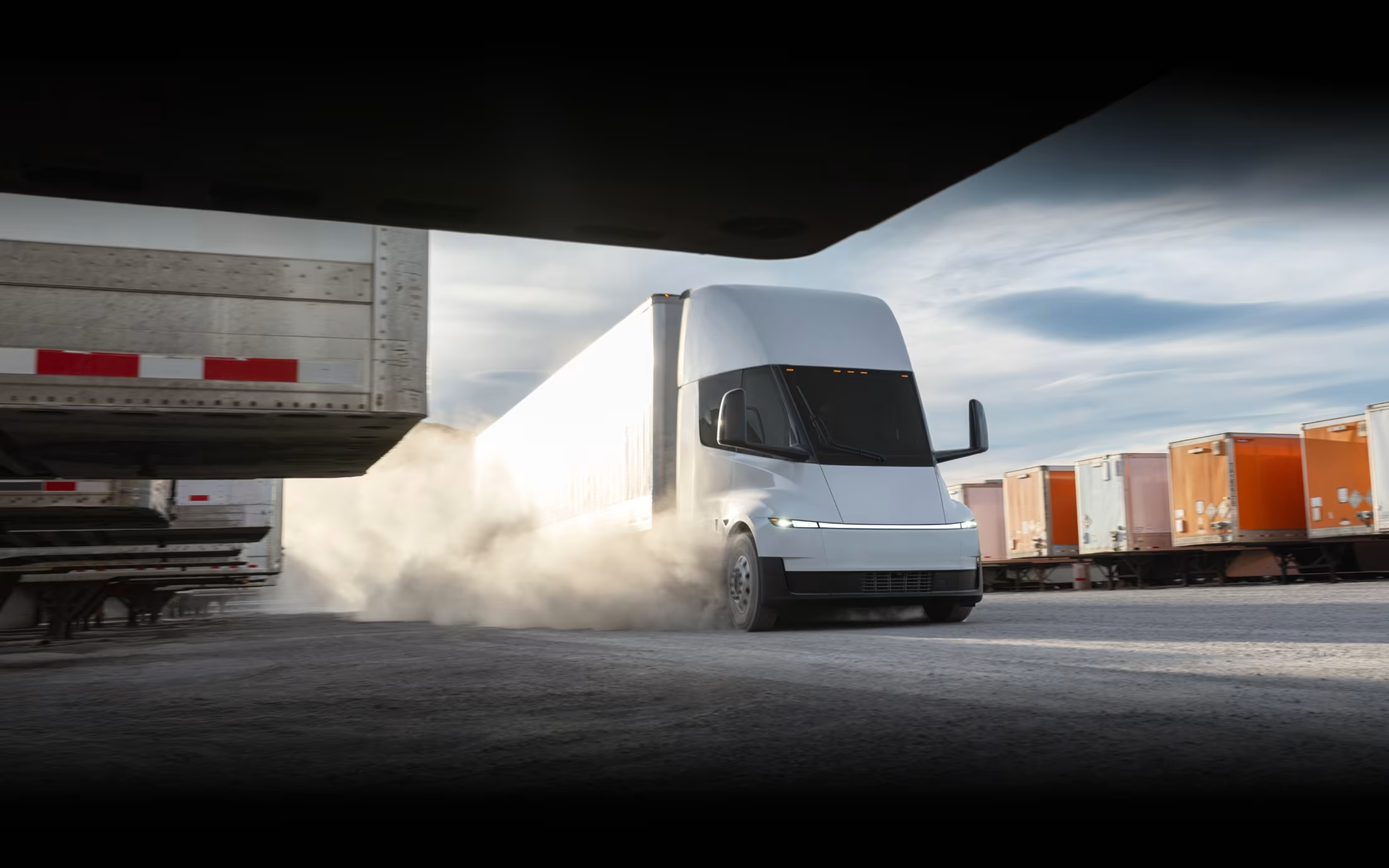
The Semi’s most obvious departure from conventional European trucks is its central driving position. Tesla says this improves visibility and makes getting into and out of the cab easier and safer. The layout also gives the driver a more symmetrical view of the road, while the cab is designed around comfort, with sufficient headroom to stand and a heated or ventilated seat.
The truck is equipped with multiple cameras and active safety systems, working alongside its electric motor and braking controls to provide traction and stability assistance. Tesla says the central seating position improves visibility and that its electric architecture can also reduce the risk of rollover and cabin intrusion in a collision.
The camera-based approach is also important for fleet management. Tesla’s business platform allows operators to monitor vehicles remotely, including location, charge status, tyre pressure and energy consumption. Over-the-air software updates mean that improvements can be delivered without a conventional workshop visit.
Remote diagnostics could be particularly valuable to commercial operators. Tesla says its Semi service operation will combine remote diagnostics, Mobile Service and dedicated Service Centres, with remote diagnosis potentially identifying problems before a vehicle arrives for repair.
Will the European Tesla Semi be different?
This is one of the biggest questions Tesla is expected to answer in Hannover.
The US Semi has been designed around the dimensions and operating requirements of North American Class 8 trucks, while European tractor units generally use a more compact cab-over configuration because of different vehicle dimension rules. A Tesla prototype shown previously was reported to have been adapted for European requirements, including a shorter design and compatibility with European trailer couplers. That version was reported to have a range of around 300 miles (480km).
However, Tesla has not yet released the definitive European specification. The company is explicitly promising to reveal the European specifications and launch details at IAA, so it would be premature to assume that the European truck will simply be a re-badged US model.
The European version will need to comply with EU requirements covering dimensions, weights, safety systems and other technical standards. The design may therefore differ in areas such as cab dimensions, bodywork, mirrors or camera systems, trailer connections and permitted gross combination weight.
Tesla’s Canadian specification already points towards a 40-tonne European-style operating configuration, although the final UK and EU specifications remain to be confirmed.
A significant moment for electric fleets
Tesla’s arrival is also becoming more credible commercially. Swedish freight technology company Einride has announced an agreement for 500 Tesla Semis, with initial deployments expected from September 2026.
That gives Tesla an important early fleet customer as it attempts to establish the Semi in a European market where range, charging infrastructure, payload and total cost of ownership will be critical.
The Hannover reveal should therefore provide much more than another demonstration of Tesla’s distinctive electric truck. Fleet operators will be looking for confirmed European range, payload and weight figures, pricing, charging requirements, delivery dates and, crucially, details of how extensively the Semi has been adapted for European roads.
After almost a decade of development, the IAA reveal could finally establish whether Tesla’s Semi is ready to become a serious contender in Europe’s rapidly developing zero-emission heavy truck market.