
Using data to stop fleet risk before it becomes an accident
Safety has a critical impact on fleet operations. When an incident happens, operators need to understand what happened, establish who was responsible and, where appropriate, protect drivers from being held accountable when something was not their fault. Video can play an important role here, providing evidence that can support investigations and driver exoneration.

But the value of video and telematics data extends beyond what happens after an incident. The same information can help fleets identify risky behaviours and recurring patterns before they contribute to a collision. David Brazell, Head of Strategic Partnerships EMEA, LightMetrics, looks at how accumulated telematics data can inprove safety and lower risk.
For years, telematics has given fleet managers greater visibility into what is happening across their vehicles. Speeding, harsh braking, acceleration and location data can all help build a picture of how a fleet is operating. Combined with video, that data can provide greater context around individual events, helping managers distinguish between genuine risk and situations where a driver has responded appropriately to what is happening around them.
The bigger opportunity is to use that information to recognise patterns of risk earlier, understand the context behind them and intervene before those behaviours contribute to a collision.
Moving beyond the single event
Traditional telematics can tell a fleet manager that a driver braked sharply, accelerated aggressively or exceeded a speed threshold. Video and DVR footage can then provide valuable evidence when an incident has already occurred, helping fleets understand the circumstances and, where appropriate, exonerate drivers. That information is useful, but an individual data point or isolated video rarely tells the whole story. A harsh braking event, for example, could indicate poor anticipation. Equally, it could mean the driver reacted appropriately when another vehicle suddenly pulled into their path.
This is where combining telematics with video can provide important context. Rather than looking at isolated events, fleets can start to understand what was happening both inside and around the vehicle. Was the driver distracted? Were they following another vehicle too closely? Did road conditions contribute? Was the action actually evidence of good defensive driving?
That distinction is important for fleets because effective risk management depends on identifying genuine risk rather than simply generating more alerts.
Finding the pattern in the data before the collision
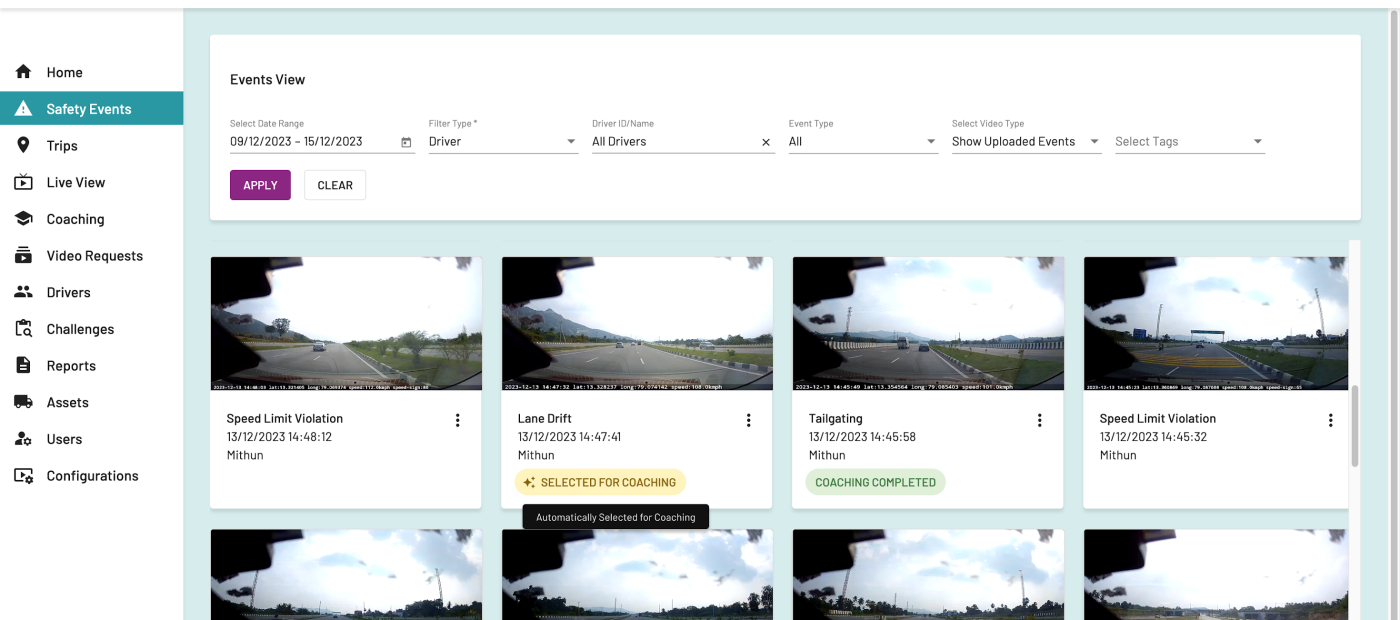
The real value comes when fleets move beyond reviewing individual events and start looking for patterns. DVR footage can be essential when something has already happened, but a collision should not be the first indication that a driver may need support. Before a serious incident occurs, there may have been repeated examples of distraction, close following, harsh manoeuvres, or other behaviours that suggest risk is increasing.
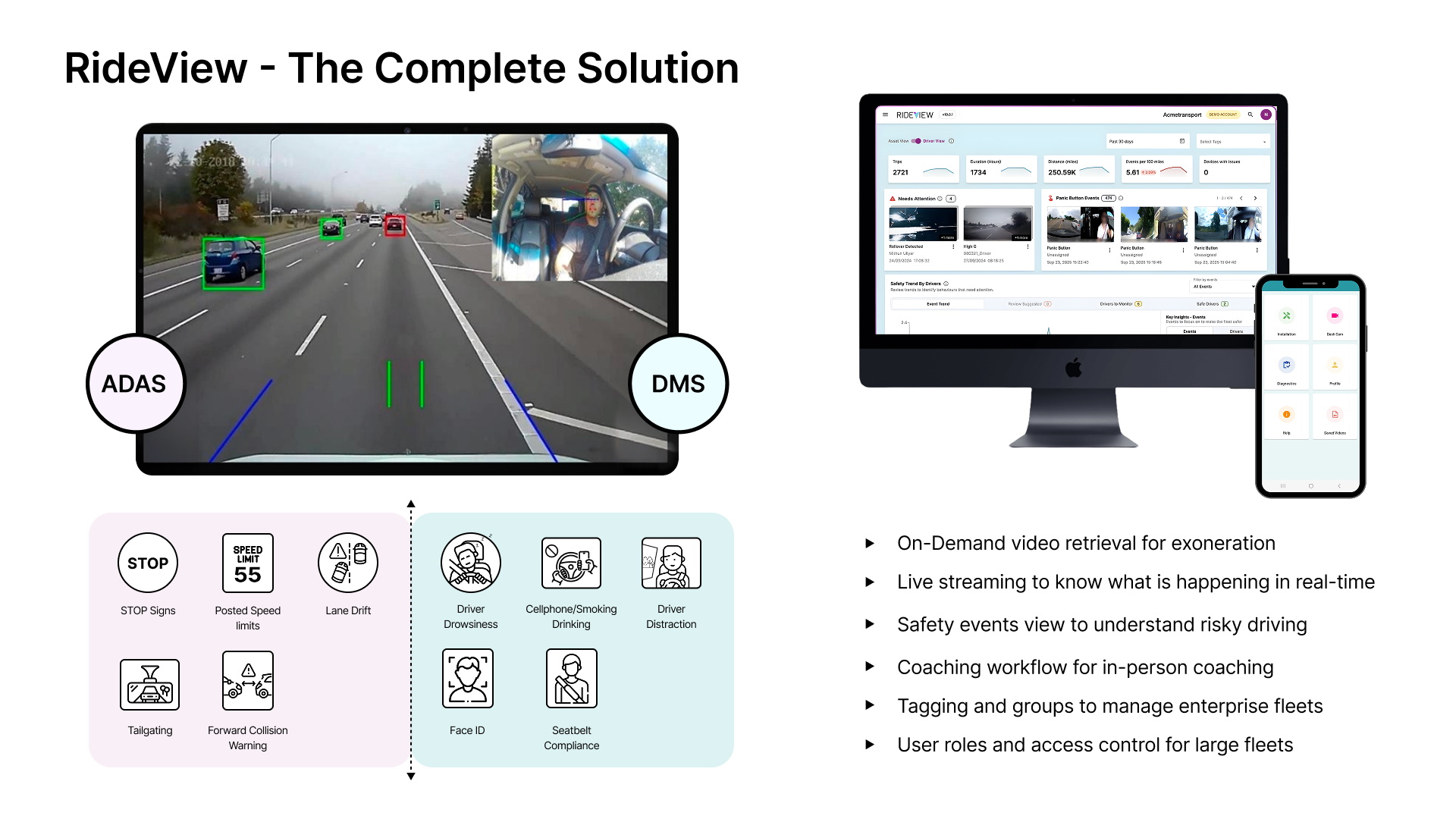
Used effectively, video and telematics data can help make those trends visible. This does not mean every alert should result in intervention. Fleet and safety managers are already dealing with enormous amounts of operational information, and simply giving them more data risks creating noise rather than insight.
The priority should be identifying the behaviours that matter, establishing whether they are recurring, and making it easy for managers to determine where action is required. AI can help by analysing events at scale and surfacing the footage that is most important to review, cutting through the volume of data and allowing managers to focus on the patterns that warrant attention. But accuracy is critical. If a system repeatedly flags normal driving as dangerous, managers waste time, and drivers quickly lose trust in it. The effectiveness of any safety system therefore depends as much on the quality and relevance of its alerts as it does on the volume of data it can collect.
Intervention has to be timely
Identifying risk is only useful if it leads to action. Historically, driver coaching has often taken place days or weeks after an event, perhaps during a scheduled review or once a manager has worked through a backlog of reports.
By then, the connection between the behaviour and the feedback can be significantly weaker.
Real-time alerts, on the other hand, can allow drivers to correct behaviours such as distraction or close following immediately. For fleet managers, the same data can then be used to identify recurring behaviours and inform more targeted coaching conversations over time.
The objective should not be to reprimand a driver every time an alert appears. It is to give drivers useful feedback that can help them recognise and change behaviours before they result in an incident. That is particularly important if fleets want drivers to engage positively with safety technology.
Bringing drivers with you
Video technology inevitably raises questions about monitoring and privacy. Fleets cannot simply install cameras and assume drivers will see them as a benefit. They need to clearly explain what information is being collected, when video is recorded, how that information will be used, and who has access to it.
Just as importantly, drivers need to see that the technology is there to support them as well as the business. Video can provide evidence that protects a driver when they were not responsible for an incident, helping fleets establish what happened and support exoneration where appropriate. It can identify circumstances where a driver reacted correctly to avoid a collision. Coaching can also recognise improvements and reinforce good driving rather than focusing exclusively on mistakes.
A safety programme built purely around transparency, fairness and improvement is more likely to encourage drivers to engage positively with the technology and the behaviours it is designed to change.
Measuring whether intervention works
For fleet managers, the final step is to connect these interventions back to measurable outcomes.
That means looking beyond the number of alerts generated to consider whether risky behaviours are actually declining over time. Are repeat distraction events falling after coaching? Are instances of close following decreasing? Are particular teams, routes or operating environments consistently generating more risk? Most importantly, is the frequency or severity of collisions moving in the right direction?
This is where fleet safety becomes a continuous process rather than a reaction to individual incidents.
Data identifies a potential risk; context helps determine whether that risk is genuine; the fleet intervenes. Subsequent data then shows whether behaviour has changed.
Ultimately, the objective is not to collect more footage or create another dashboard for fleet managers to monitor, but to make the information that fleets already generate more useful.
The value of fleet safety technology lies in what happens after the data is collected: whether it helps fleets establish what happened when an incident occurs, while also recognising risk sooner, intervening more effectively and reducing the likelihood of the next incident.