
New crash tests launched after hidden HGV safety risk identified
National Highways has launched a series of crash tests with Euro NCAP and leading European road safety organisations after identifying a significant safety risk on England’s motorways and major A roads.
The research focused on rear-end collisions involving heavy goods vehicles (HGVs), particularly incidents where a smaller vehicle, such as a car, crashes into the back of a lorry. The findings aim to improve vehicle safety technology and reduce the number of deaths and serious injuries on the UK’s strategic road network.
HGVs accounted for around 10% of traffic on England’s motorways and major A roads in 2024, but were involved in 19% of collisions that resulted in people being killed or seriously injured.
Rear-end collisions were the most common type of HGV-related incident, representing 39% of all such crashes during the year. In total, 160 collisions involved a smaller vehicle striking the rear of an HGV, with this type of incident responsible for 18% of all serious or fatal HGV-related casualties.
Roads and Buses Minister Simon Lightwood said: “Every death on our roads is a tragedy, which is why I am pleased to see National Highways taking the initiative with this vital research.
“This will go hand in hand with our Road Safety Strategy – the first in over a decade – as part of our commitment to cut deaths and serious injuries on our roads by 65% by 2035.”
Sheena Hague, Director of Road Safety at National Highways, said: “Collisions where smaller vehicles run into the back of HGVs can have devastating consequences. This testing helps build a clearer understanding of how and why they happen, so we can work with our partners to take practical steps to prevent them or reduce their impact.”
“The freight industry is a vital part of our economy, and we work closely with hauliers and others to help keep all road users safe.”
To better understand how modern vehicle safety systems perform in real-world conditions, National Highways partnered with Euro NCAP to carry out two phases of testing in February and March this year.
The programme was conducted alongside Sweden’s national transport authority and Germany’s Allgemeiner Deutscher Automobil Club (ADAC), Europe’s largest motoring organisation, after all three bodies independently identified concerns about the frequency and severity of rear-end HGV collisions.
The first series of tests examined how effectively advanced emergency braking systems (AEBS) fitted to passenger cars detect the rear of different HGV trailer designs. Researchers found significant differences in performance, with older AEBS technology failing to consistently recognise the rear of some trailers. In these cases, the automatic emergency braking system did not always activate, increasing the risk of a high-impact collision.
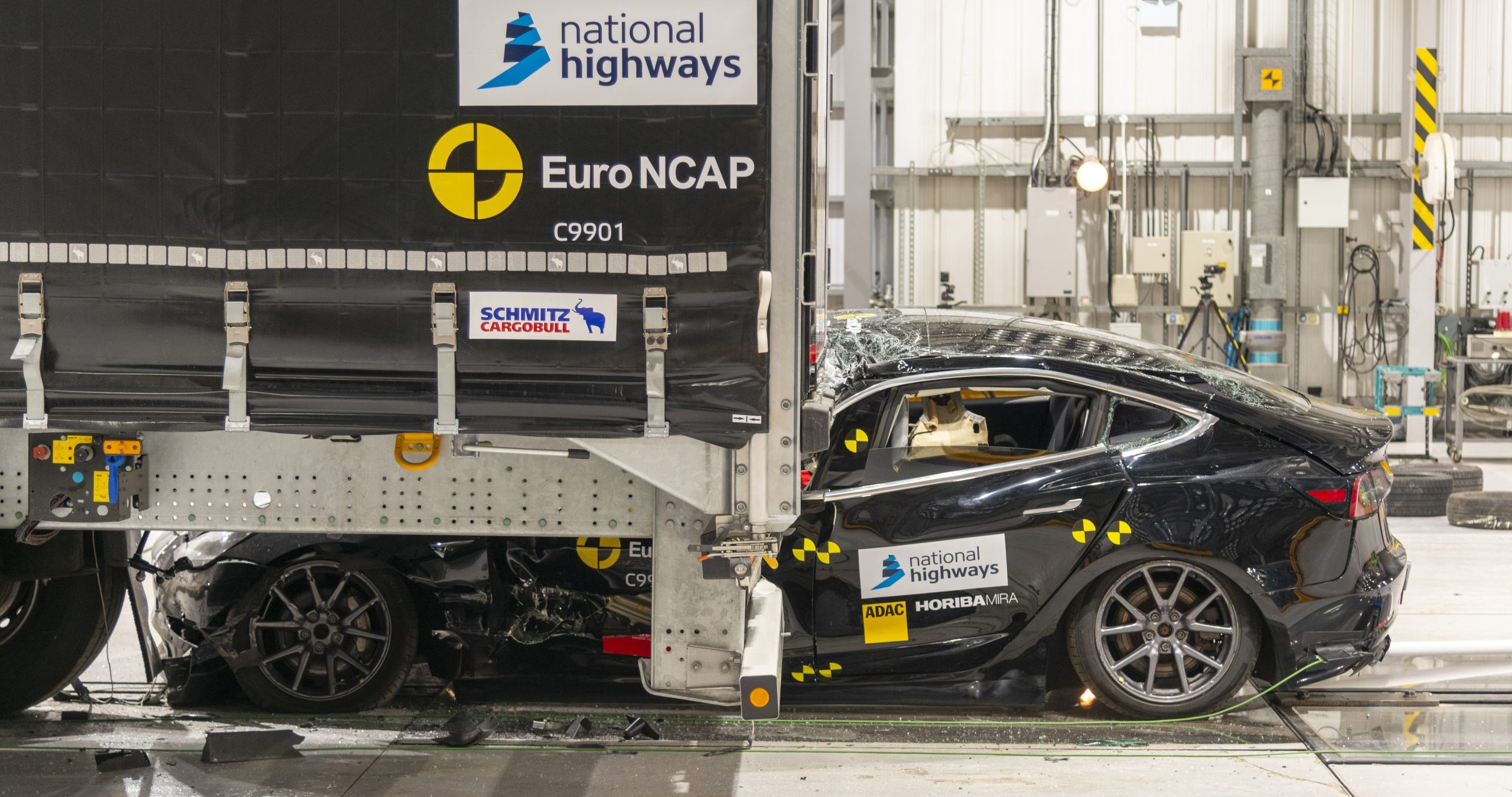
The second phase assessed the effectiveness of rear underrun protection (RUP) systems, the steel bars fitted to the back of HGV trailers that are designed to prevent cars from becoming trapped underneath in a crash. Rear underrun protection devices approved under UNECE regulations were crash-tested and compared with equivalent testing carried out in the United States.
The results reinforced the importance of rear underrun protection in reducing the severity of rear-end crashes. However, researchers found that some existing RUP designs failed to stop vehicles from passing beneath trailers during an impact, demonstrating that severe injuries to vehicle occupants could still occur.
National Highways said the findings will help inform future improvements to vehicle safety technology and trailer design, supporting efforts to reduce the number and severity of HGV-related collisions on England’s motorways and major A roads.