
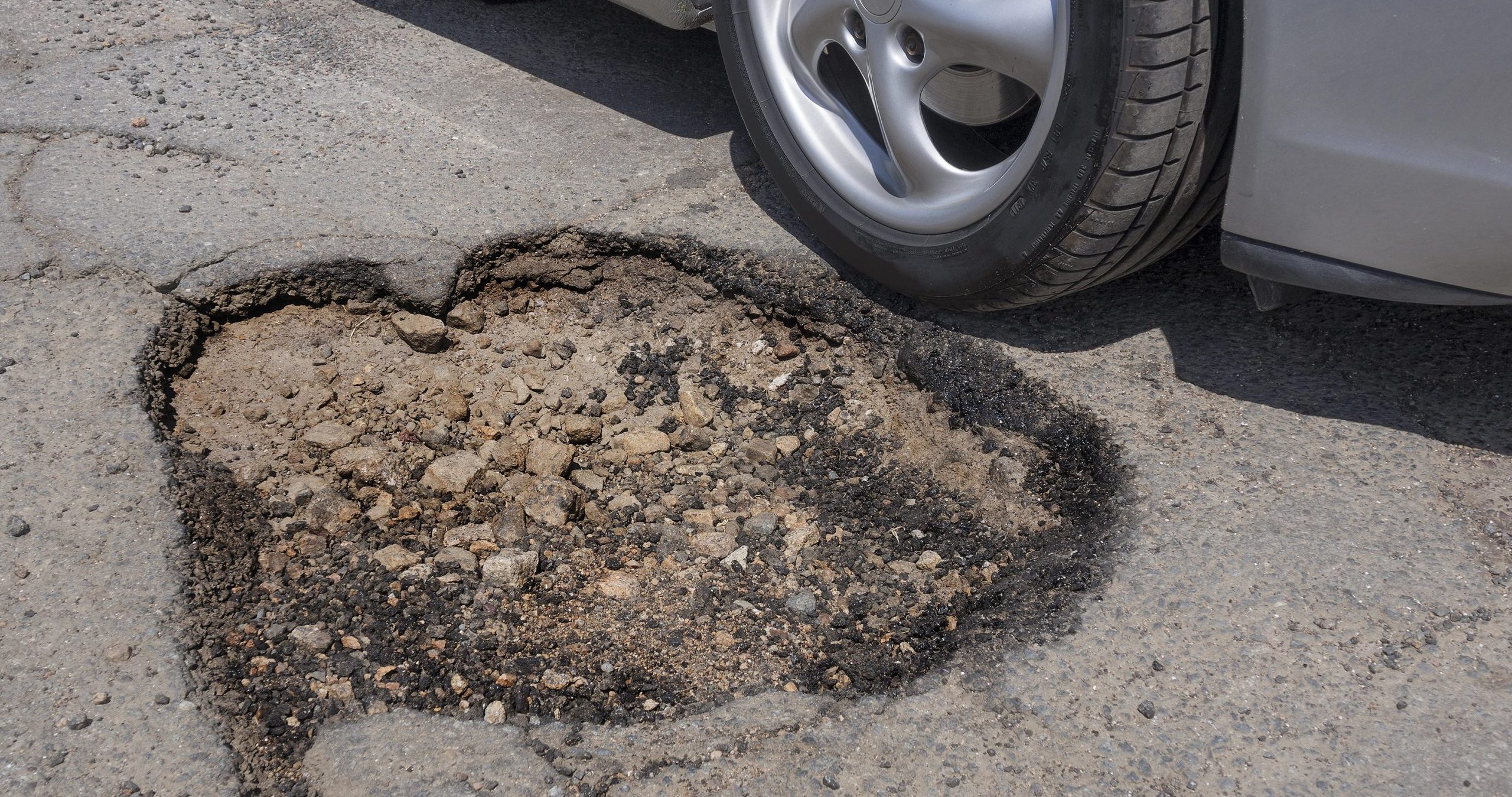
The UK is thought to have more than one million potholes, with these road defects being one of the leading causes of car breakdowns, according to the RAC. Recent storms and heavy rain are adding to what is already being called Britain’s ‘pothole plague’.
In this article, Steve Birdsall, CEO of Gaist reflects on the current status of our roads and that a more data-driven approach is required if the true scale of the pothole problem and develop a realistic approach to road maintenance.
Of the £24 billion allocated by the Department for Transport (DfT) to maintain and improve roads over the next five years, £1.6 billion will be used for pothole repairs by 2026. In November’s budget, £7.3 billion was promised to local highway maintenance over the next four years. Still, many organisations are lobbying for the government to invest more. Notably the Asphalt Industry Alliance (AIA) has said the cost of clearing the backlog of pothole repairs on roads in England and Wales is now £16.8 billion.
The problem is, when you boil them down, all of these figures remain anecdotal. Without a full digital condition assessment of all of the nation’s roads, it’s impossible for authorities to understand the extent of the problem. They can’t track progress over time, and they’re unable to confidently calculate the funds needed to get the UK into a position where preventative treatment is the lead approach of managing a road, rather than the reactive repairs that dominate now.
Authorities are Missing the Big Picture
The scale of Britain’s pothole problem shows that this is no longer just a maintenance issue; it’s a data and decision-making oversight. The Centre for Economics and Business Research (CEBR) – and the public – align road deterioration with the increase in potholes. Yet, measuring potholes is a distraction. Potholes are the visible symptom of roads that have already deteriorated. Once a surface starts to fail, damage accelerates quickly, and short-term patching becomes a costly cycle that delivers diminishing returns.
A number of local authorities are now being rated ‘red’ for road condition, but councils do not have a full picture of their roads to be able to prioritise spending efficiently and for maximum impact. Instead, they must repeatedly dispatch crews to patch individual failures, which comes at the expense of preventative work that would extend the life of entire road sections. The result is a short-term repair cycle that consumes budgets while allowing overall asset condition to decline. Many are trying to do the right thing with limited resources, but without a clear, consistent picture of asset condition, road maintenance is effectively guesswork.
A Perfect Storm of Structural Decline
It’s fair to say that climate pressures are accelerating the problem. More frequent heavy rainfall and greater temperature fluctuations increase the rate at which already weakened surfaces fail. And with England already exceeding its seasonal average of rain this year according to the Met Office, and winters in general getting notably wetter, the problem is only set to continue. Yet there is no comprehensive annual health check of the entire national network to measure the pace of deterioration or distinguish between weather-related damage and structural decline. Long-term planning is therefore based on partial visibility.
Road degradation is also influenced by other factors, such as the scale of street and road work activity required to improve and maintain utility networks. The onus for inspection and enforcement falls on extremely stretched local authorities, which experience an endemic lack of visibility over the quality of reinstatement work at every stage of the process. Without this insight, both councils and utility companies have minimal visibility of the quality of work completed and, as such, limited opportunities to enforce rapid and effective repair if required.
Preventative Approach to Road Maintenance
The challenge for authorities is a lack of data on the true scale of road deterioration. Headline figures circulate widely, yet there is no universally accepted national baseline that provides a consistent picture of network condition. Without that foundation, it is impossible to determine whether funding levels are sufficient, misdirected or failing to address the most critical points of decline.
To reduce breakdowns, improve safety and make public funding go further, the focus has to shift from reacting to potholes to preventing them by identifying early-stage defects, understanding how roads are deteriorating, and intervening before failure occurs. Today, there is the capability to complete a full road imaging survey to unlock all the road data needed to ensure funding is allocated effectively – and to measure the results. A trusted baseline created by an immediate national dataset should be the foundation for an effective and efficient model for maintenance required to safeguard a national road infrastructure under increasing strain.