
AIT Home Delivery adds Mercedes-Benz eSprinter vans
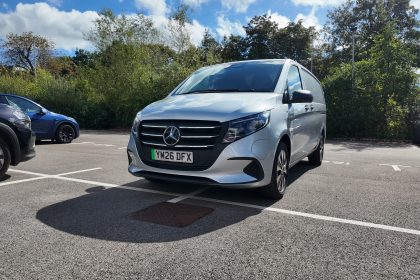
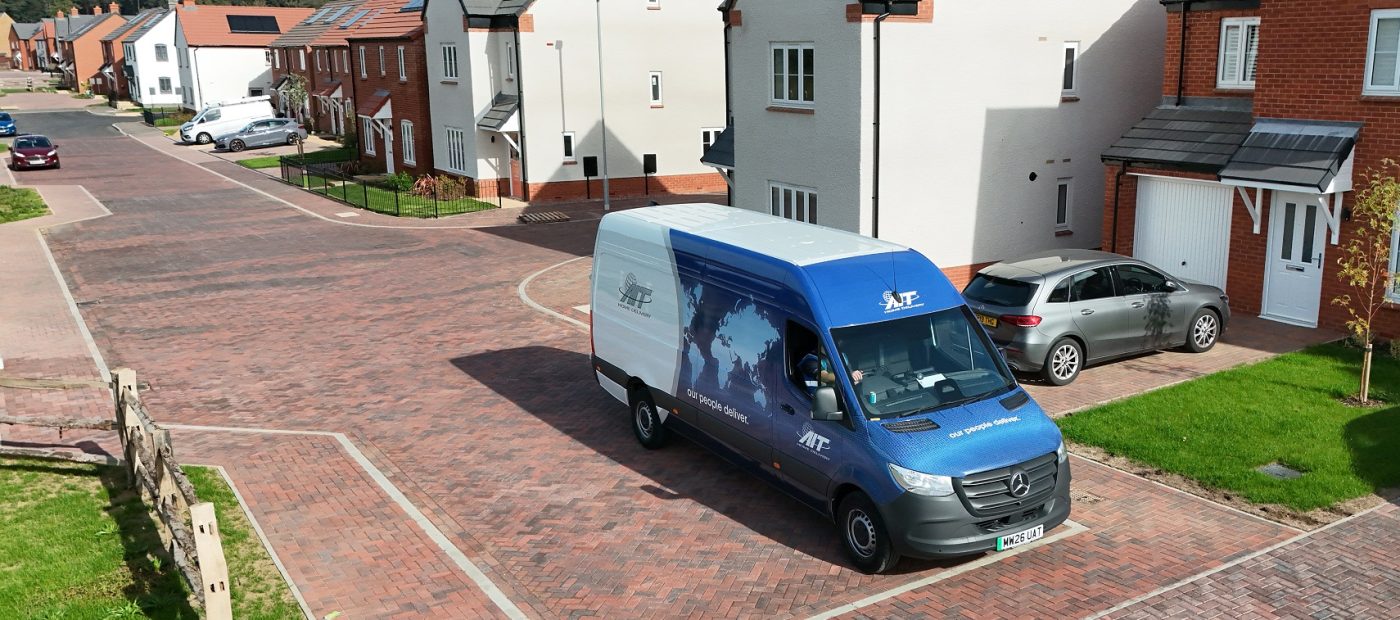
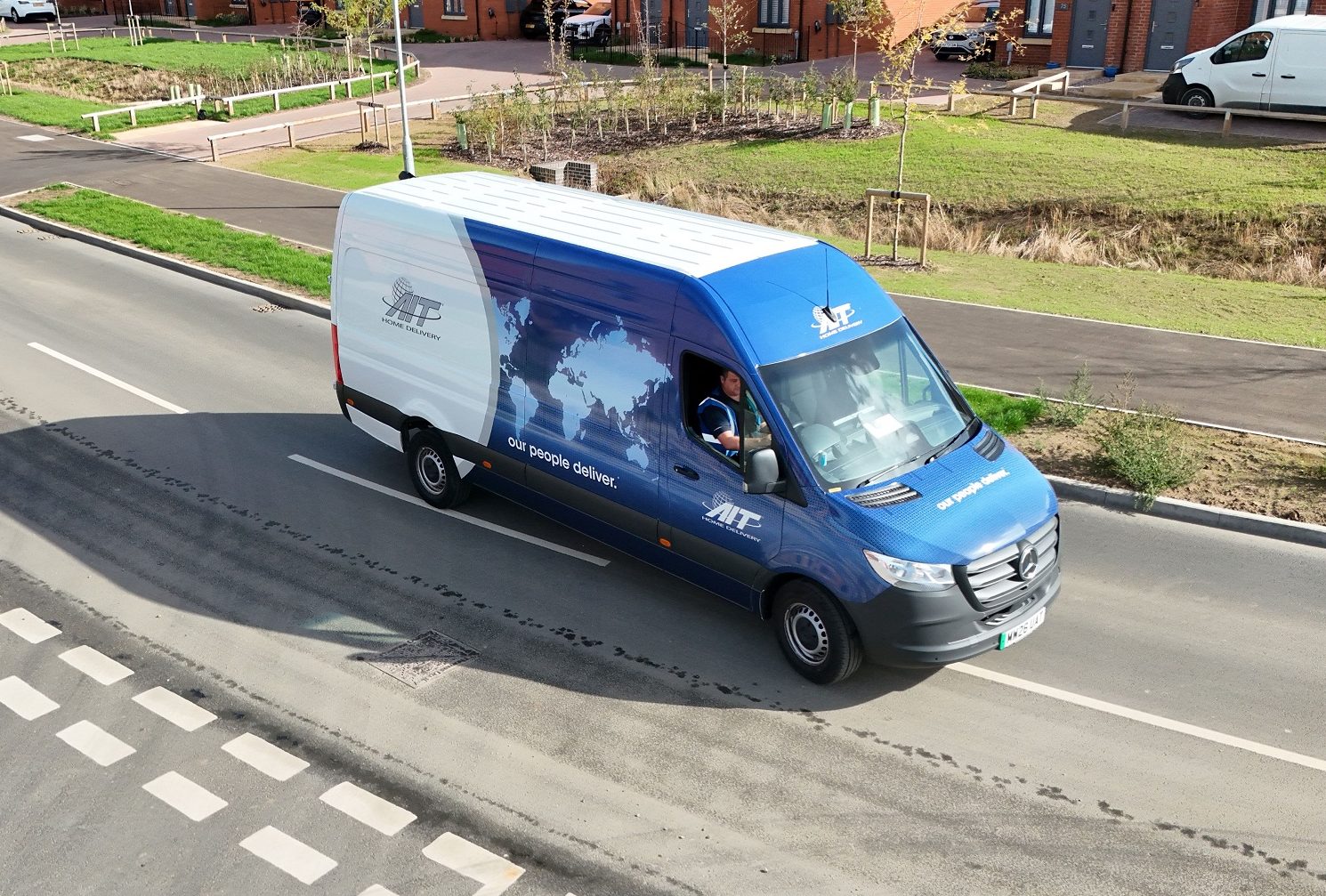
AIT Home Delivery, a wholly owned subsidiary of AIT Worldwide Logistics, has strengthened its commitment to sustainable logistics and market-leading customer service with the addition of two new Mercedes-Benz eSprinter electric vans to its delivery fleet.
Supplied by NRG Riverside, the fully electric vehicles will carry out urban delivery routes from AIT’s Northampton and Enfield facilities, helping to reduce emissions while maintaining the exceptional service standards that have made the company one of the UK’s leading two-person home delivery specialists.
Part of a long-term fleet strategy
The investment forms part of AIT’s long-term fleet strategy, which combines operational excellence with lower-emission transportation alternatives, ensuring customers benefit from reliable, efficient and increasingly sustainable final-mile delivery solutions.
The Mercedes-Benz eSprinter is ideally suited to urban distribution, offering no tailpipe emissions, low noise levels, and the range and payload required to support demanding, specialised home delivery operations in towns and cities. As more urban areas introduce low-emission zones, the new vehicles will help future-proof AIT’s operations while reducing its environmental impact.
Gary McKelvey, Vice President Global Home Delivery, said: “Investing in electric vehicles is another important step in our sustainability journey and demonstrates our commitment to delivering smarter, more efficient and lower-emission logistics solutions.”
He added: “We have a duty to our customers to continually improve every aspect of the final-mile delivery experience. These new Mercedes-Benz eSprinters allow us to combine environmental benefits with the high levels of service, reliability and professionalism for which the company is renowned.”
NRG Riverside supports smooth rollout
The vehicles have been supplied by NRG Riverside, whose expertise in commercial vehicle fleet solutions has supported the smooth introduction of the electric vans into AIT’s UK operation.
Russell Markstein, Chief Commercial Officer at NRG Riverside, commented: “We are delighted to be working with AIT and making a contribution to the company’s Scope 1 emissions reduction efforts.”
Reinforcing AIT’s position in specialised home delivery
The latest investment reinforces AIT’s position at the forefront of innovation in the specialised home delivery sector, where continuous improvement, operational excellence and outstanding customer experience remain central to the company’s strategy. Introducing electric vans onto urban routes represents a tangible way for the business to demonstrate that sustainability and service quality can go hand in hand, rather than being treated as competing priorities.
Wider fleet investment includes HVO-capable tractor units
AIT continues to invest significantly in its fleet to improve fuel efficiency. The business recently introduced 35 new MAN tractor units, all capable of running on HVO (hydrotreated vegetable oil) fuel, which have the potential to reduce lifecycle CO₂ emissions by up to 90%. This further underlines an organisational commitment to delivering more sustainable logistics solutions while continually enhancing efficiency, resilience and the customer experience across the wider fleet.
Together, the eSprinter vans and the HVO-capable tractor units illustrate a broader pattern in AIT’s approach: addressing emissions across different parts of the operation, from last-mile urban delivery through to longer-haul transport, rather than focusing sustainability efforts on a single vehicle type or route.
Supporting compliance with low-emission zones
The timing of the eSprinter introduction is notable given the growing number of low-emission and ultra-low-emission zones being rolled out across UK towns and cities. Diesel and petrol vans operating in these zones increasingly face daily charges or restrictions, making zero-tailpipe-emission vehicles like the eSprinter an increasingly practical choice for delivery operators working in dense urban environments. By introducing electric vans at Northampton and Enfield now, AIT is positioning itself ahead of further regulatory tightening, rather than reacting to it after the fact.
For a two-person home delivery specialist, urban manoeuvrability and payload capacity are just as important as environmental credentials. The eSprinter’s combination of range, load capacity and low noise operation means deliveries involving bulky or specialist items can continue to be carried out efficiently, even as the vehicles themselves become quieter and cleaner. This is particularly relevant for residential deliveries, where reduced noise can also improve the experience for customers and their neighbours during early morning or evening delivery windows.
Part of a wider Scope 1 emissions strategy
Every fleet investment forms part of AIT Home Delivery’s wider strategy to deliver an industry-leading final-mile delivery service while reducing its Scope 1 emissions. By pairing electric vans for urban routes with HVO-capable tractor units for longer journeys, the company is building a fleet strategy that addresses emissions across multiple vehicle classes and delivery contexts, rather than relying on a single technology to carry the full weight of its sustainability commitments.
As the pressure on logistics providers to decarbonise continues to grow, from both regulation and customer expectation, AIT’s approach signals a recognition that fleet transformation needs to happen incrementally and across different vehicle types. The introduction of the eSprinters at Northampton and Enfield is a modest but visible step in that direction, and one that the company suggests will be followed by further investment as its sustainability journey continues.
With low-emission zones expanding and customers increasingly factoring environmental performance into their choice of logistics partner, AIT’s willingness to combine service quality with reduced emissions may prove to be a meaningful differentiator in a competitive final-mile delivery market. The company’s continued investment across both electric and alternative-fuel vehicles suggests this is intended as a long-term shift in operational strategy, rather than a one-off gesture.