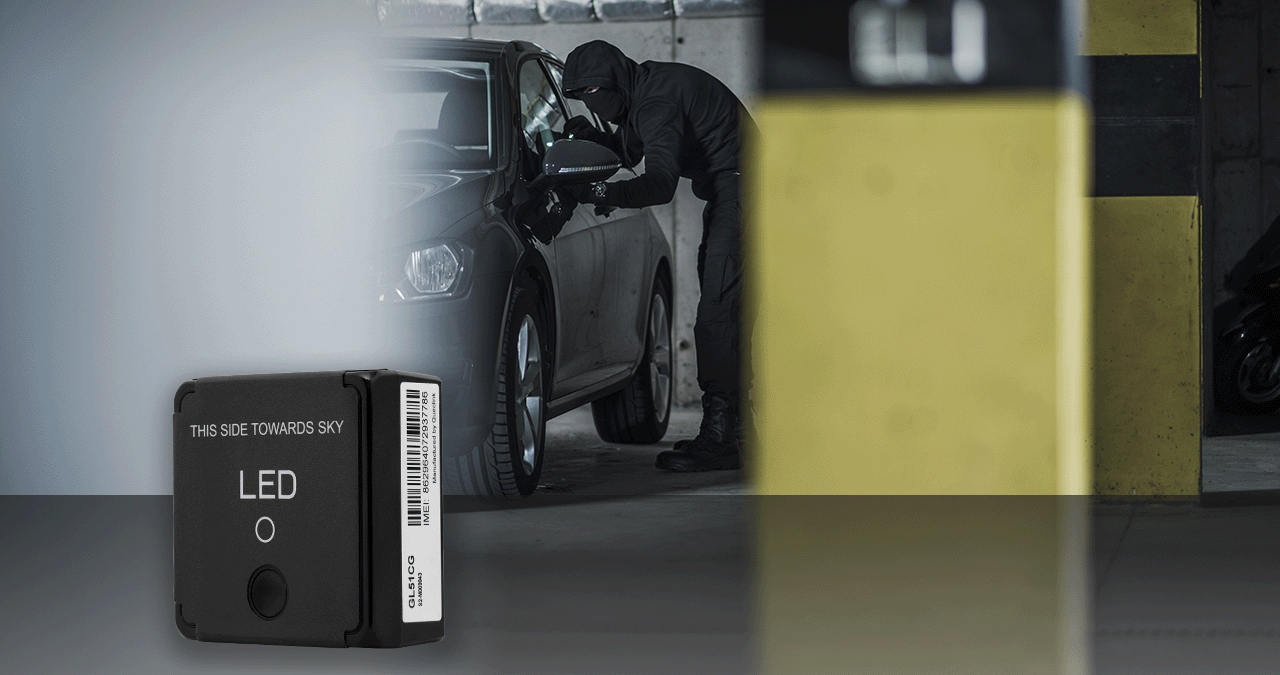


Fleet operators are fighting vehicle theft with the wrong playbook
Vehicle theft across Europe has been rising for three consecutive years. 2024 figures put the total at more than 400,000 vehicles stolen in Italy, France, and the UK alone. The conditions driving that number haven’t changed. In Italy alone, commercial vehicle theft jumped 112 percent year on year, according to data from the national fleet and rental association ANIASA. Recovery rates across the industry have not kept pace. The gap between what’s being stolen and what’s being recovered is widening, and the conventional response is failing to close it.
In this article, Christoph Ludewig, Vice President OEM, EMEA & Global at Geotab, examines how fleet operators can improve vehicle theft prevention and accelerate recovery when vehicles are stolen.
The standard response has been to invest in better hardware: faster alert systems, stronger devices, more tamper-resistant casings. The logic is reasonable: if thieves are stealing vehicles, make them harder to steal. It breaks down at the point of execution.
The organised groups responsible for the majority of high-value commercial vehicle theft across Europe are specialists. They study the industry’s defences, identify the weak points, and plan around them. They use signal jammers to block GPS transmission, know exactly how long they have before an alert is triggered, and are practiced at locating and removing tracking hardware.
One gap gets far less attention than it deserves. Most modern vehicles come with OEM-embedded location tracking, which fleet operators reasonably treat as a baseline layer of protection. But on certain vehicle makes and models, those systems allow users to disable location sharing through in-vehicle privacy settings, with no tools required and no hardware touched. A thief with enough time at the dashboard can switch it off before the vehicle leaves the scene. The operator has no alert, no indication that anything has changed, and no visibility into a vehicle that, on paper, still has tracking fitted.
This is the structural problem the industry hasn’t fully confronted. Better hardware, added to a single-layer architecture, improves that layer. It doesn’t fix the architecture. Every system that depends on one primary signal, however sophisticated, can be compromised by defeating that signal. The system that addresses this is built on redundancy: OEM telematics control unit signals that can’t be removed without disabling the vehicle itself, secondary covert tracking hardware, and AI-driven sensor fusion across all available inputs. There is no single point of failure for a thief to exploit. Jamming one signal doesn’t eliminate the others; removing one device doesn’t blind the system. Disabling the OEM privacy setting doesn’t affect a secondary layer that has no consumer-facing interface at all.
Detection also has to come before the vehicle disappears. By the time a theft is confirmed, the window for recovery is already closing. Rules configured for geofencing perimeters, high-risk country border crossings, and night movement anomalies can flag suspicious behaviour before anything is reported, giving operators and security centres time to act. AI algorithms that increase reporting frequency in known high-risk areas and time windows compress that window further, identifying unusual movement patterns and escalating long before a static alert threshold would register anything.
The commercial stakes for leasing and rental companies are considerable. A vehicle off the road through theft lands as a contract failure, a customer disruption, an insurance claim, and a reputational cost, often at the same time. For companies running tens of thousands of vehicles across multiple European markets, the aggregate exposure from a recovery rate in the mid-to-high 80s adds up quickly. Every percentage point of improvement has a direct and calculable impact on total cost of ownership.
European leasing companies face a specific version of this problem that makes the architecture question even more pressing. Their fleets span multiple countries with different theft risk profiles, different organised crime networks, different police response times, and different legal frameworks for cross-border recovery operations. An approach calibrated for one market may be poorly suited to another. Pan-European fleet protection has to be designed for that complexity from the start, not adapted to it after the fact.
As theft networks evolve we need to ensure that the architecture of fleet protection is built for the changing threat environment European operators face today. The people stealing these vehicles are professional. The approach to stopping them has to be the same.